



Baroque Silk Textile
A baroque silk textile brings monumental theatricality into a room, offering rich textures and historic weave structures that collectors covet for grand interiors.
Baroque Silk Textile
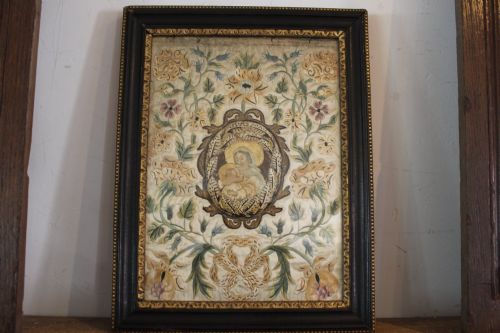
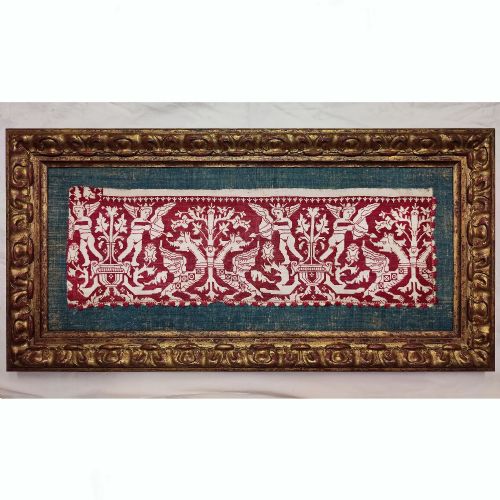
A baroque silk textile encompasses wall hangings, tapestries, embroidered panels, and framed textile art created during the seventeenth and eighteenth centuries, alongside later Victorian revivals. These objects reflect the theatrical grandeur and ornate aesthetic of the period, often serving as architectural wall decorations or furnishings in opulent settings.
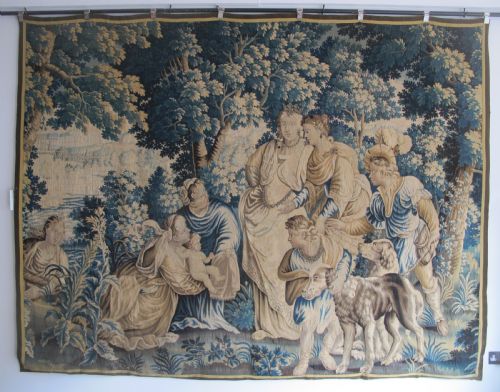
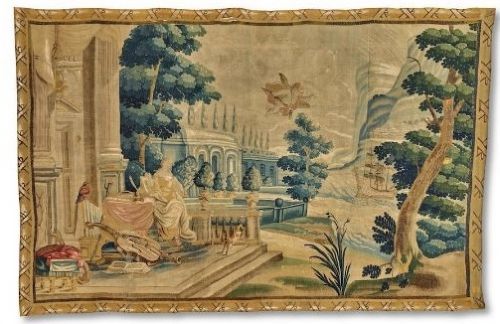
The selection on this page relies heavily on seventeenth-century Flemish and French verdure tapestries, alongside Italian embroidered borders, silk velvet hangings, and eighteenth-century bizarre silk lampas. Buyers will frequently encounter wall art, tapestry fragments, and cushion covers that display the characteristic dynamic movement and rich botanical or mythological motifs of the era.
What varies in quality
The distinction between ordinary and exceptional pieces lies in the density of the weave, the complexity of the design, and the survival of metallic threads. Master workshops achieved remarkable depth through subtle tonal gradations in wool and silk, whereas lesser pieces show simplified colour palettes and looser structures.
Preservation of the original ground fabric and the crispness of the motifs heavily influence the stature of a textile. Intact borders on panels and the retention of shimmering metallic highlights elevate the visual impact and historical integrity of the piece.
Early weavers occasionally hid tiny mythological beasts deep within verdure foliage, waiting patiently for sharp-eyed buyers to spot them centuries later.
The Baroque Silk Textile Glossary
- Verdure tapestry
- A wall hanging featuring a stylized landscape or woodland scene filled with lush foliage, trees, and often birds or animals. These scenes formed a staple output of Flemish weaving centres during the seventeenth century.
- Bizarre silk
- An extravagant type of eighteenth-century woven silk characterised by asymmetric, exotic patterns and heavy use of metallic yarns. The style reflected a brief, radical departure from classical symmetry in textile design.
- Ciselé velvet
- A velvet fabric created by combining cut and uncut pile loops to form raised patterns against a contrasting ground. This technique produces a subtle texture and tactile relief popular in baroque interior furnishings.
- Lampas
- A complex shuttle-woven textile featuring a background warp and weft with a supplementary pattern-weft that creates the design. It allows for rich polychromatic effects and varied surface textures.
- Pilaster hanging
- A long, narrow textile designed specifically to fit between architectural wall panels or windows. These vertical hangings often display symmetrical baroque ornamentation or scrolling foliage.
Baroque Silk Textile: Frequently Asked Questions
How do I hang a large tapestry safely?
Large wall hangings require even weight distribution to prevent distortion of the historic weave. Professionals typically attach a supportive linen backing and a velcro mounting system to distribute the tension.
Avoid hanging textiles directly in strong sunlight or against damp exterior walls. Using a padded wooden batten ensures the weight hangs vertically without pulling individual threads.
What is bizarre silk?
Bizarre silk refers to an innovative style of woven textile produced in the early eighteenth century featuring asymmetrical, abstract motifs. These fabrics combined Eastern influences with complex lampas weaving techniques.
Designers utilised discordant scales and rich metallic threads to create striking, unconventional patterns that defined high fashion during the period.
How can I tell seventeenth-century work apart from Victorian revivals?
Seventeenth-century pieces display authentic wear patterns, organic dye variations, and hand-spun materials consistent with early workshops. The construction techniques and motifs reflect the direct aesthetic of the baroque period.
Victorian revival pieces often utilise machine assistance, chemically stable synthetic mordants, or tighter, more uniform modern backing structures that betray nineteenth-century manufacture.