


Gold Shell Cameo
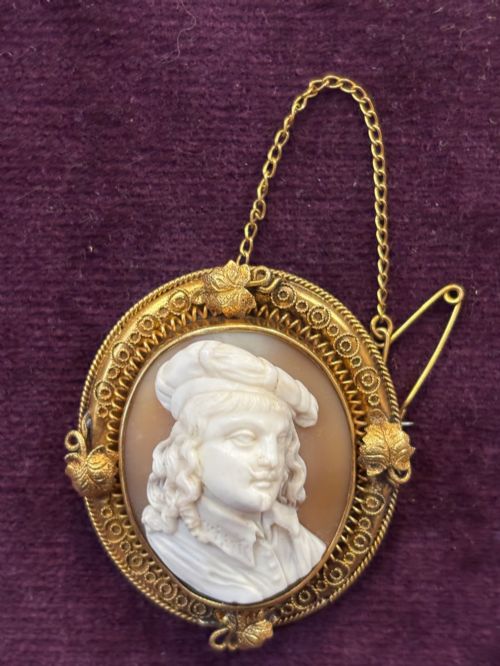
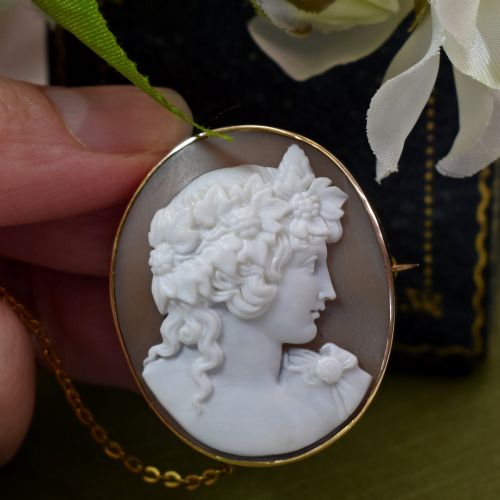
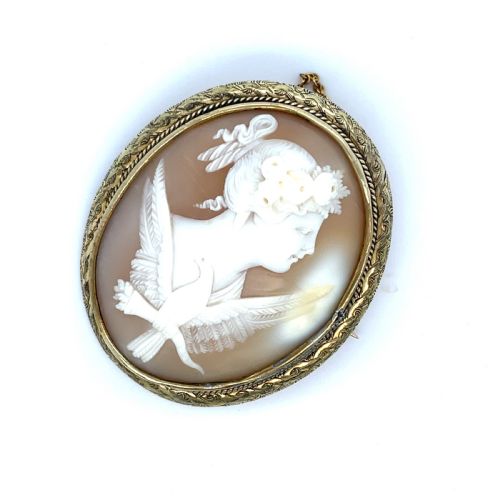
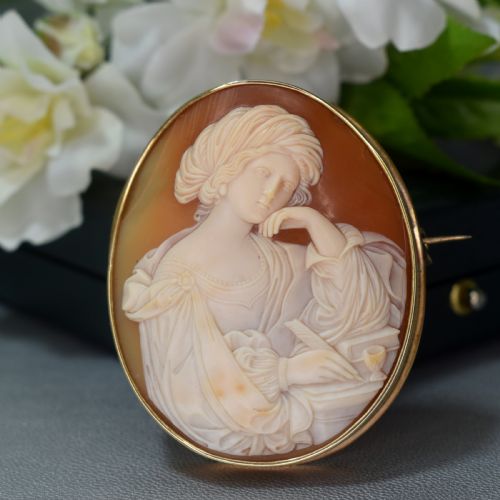
A gold shell cameo captures classical portraiture carved in relief on natural shell, mounted in gold for wear or display.
Gold Shell Cameo
A gold shell cameo is a carved relief ornament depicting classical figures, deities, and mythological subjects derived from antiquity. These pieces appear predominantly as brooches and pendants, alongside earrings, rings, bracelets, and tabletop ornaments.
The material centres on natural shell carved to reveal a pale subject against a darker background, set into frames of yellow gold, 9ct gold, 15ct gold, 18ct gold, or pinchbeck. Examples span Georgian, Victorian, Edwardian, and later twentieth-century periods.
Victorian and nineteenth-century brooches dominate the selection, often portraying subjects such as Nike, Flora, Venus, and classical portrait heads. Pieces range from small dress rings to monumental tabletop ornaments mounted in solid gold frames.
How they were made
Carvers utilise layered seashells, cutting away the upper stratum to leave a raised white or cream motif standing proud of a darker brown or amber ground. The precision of this relief carving determines the crispness of facial profiles and drapery folds.
Metalworkers house the carved shell within secure gold mounts, ranging from simple bezels to ornate filigree frames in 9ct, 12ct, 14K, 15ct, 18ct, and 20ct gold, as well as pinchbeck. Many frames incorporate additional decorative elements such as seed pearls, coral, or scroll wirework.
Listings feature shell cameos mounted in gold fineness ranging from 9ct up to 20ct, alongside pinchbeck settings.
What varies in quality
Depth and crispness of the carving distinguish finer work, where facial expressions, hair strands, and folds of drapery show distinct anatomical accuracy and relief separation. Lower-grade carving appears flat with softer, less defined contours.
The weight and substance of the gold mount, alongside the presence of maker signatures such as R. Pernice, separate standard production pieces from museum-quality examples. Integration of pearls, coral, or substantial multi-stone gold links elevates the status of the item.
R. Pernice
The Gold Shell Cameo Glossary
- Cameo
- A method of carving an object such as a gemstone or shell where a design is raised in relief above a contrasting background. This technique exploits the natural colour layers found within the material.
- Pinchbeck
- An alloy of copper and zinc developed to imitate gold, often utilised for antique jewellery mounts. It offers a warm metallic tone without employing precious metal.
- Neoclassical Revival
- A style drawing inspiration from the classical art and architecture of ancient Greece and Rome. This aesthetic heavily influences the mythological subjects chosen for carved shell cameos.
- Intaglio
- A technique opposite to cameo carving, where the design is incised into the surface rather than left in relief. It permits the stone or shell to serve as a seal.
- Bezel setting
- A method of holding a shell or stone in place by a narrow strip of metal that folds over the outer edge of the piece. This secures the carved material within its gold frame.
Gold Shell Cameo: Frequently Asked Questions
How do I wear a cameo brooch?
Pin the brooch securely to heavier fabrics such as wool jackets, scarves, or lapels where the weight of the gold frame and shell finds proper support. Ensure the pin mechanism fastens correctly behind the mount before wearing.
For pendant conversions, suspend the piece from a suitable gold chain that complements the tone of the frame. This allows the carved subject to hang straight against clothing.
What periods do these cameos come from?
The pieces span from the Georgian era through the Victorian period, Edwardian times, and into the mid-twentieth century. Victorian examples form the largest group across the selection.
Markers such as frame construction, mount carat marks, and carving depth help distinguish between early nineteenth-century work and later twentieth-century revivals.
How were shell cameos used historically?
Wearers displayed cameo brooches and pendants as personal adornments on garments, ribbons, or necklaces to signal an appreciation for classical art and mythology. Portrait pieces also served as commemorative items or tokens of affection.
Larger signed shell carvings functioned as tabletop ornaments, mounted on stands to decorate nineteenth-century drawing rooms and display cabinets.
What materials make up the frames?
Frames consist of various grades of gold, including 9ct, 12ct, 14K, 15ct, 18ct, and 20ct yellow gold. Some pieces utilise pinchbeck, a historical brass alloy designed to resemble gold.
Additional materials incorporated into the mounts include seed pearls, coral, and intricate wire filigree work surrounding the central shell.
How do I care for a shell cameo?
Protect shell cameos from hard impacts, harsh chemicals, and cosmetic sprays, as the natural shell material is softer than precious gemstones. Clean the surface gently with a dry or slightly damp soft cloth.
Store each piece individually in a padded box to prevent the gold mount from scratching the shell surface of adjacent items.