


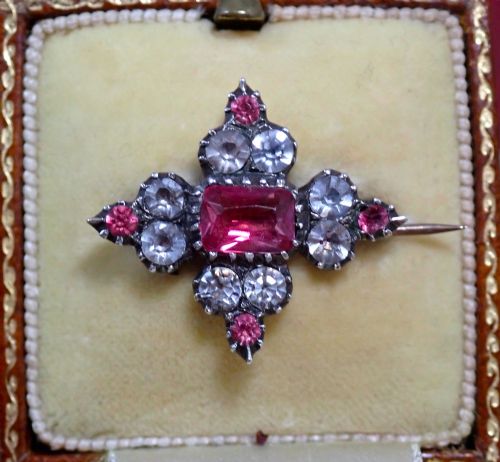
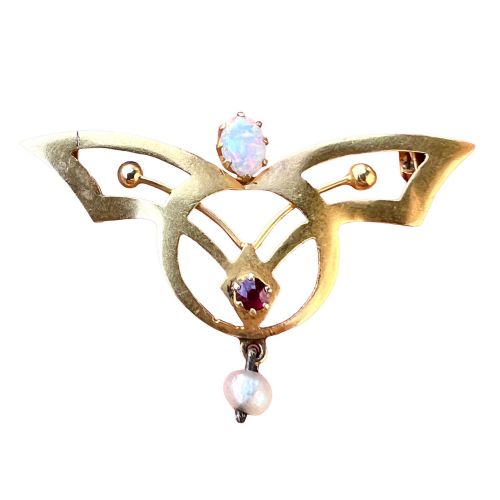
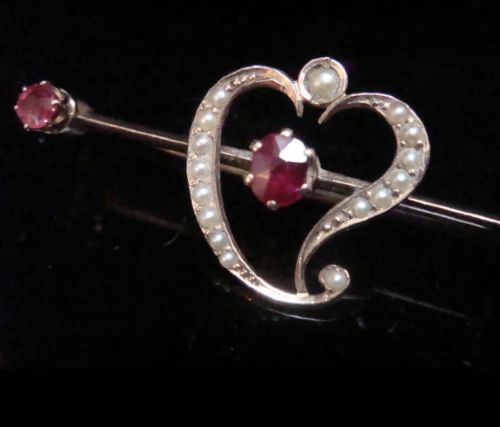


Gold Ruby Pin
A gold ruby pin carries deep crimson stones set in yellow, rose, or white precious metal, capturing centuries of decorative lapidary design.
Gold Ruby Pin
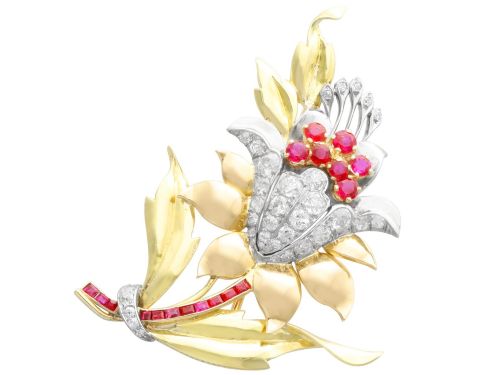
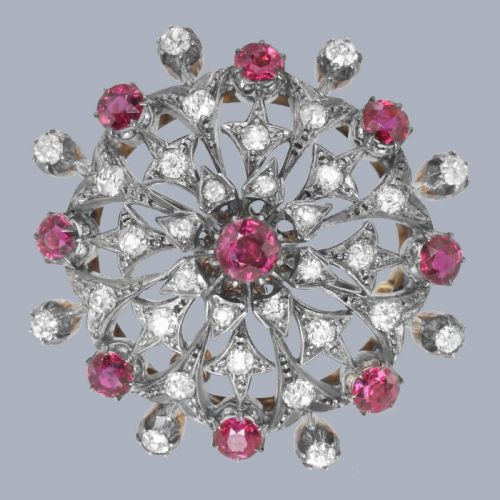
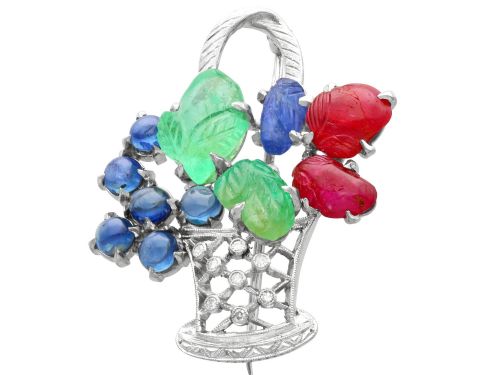
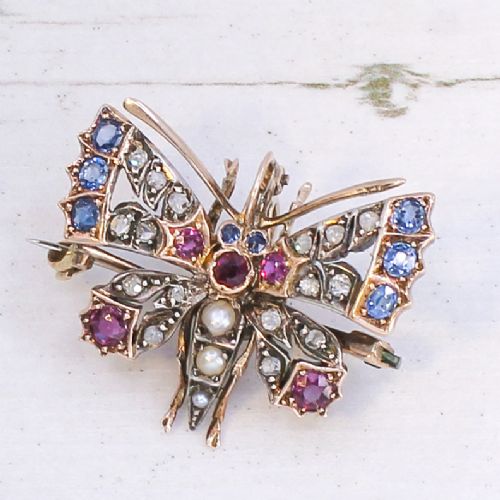
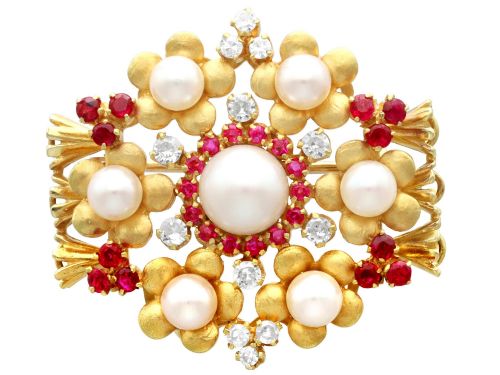
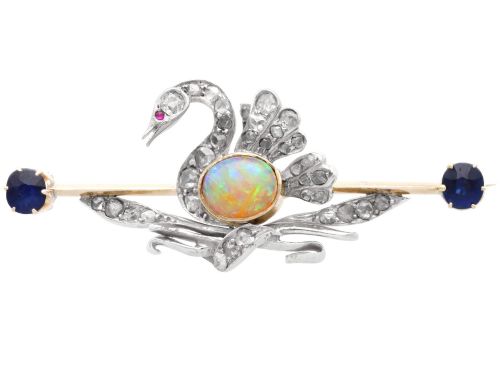
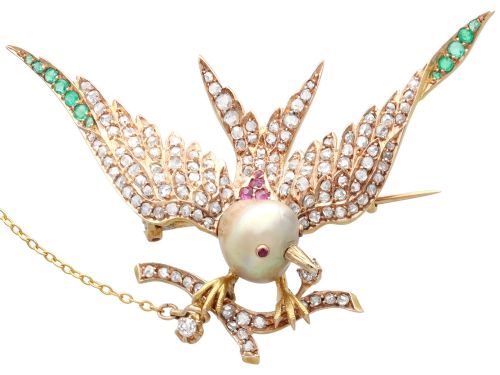
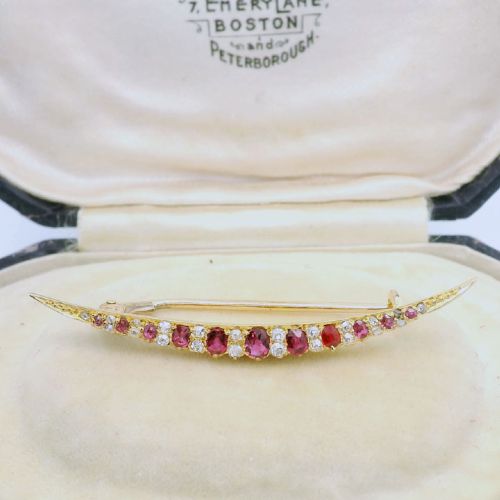
A gold ruby pin encompasses various antique and vintage brooches, pendants, and bar designs centered around the vivid red corundum gemstone. These ornaments span multiple eras, with the crescent motif and floral sprays appearing frequently across the selection.
Buyers will encounter convertible pieces that function as both a brooch and a pendant, alongside specialised dress pins and bar brooches. Each period brings distinct motifs, ranging from romantic hearts and crescents to naturalistic birds and floral arrangements.
Materials and construction methods
Goldsmiths utilised varying purities of gold, including 9ct, 15ct, 18ct, and occasional higher karats, alongside silver settings for early stone retention. Rubies were frequently accompanied by supporting diamonds, seed pearls, and opals to enhance the central red coloration.
Construction techniques evolved from Georgian foiled backing and paste integrations to precise Edwardian claw settings and geometric Art Deco platinum-topped arrangements. Master jewellers employed meticulous hand-fabrication to mount multi-gem clusters, crescent frames, and articulated animal subjects.
Gold Ruby Pin Retail Price Guide 2026
Typical asking prices for gold ruby pin among the pieces listed under this phrase on Sellingantiques today, from the lower quarter to the upper quarter. They describe what is for sale here now, not the wider market.
Listings feature yellow gold, rose gold, white gold, and silver pairings, incorporating gemstones like diamonds, pearls, opals, and emeralds alongside rubies.
Assessing quality and craftsmanship
Quality rests in the depth of stone treatment and clarity, distinguishing natural untreated rubies from paste alternatives or heavily treated specimens. The precision of the setting work, secure prong placement, and the symmetry of complex motifs dictate the piece's overarching standard.
Signatures from notable makers elevate a piece, alongside documented gemological reports confirming stone origins. The harmony between the ruby saturation and the supporting diamonds or pearls demonstrates superior lapidary curation.
Kutchinsky·Ben Rosenfeld·Gubelin
The Gold Ruby Pin Glossary
- Crescent brooch
- A curved, moon-shaped piece that gained immense popularity during the late Victorian and Edwardian eras. These designs are frequently pavé-set with graduated rubies and diamonds.
- Bar brooch
- A slender horizontal metal rod featuring a central cluster of stones or an ornamental motif. This form was widely worn on lapels throughout the early twentieth century.
- Seed pearl
- A tiny, naturally small saltwater pearl drilled and threaded into clusters or borders. They provide a soft white contrast against deep red rubies.
- Convertible pendant brooch
- An item engineered with a hidden loop or detachable bail, allowing the owner to wear it pinned to fabric or suspended from a neck chain.
Gold Ruby Pin: Frequently Asked Questions
What periods do these pins cover?
The available selection spans from the Georgian era through the Victorian, Edwardian, and Art Deco periods, extending into mid-century 1960s designs.
Each era contributes distinct stylistic markers, such as the romantic symbolism of the late nineteenth century and the clean geometric lines of the 1920s.
How were these pins originally worn?
Historically, these ornaments secured collars, cravats, or lapels on formal garments and outerwear. Many larger examples also double as pendants when suspended from a chain.
Versatility remains a key characteristic of these antique jewels, permitting modern integration as both brooches and necklaces.
What metal purities are common?
Gold standards vary widely depending on the decade of manufacture, including traditional 9ct and 15ct British gold, alongside continental 18ct yellow and white gold. Silver-topped gold and platinum settings also appear in pieces designed to maximise stone brilliance.
Markings and hallmarks, where present, help confirm the specific metal purity of the mounting.