


Gold Ruby Jewellery
Gold ruby jewellery brings together warm metals and vivid red stones across Victorian, Edwardian and mid-century designs that collectors prize for everyday wear.
Gold Ruby Jewellery
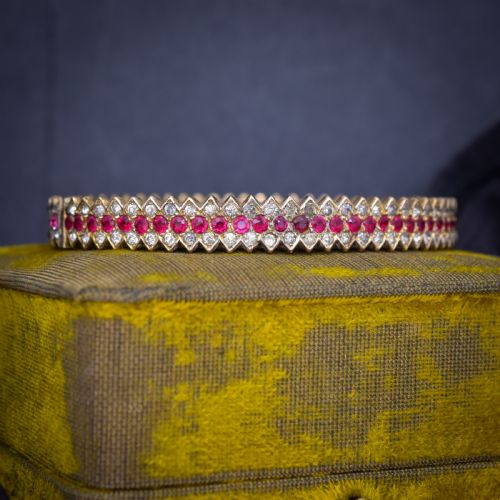
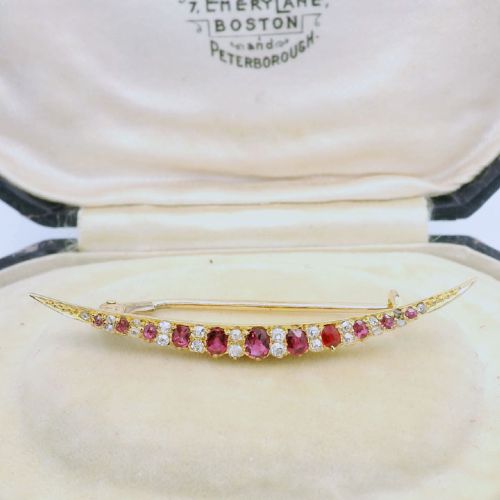
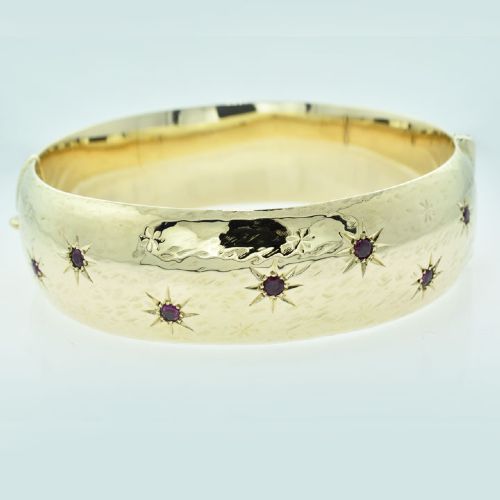
Gold ruby jewellery encompasses rings, brooches, bangles, pendants and necklaces spanning the Victorian, Edwardian, Art Deco and mid-century periods. When you search for gold ruby jewellery, you encounter pieces designed to showcase rich red corundum set against polished precious metal.
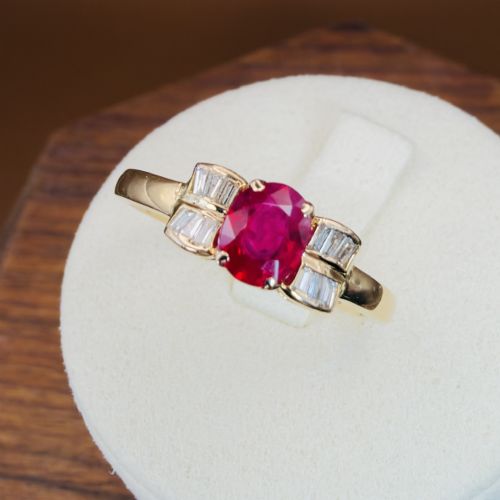
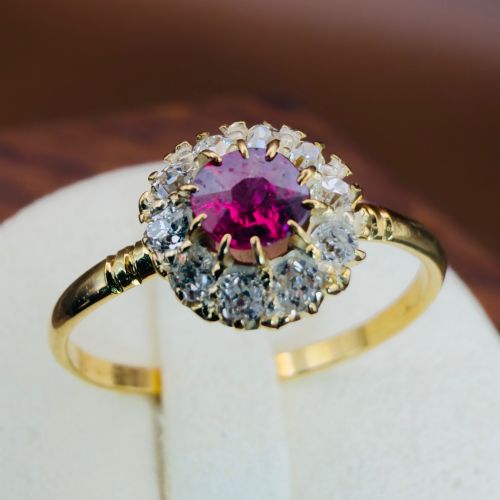
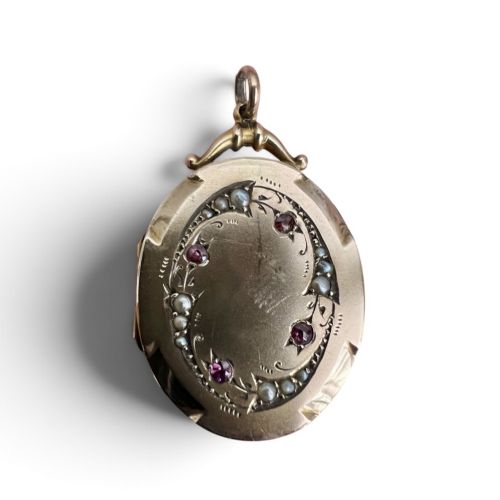
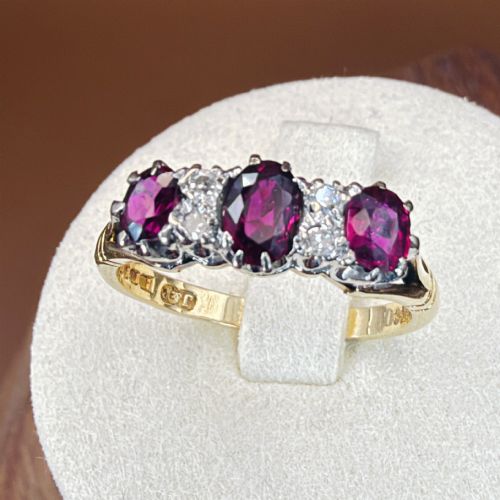
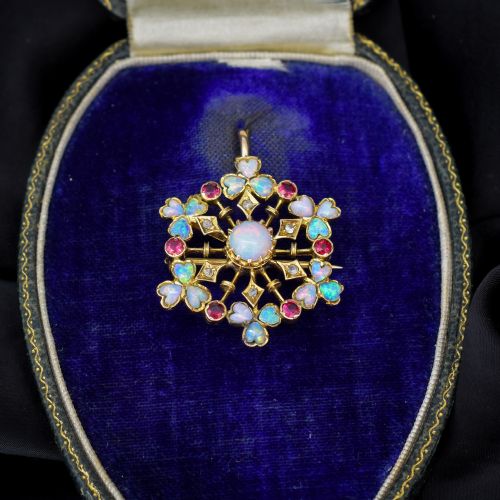
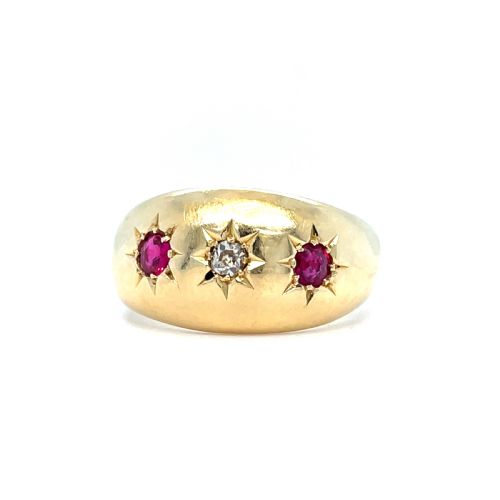
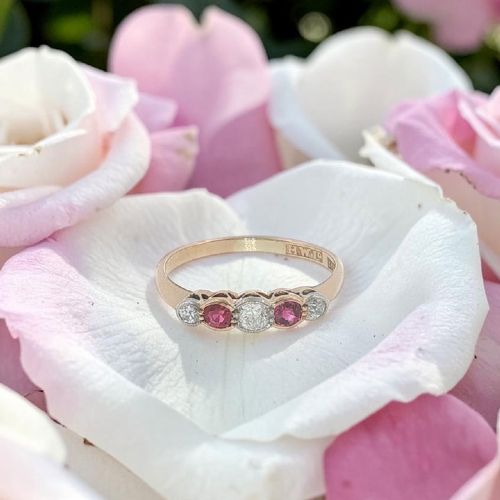
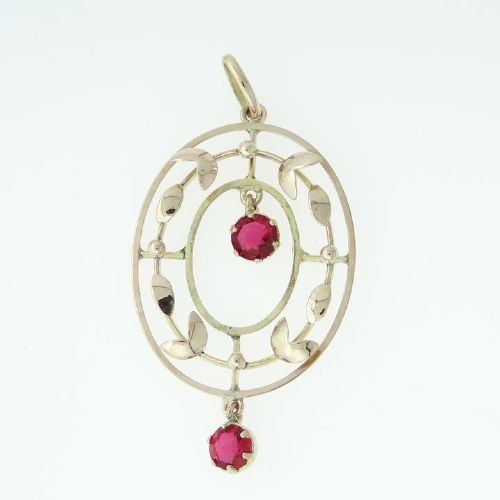
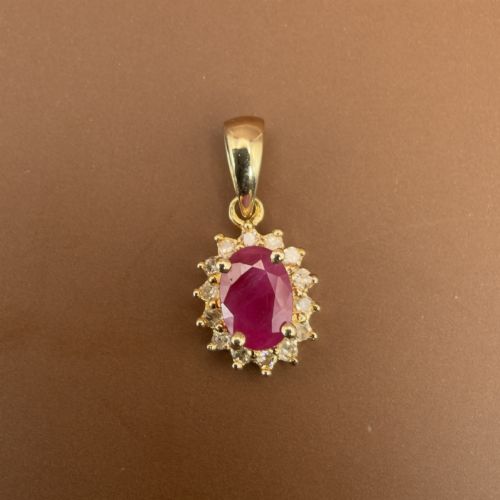
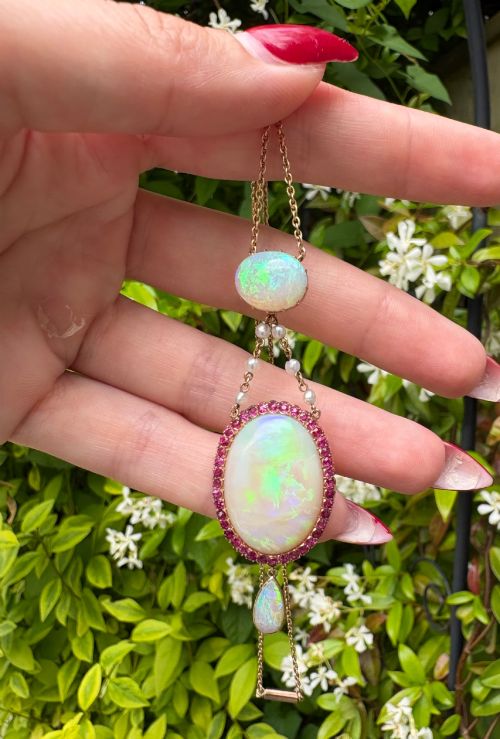
The most common forms on this page are rings, including cluster, starburst, gypsy, boat and five-stone band configurations. Brooches and pendants also feature prominently, often incorporating diamonds, pearls or opals alongside the central ruby.
These items originate from various eras, ranging from late nineteenth-century Victorian work to mid-century modern pieces. Each period brings distinct mounting styles, from intricate starburst settings to clean geometric lines.
How gold ruby jewellery was made
Goldsmiths utilised 9ct, 15ct and 18ct yellow and rose gold, alongside platinum and white gold in later twentieth-century items. Metal was cast, hand-beaten or drawn into wire to form band rings, hinged bangles and delicate pendant mounts.
Gemstones including old-cut, old-mine cut and oval-cut diamonds were set alongside rubies using claw, flush or star settings. Makers secured stones by hand, often finishing mounts with millegrain edging or engraved patterns on the gold shank.
What varies in quality in gold ruby jewellery
Quality rests upon the natural origin and saturation of the ruby, alongside the cut and clarity of any accompanying diamonds. Untreated stones from specific sources command greater attention than simulated or heavily treated alternatives.
The precision of the metalwork defines the construction standard, visible in the symmetry of starburst mounts, the crispness of chased patterns on gold bands and the secure housing of each stone within its setting.
Kutchinsky
The Gold Ruby Jewellery Glossary
- Cluster ring
- A ring featuring a central gemstone surrounded by a border of smaller stones, typically diamonds framing a central ruby.
- Gypsy ring
- A style where stones are flush-set directly into a thick, tapered gold band.
- Navette
- A boat-shaped or marquise setting that stretches longitudinally along the finger.
- Old-cut diamond
- A vintage diamond cutting style characterised by a small table, high crown and open culet, common in Victorian and Edwardian pieces.
- Millegrain
- A decorative technique featuring a row of tiny raised metal beads along the edges of a setting.
Gold Ruby Jewellery: Frequently Asked Questions
How do I date a gold ruby ring?
Dating relies on hallmarks stamped inside the gold band, which indicate assay offices, maker marks and specific date letters.
Stylistic clues such as claw settings, shank profiles and the presence of old-cut diamonds help narrow the period when hallmarks are rubbed or absent.
Are the rubies in these pieces natural?
Many antique and vintage pieces feature natural rubies, sometimes originating from Burma, though descriptions specify unheated stones or simulated alternatives when applicable.
Examinations under magnification reveal natural inclusions that distinguish earth-mined corundum from synthetic or paste substitutes.
How should I care for antique gold ruby jewellery?
Clean pieces gently using warm soapy water and a soft brush, avoiding harsh chemical dips that can damage softer gems like pearls or opals.
Store items separately in fabric pouches to prevent the harder rubies and diamonds from scratching the surrounding gold mounts.