

Gold Religious Pendant
When you search for a gold religious pendant, you encounter devotional jewellery spanning the Victorian, Edwardian, and Art Deco periods, created to be worn close to the heart.
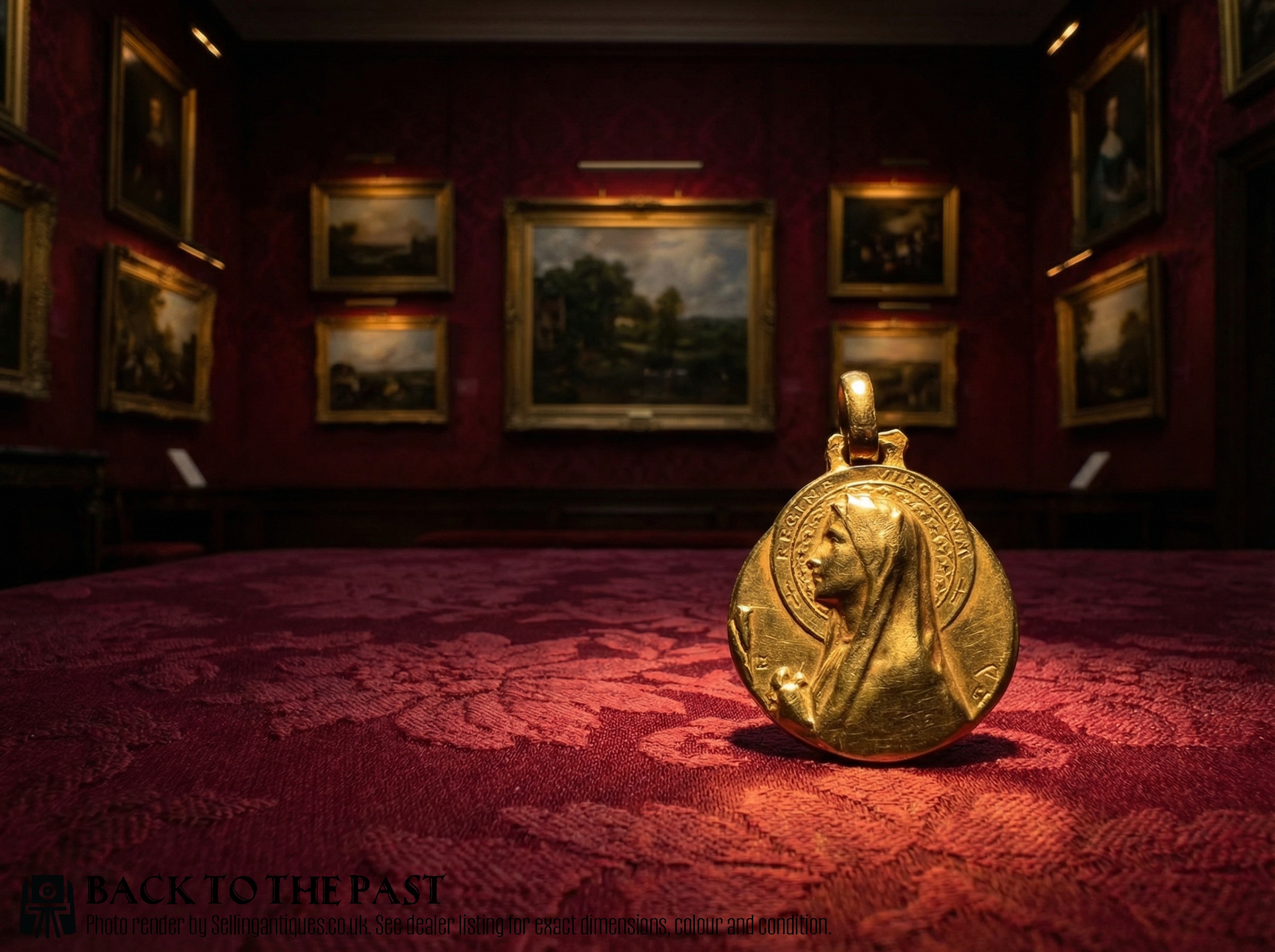
Gold Religious Pendant
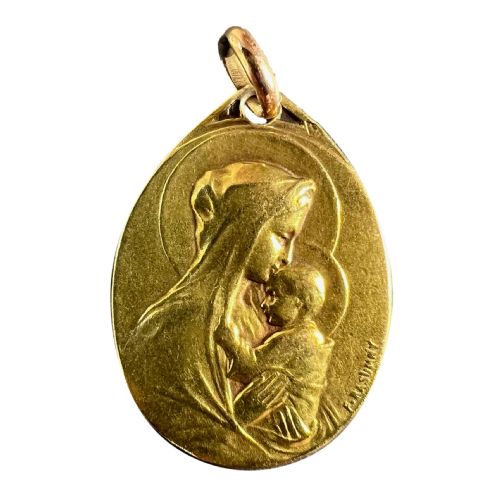
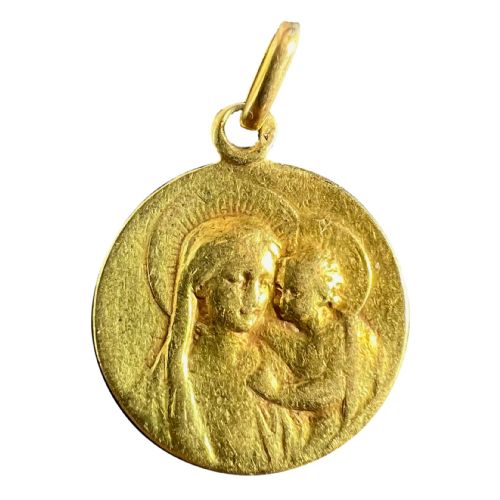
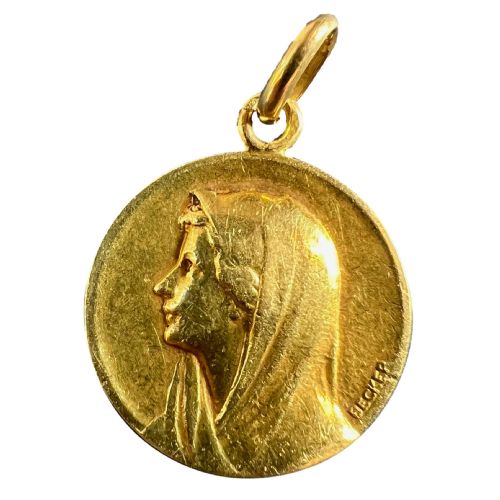
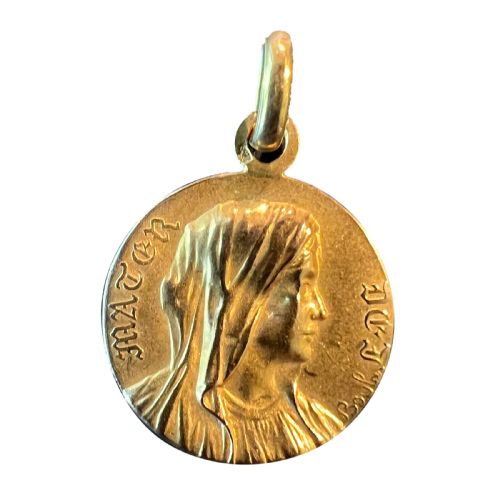
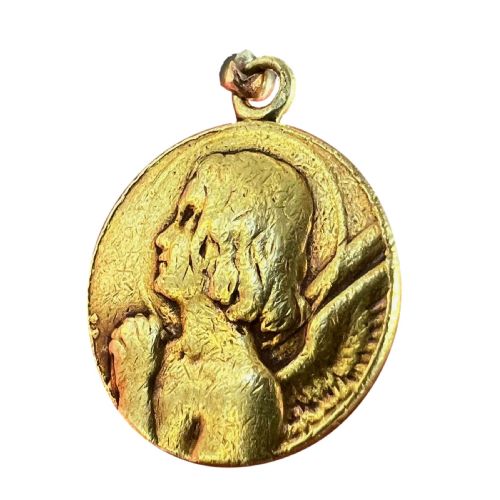
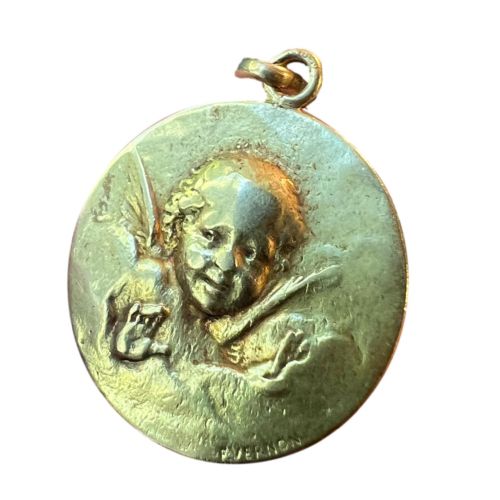
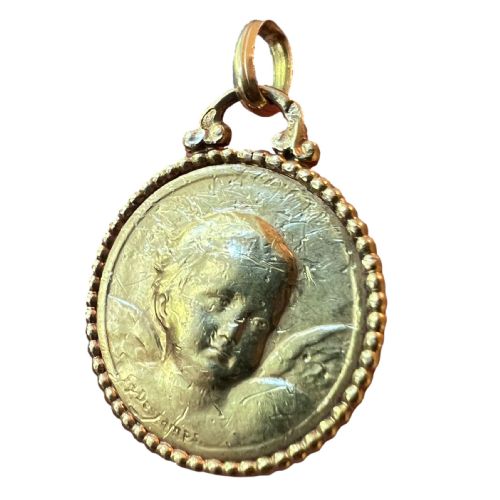
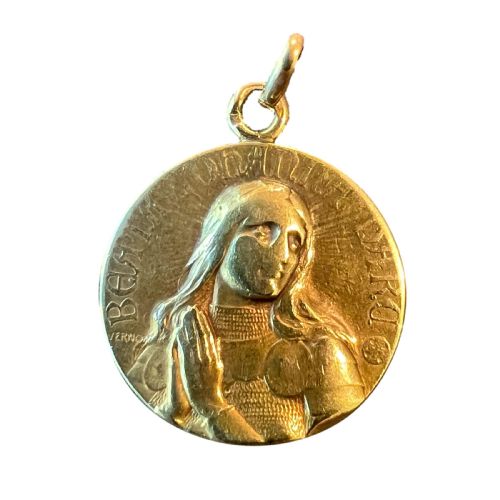
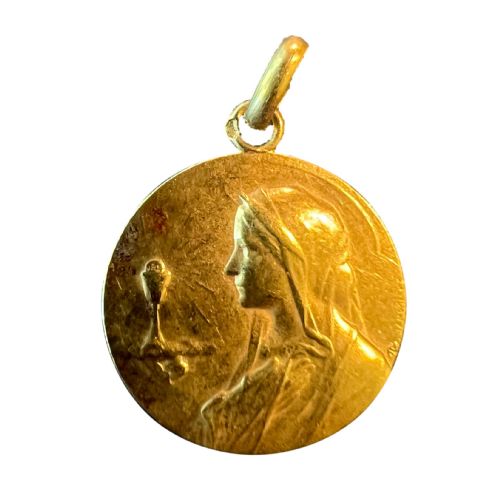
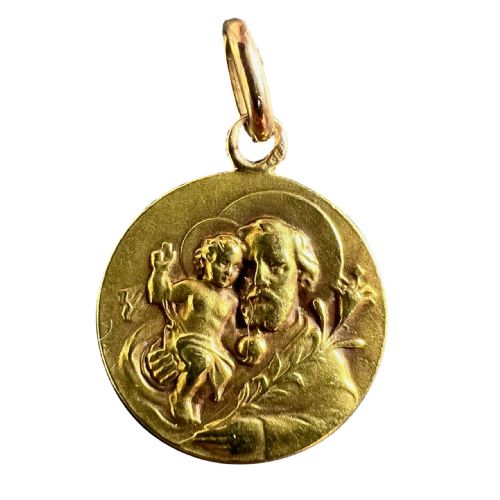
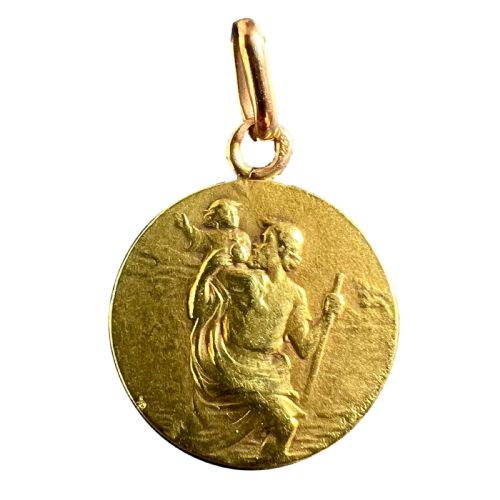
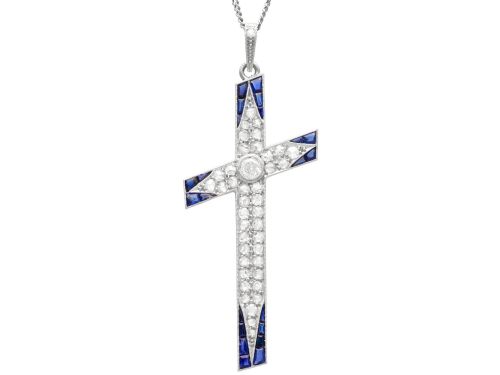
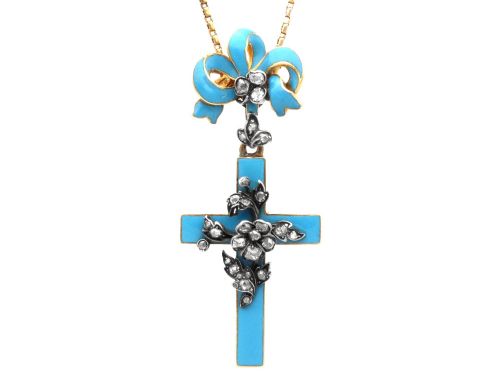
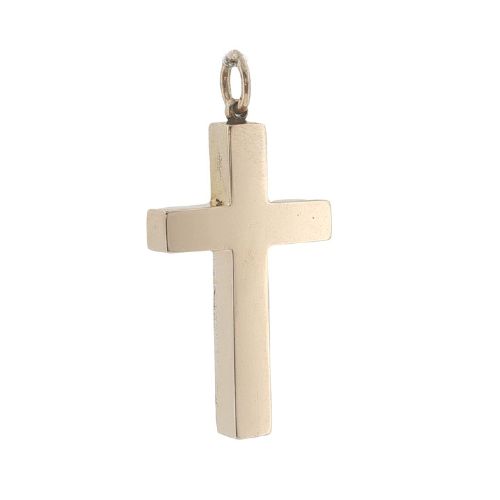
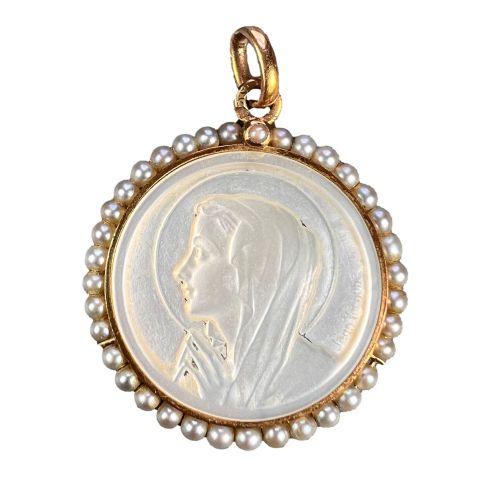
A gold religious pendant encompasses devotional medallions, crosses, and crucifixes made in yellow, rose, and white gold. These pieces celebrate figures such as the Virgin Mary, Jesus Christ, Madonna and Child, and various saints.
The versions most frequently met on this page originate from French workshops dating between 1890 and 1950, alongside British examples from the Victorian and Edwardian eras. Forms range from simple engraved crosses to intricate circular medals.
Many items function simultaneously as charms, brooches, or necklaces, reflecting the versatile ways past owners wore their faith. The design vocabulary draws heavily from Art Nouveau naturalism and clean Art Deco geometry.
Materials and construction
Makers utilised 18ct and 9ct yellow, rose, and white gold as the primary structural metal for these pendants. Gold is frequently paired with contrasting materials such as silver inlay, mother of pearl, and seed pearls.
Surface decoration often involves translucent plique-a-jour or coloured enamel work to highlight robes, halos, and floral motifs. Hand engraving provides crisp detailing on the reverse or borders of medallions.
Selected pieces incorporate gemstones including diamonds to accent crosses and frames. Metal components are cast, stamped, or pierced before being hand-finished by skilled jewellers.
Gold Religious Pendant Retail Price Guide 2026
Typical asking prices for gold religious pendant among the pieces listed under this phrase on Sellingantiques today, from the lower quarter to the upper quarter. They describe what is for sale here now, not the wider market.
The selection spans the Victorian, Edwardian, Art Nouveau, and Art Deco design movements.
Evaluating quality and execution
The application of enamel, such as delicate plique-a-jour work, demands exceptional technical skill from the artisan. Smooth surfaces and secure setting of pearls or diamonds indicate careful craftsmanship.
Signed medals by documented designers carry distinct artistic merit through composition and proportion. The weight and gauge of the gold used in the chassis further establish the standard of manufacture.
Emile Monier·Paul Brandt·Mazzoni·Pageli Perriat·Emile Dropsy·Guilbert·Vernon·Sellier·Rasumny·Ovide Yencesse·Tairac·Tschudin·Jules Holy
The Gold Religious Pendant Glossary
- Plique-a-jour
- An enamelling technique where translucent enamel is fired without a backing, resembling miniature stained glass. This method allows light to pass directly through the coloured sections.
- Miraculous Medal
- A specific devotional medal associated with Catherine Labouré, depicting the Virgin Mary standing on a globe. It is one of the most common Catholic medal designs found in antique jewellery.
- Sacred Heart
- A traditional Catholic symbol representing the heart of Jesus Christ as a vital source of divine love for humanity. It is frequently depicted with flames, a crown of thorns, or rays of light.
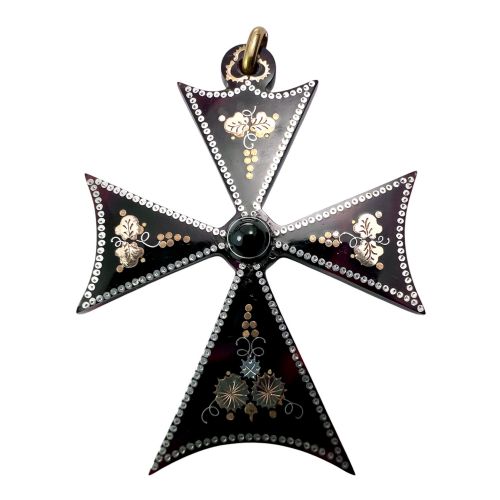
- Pique
- A method of inlaying tiny pins of gold or silver into tortoiseshell or other materials to form geometric or floral patterns. This decorative technique appears on select Victorian cross pendants.
- Medallion
- A circular or oval metal disc bearing a pictorial or written commemoration on one or both sides. These are designed to be suspended from a chain as a pendant.
Gold Religious Pendant: Frequently Asked Questions
What do these pendants depict?
These pieces primarily portray Christian iconography, including the Virgin Mary, Jesus Christ, Madonna and Child, and specific saints like Saint Christopher and Saint John the Baptist. Crosses and crucifixes also feature prominently across the collection.
Designs often incorporate symbolic elements such as the Sacred Heart, floral motifs, or hunting horns depending on the specific devotion or commission.
How do I date a gold religious pendant?
Dating relies on hallmarks stamped on the jump ring or edge of the metal, stylistic cues from periods like Art Nouveau and Art Deco, and sometimes engraved inscriptions on the reverse. British pieces frequently carry assay office marks and date letters.
French pieces from the late nineteenth and early twentieth centuries often feature the eagle head hallmark indicating eighteen-carat gold standard. Maker signatures also help narrow the production decade.
Were these worn daily?
Historical evidence suggests these pendants served as personal devotional items worn close to the body on chains or ribbons. Many show gentle wear consistent with long-term daily use by their original owners.
Some double as brooches or feature secure loop attachments, indicating they adapted to changing fashion over the course of a lifetime.