



Gold Porcelain Pot Pourri
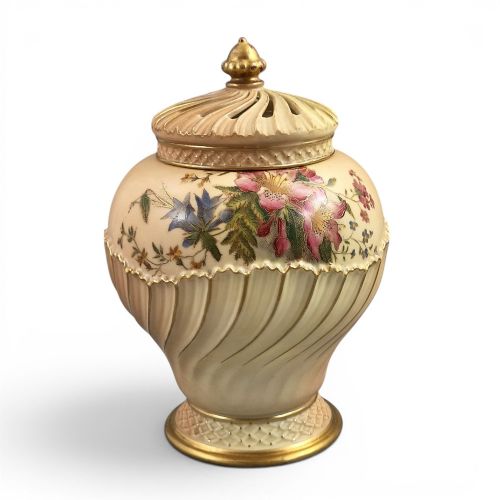
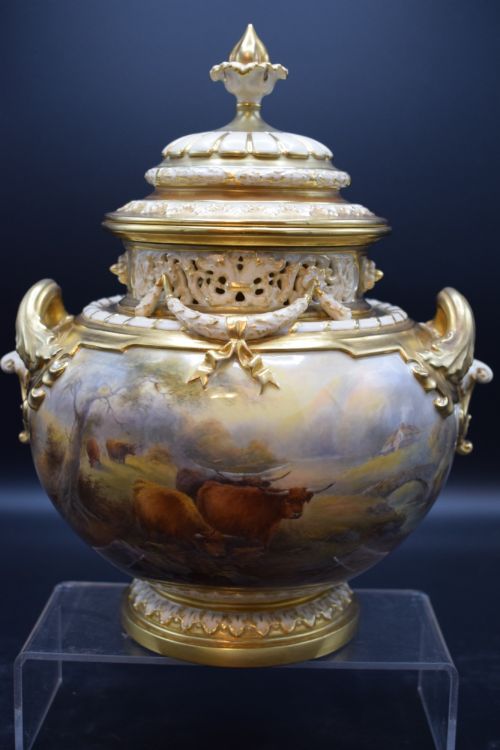
Gold porcelain pot pourri brings scented dried flowers into the room through pierced lids and painted ceramic bodies.

Gold Porcelain Pot Pourri
Gold porcelain pot pourri vessels take the form of jars, urns, and vases designed to hold aromatic plant mixtures. These decorative containers appear across several periods including Edwardian times alongside mid-twentieth century decades.
The objects frequently feature specialised crown covers or pierced lids intended to release scent while containing the dried petals. Surviving examples demonstrate forms ranging from single lidded jars to three-piece garniture sets.
How they were made
Makers shaped fine porcelain and bone china into bulbous vase bodies and pierced covers before applying detailed ceramic pigments. Artisans then added gold leaf and rich gilding to highlight shoulders, handles, and finials.
Many of these decorative pieces rely on hand-painted enamel botanical motifs or fruit scenes applied directly onto the glazed ceramic surface. The fired porcelain provides a smooth white ground that contrasts with the applied metallic lustre.
Gold Porcelain Pot Pourri Retail Price Guide 2026
Typical asking prices for gold porcelain pot pourri among the pieces listed under this phrase on Sellingantiques today, from the lower quarter to the upper quarter. They describe what is for sale here now, not the wider market.
Several pieces bear the signature of artists who spent their days painting endless little peaches and pears on porcelain.
What varies in quality
The standard of painting determines the distinction between ordinary production pieces and superior examples. Works bearing named artist signatures display greater finesse in brushwork and botanical or fruit rendering.
The complexity of the ceramic form also influences the overall execution. Pierced crown covers and multi-piece sets require precise moulding and careful firing compared to simple single vessels.
Royal Worcester
The Gold Porcelain Pot Pourri Glossary
- Bone China
- A type of porcelain incorporating bone ash for enhanced translucency and strength. It forms a durable white body suitable for intricate painting.
- Gilding
- The application of gold leaf or powdered gold paint to ceramic surfaces. This metallic decoration accents rims, handles, and pierced covers.
- Enamel
- Opaque vitreous pigment fused to the porcelain surface through firing. It provides vibrant permanent colour for painted fruit and floral designs.
- Pot Pourri
- A mixture of dried fragrant plant material placed inside a vessel to perfume a room. The pierced lid allows the scent to escape gradually.
Gold Porcelain Pot Pourri: Frequently Asked Questions
What is gold porcelain pot pourri?
Gold porcelain pot pourri refers to ceramic jars and vases created to hold scented dried plant matter. These decorative vessels feature pierced covers designed to release fragrance into living spaces.
Such items combine fine ceramic bodies with painted decoration and gold leaf accents. They survive from various twentieth-century decades and the Edwardian era.
How were these pots used?
These vessels functioned primarily to fragrance domestic interiors using mixtures of dried flowers and spices. The pierced or crown-shaped lids kept the dry mixture contained while permitting the aroma to circulate.
Beyond their aromatic purpose, they served as ornamental mantelpiece and table ornaments. Their painted surfaces made them prominent decorative accessories in period homes.
How do I date these pieces?
Dating relies on factory marks stamped or painted on the underside of the porcelain body. Stylistic details such as painted fruit subjects or blush ivory grounds also point to specific production eras.
Comparing the shape number and signature styles helps narrow down the decade of manufacture. Edwardian examples differ distinctly in palette and finish from mid-century pieces.
Are the lids original?
Original covers fit the collar of the vase precisely and match the exact glaze and gilding of the body. Pierced crown covers are integral to the pot pourri function and design.
Matching the pattern number on both base and lid confirms completeness. Replacement covers often show subtle differences in ceramic tone or wear.