
Gold Ormolu Wall Appliques
These gold ormolu wall appliques deliver genuine period illumination and decorative weight, bringing historic French interiors straight to your walls.
Gold Ormolu Wall Appliques
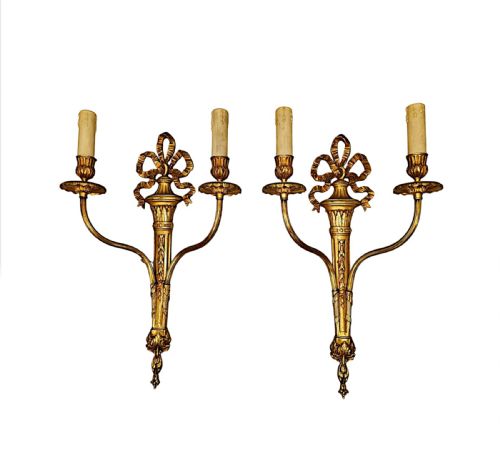
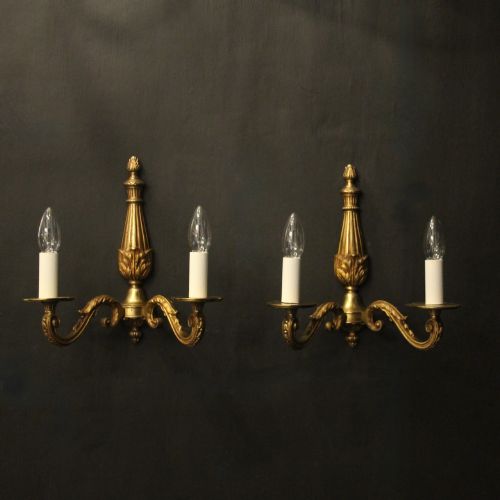
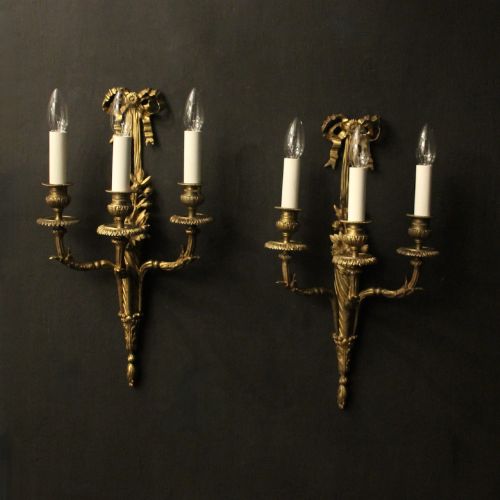
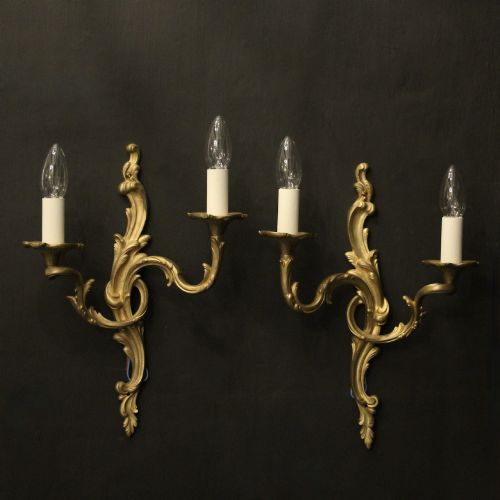
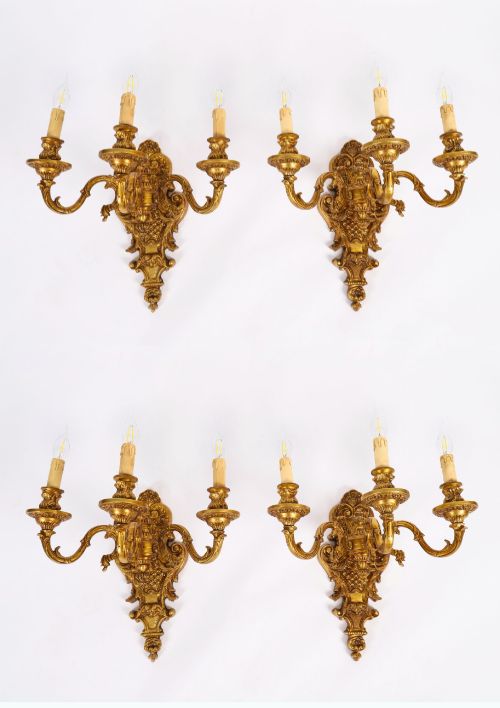
When you search for gold ormolu wall appliques, you encounter decorative wall fixtures designed to hold candles or electric bulbs while projecting metallic warmth across a room. These pieces function primarily as wall lights, wall sconces, and candelabras, bringing a sculptural layer of interior illumination to domestic spaces.
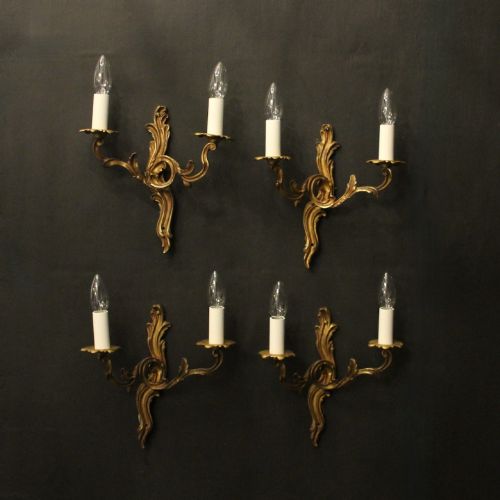
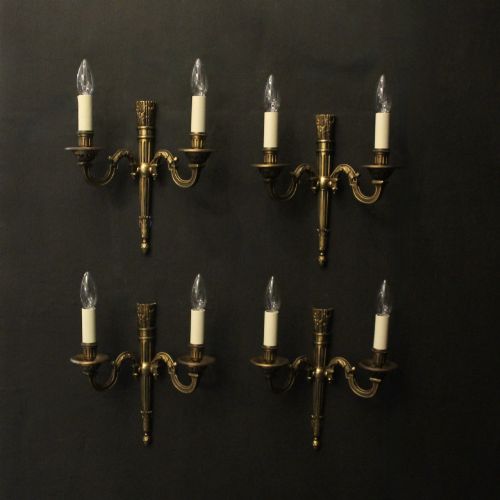
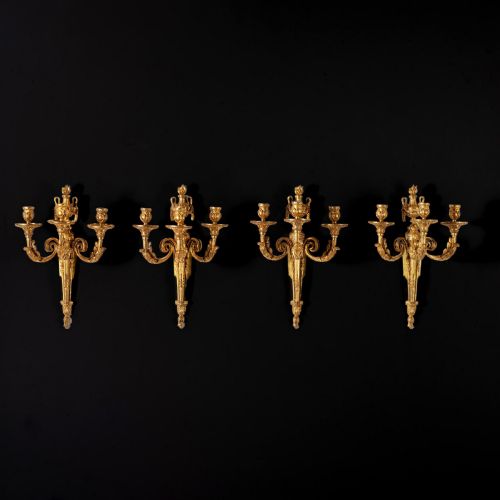
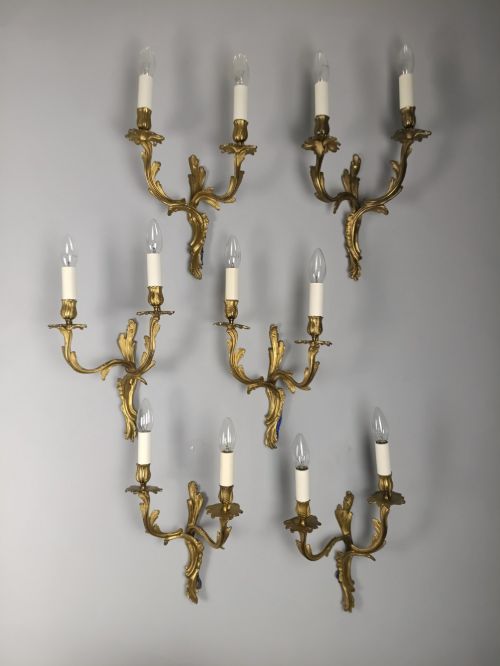
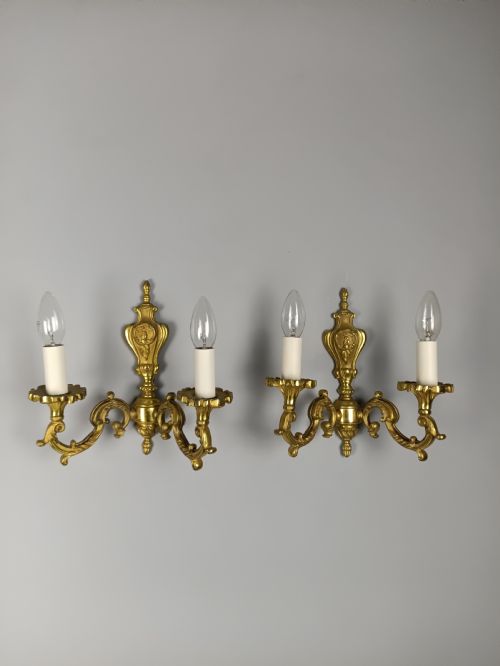
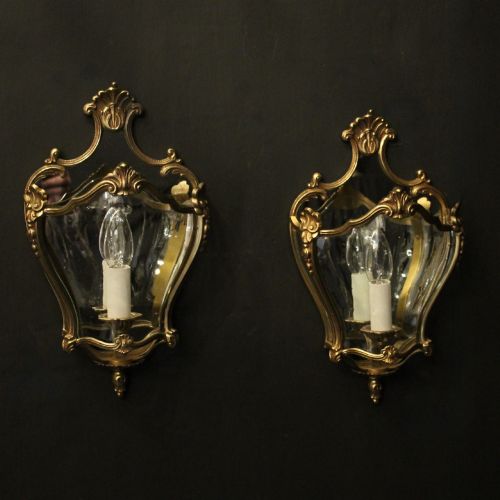
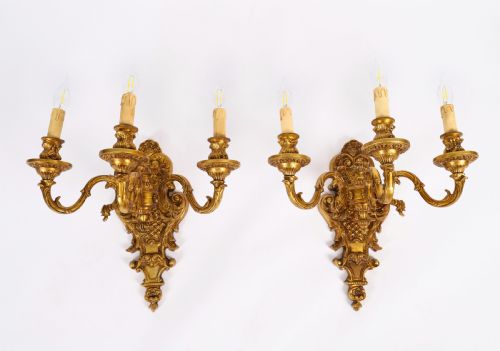
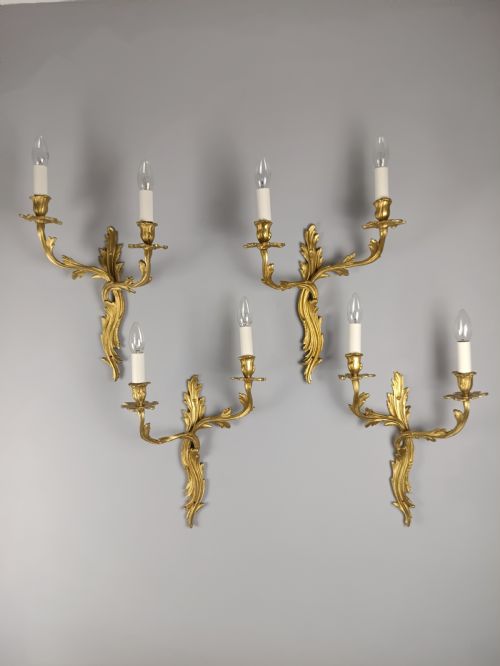
The versions most commonly met on this page span from the eighteenth century through to the early decades of the twentieth century, with a strong representation of French origins. You will frequently find matching pairs or larger sets of twin-arm and triple-arm fixtures shaped by historical revivals.
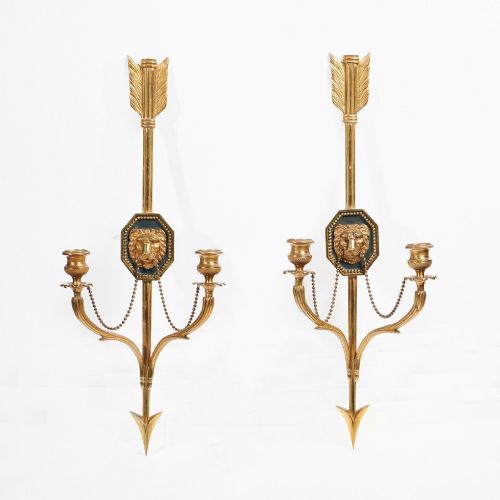
Makers and designers drew heavily on classical and decorative idioms, resulting in forms that range from asymmetrical Rococo scrolls to disciplined Neoclassical and Empire symmetries. These wall-mounted pieces often incorporate glass elements or furniture mount designs alongside standard branching arms.
Materials and construction
The primary construction relies on cast bronze, brass, and related metal alloys that provided the necessary structural rigidity for multi-branched wall lights. Artisans cast these metals in sections before assembling them into complex, decorative lighting configurations.
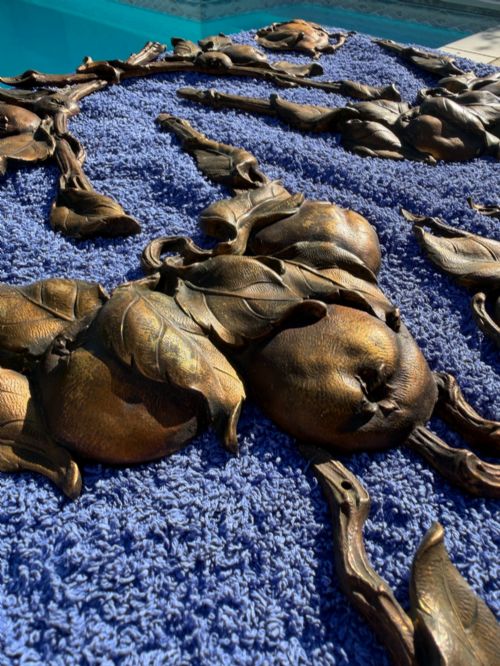
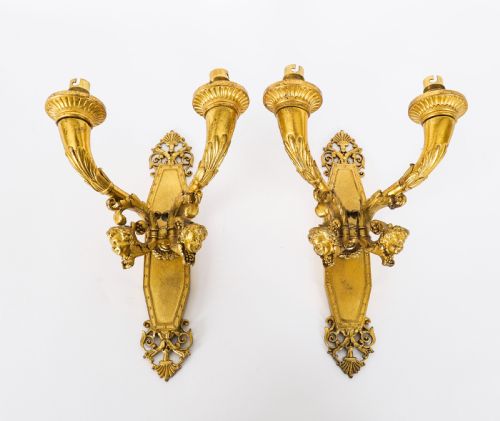
Surfaces received treatments of gold gilding, creating the characteristic ormolu or gilded bronze finish that reflects candlelight and ambient room light. This application required meticulous metalwork to ensure the gold layer adhered evenly across intricate cast details like acanthus leaves and cherubs.
Several heavy bronze pairs sneak past normal weight limits, practically requiring steel anchors just to hold up their gilded cherubs.
Distinctions in quality
Quality reveals itself in the crispness of the metal chasing and the depth of the original gilding, where superior examples retain sharp relief in foliage and figural elements. Finer castings display clean lines without surface pitting, whereas lesser pieces often show softened details from worn or repeated moulds.
The scale and weight of the fixture also dictate the tier of the piece, with substantial multi-branch appliques demonstrating more ambitious brass and bronze smithing. Integrated artistic attribution, such as maker stamps, further separates standard decorative hardware from high-end collectible examples.
Poix Blin·Henri Vian
The Gold Ormolu Wall Appliques Glossary
- Ormolu
- A golden surface finish created by applying finely ground gold mercury amalgam to bronze, or by modern electroplating methods that simulate the historic look. This technique protects the underlying metal while offering a rich metallic lustre.
- Applique
- A decorative wall-mounted lighting fixture or ornamental plaque designed to sit flush against wood paneling or plaster. These pieces project outward to hold candles or bulbs.
- Candelabra
- A branched lighting fixture holding multiple candles or light sources on distinct arms. They often feature central decorative shafts and symmetrical branching.
- Rococo
- An ornate design style characterised by asymmetric scrolls, shell motifs, and naturalistic curves popular in eighteenth-century France and later revival periods. This aesthetic emphasises fluid, organic movement.
- Neoclassical
- A decorative style inspired by classical antiquity featuring restrained symmetry, urns, flaming torches, and geometric proportions. It emerged as a reaction against the excessive curves of earlier periods.
Gold Ormolu Wall Appliques: Frequently Asked Questions
How do I install antique wall appliques safely?
Most antique wall lights require professional wiring and secure bracket mounting to support the heavy bronze or brass bodies safely against plaster or stud walls. Many pieces arrive already rewired for modern electrical standards while retaining their historic aesthetic.
Ensure your electrician checks the internal channels and backplates to accommodate current household voltage requirements without damaging the original metal structure.
What is the difference between an applique and a sconce?
In historical terminology, both terms describe wall-mounted lighting fixtures designed to project illumination into a room using candles or built-in light sources. Regional preferences often dictate the chosen word, though both refer to ornamental bracket lights.
On this page, the terms frequently overlap to describe ornate gilded metal fixtures featuring single, double, or triple arms.
How do I clean gilded bronze or ormolu safely?
Maintain the surface by gently dusting with a soft, dry cloth to prevent the accumulation of dirt within the intricate chased details of the metal. Avoid harsh commercial metal polishes, abrasive pads, or liquid cleaners that can strip away the delicate gold layer.
Professional conservation cleaning is recommended if the gilding has accumulated heavy tarnish or grime over decades of domestic use.
How can I tell a nineteenth-century revival piece from an eighteenth-century original?
Look closely at the casting techniques, screw types, and tool marks on the reverse side of the backplate to determine the likely manufacturing era. Eighteenth-century pieces typically exhibit hand-finished bronze work and specific assembly methods unique to period workshops.
Nineteenth-century revival appliques, such as those from the Louis XIV or Rococo revival movements, often use more standardised mechanical fasteners while maintaining exceptional artistic quality.