

Gold Ormolu Urns
Gold ormolu urns bring neoclassical presence to a room, combining cast gilt bronze with fine porcelain and marble across nineteenth-century French and English designs.
Gold Ormolu Urns
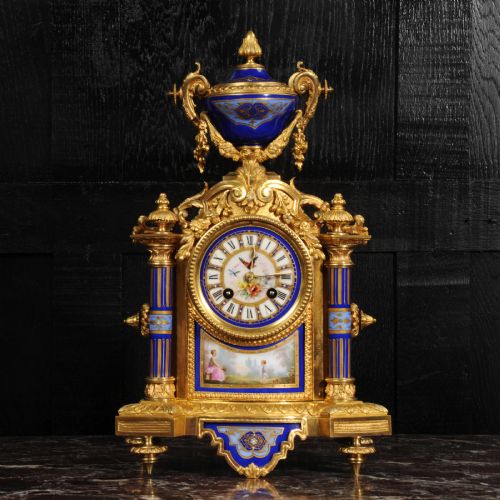
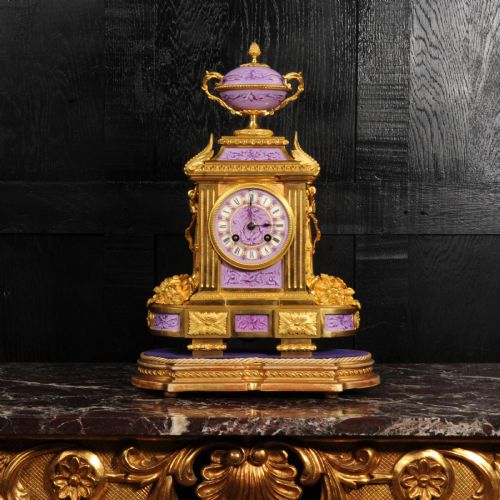
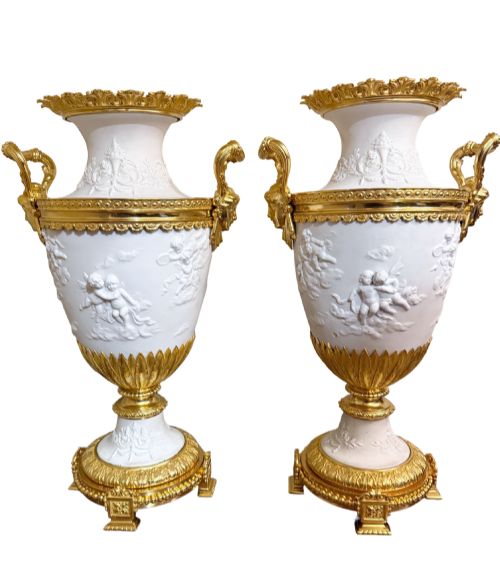
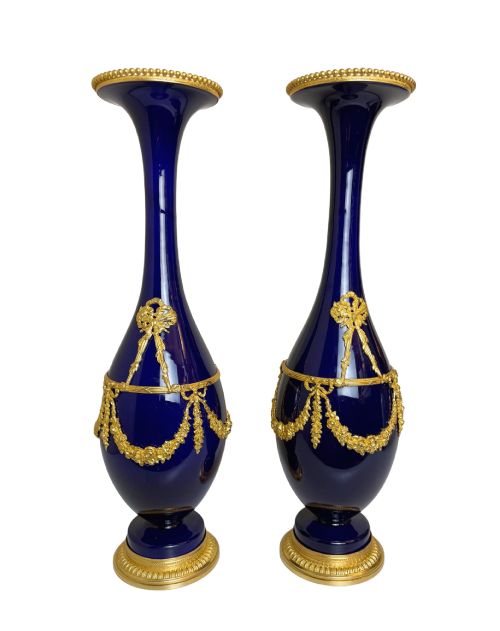
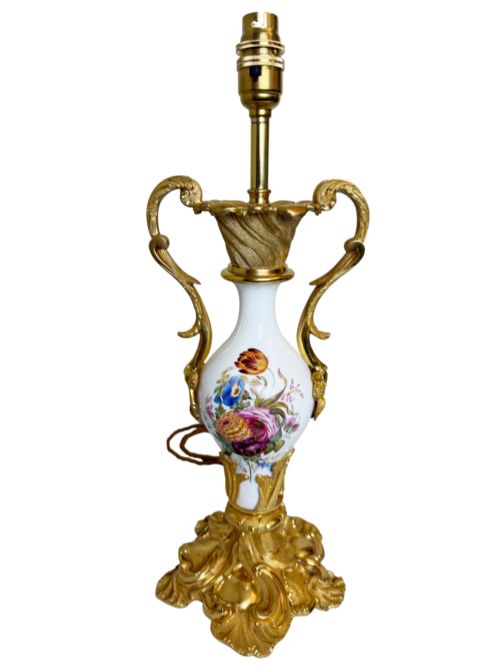
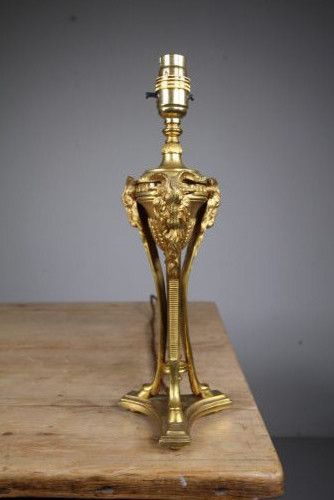
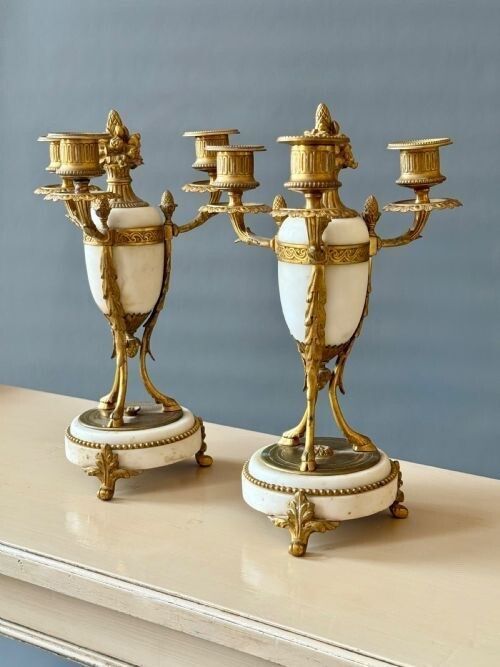
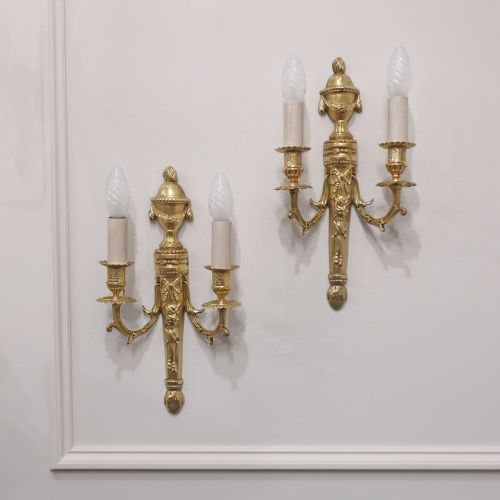
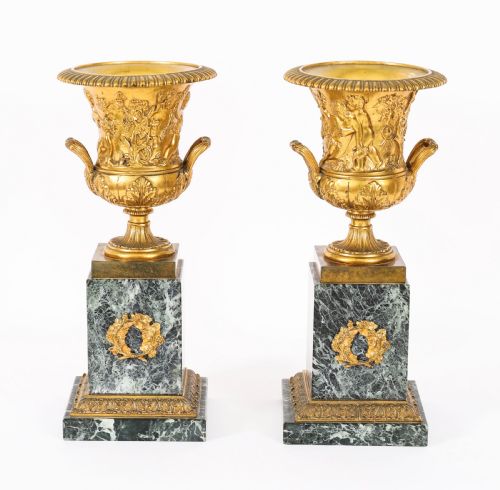
When searching for gold ormolu urns, collectors encounter a diverse array of nineteenth-century decorative metalwork, mantel clocks, and lamps. These items predominantly originate from French workshops adhering to Louis XVI, Empire, and Rococo Revival styles.
Grand Tour reductions of classical antiquities also appear frequently alongside practical conversions into table lamps. These diverse forms share a reliance on cast bronze finished with bright fire gilding.
Casting and gilding techniques
Makers utilised lost-wax or sand-casting methods to produce intricate bronze components, which required extensive hand-chasing to sharpen foliage, masks, and fluting. The resulting metalwork was then gilded using mercury amalgamation to achieve the characteristic deep ormolu lustre.
Porcelain elements, often imported from Sevres or produced in Chinese export styles, were selected to contrast with the warm tone of the gilt bronze mounts. Marble and onyx bases provided substantial weight and colour contrast for these ornamental vessels.
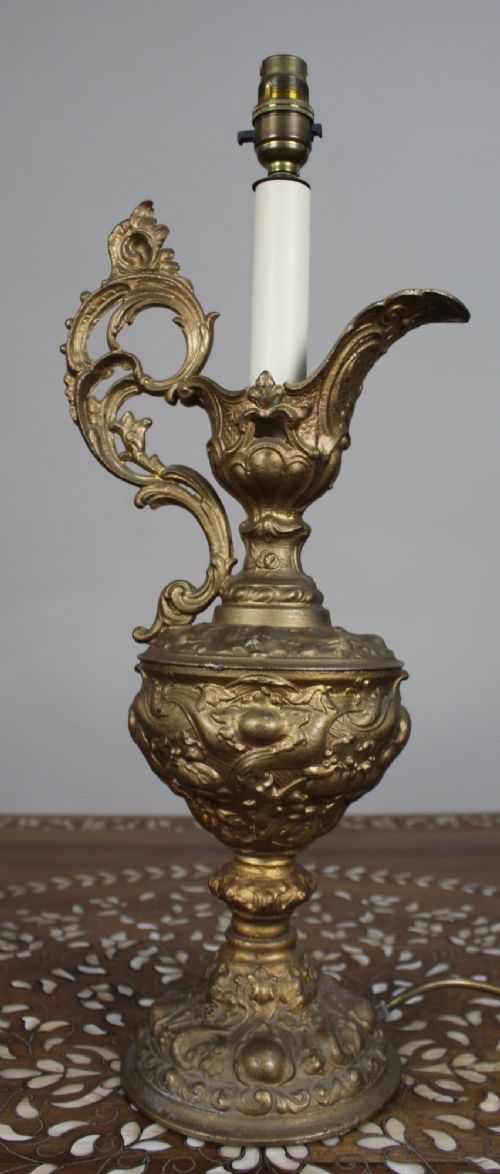
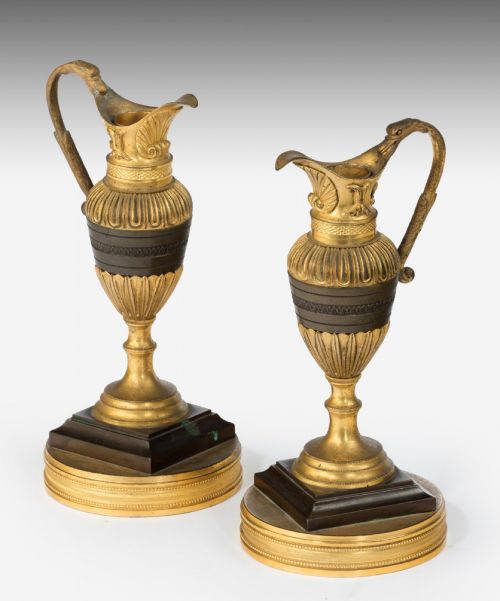
Object forms span mantel clocks, table lamps, ewers, and cassolettes created during the Victorian and Empire periods.
Craftsmanship and material selection
The distinction between ordinary production and finer items rests upon the crispness of the bronze chasing and the depth of the mercury gilding. Superior examples display sharply defined ornamentation without smoothing or softening in the recessed areas.
Harmony between the incorporated materials also determines overall merit, where high-grade porcelain panels or unblemished Sienna and white marble plinths elevate the piece. Maker attribution, through stamped movements or foundry marks, further separates standard decorative wares from notable works.
Japy Freres·Achille Brocot·Casier·Louis Goret·Pons De Paul·A.D Mougin
The Gold Ormolu Urns Glossary
- Ormolu
- Gilded bronze produced through a mercury amalgamation technique. This historic process yields a durable, deep golden surface distinct from modern electroplating.
- Cassolette
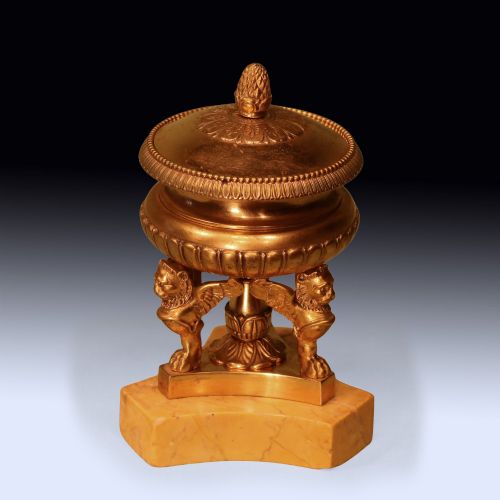
- A decorative vessel with a reversible lid that functions as either a vase or a burner. These dual-purpose objects often feature elaborate ormolu mounts and marble bodies.
- Champlevé
- An enamelling technique where troughs are dug into a metal surface and filled with vitreous paste before firing. This colourful decoration frequently complements ormolu frames on nineteenth-century French pieces.
- Grand Tour
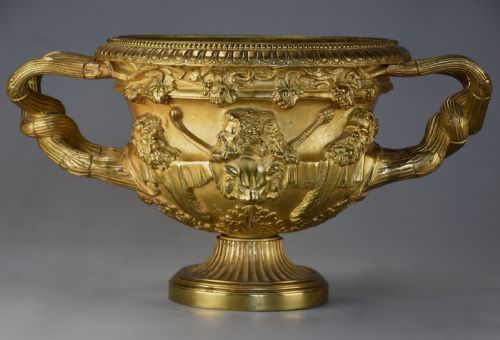
- Eighteenth and nineteenth-century travel across continental Europe by the wealthy to collect classical antiquities and miniature bronzes. Reductions of famous monuments like the Warwick Vase stem from this tradition.
Gold Ormolu Urns: Frequently Asked Questions
What is ormolu?
Ormolu refers to finely chased bronze that has been coated with a gold and mercury amalgam and heated until the mercury vapourises. This leaves a rich, durable golden layer on the metal surface.
Unlike modern electroplate, historic fire gilding exhibits a distinct warm lustre that does not wear down easily to reveal base metals underneath.
How were urns used historically?
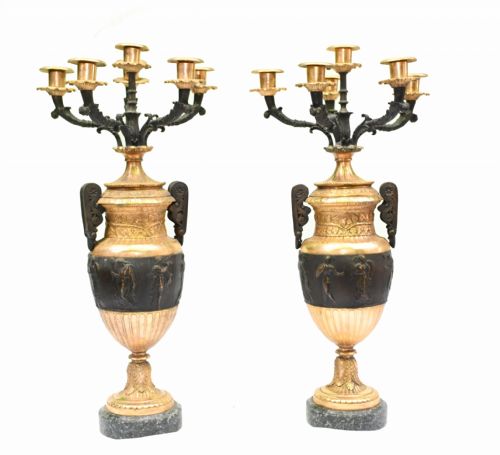
These decorative vessels served primarily as mantel ornaments, often arranged in garniture sets alongside matching clocks or candelabra. They reflected classical tastes in formal nineteenth-century drawing rooms.
Some designs, such as cassolettes or perfume burners, offered dual functions with reversible lids for domestic display.
How do I care for gilt bronze?
Dust gilt bronze gently with a soft, dry brush to prevent accumulation in the intricate recesses of the chasing. Avoid harsh commercial metal cleaners that strip away historic fire gilding.
Keeping pieces away from direct moisture and handling them minimally helps preserve the delicate surface finish over time.
How do I identify Louis XVI style?
Louis XVI style pieces display strict symmetry, straight fluted columns, and neoclassical motifs like acanthus leaves and ram's head masks. This aesthetic emerged in reaction to the curving asymmetry of earlier Rococo designs.
In nineteenth-century revivals, makers closely copied these eighteenth-century architectural proportions and decorative vocabularies.