
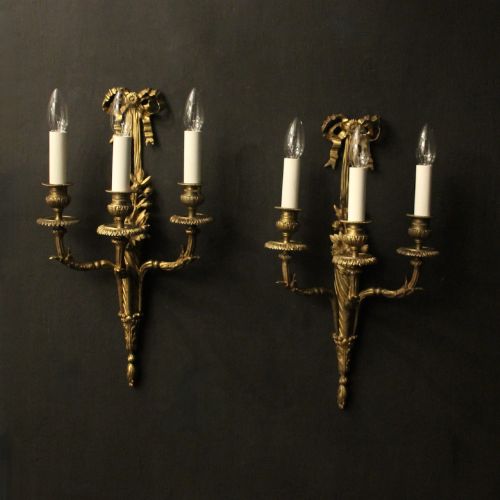
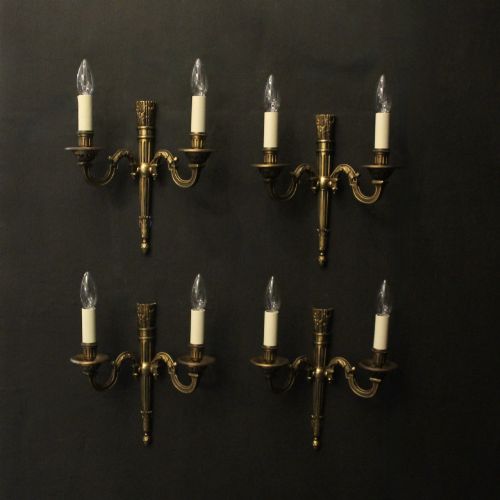
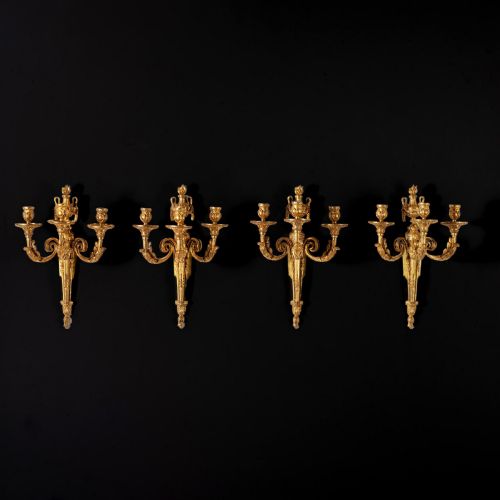
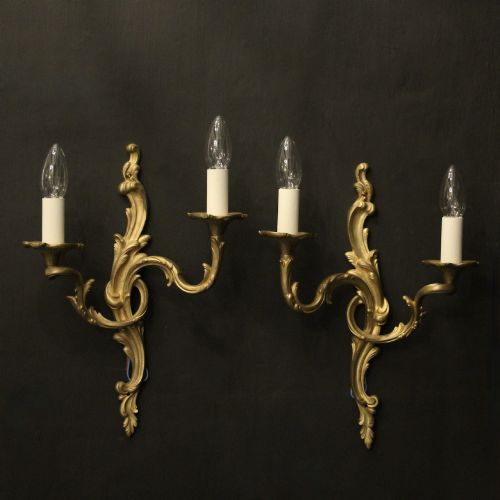
Gold Ormolu Sconces
Gold ormolu sconces bring warm, reflective candle or gas light to a room through intricately cast metal wall fixtures.
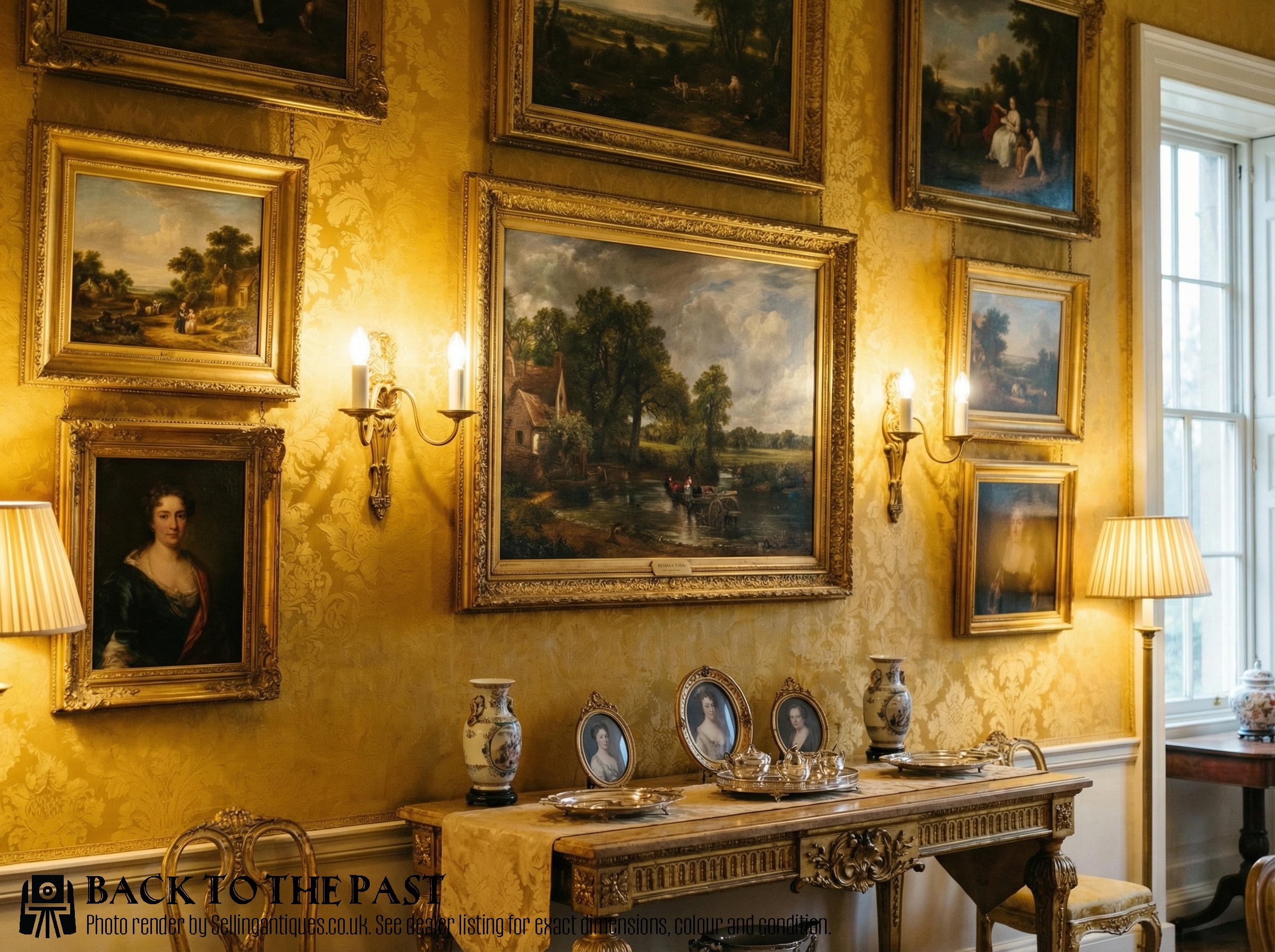
Gold Ormolu Sconces
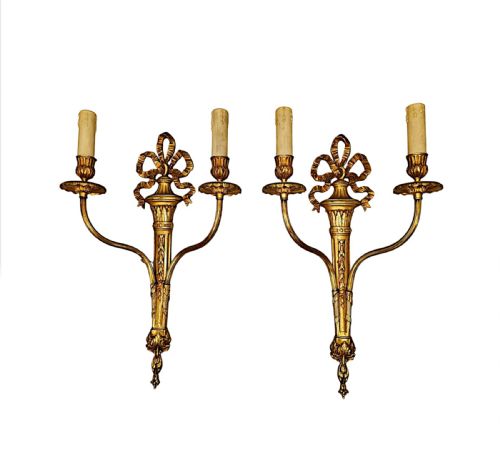
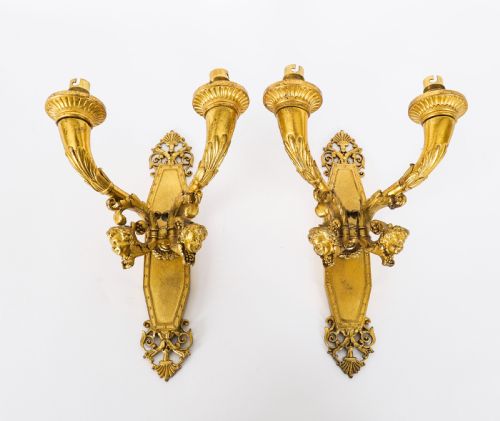
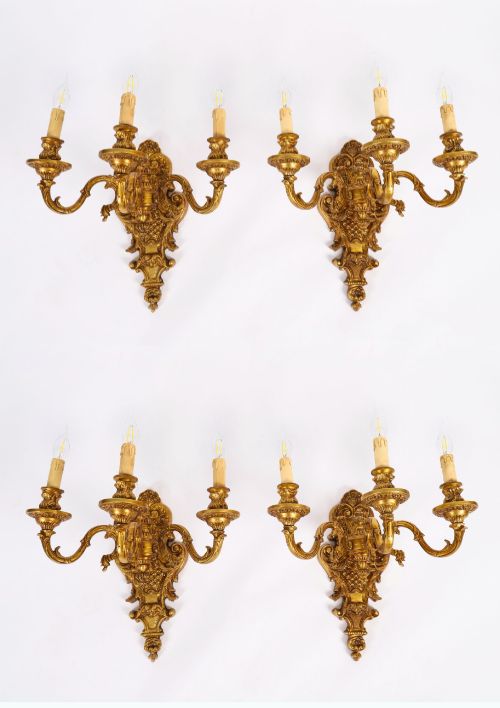
Gold ormolu sconces are wall-mounted lighting fixtures designed to hold candles or illuminate interiors with metallic reflection. When searching this phrase, a buyer encounters pieces primarily originating from France, spanning the eighteenth, nineteenth, and early twentieth centuries.
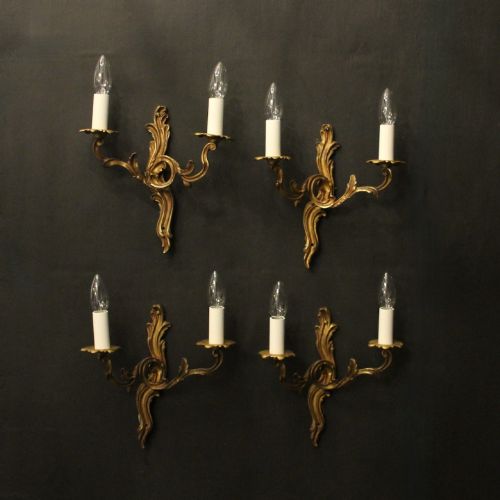
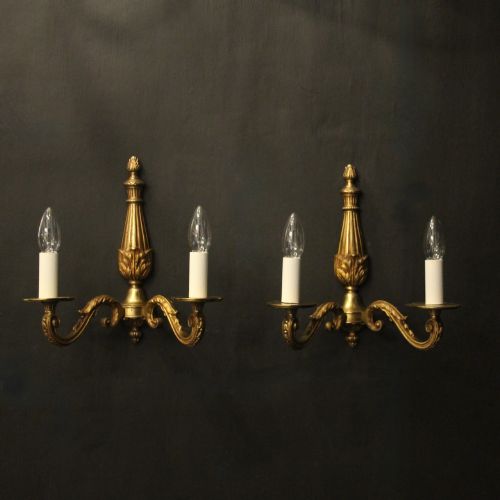
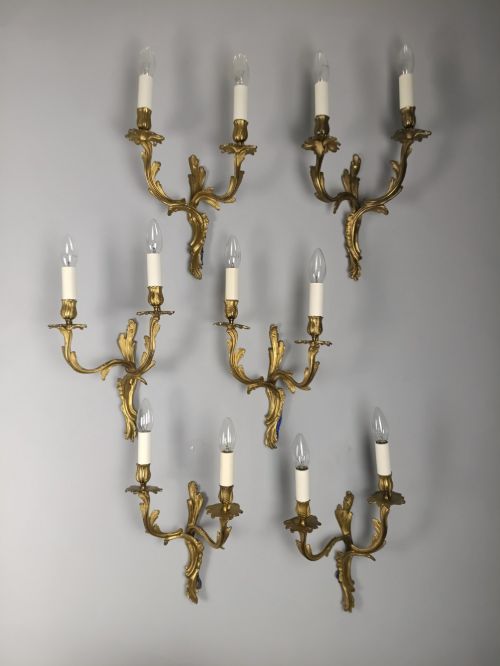
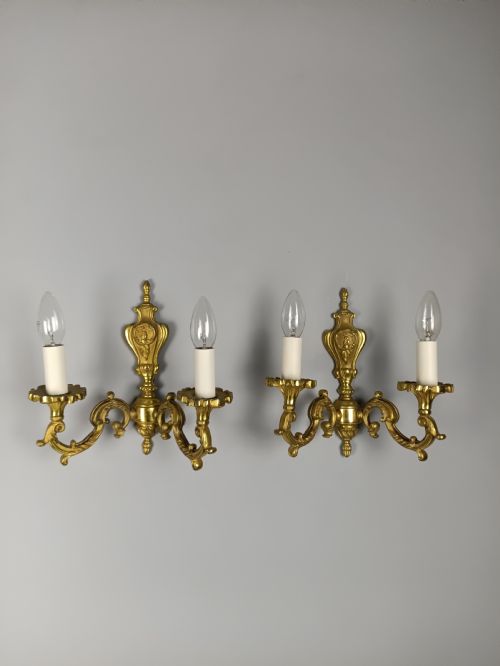
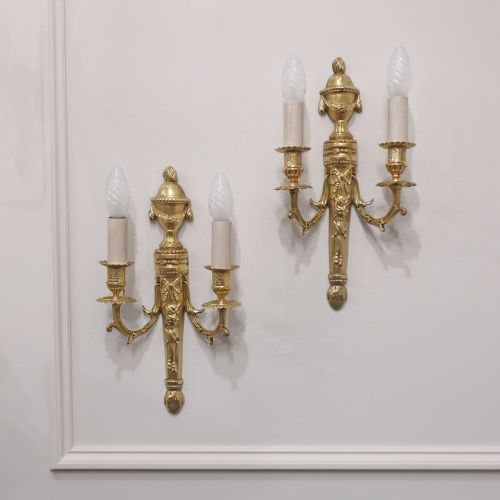
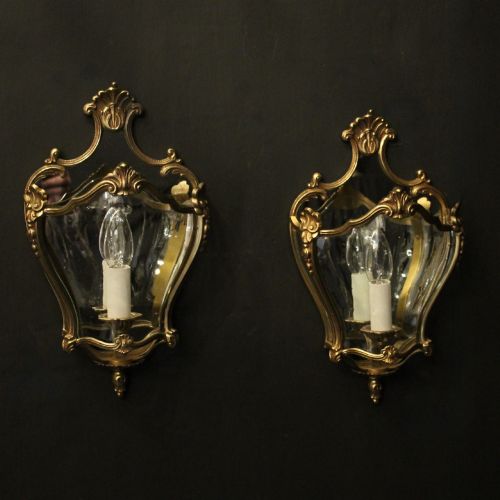
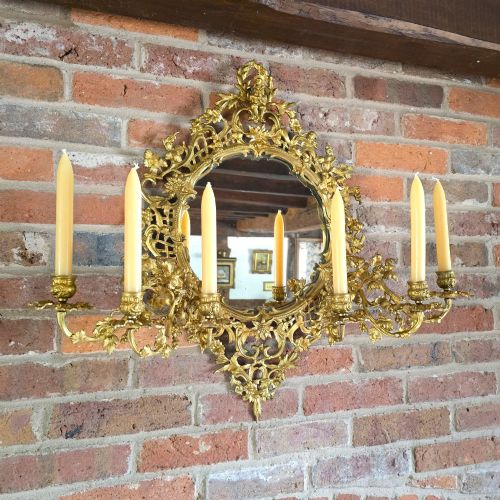
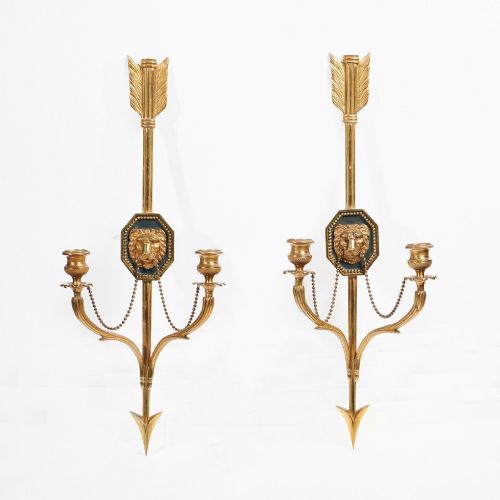
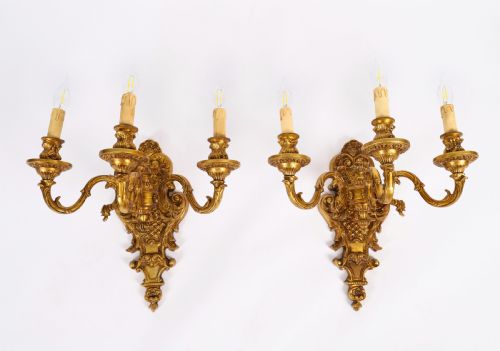
The selection on this page consists heavily of twin and triple arm wall lights, alongside larger sets of four or six matching pieces. Forms range from classical torch designs to elaborate rococo revival candelabras and half lanterns.
Most examples date from the nineteenth and early twentieth centuries, particularly around the eighteen-eighties, nineteen-hundreds, and nineteen-twenties, reflecting revivalist periods inspired by earlier French royal tastes.
Materials and Casting
These fixtures are constructed using bronze, brass, and metal substrates that receive a layer of applied gilding. Ormolu specifically refers to the high-status technique of applying finely ground gold-mercury amalgam to bronze, though later pieces utilise modern gilding or brass plating.
Foundry work relied on lost-wax or sand casting methods to achieve deeply textured surfaces, which were then chased with chisels and punches to sharpen botanical and scroll motifs. Glass components and marble elements occasionally accompany the metalwork in neoclassical torch and candlestick configurations.
Several pairs preserve the exact candle-drippage height where Victorian residents once pushed beeswax down into the sconce sockets.
The Distinction in Craft
The distinction between standard production and exceptional work lies in the depth and sharpness of the hand-chasing on the metal surface. Crisp leaf veining, deep undercut scrolling, and clean joints separate superior castings from softer, commercially mass-produced alternatives.
Weight and substantial metal gauge indicate higher quality construction, particularly in multi-branch configurations where arm stability matters. Original gilding preservation and coherent patination across matching sets also dictate the visual coherence of the fixture on the wall.
Casier
The Gold Ormolu Sconces Glossary
- Ormolu
- Gilded bronze, derived from the French term ou moulu meaning ground gold. It describes objects decorated with a gold-mercury amalgam applied to a bronze base.
- Sconce
- A wall-mounted lighting fixture designed to project illumination into a room using candles or later electric fittings. These typically feature one or more projecting arms.
- Applique
- A French term frequently used interchangeably with wall sconce to describe ornamental light fittings attached directly to panelling or plaster walls.
- Girandole
- An ornamental branching wall light or candelabrum, often incorporating a mirrored backplate to multiply the flickering reflection of the candles.
- Chasing
- The manual post-casting process of refining metal surfaces with hammers, punches, and chisels to add texture and detail to cast bronze.
Gold Ormolu Sconces: Frequently Asked Questions
How do I clean gold ormolu sconces?
Dust these fixtures gently with a soft, dry brush to prevent the accumulation of dirt in recessed chasing. Avoid abrasive metal polishes or chemical dips, which strip the delicate surface gilding.
For stubborn grime, use a slightly damp cloth with mild soap, followed immediately by thorough drying with a soft lint-free towel.
Were these sconces originally wired for electricity?
Almost all nineteenth-century and earlier sconces were originally manufactured exclusively for wax candles or oil. Electrification typically occurred during later twentieth-century residential updates.
When living with these pieces, check whether existing wiring runs internally through the original cast arms or externally along the backplate.
How do I distinguish Louis XIV from Louis XVI styles?
Louis XIV designs feature heavy, symmetrical, and theatrical ornamentation with bold architectural proportions. Louis XVI styles introduce lighter neoclassical geometry, straight tapering lines, ribbons, and symmetrical floral swags.
Examining the underlying casting style helps date revival pieces accurately to the nineteenth century.