



Gold Ormolu Candle Stand
A gold ormolu candle stand brings genuine warmth and historical presence to a room, offering the unmistakable glow of gilded metal shaped during past centuries.
Gold Ormolu Candle Stand
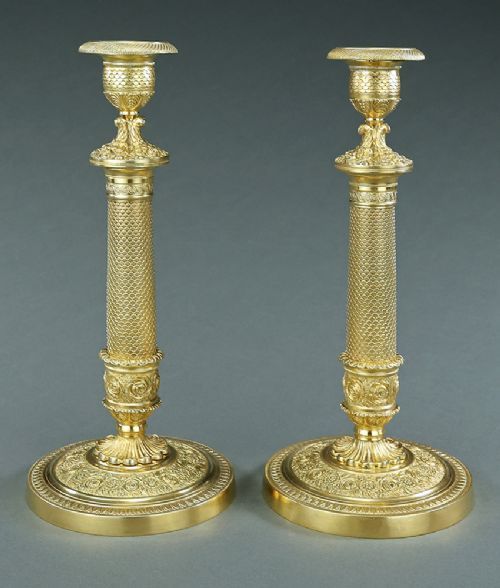
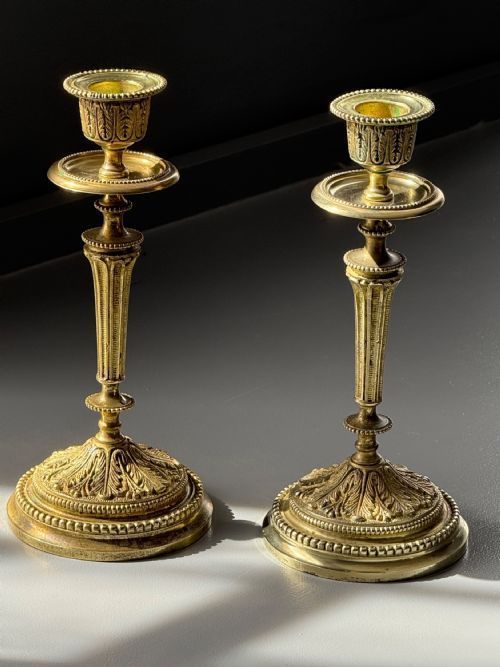
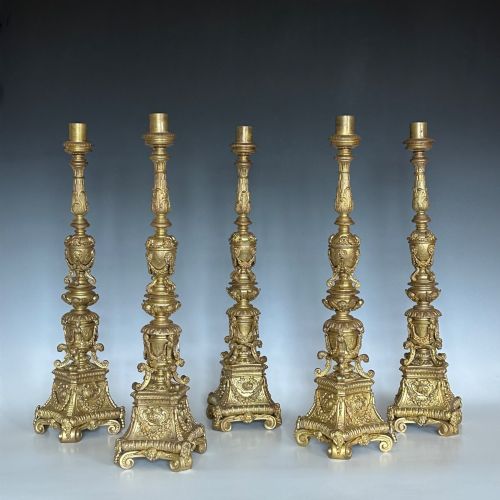
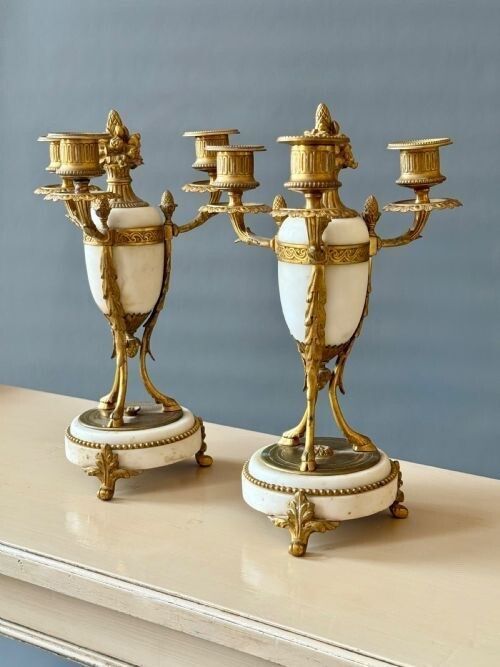
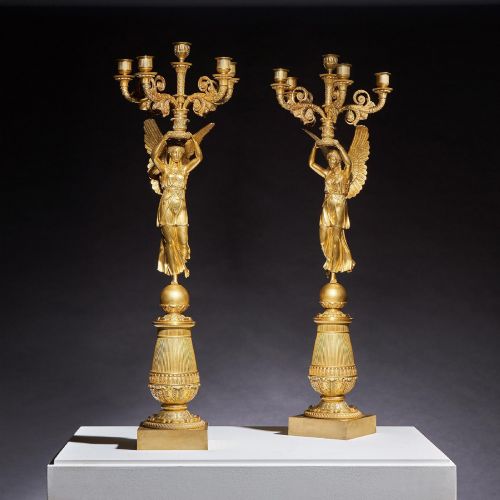
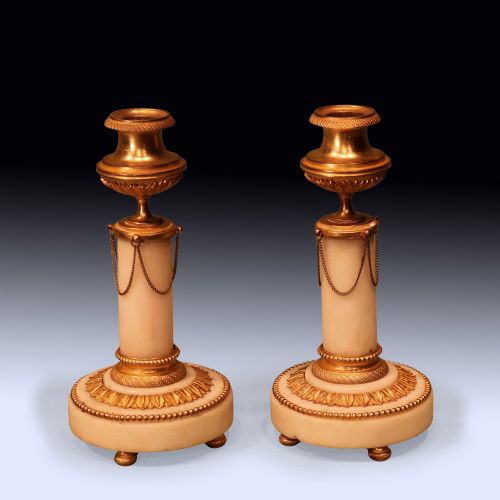
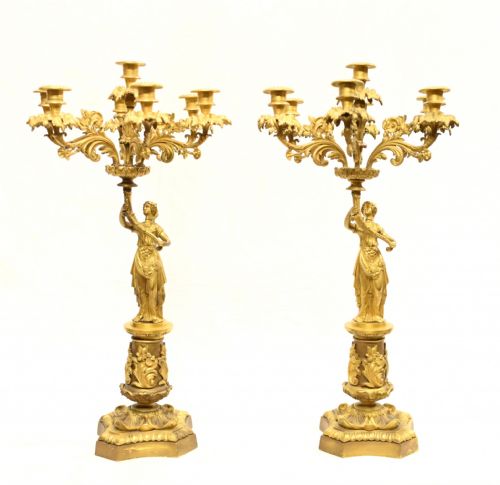
A gold ormolu candle stand encompasses gilded bronze, brass, and ormolu candleholders originating primarily from French and English workshops across the eighteenth and nineteenth centuries. These pieces range from single candlesticks to multi-arm candelabra and small desk pieces, frequently incorporating materials like white marble or porphyry.
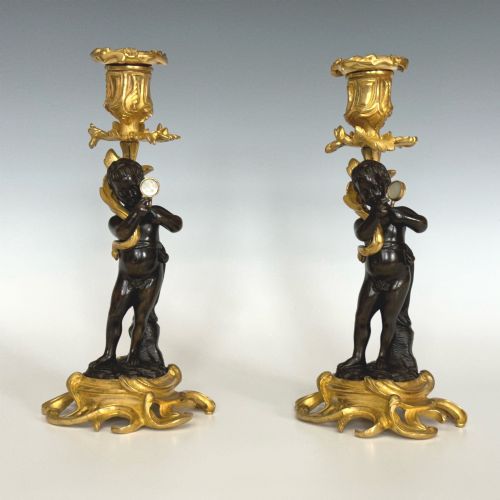
The selections available here lean heavily toward nineteenth-century French manufacturing, particularly pieces reflecting Empire, Louis XVI, and Regency styles. Buyers encounter matching pairs designed for mantelpieces and side tables, alongside figural subjects depicting cherubs, mythological figures, and seasonal allegories.
Materials and Technique
Makers utilised bronze and brass as the foundational metals, casting them using traditional lost-wax or sand-casting methods to achieve intricate sculptural detail. Once cast, the components underwent meticulous hand-chiselling to sharpen the decorative motifs and foliage before receiving their metallic finishes.
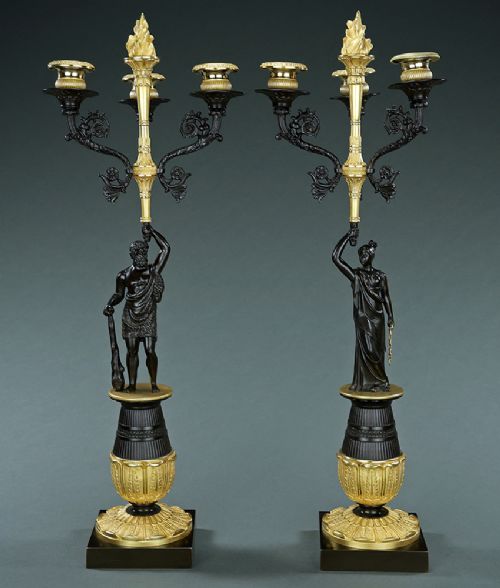
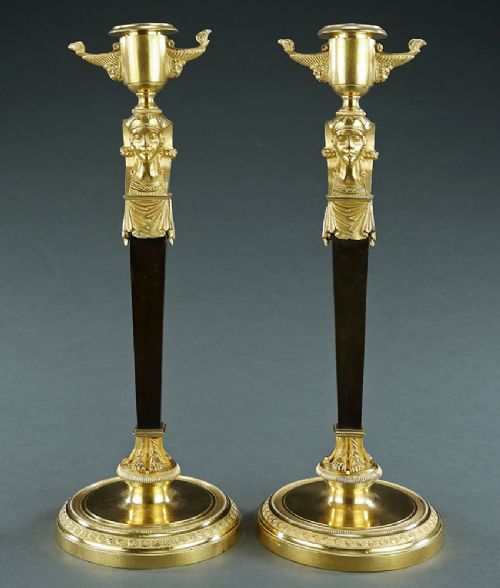
The characteristic golden surface comes from an amalgamation of finely ground gold applied via mercury gilding or modern electroplating, creating the durable ormolu finish. This surface work is frequently paired with contrasting patinated bronze elements, ebonised wood, or carved white marble bases.
Napoleon III era artisans occasionally hid candles behind porcelain birds and mythological figures, turning simple illumination into whimsical tabletop sculpture.
Assessing Quality
Construction methods also separate standard production from exceptional studio work. Finely made pieces fit together with concealed fixings and substantial metal weight, maintaining stability and balance across multi-armed candelabra without relying on modern structural reinforcements.
Pierre Philippe Thomire·Rabiat·Auguste Cain
The Gold Ormolu Candle Stand Glossary
- Ormolu
- A method of applying finely ground gold amalgam to a bronze base, creating a rich golden surface that resists tarnish. The technique requires careful heating to drive off the mercury, leaving a durable metallic layer.
- Chasing
- The manual process of refining a cast metal surface using small punches and hammers. Artisans use this technique to add texture, hair lines, and botanical detail to the raw bronze.
- Patinated Bronze
- Bronze that has been chemically treated to achieve a dark brown, green, or black surface colour. This dark tone provides visual contrast against the bright gleam of adjacent ormolu sections.
- Torchere
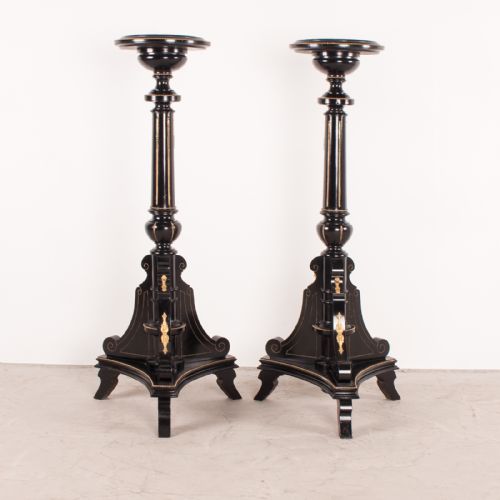
- A tall stand or pedestal originally designed to carry a torch or heavy candelabrum. In later periods, these forms adapted into decorative furniture pieces supporting lighting fixtures.
Gold Ormolu Candle Stand: Frequently Asked Questions
How do I clean ormolu?
Dust these pieces gently with a soft, dry brush to prevent dirt accumulation within the recessed chasing. Avoid abrasive metal polishes and chemical cleaners, which strip away the delicate gold layer.
If the metal requires deeper cleaning, use a damp cloth with mild soap and dry immediately with a soft cloth. Excessive moisture can damage underlying bronze or incorporated materials like white marble.
Are these stands electrified?
Many historical candelabra and candle stands remain in their original configuration designed strictly for wax candles. Some pieces have received careful conversion for electrical wiring over the decades.
Buyers should examine the specific listing details to determine whether the fittings retain their original candle sockets or contain modern wiring components. Professional inspection is recommended before connecting any vintage lighting to power.
How do I date a piece?
Dating relies on stylistic markers associated with specific design periods such as French Empire, Louis XVI, or the Regency era. Architectural motifs, costume details on figural supports, and the casting style offer clear clues to the decade of origin.
Material choices also help narrow the timeline, as nineteenth-century interpretations frequently combined white marble or porphyry bases with brighter ormolu finishes. Maker signatures or foundry stamps, when present, provide definitive chronological reference points.
Where were they placed?
These stands traditionally occupied prominent surfaces in formal drawing rooms, dining spaces, and boudoirs. Pairs frequently graced mantelpieces above fireplaces, reflecting light into the room from adjacent mirrors.
Smaller desk candlesticks served private studies and writing tables, while taller candelabra anchored sideboards or dedicated pier tables. Their primary function combined practical illumination with a display of household status.