

Gold Open Armchair
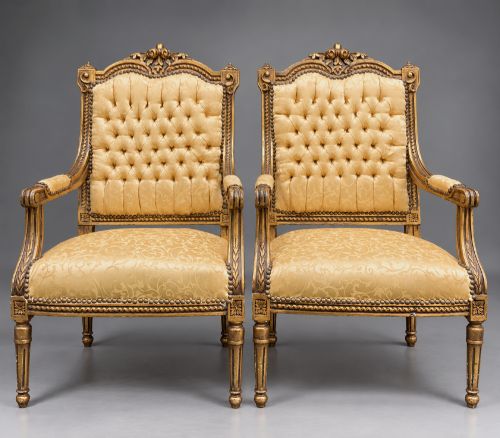
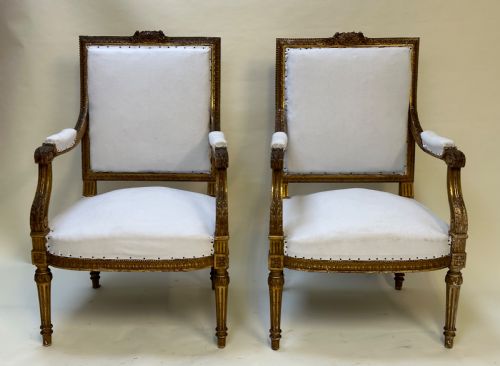
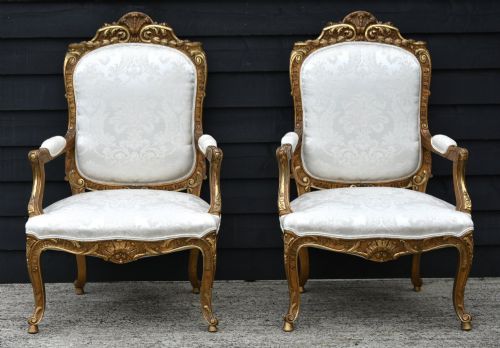
A gold open armchair brings gilt frames and exposed timber arms together for formal sitting rooms and salons.
Gold Open Armchair
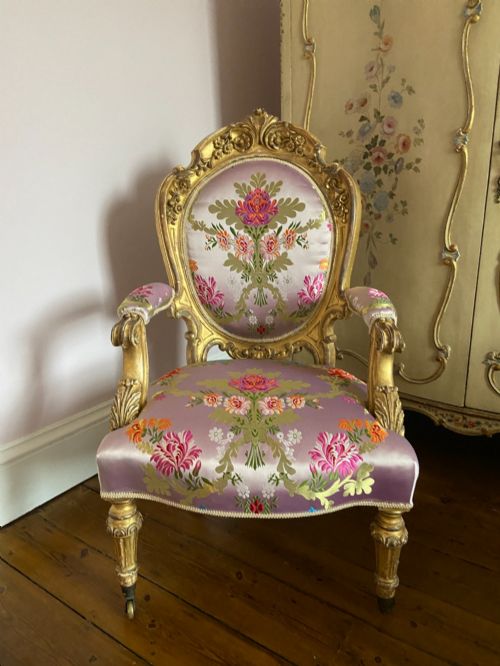
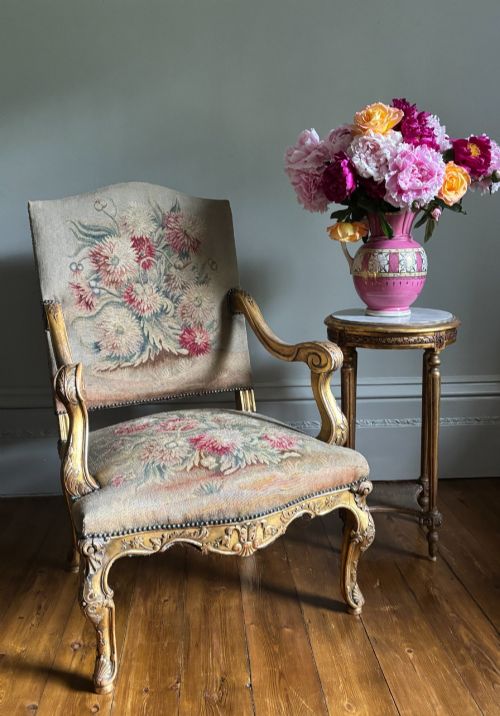
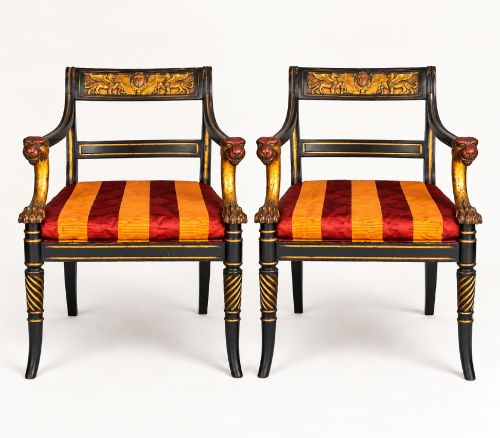
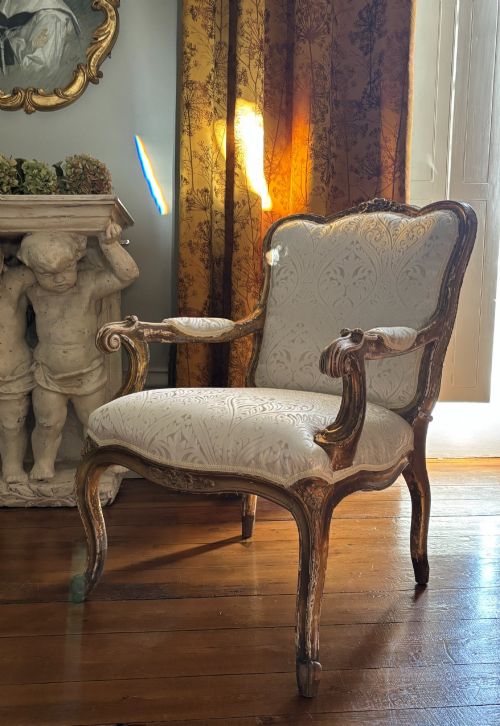
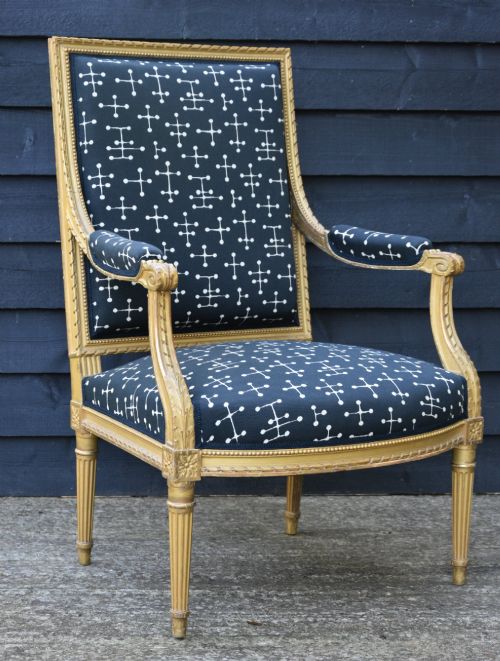
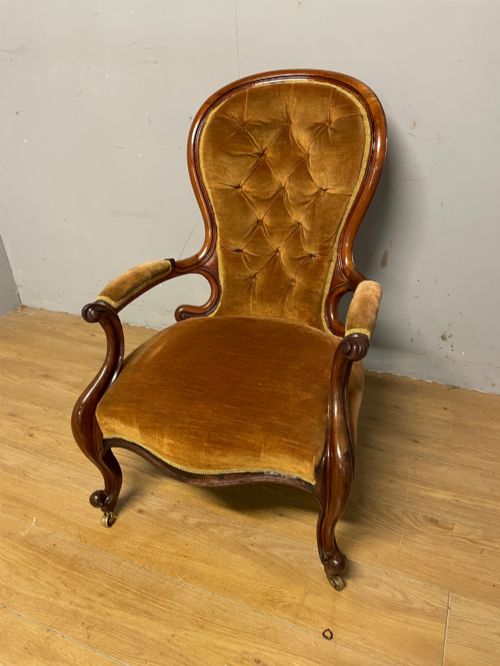
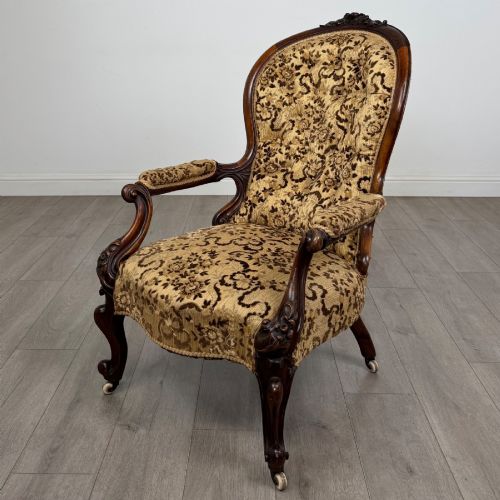
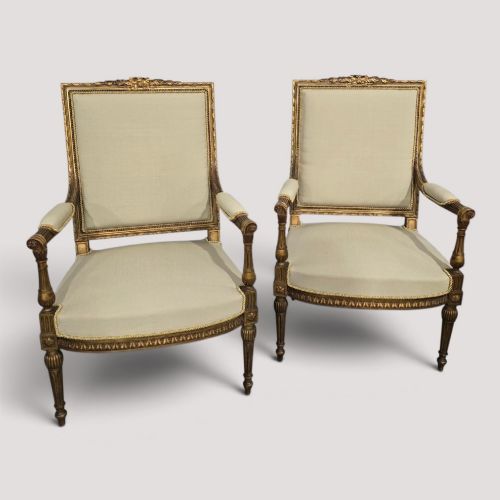
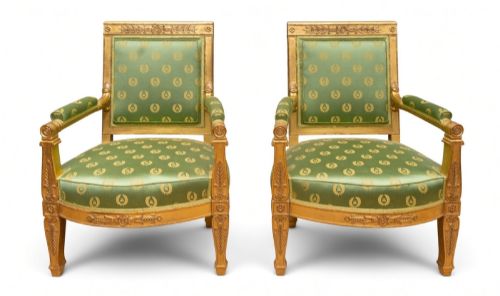
A gold open armchair is a seat defined by an exposed wooden frame finished in gold leaf or gilt paint, combined with open arms rather than fully upholstered sides. These pieces draw heavily from French court aesthetics and British revival movements, spanning periods from the eighteenth century through to the early twentieth century. Buyers seeking this phrase encounter grand French Louis styles, Regency revivals, and Victorian interpretations designed for display and formal repose.
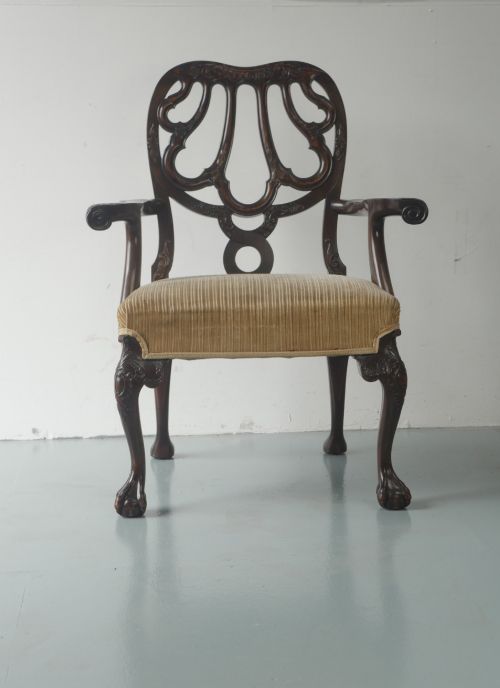
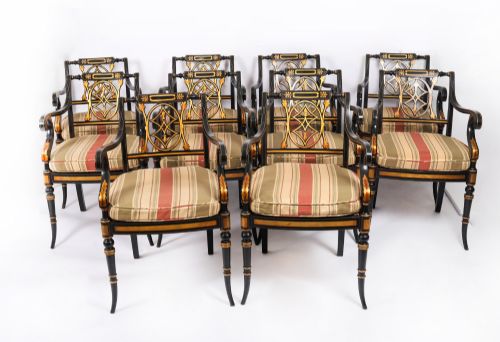
The forms vary from single grand salon chairs to matched pairs and larger dining sets sharing gilded frames and open arm construction. Wood species such as walnut, mahogany, and beech form the structural carcass beneath the gilding, supporting seats upholstered in silk, velvet, or contemporary fabric. They serve equally as reading chairs in a library or statement pieces within a drawing room, maintaining a visual lightness through their open frames despite their ornate decoration.
Materials and construction methods
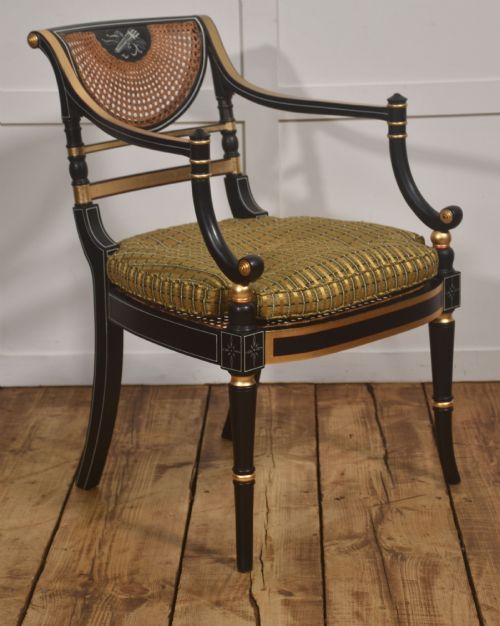
Makers shaped structural timbers like beech, walnut, and mahogany by hand, carving detailed foliage, fluting, and scrolls directly into the wood before applying surface finishes. Giltwood surfaces received thin sheets of beaten gold leaf applied over a prepared gesso and bole base, while alternative pieces utilised parcel-gilt techniques where gilding highlights specific carved elements against painted or ebonised timber.
Upholstery techniques matched the formal nature of the frames, securing horsehair and stuffing over webbing before covering the seat and back in rich textiles such as silk, velvet, or damask. Frames were assembled using traditional joinery, including mortise and tenon joints, ensuring the open arms remained structurally rigid under regular use.
Gold Open Armchair Retail Price Guide 2026
Typical asking prices for gold open armchair among the pieces listed under this phrase on Sellingantiques today, from the lower quarter to the upper quarter. They describe what is for sale here now, not the wider market.
Several armchairs escaped royal French palaces to end up sitting quietly in nineteenth-century British drawing rooms.
Distinctions in craftsmanship and preservation
Quality rests primarily in the crispness and depth of the wood carving, where hand-carved acanthus leaves and moulded rails show sharp definition rather than soft, rounded edges. Superior examples retain their original fire-gilding or well-applied gold leaf, showing subtle ageing and wear rather than flat, modern metallic paint that obscures the wood texture beneath.
Structural integrity of the open arms dictates durability, as these joints bear continuous weight and pressure when users rise from the seat. Pieces retaining their period upholstery foundations and traditional stuffing demonstrate a higher tier of original workshop production than those repeatedly altered over successive generations.
Thomas Chippendale·Jacob Desmalter·Holland and Sons·Blaise Maucuy
The Gold Open Armchair Glossary
- Giltwood
- Wood that has been decorated with gold leaf applied over a prepared base of gesso and bole. This technique creates a luminous, warm metallic finish common on high-status seating from the eighteenth and nineteenth centuries.
- Fauteuil
- A French upholstered armchair with open wooden sides originating in the seventeenth century. The exposed arms typically feature padded elbow rests for comfort.
- Parcel-gilt
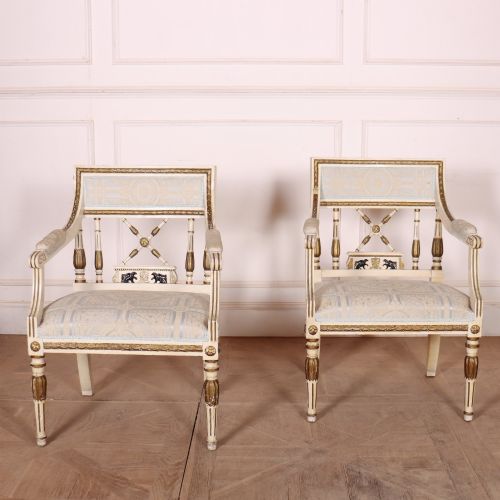
- A decoration method where only specific carved details or highlights are gilded while the rest of the timber remains painted, ebonised, or polished. It creates contrast across the wooden frame.
- Bergère
- An enclosed or partially open upholstered armchair with wooden framing and a built-in upholstered back and sides. Many examples feature exposed gilded frames and cane or fabric panels.
- Gesso
- A plaster-like mixture applied to wood surfaces as a smooth foundation for laying gold leaf. It allows carvers to achieve sharp, refined details beneath the gilding.
Gold Open Armchair: Frequently Asked Questions
How do I distinguish French styles from Regency revival pieces?
French designs like Louis XVI lean towards neoclassical symmetry, fluted legs, and carved floral crests. Regency revival pieces often incorporate ebonised details, sabre legs, and classical British motifs.
Examining the underlying timber and the specific handling of the gilt finish helps clarify the regional workshop tradition.
Can these armchairs be used for daily sitting?
These seats were built for formal rooms and salon use, meaning their frames require sensible handling. While sturdy, their open arms and antique joints are best suited to gentle daily use rather than heavy lounging.
Positioning them away from direct sunlight protects both the gilded surfaces and delicate silk or velvet fabrics.
What does parcel-gilt mean on an armchair?
Parcel-gilt refers to a finish where only selected carved motifs receive gold leaf while the rest of the wood stays painted or dark. This highlights specific decorative elements like rosettes and fluting against the contrasting background.
It was a favored technique in Regency and neoclassical furniture design.
How should I care for giltwood frames?
Giltwood requires gentle dusting with a soft, dry brush to avoid disturbing the delicate gold leaf layer. Moisture and abrasive cleaners will damage the gesso and base layers beneath the metal.
Keeping the chairs away from extreme temperature shifts prevents the timber frame from expanding and cracking the finish.