


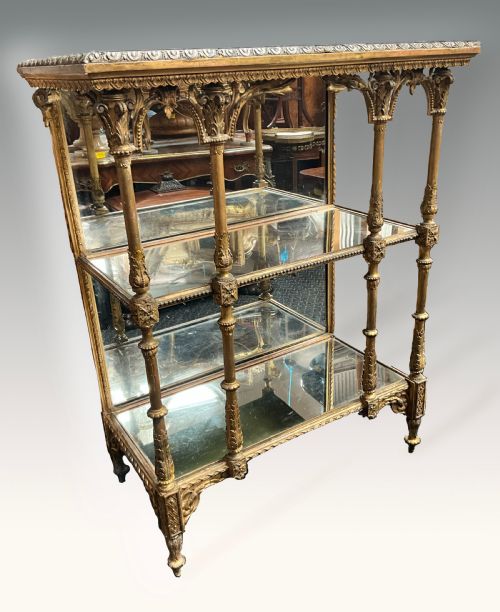


Gold Mirrored Shelf
A gold mirrored shelf combines reflective glass with display ledges, offering a practical surface and light-enhancing decor for your interior.
Gold Mirrored Shelf
A gold mirrored shelf brings together a reflective glass surface and integrated brackets or ledges, creating a dual-purpose fixture for walls and mantelpieces. When you search for a gold mirrored shelf, you encounter pieces originating primarily from the Victorian era and the early twentieth century, spanning dates from 1860 to 1920.
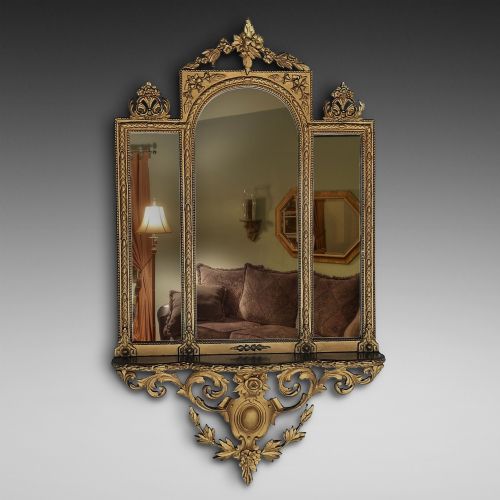
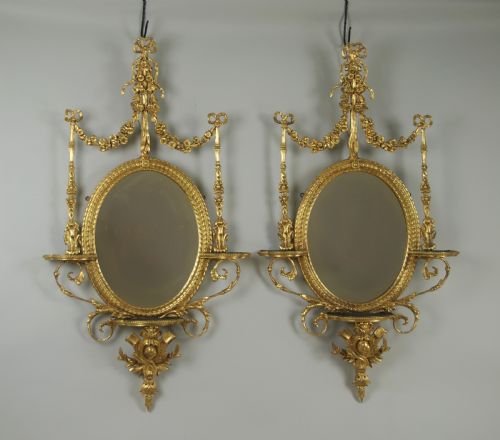
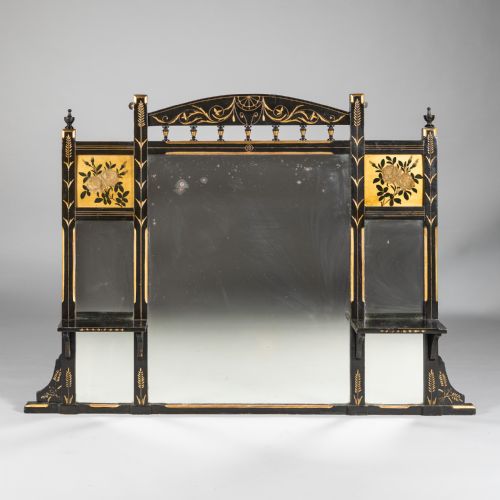
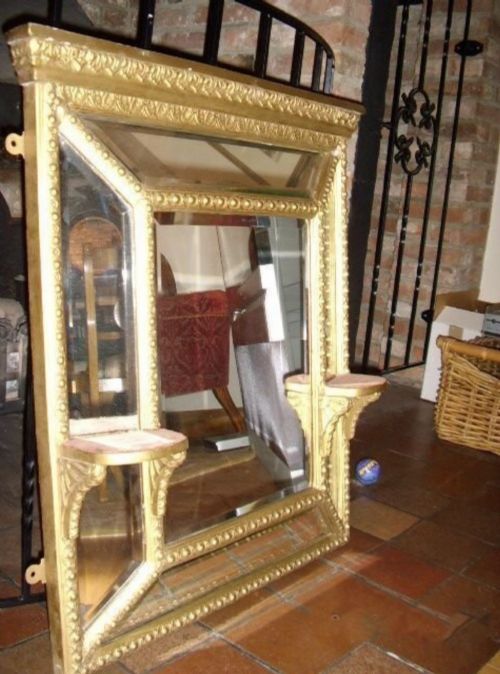
The selections on this page appear in various formats, including overmantel mirrors with gilded brackets, wall display shelves, console mirrors, and étagères. Victorian and French Rococo Revival styles dominate the selection, accompanied by Aesthetic Movement ebonised designs and occasional Chinoiserie influences.
Makers and workshops from Britain, France, and Ireland shaped these pieces, utilising forms ranging from small oval brackets to large pier glasses and portmanteus. Buyers find that these items function equally well as decorative focal points and practical ledges for small ornaments.
Materials and construction techniques
Makers constructed the structural frames of a gold mirrored shelf using woods such as painted timber, ebonised wood, and solid framing, upon which they applied gesso for fine ornamentation. Artisans then decorated these surfaces with gold leaf or giltwood finishes to achieve the characteristic metallic sheen.
Glass panels, including bevel-cut 19th-century plates and original mirror glass, were set securely into the frames alongside brass fixings and wooden display brackets. This combination of carved wood, gesso, and reflective glass created sturdy ledges capable of supporting small decorative objects.
Listings span the Victorian era, the Aesthetic Movement, and the early twentieth century, utilising materials including giltwood, gesso, ebonised wood, and bevel-cut glass.
Distinctions in craftsmanship
The division between standard and superior pieces rests on the depth of hand-carved gesso, the crispness of the giltwood moulding, and the integrity of the original mirror plate. Finely executed Victorian and French revival examples display intricate relief work on the brackets and frames that simpler mass-produced variants lack.
Provenance and originality further separate the tiers, as demonstrated by labelled Irish pieces or retained original glass plates. Superior construction ensures that the integrated display shelves remain structurally sound and securely joined to the main mirror frame.
Strahan of Dublin
The Gold Mirrored Shelf Glossary
- Giltwood
- Wood that has been coated with gold leaf or a gold-coloured finish. This technique was widely utilised across Victorian and 19th-century frames.
- Gesso
- A plaster-like mixture applied to wood frames and carved into relief ornamentation before gilding. It provides the base for intricate decorative motifs.
- Overmantel mirror
- A large mirror designed to hang directly above a fireplace mantel. Many include attached shelves or brackets for display purposes.
- Étagère
- A piece of furniture or wall fixture with a series of open shelves for displaying small objects. French revival examples often combine this form with a mirror.
- Pier glass
- A tall mirror designed to fit on the wall space between windows. These often feature console tables or brackets placed beneath them.
Gold Mirrored Shelf: Frequently Asked Questions
What is a gold mirrored shelf?
A gold mirrored shelf is a wall-hanging or mantelpiece fixture that combines a reflective glass mirror with one or more integrated display ledges or brackets. These pieces were designed to bounce light around a room while providing a surface to showcase small ornaments.
Most examples found here date from the nineteenth and early twentieth centuries, featuring giltwood, gesso, or painted wooden frames in various revival styles.
Where should I hang an overmantel mirror?
An overmantel mirror is traditionally hung directly above a fireplace mantelpiece, where its proportions anchor the chimney breast and reflect light from the opposite windows. They also work effectively above large sideboards or console tables in reception rooms.
Because many of these pieces include built-in brackets or shelves, ensure the wall fixings are robust enough to support both the weight of the mirror and any objects placed on the ledges.
How do I care for giltwood and gesso?
Giltwood and gesso surfaces require gentle maintenance to preserve the delicate gold leaf and plaster relief work. Dusting should be done lightly with a dry, soft feather duster or a clean microfibre cloth without applying pressure.
Avoid using water, liquid cleaners, or chemical polishes, as moisture can soften the gesso underneath and cause the metallic finish to flake or lift over time.
How do I identify a Victorian mirror?
Victorian mirrors often exhibit specific stylistic markers such as Rococo Revival curves, Aesthetic Movement ebonised and parcel-gilt finishes, or neoclassical details. Examining the construction of the wooden backboards, the type of screws or fixings, and the ageing of the mirror plate helps confirm the period.
Many pieces from this era also incorporate maker labels or distinct framing techniques typical of mid-to-late nineteenth-century British and Irish workshops.