
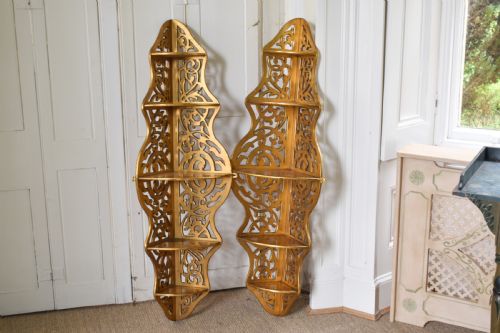
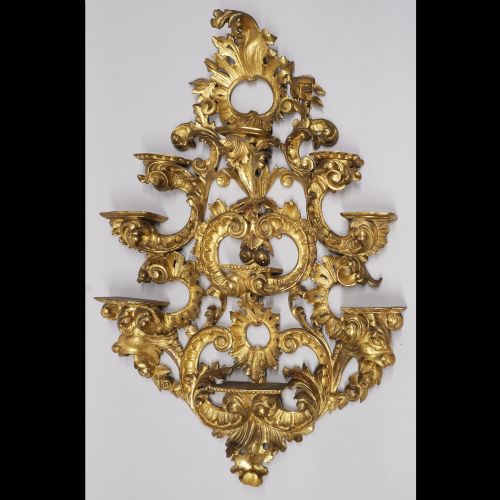


Carved Gilt Shelves
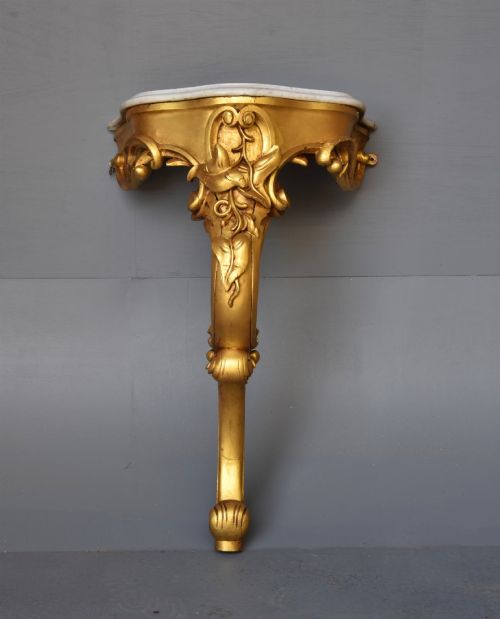
These carved gilt shelves bring a rich metallic gleam and practical display space to a room, drawing the eye upwards with their ornate forms.
Carved Gilt Shelves
Carved gilt shelves encompass a variety of wall-mounted display furniture designed to hold small objects, ranging from single wall brackets to multi-tiered étagères. Buyers searching for carved gilt shelves will encounter pieces predominantly from the nineteenth century, alongside items from the eighteenth and early twentieth centuries.
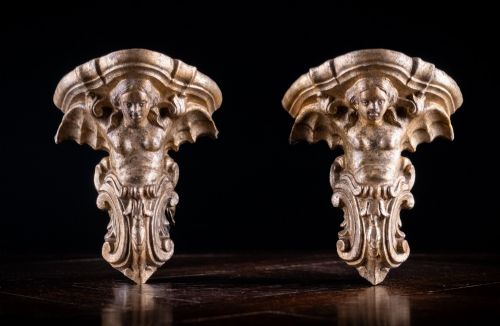
The form often appears as paired corner shelves or single architectural brackets intended to support ornaments or clocks. Makers of these pieces utilised styles spanning Rococo revival, Neoclassical, and Italian designs to create decorative focal points.
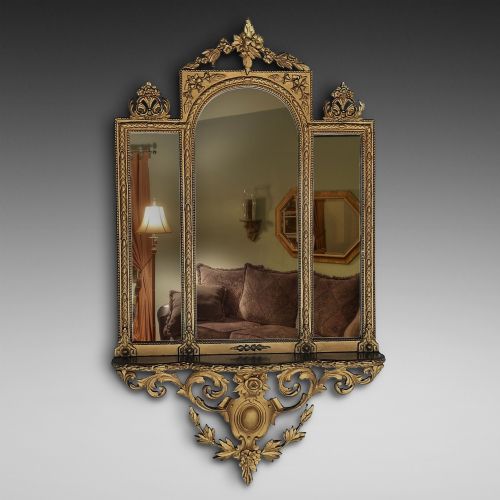
Many examples integrate mirrored glass, marble tops, or painted surfaces alongside the primary gilded woodwork. These variations reflect domestic display habits across the Victorian and Edwardian periods.
Materials and construction
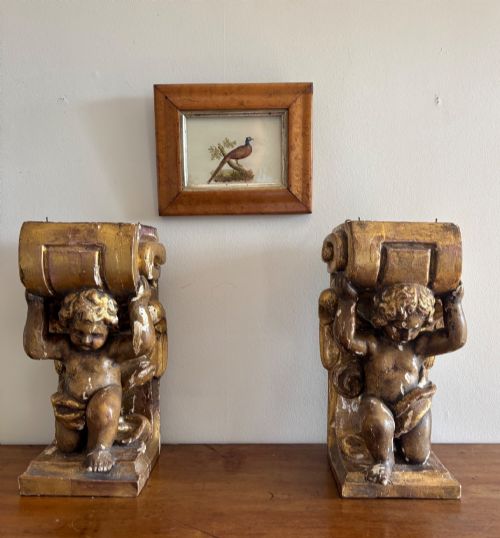
Artisans constructed these shelves primarily from wood, applying layers of gesso to create smooth surfaces suitable for carving intricate motifs like cherubs, foliage, and scrollwork. Gold leaf or gilt finish was then carefully applied over the prepared base.
Materials such as mirror glass, terracotta, and marble occasionally complement the giltwood framework, adding weight and reflective quality. Construction techniques rely on traditional joinery suited for wall-mounted brackets and console units.
Common forms include single wall brackets, paired corner shelves, and multi-tiered étagères influenced by Rococo and Neoclassical styles.
Assessing quality and execution
Quality in these pieces rests upon the crispness of the carving and the depth of the gesso preparation beneath the gilding. Superior examples display sharply defined motifs without the softening that indicates worn moulds or hasty recarving.
The integrity of the gilt surface and the skill with which gold leaf adheres to complex wooden contours distinguish finer workshops from mass production. Well-preserved original surfaces demonstrate superior material selection and finishing techniques.
Strahan of Dublin
The Carved Gilt Shelves Glossary
- Giltwood
- Wood that has been coated with gold leaf or a gold-coloured finish. This material forms the primary structure of most wall brackets and decorative shelves.
- Gesso
- A plaster-like mixture applied to wood to create a smooth base for carving and gilding. It allows artisans to achieve fine relief details.
- Rococo Revival
- A nineteenth-century style characterised by asymmetrical scrollwork, C-scrolls, and organic plant motifs. It heavily influences the design of many nineteenth-century wall shelves.
- Console Table
- A table supported by wall brackets or console legs, often topped with marble. Some examples feature an integrated shelf underneath.
- Étagère
- A piece of furniture consisting of open shelves for displaying small objects. These tiered units often incorporate painted wood and gilt detailing.
Carved Gilt Shelves: Frequently Asked Questions
How were carved gilt shelves used historically?
These shelves served as ornamental ledges in formal reception rooms for displaying porcelain, small clocks, and figurines. Their reflective surfaces enhanced candlelight and added a sense of luxury to period interiors.
Positioned on walls or in corners, they drew attention to curated collections of decorative items while saving floor space. Their placement often complemented larger overmantel mirrors or console tables.
How do I hang heavy giltwood wall shelves?
Hanging these pieces requires locating solid fixing points in the wall, such as studs or masonry, to support the weight of the wood and gesso. Professional installation ensures the bracket remains secure and level.
Because many pieces feature delicate protruding carvings, careful handling during mounting prevents accidental damage to the gilt surface. Using appropriate weight-rated hardware is essential for long-term stability.
How do I clean and maintain gilt surfaces?
Maintenance involves gentle dusting with a soft, dry brush to prevent the accumulation of dirt within intricate carved areas. Moisture and chemical cleaners should be avoided to protect the underlying gold leaf and gesso.
Placing shelves away from direct sunlight and excessive humidity helps preserve the original condition of the gilded wood over time. Regular, minimal care maintains the reflective quality of the finish.