




Gold Leaf Pedestal
A gold leaf pedestal elevates statuary or lamps with shimmering surface and sculptural form.
Gold Leaf Pedestal
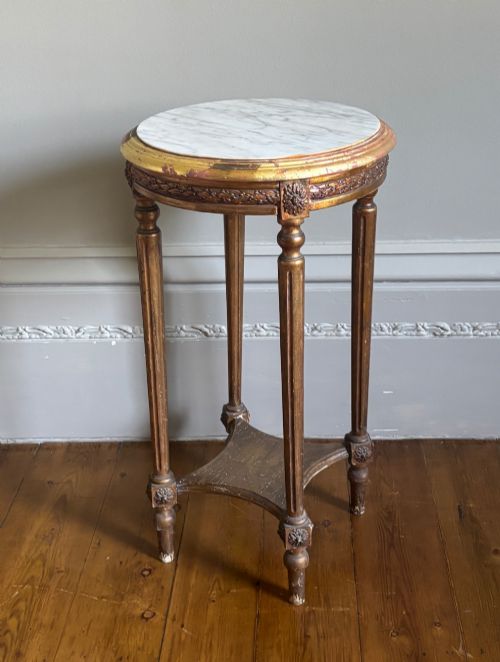
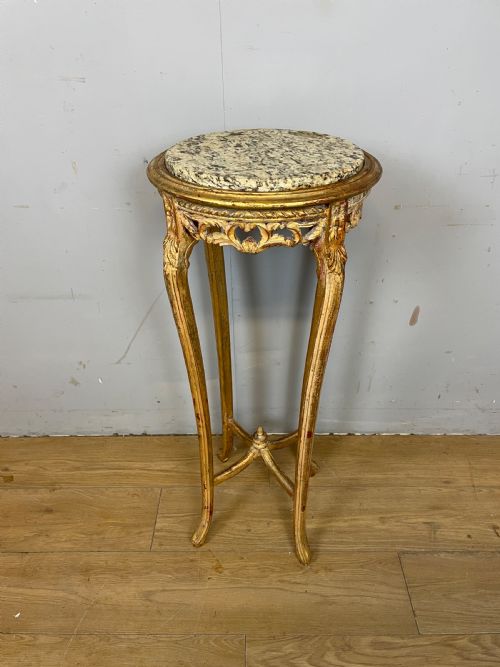
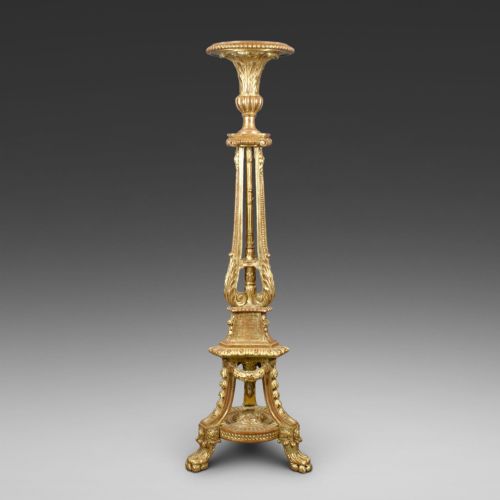
A gold leaf pedestal provides a raised platform for display, taking the form of torcheres, urn stands, and plant stands across this selection.
The objects span periods from the eighteenth century through the Edwardian era, incorporating styles such as Italian Baroque, Regency, and French Neoclassical.
Makers shaped carved wood, gesso, and giltwood into columns and figures, frequently pairing these stands with inset marble tops.
How they were made
Carved wood provides the structural core for these stands, shaped into intricate columns, scrollwork, and figurative elements.
Layers of gesso are applied over the wood base to smooth the surface before the application of gold leaf or giltwood finishes.
Marble inserts provide durable, polished surfaces on the tops of tables and pedestals designed to hold heavy decorative objects.
The listings span from the eighteenth century to the Edwardian era, featuring materials such as marble, giltwood, and carved wood.
What varies in quality
The crispness of the carved details in the wood separates standard production from exceptional work, defining the depth of acanthus leaves and drapery.
The condition and application technique of the gold leaf layer dictate how the piece catches light and ages over time.
The Gold Leaf Pedestal Glossary
- Giltwood
- Wood coated with gold leaf or gold paint for a decorative metallic finish. This surface treatment defines many decorative pedestals and torchere stands.
- Torchere
- A tall ornamental stand designed to hold a light source or candelabrum. These pieces frequently feature carved wooden columns.
- Gesso
- A plaster mix applied to wood surfaces to prepare them for gilding. It allows craftsmen to carve fine details before applying gold leaf.
- Neoclassical
- A style reviving classical Greek and Roman motifs, popular in furniture and architecture. Pieces from this period display strict symmetry and classical columns.
Gold Leaf Pedestal: Frequently Asked Questions
What is a torchere stand used for?
A torchere serves as an elevated display surface for lighting or decorative objects. It places lamps and urns at eye level in a room.
Historically these tall stands held candles or oil lamps to illuminate dark corners. Today they function primarily as decorative pedestals for sculpture.
How do I clean a giltwood pedestal?
Giltwood requires gentle dusting with a soft, dry cloth to protect the delicate metallic surface. Moisture can damage the underlying gesso and gold leaf layers.
Avoid chemical polishes and commercial cleaners entirely. Professional conservation is necessary if the surface shows signs of flaking.
Where should I place a pedestal in a room?
Pedestals suit corners, hallways, and focal points where vertical height breaks up low furniture arrangements. They anchor large vases, sculptures, and table lamps securely.
Ensure the floor surface is level so the tall structure remains stable. Positioning away from direct sunlight preserves the antique gilt finish.
How do I identify a Regency period stand?
Regency pieces reflect classical antiquity with restrained ornamentation, clean lines, and architectural details. Mahogany and giltwood finishes predominate in items from this era.
Proportions remain balanced, often utilising column forms or classical motifs. Compare the construction methods and wood types with known pieces from the period.