




Gold Leaf Hall Table
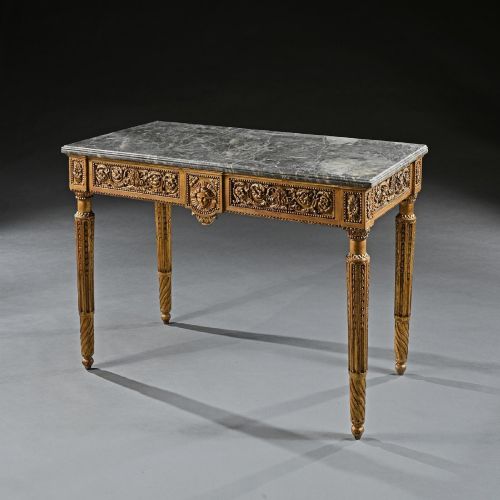
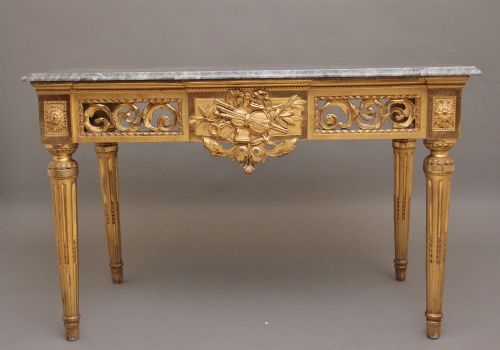
A gold leaf hall table brings instant grandeur to an entrance, combining gleaming metallic surfaces with robust marble tops.
Gold Leaf Hall Table
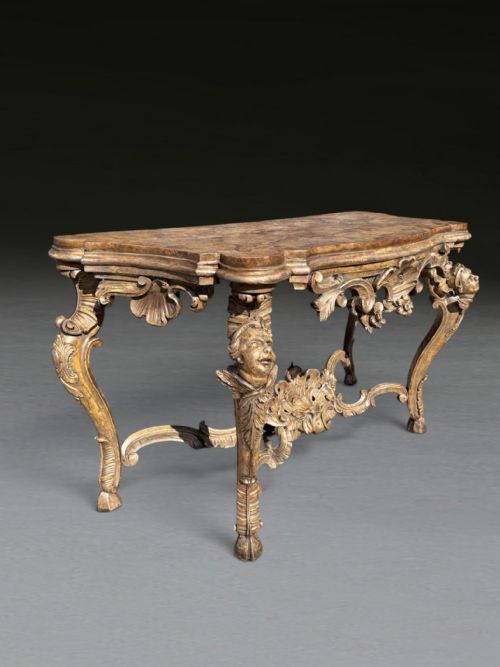
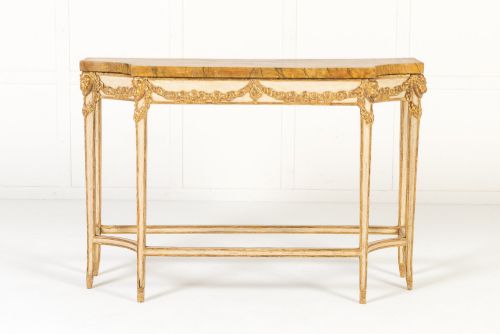
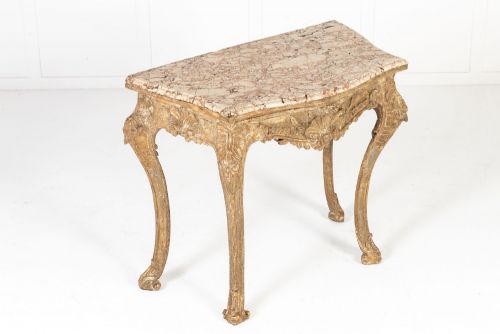
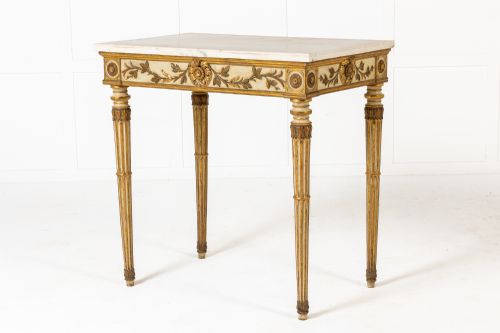
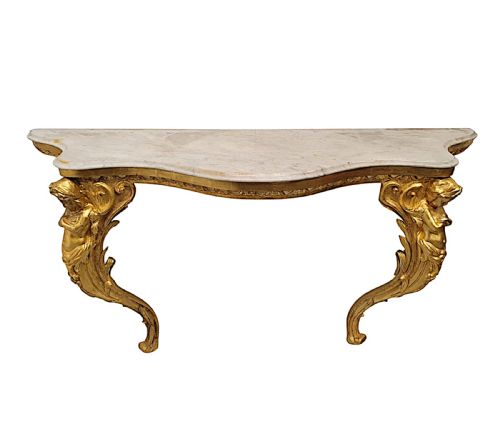
A gold leaf hall table is typically represented here by console tables and side tables designed to sit flush against a wall in a grand entrance. The selection spans the eighteenth and nineteenth centuries, taking in Georgian, Victorian, and Regency periods alongside continental European origins.
Italian, French, and Swedish examples dominate the grouping, frequently adopting Neoclassical, Baroque, and Rococo styles. These tables often feature substantial marble or rouge marble tops supported by heavily carved wooden frames.
How They Were Made
Cabinetmakers utilised timber carcasses built from wood, applying layers of gesso to smooth the surface before laying down delicate sheets of gold leaf or silver leaf. Hand-carved details on giltwood and painted frames required immense skill from artisans working in various European traditions.
Heavy marble and rouge marble slabs were shaped to fit the tops, often resting on the console frames without permanent fixings due to their considerable weight. Paint finishes were frequently combined with gilding to create contrasting textures and tones across the structure.
Some tables boast rams and maiden heads staring resolutely across the hallway.
What Varies in Quality
The finesse of the hand-carving defines the upper tier of these tables, where figures, scrolls, and foliage display crisp, deep relief rather than shallow mechanical shaping. Superior pieces exhibit harmonious proportions and integration between the marble slab and the ornate wooden base.
The application and retention of the gold leaf or gesso foundation also separate workshop standards, with finer examples showing careful burnishing and minimal later intervention. Historical integrity of the timber frame and the original association of the marble top significantly influence the standing of each piece.
Whytock and Reid
The Gold Leaf Hall Table Glossary
- Giltwood
- Wood that has been coated with gold leaf or gold paint. This technique was widely employed on decorative furniture throughout the eighteenth and nineteenth centuries.
- Gesso
- A plaster mixture applied to wood surfaces as a preparation for painting or gilding. It provides a smooth ground that can be carved or moulded once dry.
- Console Table
- A table fixed to a wall or designed to stand against it, often supported by sculptural legs or brackets. They frequently served decorative roles in formal hallways and saloons.
- Rouge Marble
- A rich red variety of marble quarried in France and prized for its variegated white and grey veining. It was a popular choice for high-end tabletop surfaces.
- Demi-Lune
- Half-moon shape used for tables designed to fit flat against a wall. This format became especially common in Georgian and neoclassical interior design.
Gold Leaf Hall Table: Frequently Asked Questions
Where should I place a gold leaf hall table?
These tables find their natural home in entrance halls, corridors, and drawing rooms where their decorative presence can be appreciated immediately. Because many are designed as console tables, they sit neatly against a wall and often anchor a mirror or painting above.
Their shallow depth makes them suitable for narrow circulation spaces without obstructing movement. Pairing them with lamps or decorative objects completes the traditional arrangement.
How do I care for antique giltwood?
Giltwood requires gentle maintenance to protect the delicate metallic leaf and underlying gesso from damage. Dusting should be done lightly with a dry, soft brush rather than a cloth that might snag on raised carved details.
Moisture and harsh cleaning chemicals must be kept away from the surface to prevent the gold leaf from lifting or tarnishing. Professional conservation is recommended for any repairs to the gilded finish.
Are these tables sturdy enough for daily use?
Console tables are primarily decorative and architectural pieces designed to display objects rather than endure heavy weight or robust activity. The heavy marble tops generally remain stable through gravity alone, resting securely on the carved wooden bases.
While structurally sound for normal interior placement, they benefit from being positioned away from high-traffic areas where they might be accidentally bumped.
How can I tell an eighteenth-century table from a nineteenth-century revival?
Eighteenth-century pieces typically exhibit the tool marks, timber shrinkage, and hand-mixed gesso compositions characteristic of period craftsmanship. Revival pieces from the Victorian era or later often show different machine intervention, standardised joinery, or distinct chemical signatures in the gilding.
Stylistic cues such as the specific interpretation of Rococo or Neoclassical motifs also help experienced eyes separate original period items from later revivals.