



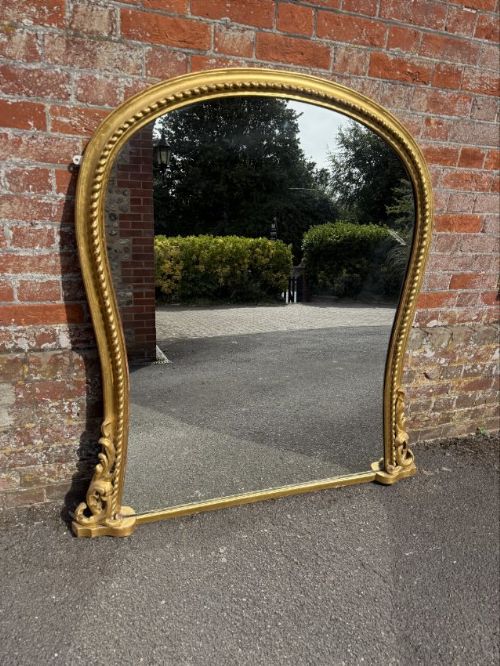
Gold Leaf Arch Mirror
A gold leaf arch mirror brings a bright, reflective presence to a room, drawing the eye upwards with its curved silhouette.
Gold Leaf Arch Mirror
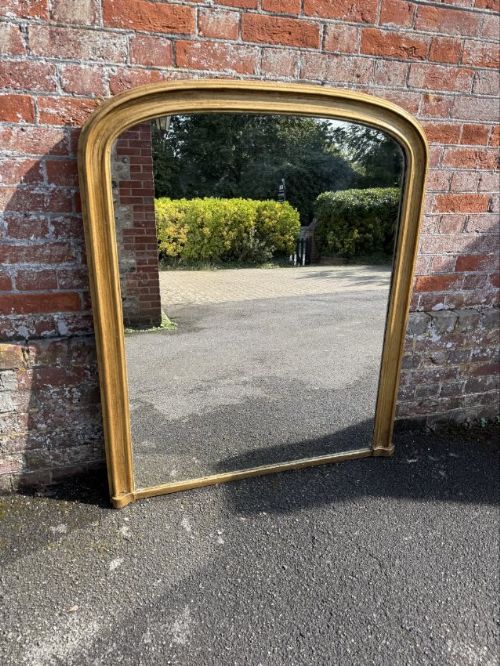
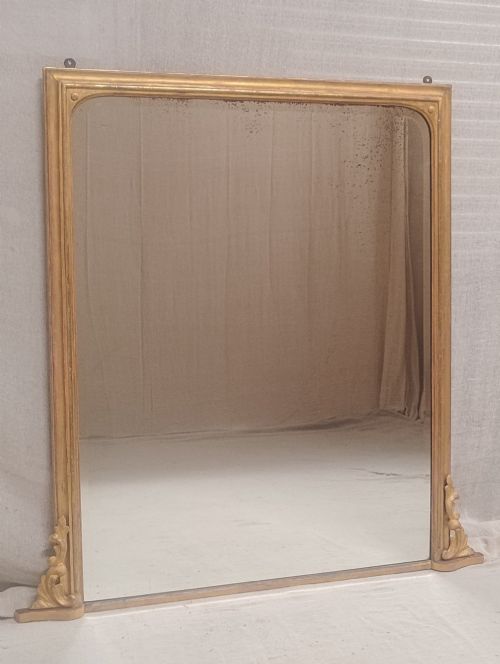
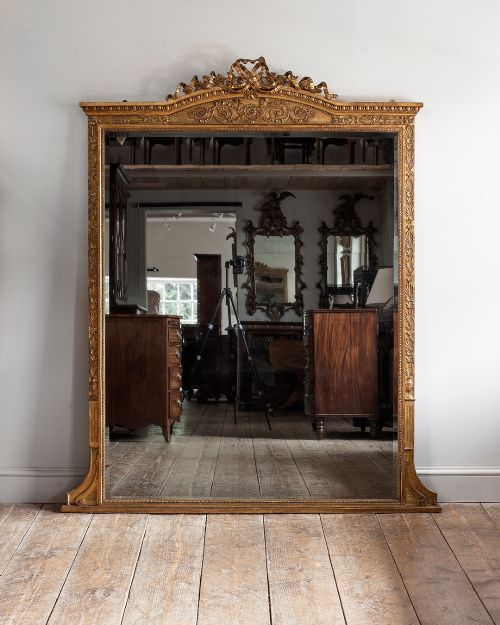
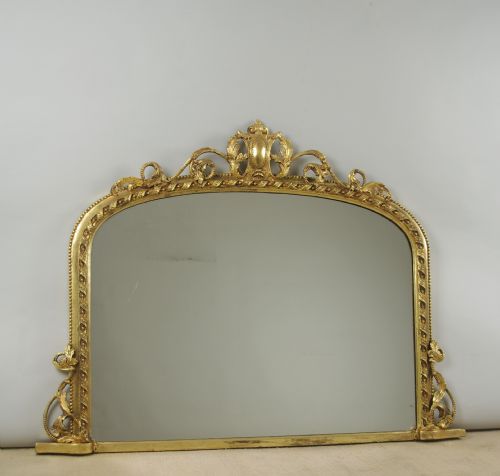
When you search for a gold leaf arch mirror, you encounter substantial furnishings designed to catch and amplify the light in a room. These pieces function primarily as overmantel mirrors placed above a fireplace, or as tall wall and pier mirrors positioned between windows or along hallways.
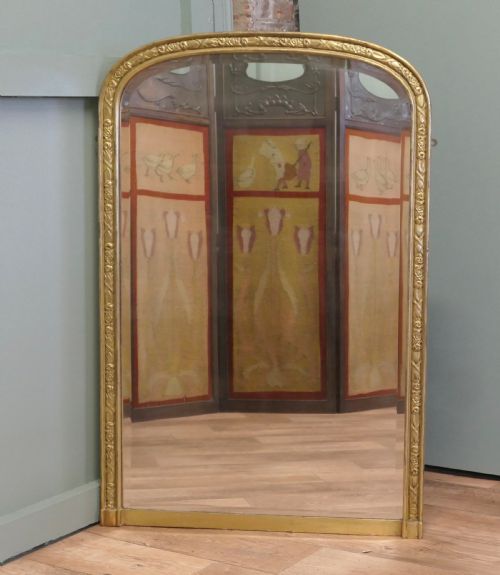
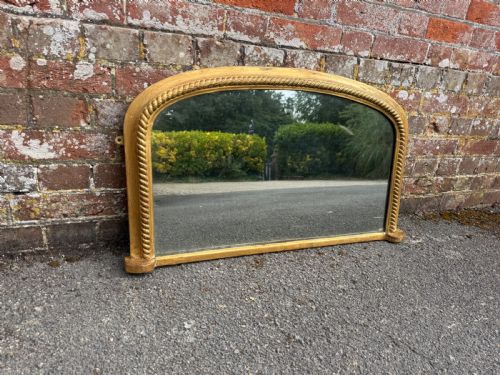
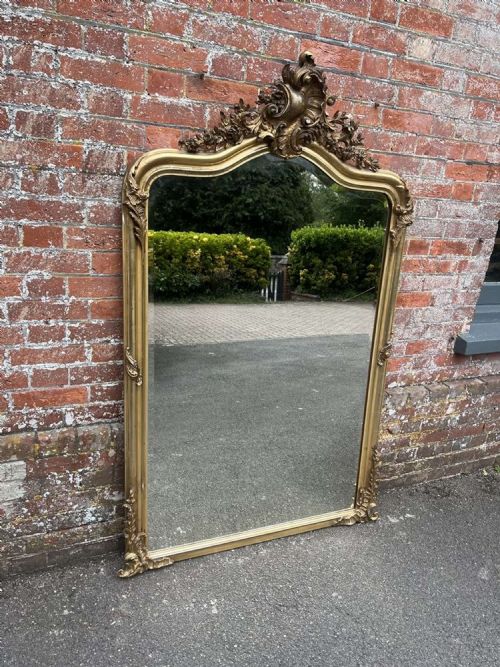
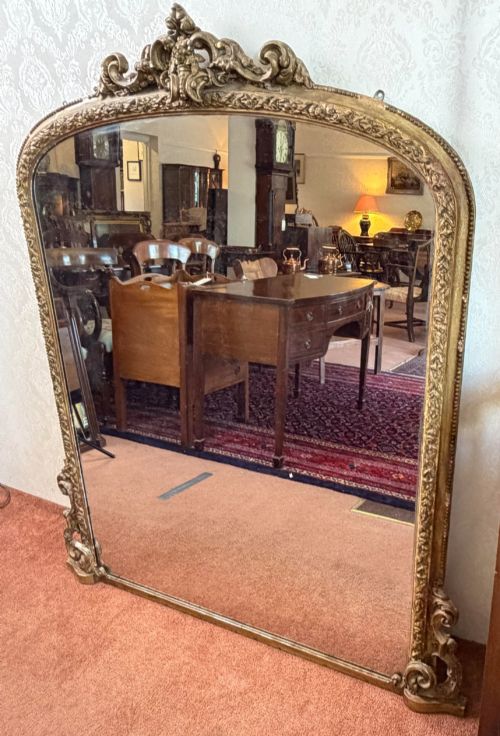
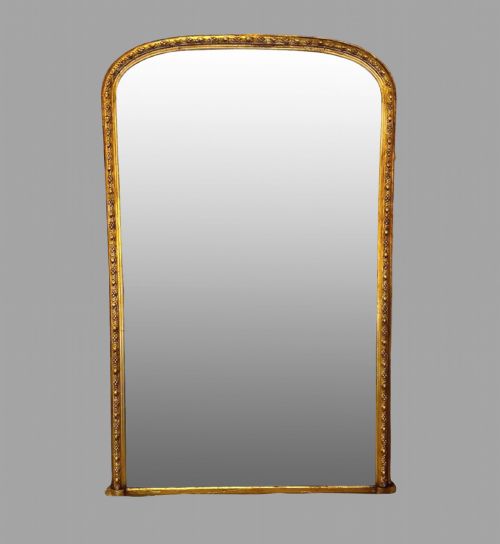
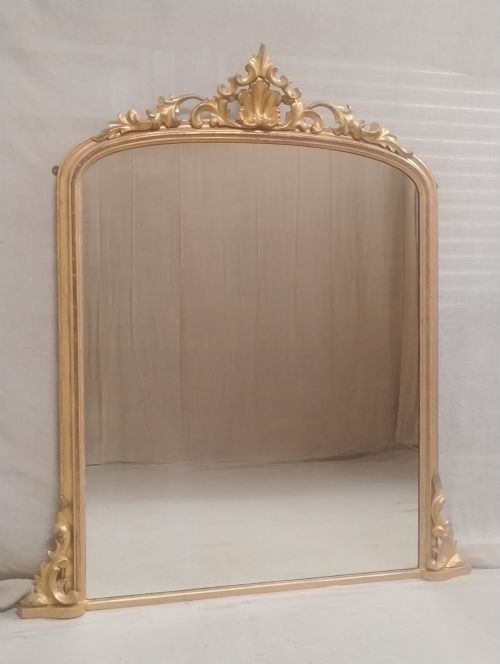
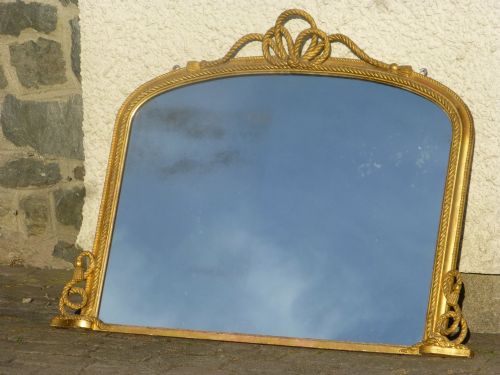
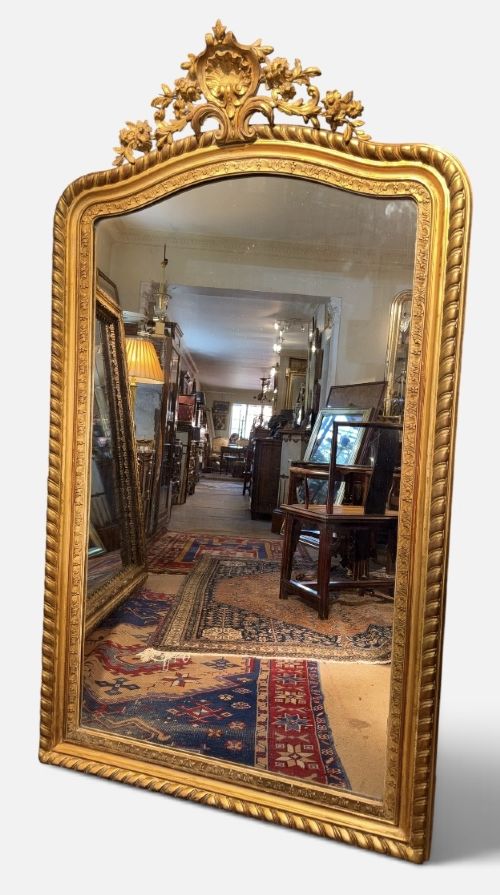
The versions most common on this page date from the nineteenth century, including Victorian and Georgian periods alongside French Louis Philippe and Rococo styles. English examples frequently feature carved wood and gesso arched tops with ribbed or rope twist frames, while French pieces tend toward clean Louis Philippe lines or ornate crests.
How they were made
Makers constructed the foundation frames using carved wood, applying layers of gesso to build up smooth surfaces and crisp decorative details before adding the metallic finish. Artisans then applied delicate sheets of gold leaf or gilt to the prepared gesso and wood substrates.
Many frames incorporate composition ornament, a moulded mixture that allowed workshops to produce repetitive floral, rope twist, or Rococo motifs efficiently. The glass mirror plates were set securely into these heavy wooden frames, often retaining their original silvering and subtle distortions.
What varies in quality
The depth and crispness of the hand-carved wooden details separate standard production frames from finer examples, as does the complexity of applied gesso ornamentation. Superior pieces demonstrate meticulous gilding technique where the gold leaf catches the light evenly across every curved moulding and crest.
Proportions also dictate the character of the piece, with the most successful mirrors balancing the height of the arch against the width of the frame without looking crowded. The integrity of the original glass plate and the stability of the heavy underlying wood frame further distinguish better examples.
The Gold Leaf Arch Mirror Glossary
- Gesso
- A prepared mixture of chalk, gypsum, and binder applied to wood frames to create a smooth surface for gilding. This layer is often carved or moulded into intricate decorative reliefs.
- Giltwood
- Timber that has been coated with thin sheets of gold leaf or gold paint. It provides a warm, reflective metallic sheen that defines nineteenth-century frames.
- Overmantel mirror
- A large horizontal or arched mirror specifically designed to sit on the mantelpiece above a fireplace. These frames often anchor the decorative scheme of a reception room.
- Pier mirror
- A tall, narrow mirror created to hang on the wall space between two windows. They make efficient use of natural light in high-ceilinged rooms.
- Louis Philippe
- A nineteenth-century French style characterised by understated elegance, simple arched tops, and restrained moulded frames. It bridges the gap between heavier empire designs and later revival styles.
Gold Leaf Arch Mirror: Frequently Asked Questions
Where should I hang a large arch mirror?
These mirrors traditionally anchor the wall space above a fireplace mantel, where their arched shape draws the eye toward the ceiling. They also work effectively along main reception room walls to bounce natural light deep into the interior.
Ensure the wall construction supports considerable weight, as nineteenth-century wooden frames combined with thick glass plates require robust fixings. Position them opposite a window to maximise the reflection of daylight.
How do I identify a Victorian mirror?
Victorian examples often feature heavy carved wood and gesso construction with distinct architectural arched tops, rope twist borders, or ribbed framing. They frequently serve as large overmantel pieces designed for nineteenth-century domestic hearths.
Look for construction details at the back of the wooden frame, such as traditional fixings and aged timber that match nineteenth-century cabinet-making methods.
Are French mirrors different from English ones?
French mirrors from the nineteenth century commonly follow the Louis Philippe style, presenting simpler curved shoulders and restrained moulded frames without excessive carving. Others embrace ornate Rococo revival forms with elaborate crests and asymmetrical flourishes.
English counterparts tend to focus on architectural overmantel formats featuring robust gesso mouldings, rope twists, and pronounced arched tops intended for coal-grate fireplaces.
What does composition ornament mean?
Composition ornament refers to a mouldable paste made from whiting, resin, glue, and linseed oil pressed into decorative motifs. Workshops applied these pliable elements to wooden frames before gilding to achieve uniform relief patterns.
This technique allowed makers to decorate complex curved arches and rope twist borders efficiently while maintaining crisp visual depth.