
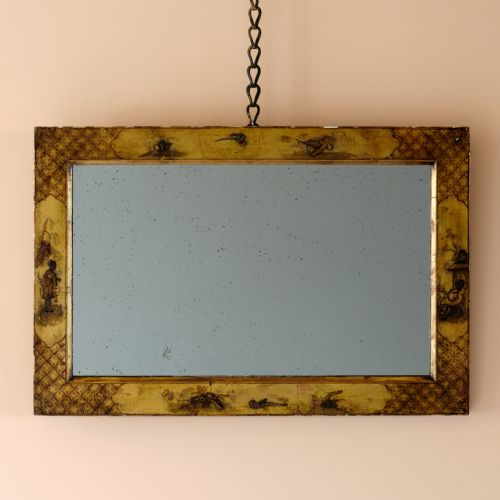
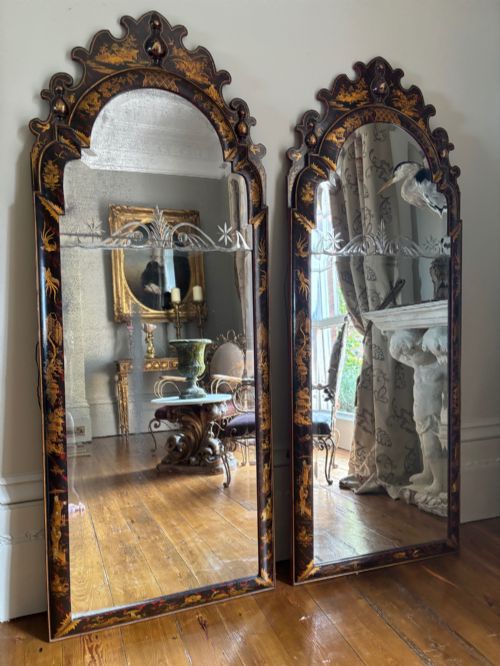


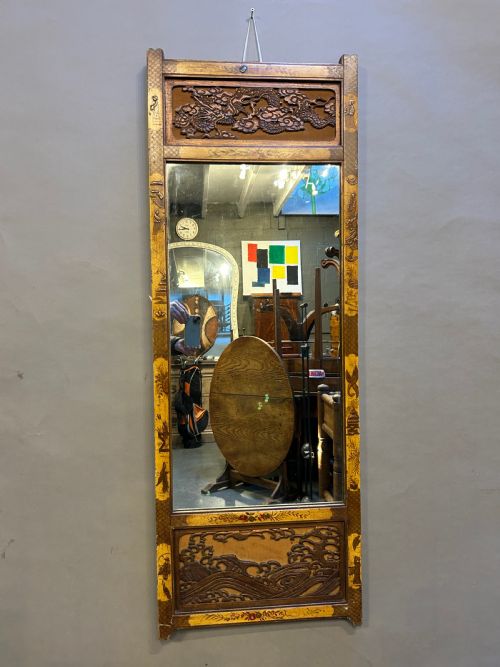


Gold Lacquer Wall Mirror
A gold lacquer wall mirror brings rich Chinoiserie and gilt detail to a room, offering a striking focal point for collectors of period interiors.
Gold Lacquer Wall Mirror
A gold lacquer wall mirror combines ornate Chinoiserie decoration with gilded frames, creating an arresting decorative focal point for period interiors. When searching for a gold lacquer wall mirror, buyers encounter a variety of forms including oval wall mirrors, pier mirrors, and console tables paired with mirrors. These pieces originate from diverse periods such as the Georgian era, the nineteenth century, and early twentieth-century revivals.
The aesthetic draws heavily on stylistic revivals, notably Queen Anne, George I, George II, and Edwardian interpretations of Chinoiserie and French Empire designs. Makers utilised traditional motifs, figures, and landscapes rendered in lacquer and giltwood to achieve a distinct decorative presence. Most examples function primarily as wall mirrors, though console tables with matching mirrors also appear within the selection.
How they were made
Wood serves as the primary structural substrate for these frames, shaped and carved to form elaborate profiles like the George II style carved scarlet and giltwood mirror or Edwardian oval designs. Artisans applied layers of lacquer and gold leaf or gilt to the wooden frames, often incorporating black or red japanned finishes beneath the gilding. This layering technique required meticulous preparation to secure the gold leaf and lacquer onto the wooden base.
Details such as gilt brass mounts augment the construction in certain French Empire examples, contrasting with the smooth lacquered wood surfaces. Carving and joinery demand precise craftsmanship, visible in the shaped frames and pier mirrors that define the genre. The integration of glass mirrors within these ornate wooden surrounds completes the construction process.
Periods represented span from Georgian and 1800 through the nineteenth century into Edwardian and 1930 revivals.
What varies in quality
The refinement of the hand-carved wooden frames and the execution of the Chinoiserie lacquerwork dictate the distinction between standard and superior pieces. Finer mirrors display crisp detailing in the carved giltwood and intricate, well-preserved painted scenes characteristic of genuine japanning and gold leaf application. Lesser examples show simpler wooden mouldings and less nuanced surface decoration.
The depth and brilliance of the gold leaf and the integrity of the underlying lacquer finish establish the visual authority of a piece. Period authenticity, whether dating from the eighteenth century or later revivals such as the 1880 Queen Anne style or 1910 Edwardian pieces, influences the overall character and desirability of the mirror.
The Gold Lacquer Wall Mirror Glossary
- Chinoiserie
- European decorative art style reflecting Chinese artistic influences, frequently seen in the painted and lacquered motifs of these mirrors. This aesthetic dominated various revival periods.
- Giltwood
- Wood that has been prepared and coated with a thin layer of gold leaf or powder. This technique provides the bright metallic finish seen on many period frames.
- Pier Mirror
- A tall mirror designed to be hung on the pier wall between two windows. These pieces often coordinate with console tables placed below them.
- French Empire
- A neoclassical design style originating in nineteenth-century France, distinguished by symmetrical forms and classical motifs. Pieces in this style sometimes incorporate gilt brass alongside black lacquer.
Gold Lacquer Wall Mirror: Frequently Asked Questions
What periods do these mirrors span?
The selection encompasses authentic eighteenth-century Georgian pieces alongside nineteenth-century examples and early twentieth-century revivals from the 1900s to the 1930s. Edwardian and Victorian interpretations frequently emulate earlier Queen Anne and George I aesthetics.
Craftsmen across these different eras maintained traditional methods of lacquering and gilding wood, ensuring stylistic continuity. This blend of original period items and later revivals provides diverse options for interior decoration.
How do I hang a heavy giltwood mirror?
Secure hanging requires locating wall studs or employing heavy-duty fixings appropriate for the weight of the wooden and glass structure. Professional installation is advisable given the substantial weight of carved giltwood and mirrored glass.
Ensuring the wall bracket directly supports the frame prevents stress on the joints and protects the antique construction over time. Proper placement also enhances the reflective qualities within the room.
What is the difference between black and red japanning?
Black japanning utilises a dark ground lacquer finish to highlight gold Chinoiserie figures and landscapes. Red japanning, sometimes referred to as scarlet, provides a vibrant contrasting backdrop for the gilt details.
Both finishes involve layered varnish techniques applied to a wooden substrate. The choice of colour alters the overall visual impact of the mirror within a domestic interior.
Are console tables always sold with mirrors?
Console tables and mirrors sometimes appear as paired sets designed to complement each other in entrance halls or reception rooms. Individual wall mirrors also feature prominently without accompanying tables.
Reviewing the specific listing details clarifies whether a console table is included with the wall mirror. Both configurations reflect the decorative ambitions of Chinoiserie interior design.