
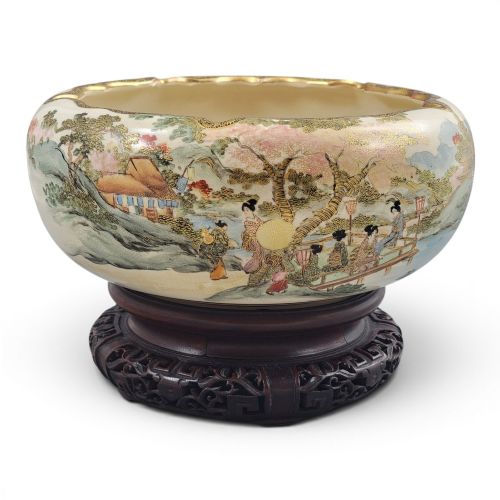


Gold Japanese Bowl
A gold japanese bowl brings Meiji period artistry into a room, offering rich gilding, delicate Satsuma earthenware and fine lacquer work.
Gold Japanese Bowl
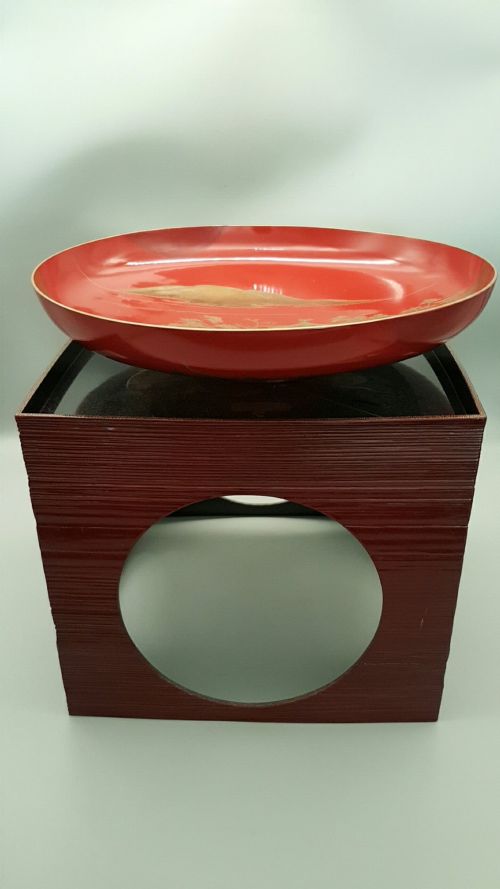
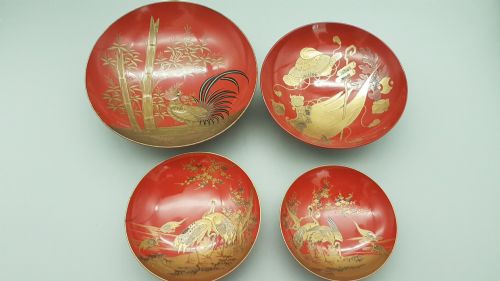
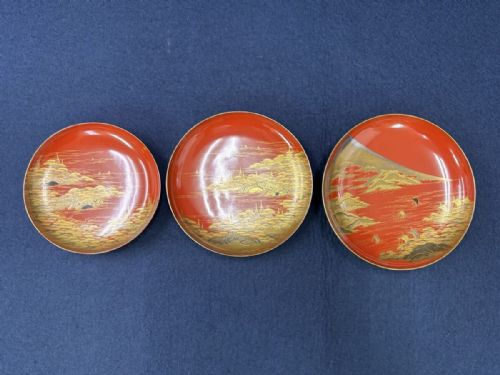
A gold japanese bowl encompasses decorative vessels from the Meiji period, Taisho period, and Victorian eras, ranging from earthenware bowls and saucers to lacquer sake cups.
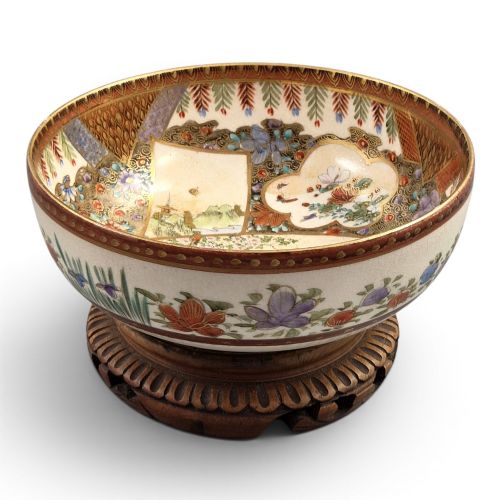
You will most commonly encounter Satsuma ware earthenware bowls enriched with cobalt blue and gilt, alongside Meiji period lacquer pieces finished with gold leaf.
How they were made
Potters shaped earthenware bodies before applying intricate enamel painting and gold gilt, creating the characteristic Satsuma surfaces seen across many pieces.
Lacquer workers utilised urushi lacquer and gold leaf upon wooden bases for sake cups and tables, building up layers for a durable finish.
Listings feature items spanning the 1880s to the 1920s, predominantly showcasing Satsuma earthenware and urushi lacquer across various decorative forms.
What varies in quality
Quality rests in the precision of the hand-painted detail and the clarity of the signature or studio crest, such as the Shimazu mon.
The depth of the gilding and the preservation of the enamel or lacquer separate standard production pieces from master-signed works.
Kozan·Shizan·Kinkozan·Nikko·Hododa·Shozan
The Gold Japanese Bowl Glossary
- Satsuma ware
- Earthenware originating from the Satsuma province, typically characterised by a crackle-glaze finish decorated with polychrome enamels and rich gilding. It gained immense popularity for export during the Meiji period.
- Meiji period
- The era of Japanese history spanning from 1868 to 1912, marked by the opening of trade with the West and a flourishing of highly detailed decorative arts.
- Urushi lacquer
- A natural varnish derived from the sap of the toxicodendron vernicifluum tree, applied to wood in multiple layers to form a hard, glossy, water-resistant surface.
- Gilt
- A thin layer of gold or gold leaf applied to the surface of ceramics, metal, or wood to provide decorative embellishment and catch the light.
- Mon
- A Japanese heraldic badge or crest used to identify individuals, families, or clans, frequently found stamped or painted on traditional ceramics.
Gold Japanese Bowl: Frequently Asked Questions
How do I identify a Satsuma bowl?
Look for a distinct ivory-coloured earthenware body covered in a network of fine crackle glaze, usually painted with dense floral patterns, figures, and heavy gold gilt.
Many pieces also feature artist signatures or studio marks on the base, such as the Shimazu crest.
How should I display a gold japanese bowl?
Place your bowl in a stable location away from direct sunlight and dramatic changes in humidity to protect the delicate enamel, gilding, or lacquer work.
Larger jardinières and decorative bowls suit a table or cabinet where their painted scenes and gold details remain visible.
What period do most of these bowls come from?
The majority of pieces date from the Meiji period, spanning the late nineteenth and early twentieth centuries, alongside occasional Edwardian and Taisho period examples.
This era represents a peak in Japanese craftsmanship tailored for both domestic use and the Western export market.