




Gold Hunter Pocket Watch
A gold hunter pocket watch protects its dial beneath a sprung metal lid, offering both elegance and utility.
Gold Hunter Pocket Watch
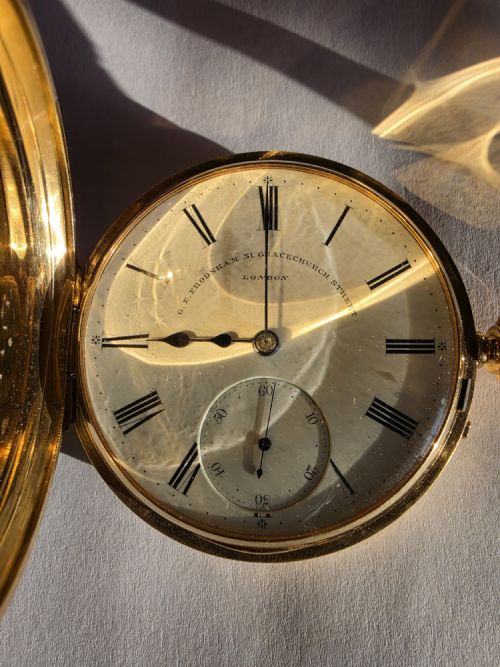
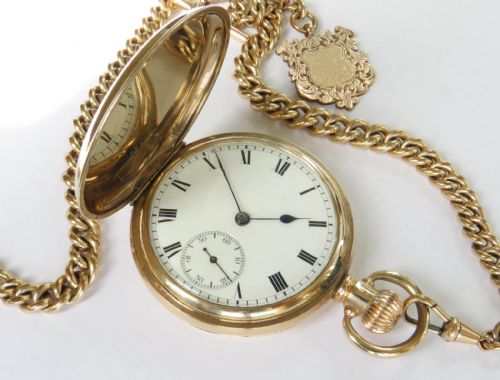
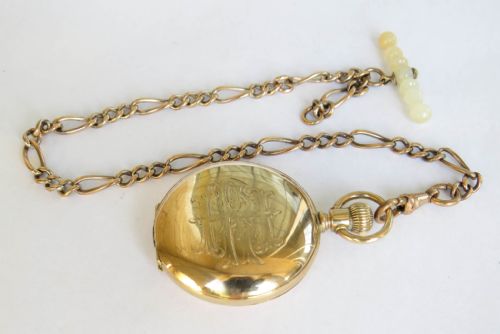
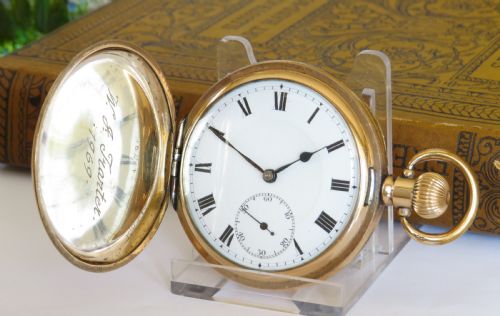
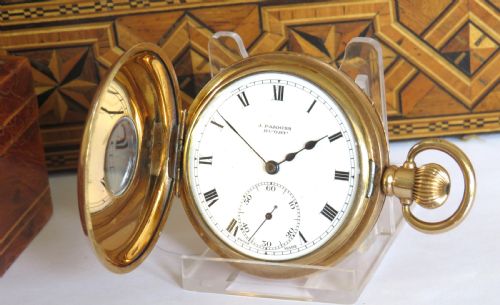
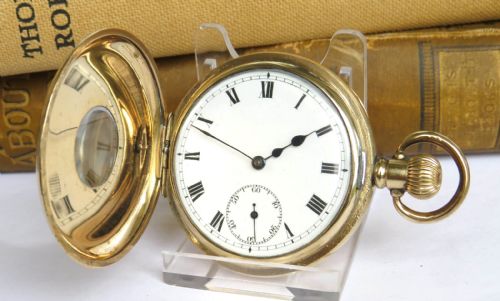
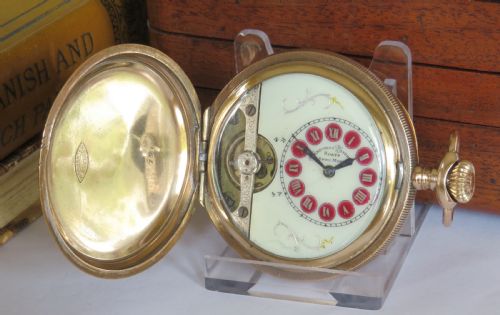
A gold hunter pocket watch is a timepiece enclosed by a metal case with a hinged cover that springs open via a push-piece button on the crown. When you search for a gold hunter pocket watch, you encounter robust timepieces originating from the nineteenth and twentieth centuries, spanning periods from early Victorian designs to Art Deco creations.
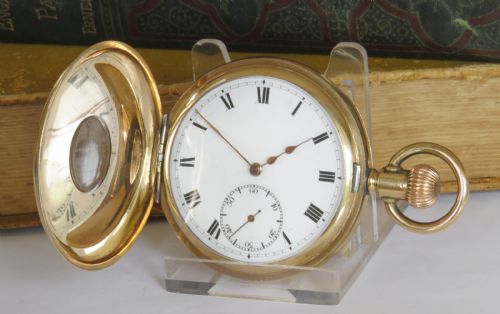
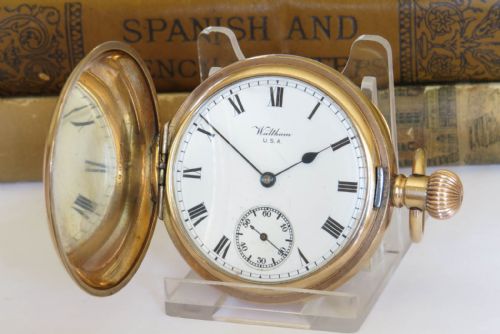
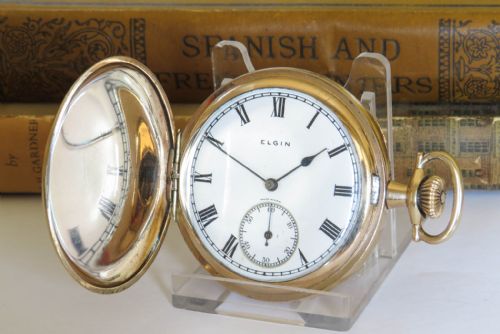
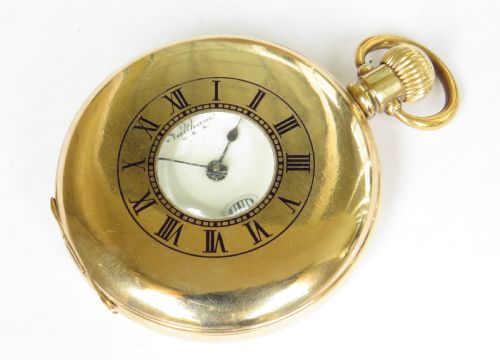
The pieces on this page appear in various configurations, most frequently as full hunter versions where the entire dial is shielded by metal, or as half hunter variations featuring a small glass opening in the outer lid for reading the hands without opening the case. Materials range from solid 18ct gold, 14k gold, and 9ct gold to gold filled, gold plate, and gun metal.
Origins vary between British workshops, notably London, Liverpool, and Glasgow, alongside Swiss manufacturing centres such as Geneva and Corgémont, with prominent American makers like Waltham and Elgin also represented in the record.
Materials and construction
Cases utilise solid precious metals like 18k and 9ct gold, or employ layered construction methods such as gold filled and gold plated brass, occasionally incorporating enamel detailing or glass crystals over the dial.
Internal movements rely on intricate brass and steel gear trains, jewelled bearings to reduce friction, and escapements including the lever and fusee mechanisms seen in nineteenth-century examples.
Some watches were tailored for specific groups, such as the Folkestone Fishermen edition, recording local maritime life inside the case.
Distinctions in craftsmanship
Quality separates through the complexity of the internal movement, moving from standard pin-pallet mechanisms to high-jewelled Swiss lever movements, fusee setups, and complications like repeaters.
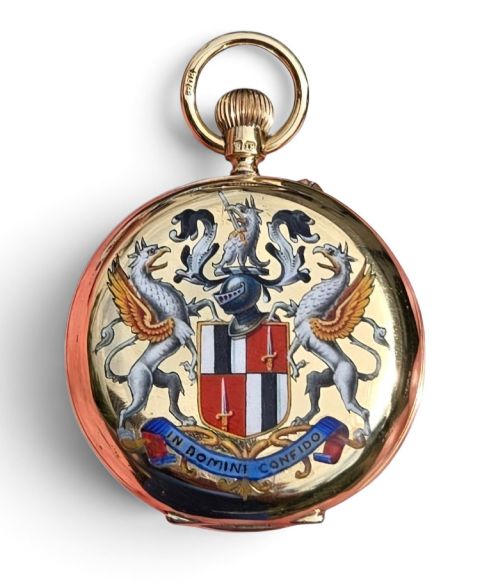
The execution of the exterior casing demonstrates refinement, seen in finely engraved motifs, engine-turned patterns, and heavy solid gold construction rather than thin plating.
George Edward Frodsham·R Stewart Glasgow·Waltham·Elgin·Urania·Revue·Record·Hebdomas Patent·Lonville·A Golay Leresche Geneve·Eastern Watch Case Co·Baume and Co·Pimco·L Roberts Geneve·Tiffany and Co·J Lyndsey·J Dauer Geneve·George Jackson·JW Benson·Thos Russell and Son·Electa·Glashutte Original·Stauffer IWC·Patek Philippe·Vertex
The Gold Hunter Pocket Watch Glossary
- Hunter
- A pocket watch style featuring a spring-loaded metal cover that protects the glass crystal dial.
- Half Hunter
- A watch design where the outer metal lid includes a glazed central aperture allowing the hands to be viewed while closed.
- Fusee
- A conical pulley mechanism that equalises the declining power of the mainspring as it unwinds.
- Gold Filled
- A manufacturing technique where a layer of solid gold is mechanically bonded to a base metal core.
- Repeater
- A complication mechanism that strikes the hours and minutes on gongs when a slide or push-piece is activated.
Gold Hunter Pocket Watch: Frequently Asked Questions
What is a gold hunter pocket watch?
A gold hunter pocket watch is a traditional timepiece enclosed in a precious metal case with a spring-loaded front cover designed to shield the dial from damage.
These pieces combine functional timekeeping with decorative metalwork, encompassing both full hunter and half hunter styles across Victorian and twentieth-century periods.
How do I wind a pocket watch?
Most twentieth-century pieces utilise a button wind mechanism built into the crown, where turning the winding knob clockwise tensions the mainspring.
Older nineteenth-century examples often require a separate key inserted into a rear dust cover or directly onto the dial arbor to power the movement.
How can I tell the period of a watch?
Dating relies on hallmarks stamped inside the gold or gold-filled cases, typographic styles on the enamel dial, and the mechanical design of the movement.
Early nineteenth-century pieces frequently feature fusee movements and hand-engraved dust covers, whereas 1920s and 1930s examples often display Art Deco numerals and Swiss lever escapements.
Can I wear a pocket watch daily?
Wearing a pocket watch daily involves securing it with a suitable chain or fob passed through a waistcoat or trouser buttonhole.
Because these mechanical items date from the Victorian and Edwardian eras, regular servicing by a horologist ensures dependable operation during routine use.