



Gold Hinged Bangle
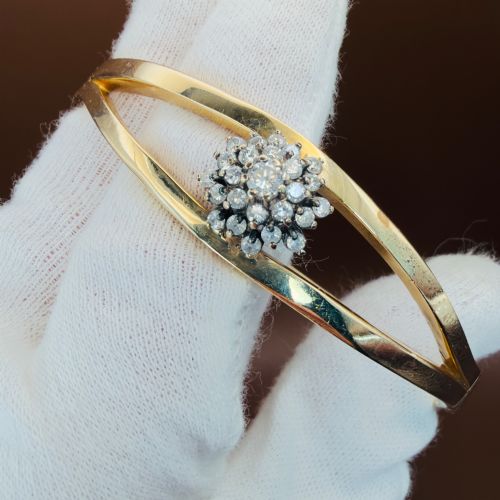
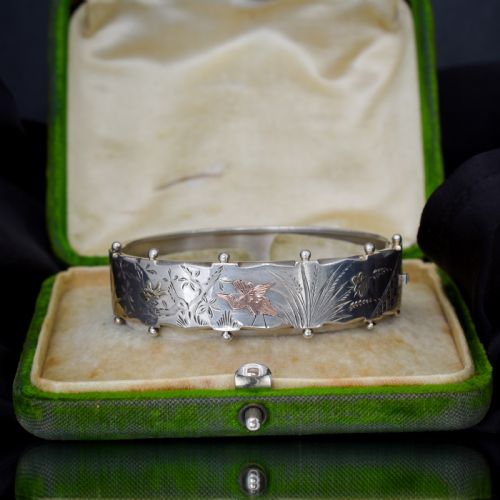
A gold hinged bangle brings secure closure and solid structure to the wrist, moving from nineteenth-century floral engraving to mid-century diamond clusters.
Gold Hinged Bangle
A gold hinged bangle is a rigid wrist ornament engineered with a pivot and a clasp, designed to slip on easily and stay firmly in place during wear.
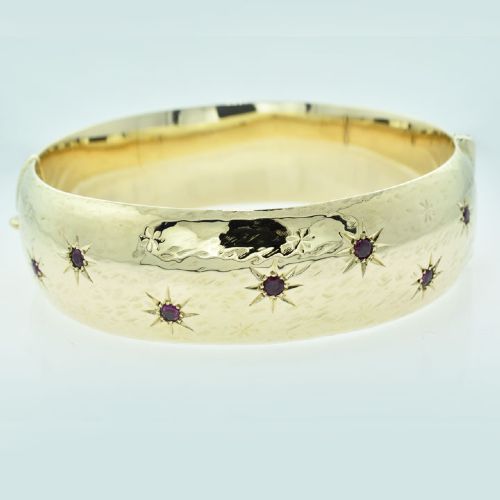
The versions met most frequently on this page span the Victorian and Edwardian eras through to the mid-twentieth century, encompassing both slender everyday bands and wider, gemstone-set cuff formats.
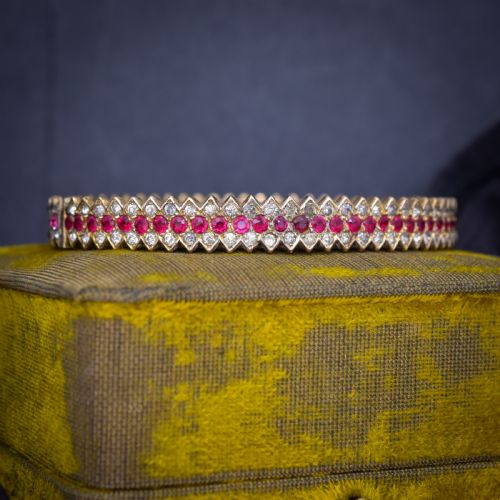
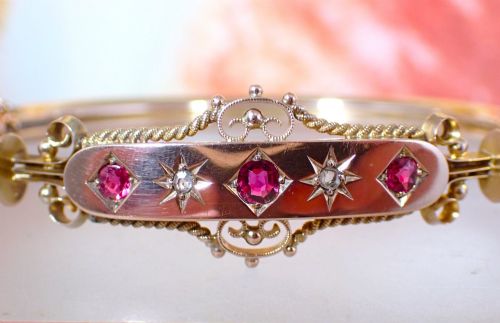
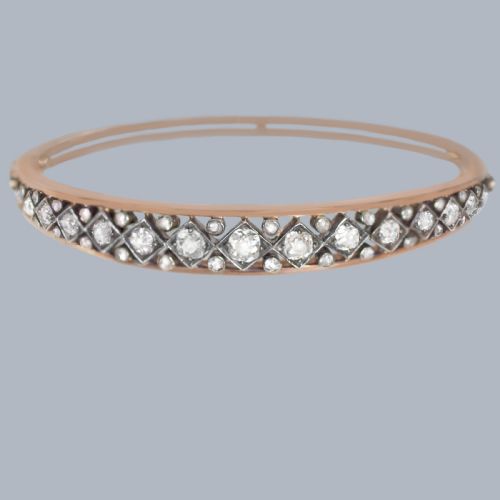
Makers utilised various carats of yellow, rose and white gold, often mounting precious stones such as diamonds, rubies, sapphires and pearls directly onto the rigid hoop.
Materials and construction
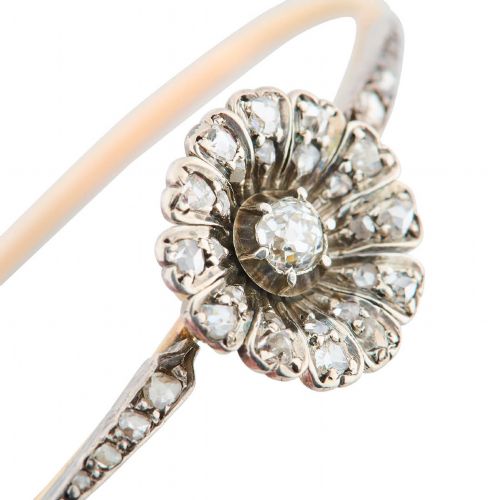
Goldsmiths constructed these pieces using solid 9ct, 15ct, 18ct or rolled gold, sometimes combining silver settings to enhance the brilliance of old-cut diamonds.
Hinges and spring or box clasps were integrated into the structural frame, allowing the rigid hoop to open wide before clicking securely shut.
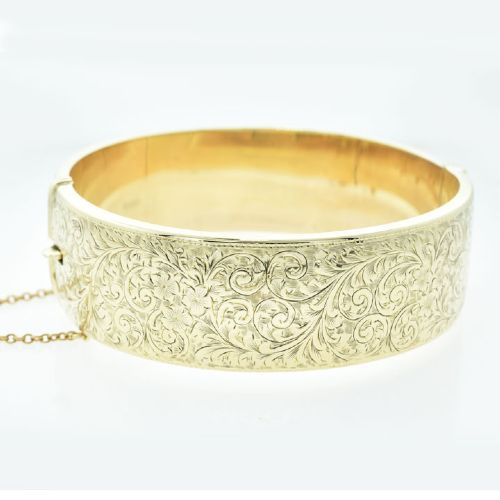
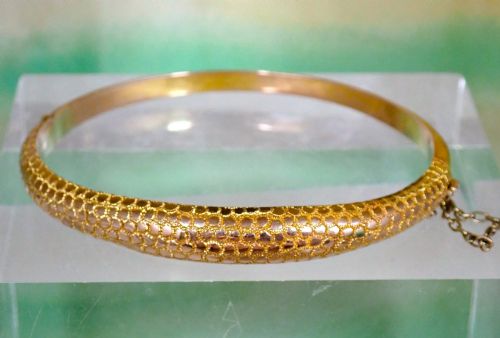
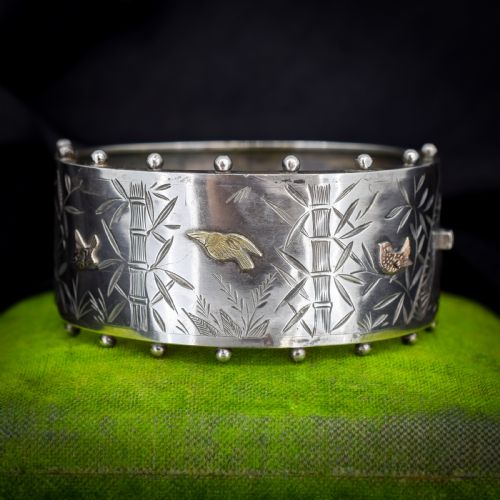
Surface decoration involved hand engraving, chased floral motifs and applied wirework, alongside flush or prong settings for clusters of gemstones.
The listings span from nineteenth-century Victorian silver and gold cuffs to mid-century 9ct gold diamond clusters.
Distinctions in quality
Quality rests heavily on the integrity of the hinge and the snap of the clasp, which should operate smoothly without lateral looseness in the arm.
The weight of the gold and the depth of the hand-engraving or repoussé work dictate the substantive feel and visual crispness of the bangle.
Gemstone selection, from matched old mine-cut diamonds to natural pearls and rich rubies, elevates the artistic ambition of the piece.
Smith and Pepper·Georg Jensen
The Gold Hinged Bangle Glossary
- Hinged bangle
- A rigid circular or oval bracelet fitted with a mechanical pivot, allowing the band to open and close around the wrist. This design became particularly popular during the Victorian period for secure everyday wear.
- Old mine cut
- An early diamond cutting style characterised by a cushion shape, high crown and small table facet. These stones were hand-faceted before modern brilliant cutting standards were established.
- Rolled gold
- A material made by mechanically bonding a thin sheet of gold to a base metal core. It provides the appearance and wear resistance of solid gold at a different weight.
- Repoussé
- A metalworking technique where the design is hammered into relief from the reverse side. It creates rich, tactile surface decoration seen frequently on nineteenth-century cuffs.
- Seed pearl
- A very small, naturally occurring pearl often drilled and threaded or set into clusters. They lend a delicate, luminous texture to floral and sentimental motifs.
Gold Hinged Bangle: Frequently Asked Questions
How do I fasten a gold hinged bangle?
Most antique and vintage examples use a side hinge paired with a tongue-in-groove box clasp, often reinforced with a safety chain.
To open the piece, press the release mechanism or gently pull the halves apart until the hinge pivots fully open.
Can I wear a gold hinged bangle every day?
Solid gold and heavier rolled gold bangles tolerate daily wear well, provided the hinge pin and clasp remain secure and undamaged.
Pieces set with softer organic gems like pearls or opals require greater care to avoid impact and moisture damage.
How do I tell a Victorian bangle from a mid-century one?
Victorian examples frequently feature high-carat rose or yellow gold, heavy hand engraving, Etruscan revival wirework, or gemstone clusters involving old-cut diamonds and natural pearls.
Mid-century pieces often shift toward streamlined profiles, 9ct gold alloys, and different diamond cluster arrangements characteristic of the nineteen-fifties and sixties.
What is the difference between a cuff and a bangle?
While both terms are used interchangeably in the archive, a cuff often denotes a wider, more substantial band with bold surface dimension.
Bangles tend to be narrower and more uniform in profile, though hinged versions of both styles rely on the same mechanical pivot for closure.