


Gold Hanging Lantern
A gold hanging lantern brings warm, reflected illumination to a hallway or entrance, spanning styles from Victorian and Edwardian to French neoclassical designs.
Gold Hanging Lantern
A gold hanging lantern is a ceiling-suspended lighting fixture designed primarily for halls, corridors, and entrance spaces. These pieces emerge across periods from the mid-nineteenth century through the 1930s, encompassing Victorian, Edwardian, and various French aesthetic movements.
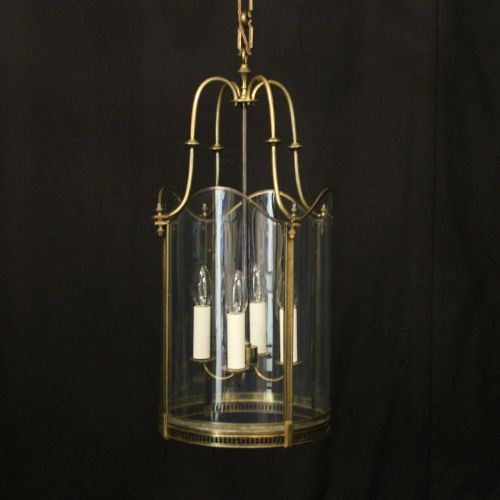
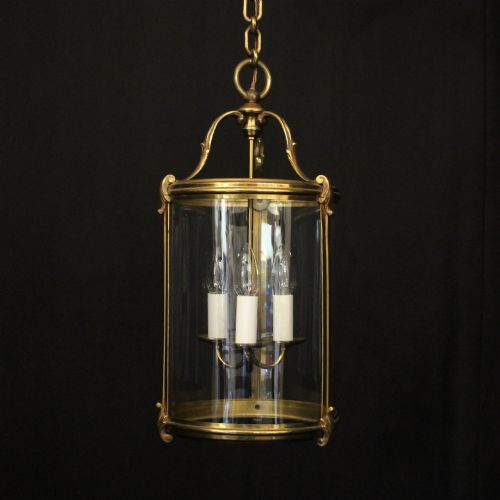
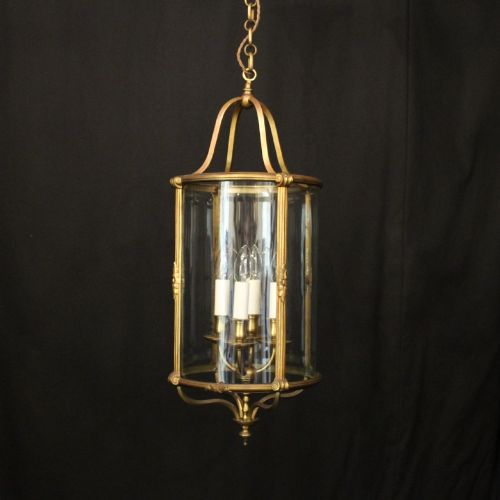
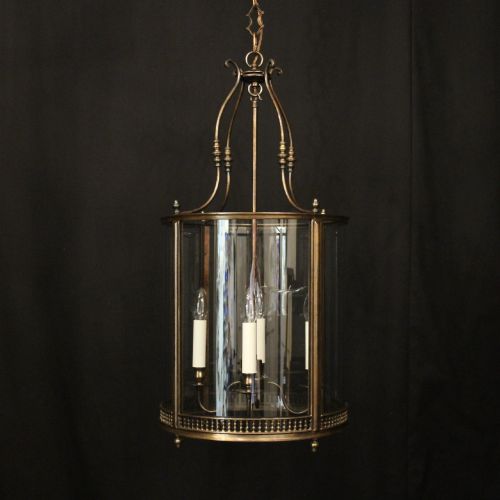
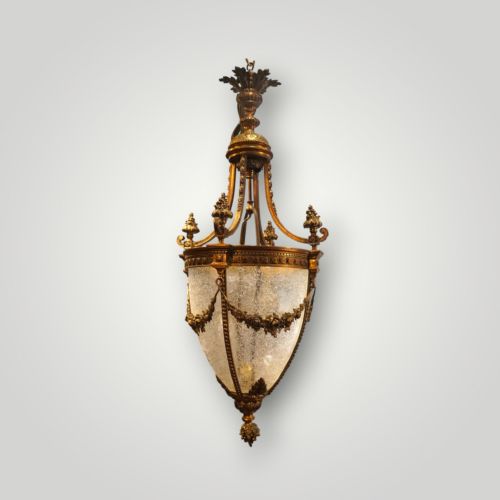
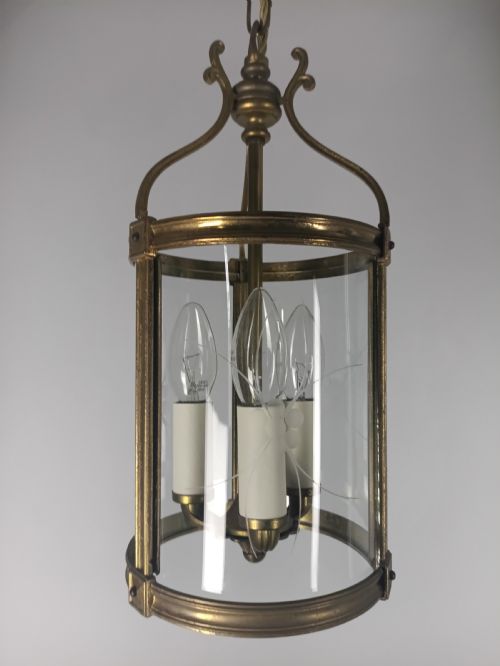
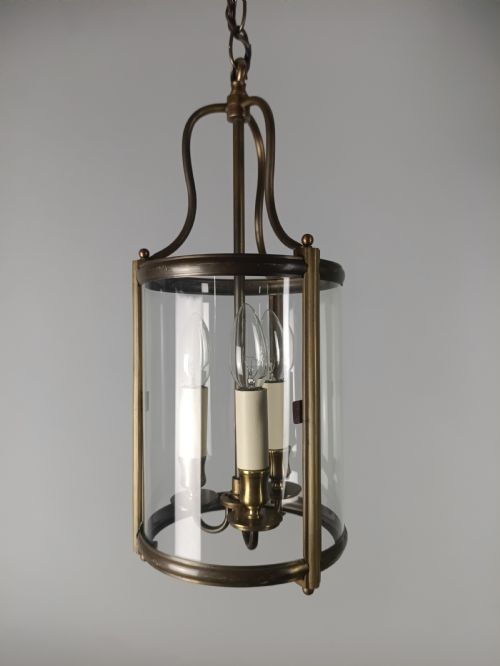
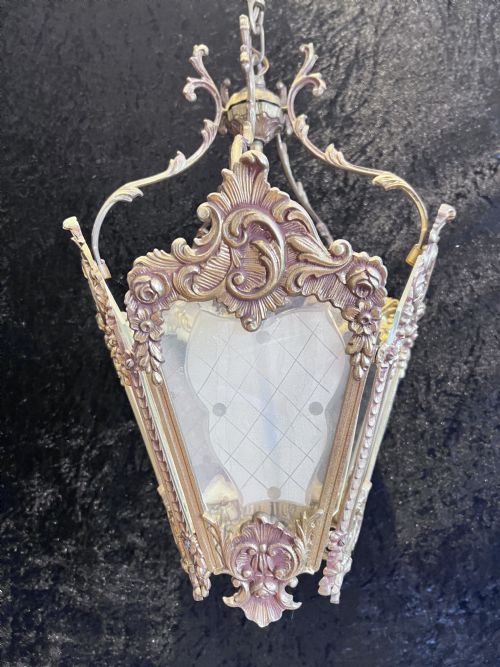
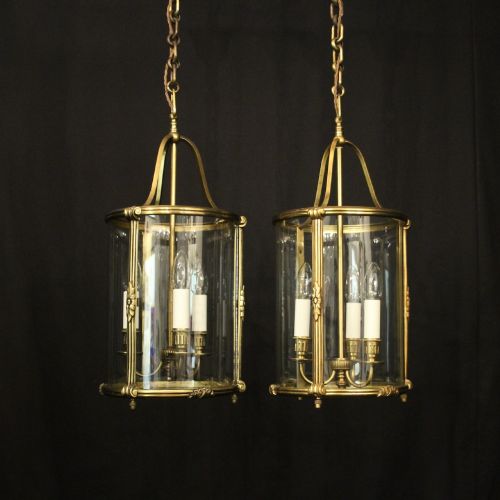
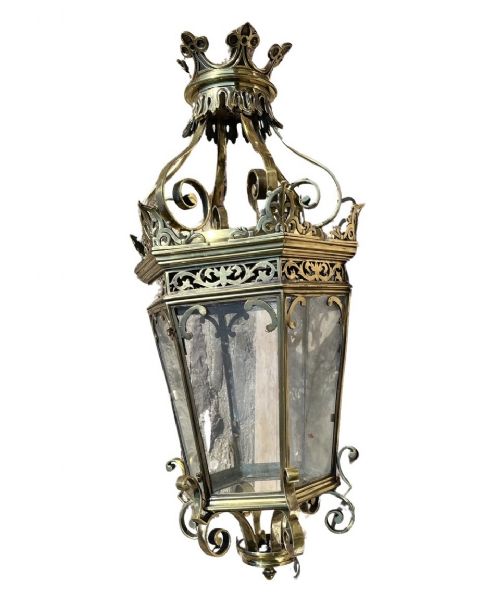
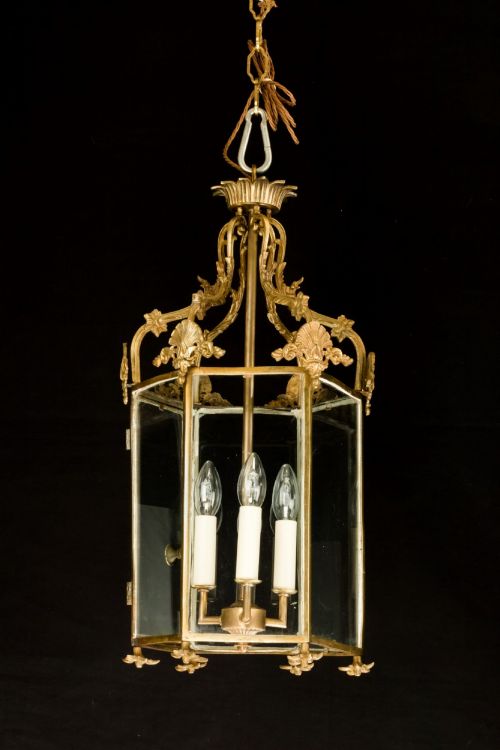
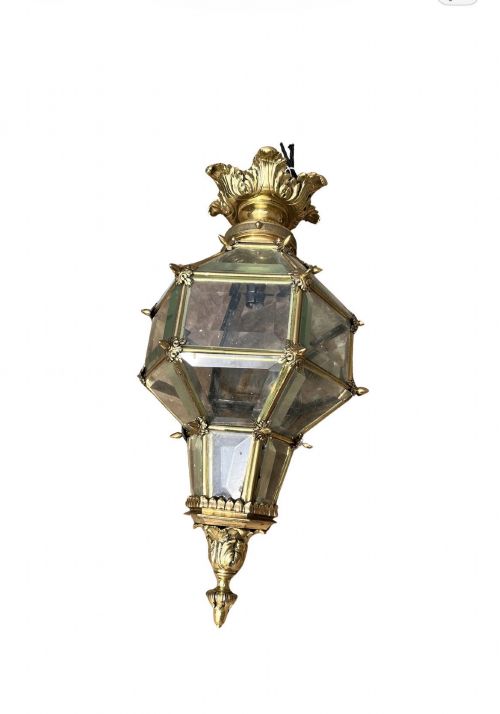
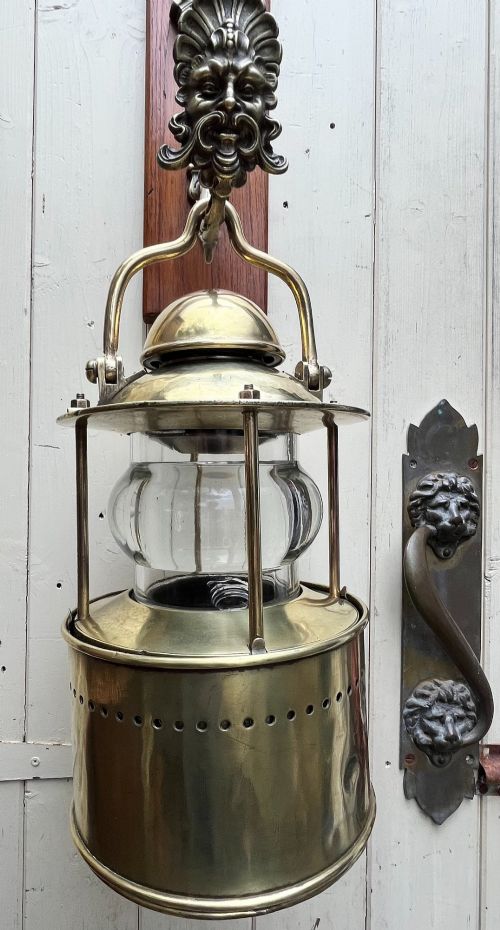
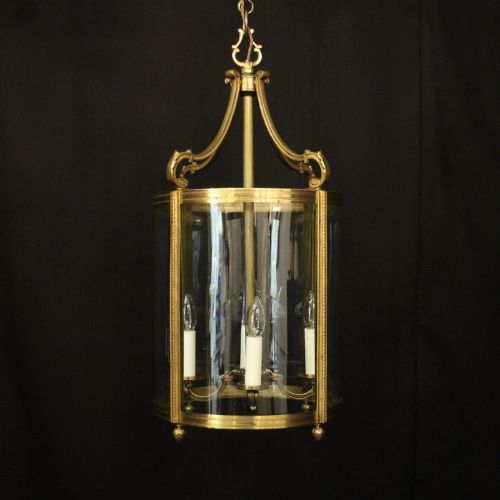
The most common version met on this page is the French gilded brass or bronze hall lantern, frequently featuring convex or bevelled glass panels. English brass examples and hexagonal shapes also appear regularly, alongside specific decorative revivals like Louis XVI and Rococo styles.
Forms span single-light pendants up to four-light or triple-light ceiling fixtures, occasionally taking monumental carved giltwood or pierced brass configurations. Their primary function remains overhead illumination styled with classical or continental ornamentation.
How they were made
Makers constructed these lanterns using brass, bronze, and giltwood frames assembled to hold glass panels. Metalwork components underwent gilding, applying gold leaf or gold finishes to bronze, brass, and ormolu surfaces.
Glass panels were frequently etched, bevelled, or convex in profile to diffuse light from internal burners or electrical wiring. Pierced brass techniques and carved wooden elements appear in specific styles, such as Venetian baroque or nineteenth-century pendant lights.
Listings span periods from 1860 through the 1930s, uniting Victorian and Edwardian examples with French neoclassical and Rococo revival designs.
What varies in quality
Quality separates through the weight and casting crispness of the bronze or brass frame, alongside the depth and durability of the gilding. Superior examples display refined chasing on ormolu mounts and precise assembly of heavy glass panels.
Subtle differences in proportions and adherence to historical design sources, such as Palace of Versailles lanterns, distinguish standard production pieces from finer commission work. The integration of complex multi-light internal clusters also marks the upper tier of execution.
The Gold Hanging Lantern Glossary
- Convex glass
- Curved glass panels that bulge outward from the lantern frame. This shape disperses light more broadly across an entrance hall.
- Gilt bronze
- Bronze metal treated with a gold finish or gold leaf application. It provides a durable, lustrous metallic surface resistant to tarnishing.
- Ormolu
- Finely chased gilded bronze used for decorative mounts and fittings. The technique creates sharp, detailed ornamental highlights on the metal frame.
- Bevelled glass
- Glass panes featuring angled edges ground down along the perimeter. This treatment catches and refracts illumination as light passes through.
- Hexagonal form
- A six-sided geometric configuration common in hall lantern bodies. This shape allows multiple glass panels to enclose the light source evenly.
Gold Hanging Lantern: Frequently Asked Questions
Where should a hanging lantern be placed?
These lanterns function best in entrance halls, corridors, or high-ceilinged vestibules where overhead clearance allows full appreciation of the frame and glass.
They provide downward and diffused ambient light suited to welcoming spaces rather than task-oriented rooms.
Are these lanterns electrified?
Many examples on this page are wired for electricity, reflecting period updates or subsequent conversions from earlier candle and gas fittings.
Buyers should inspect individual listings to confirm whether internal wiring matches current electrical standards.
How do I identify French neoclassical styles?
French neoclassical and Louis XVI lanterns rely on symmetrical geometry, classical architectural motifs, and restrained ornamentation.
They often feature clean lines, urn details, and gilt bronze or brass construction inspired by classical antiquity.
What is the difference between brass and gilt bronze?
Brass is an alloy of copper and zinc with a naturally bright golden metallic appearance, while bronze is a copper and tin alloy that requires gilding to achieve a gold surface.
Both materials were utilised extensively across nineteenth and early twentieth-century lighting.