
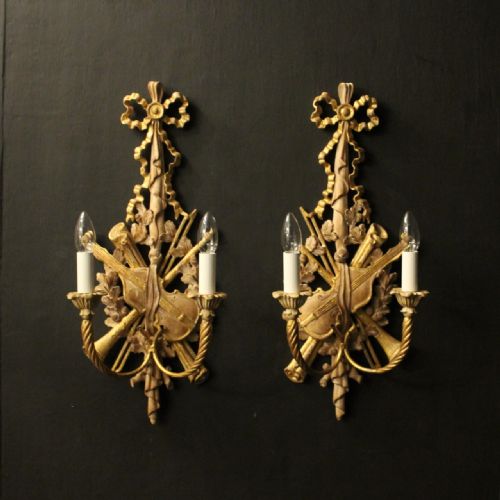


Gold Giltwood Wall Lights
Gold giltwood wall lights bring warm candle or electric reflection to a room through carved timber and metallic leaf.
Gold Giltwood Wall Lights
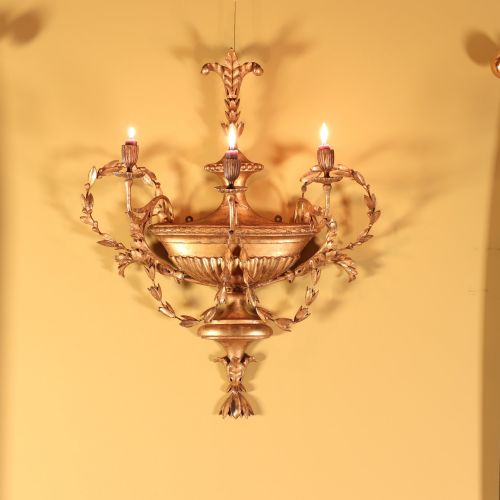
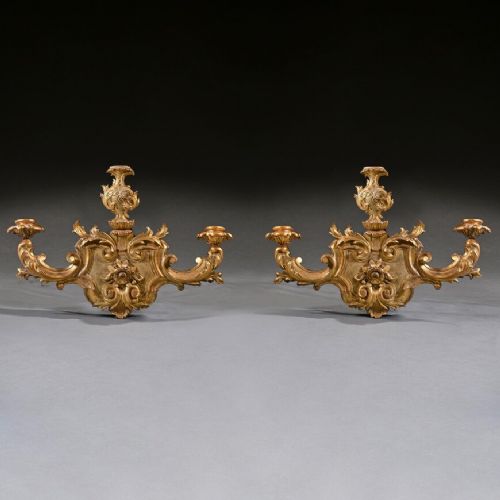
Gold giltwood wall lights combine carved wooden frames with reflective metallic surfaces designed to mount directly onto interior walls. Buyers searching this phrase most frequently encounter pairs originating from Florentine workshops or French makers during the nineteenth and early twentieth centuries.
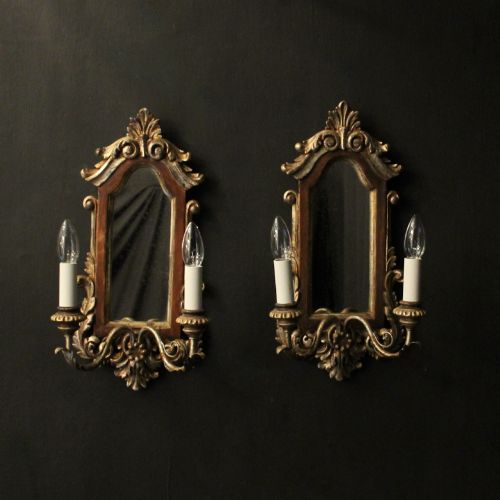
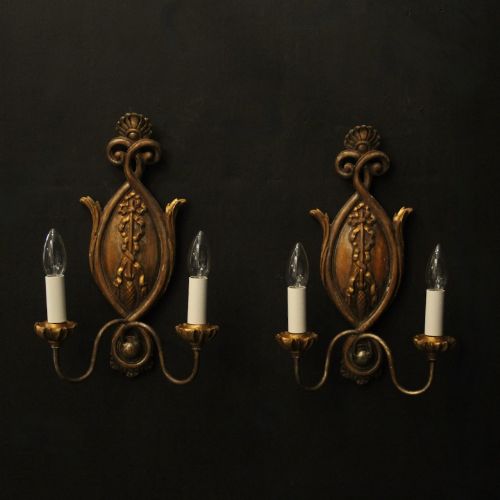
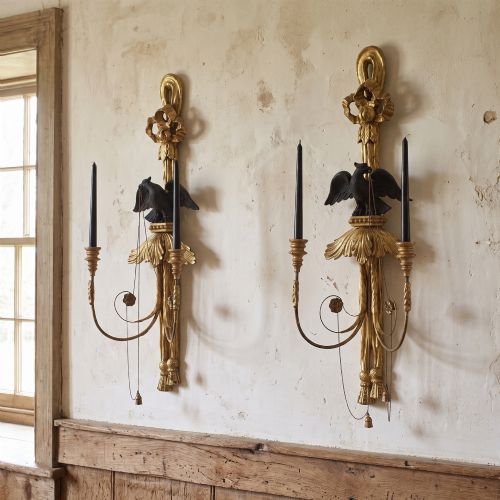
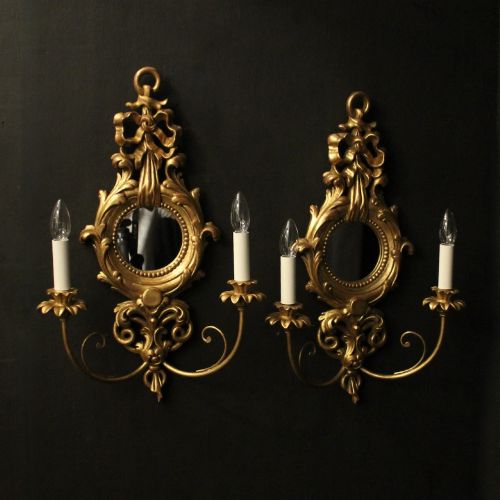
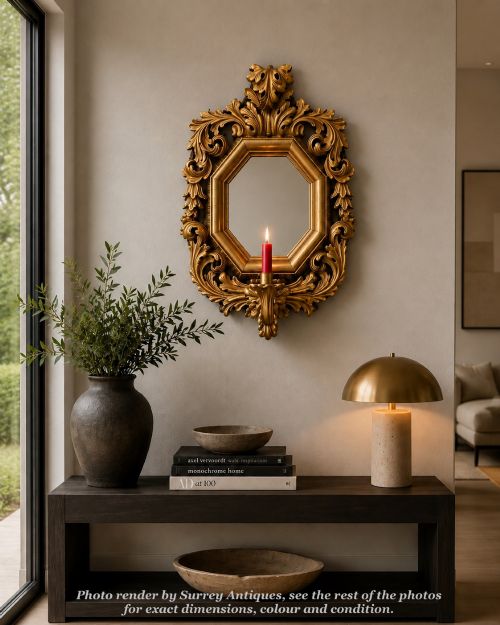
The inventory ranges from simple twin-arm sconces to complex girandole mirrors incorporating glass plates and multiple candle branches. Pieces span styles from Rococo Revival and Neoclassical to Florentine Baroque, reflecting centuries of European decorative design.
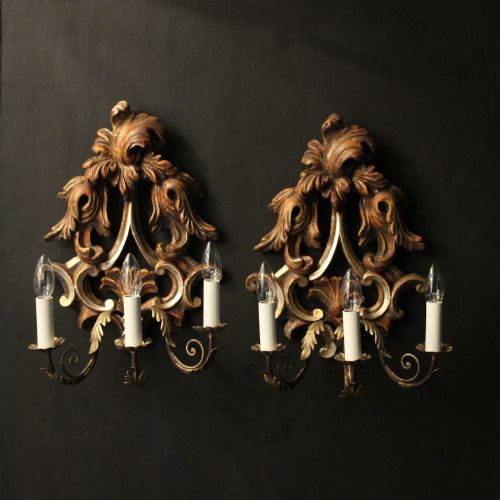
Many examples utilise carved wood and gesso foundations built to hold two, three, or four light arms. Forms also include mirrored sconces and bed crowns that extend illumination across a space.
Materials and construction
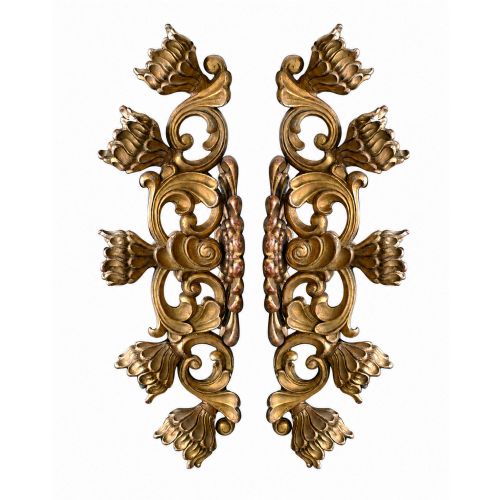
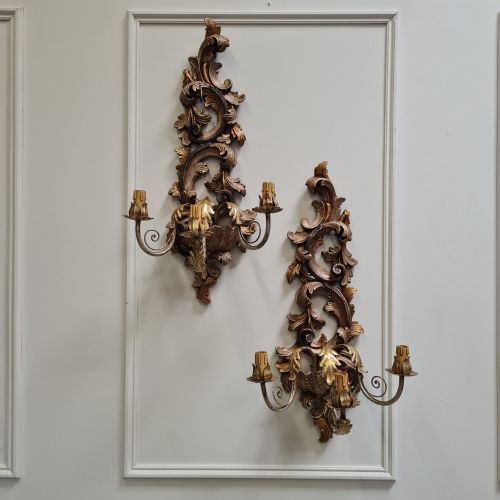
Artisans built these fixtures using carved wood or gesso laid over timber foundations to create intricate relief decoration. Skilled craftsmen then applied gold leaf or gilding to the prepared surfaces, sometimes combining the finish with polychrome paint or ebonised details.
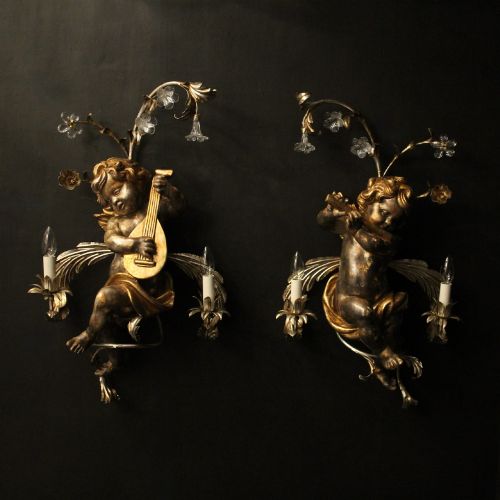
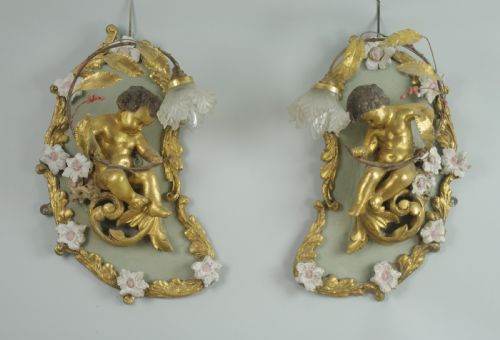
Metal components such as brass arms and glass elements like Murano droplets or mirror plates were integrated into the wooden structures. Hand-carving techniques defined the leaf motifs, putti, and scrollwork visible across the periods.
Listings feature pieces spanning the eighteenth century through to the 1930s, constructed primarily from giltwood, gesso, and brass.
Assessing craftsmanship
Quality rests upon the depth and crispness of the hand-carving within the wooden or gesso details. Superior pieces display sharply defined acanthus leaves, figures, and scrollwork rather than soft or shallow moulding.
The integrity of the original gilding and the cohesion between the wooden frame, metal arms, and integrated mirror glass determine the overall standard. Pieces retaining their original surface patination demonstrate superior historical preservation.
The Gold Giltwood Wall Lights Glossary
- Giltwood
- Timber that has been coated with gold leaf or metallic powder. This finish provides the bright reflective surface characteristic of these decorative wall fixtures.
- Gesso
- A plaster-like mixture applied to wood surfaces as a base for gilding. It allows craftsmen to carve intricate details before applying gold leaf.
- Girandole
- A branched wall light or sconce that often incorporates a mirror plate. The reflective glass multiplies the illumination from candles or lamps.
- Sconce
- A wall-mounted lighting fixture designed to hold candles or electric bulbs. These pieces project outward from the wall surface on decorative arms.
- Polychrome
- Decoration utilising multiple colours painted onto the surface. This technique often appears alongside gold leaf on Italian and French fixtures.
Gold Giltwood Wall Lights: Frequently Asked Questions
How do I date an antique wall light?
Dating relies upon stylistic markers, construction methods, and the type of wood or gesso utilised in the frame. Neoclassical and Rococo Revival indicators help place pieces within specific centuries.
Examining the reverse of the fixture and the joining techniques provides further clues regarding the period of manufacture.
Were these fixtures made as pairs?
Many examples survive as matched pairs designed to flank mirrors, doorways, or fireplaces in formal rooms. Symmetrical arrangement was standard practice in historic European interior design.
Single fixtures also appear, often having been separated from their original companion pieces over time.
How were girandole mirrors used historically?
Girandole mirrors combined reflective glass with candle arms to maximise the spread of light in candlelit rooms. They hung in principal reception spaces where illumination needed enhancement.
The combination of mirror and sconce created a dual function of decoration and functional lighting.
How do I care for antique giltwood?
Maintenance requires gentle dusting with a soft, dry brush to protect the delicate gold leaf and gesso layers. Moisture and harsh cleaning agents can damage the historic surface.
Keeping pieces away from direct heat sources prevents the timber and gesso from cracking.