
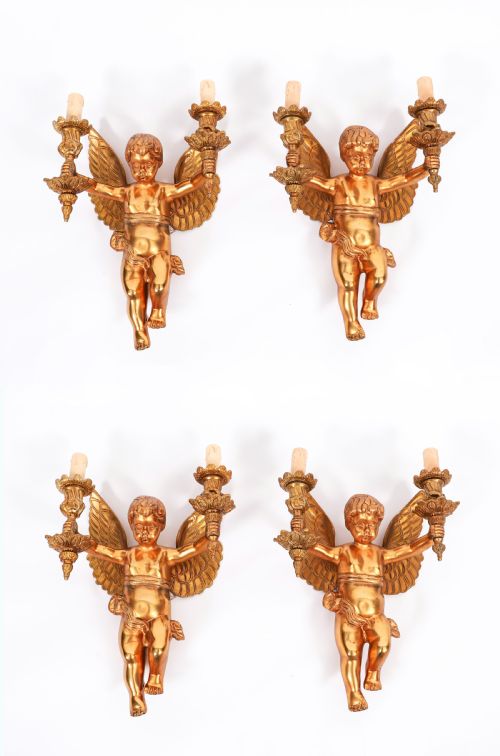


Vintage Italian Wall Lights
These vintage italian wall lights bring carved wood, gesso, and gilded surfaces from the seventeenth century through the 1930s into modern interiors.
Vintage Italian Wall Lights
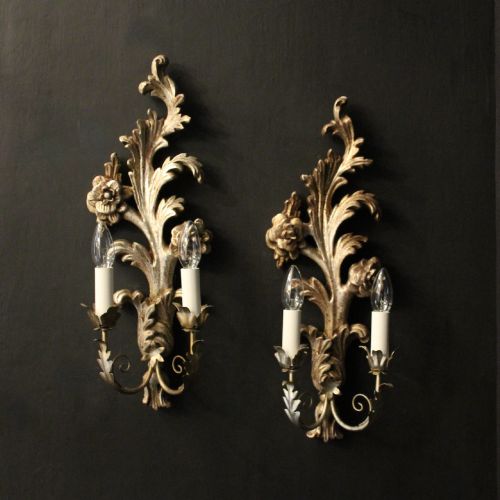
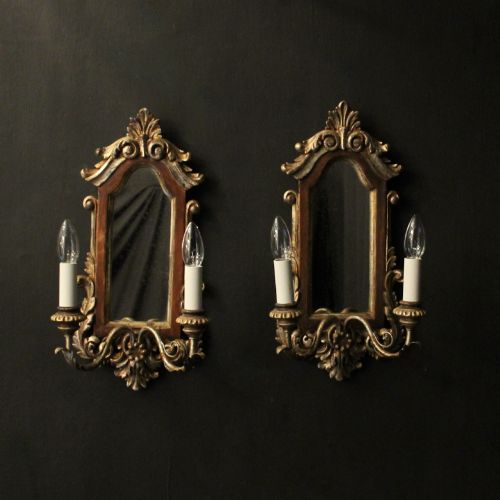
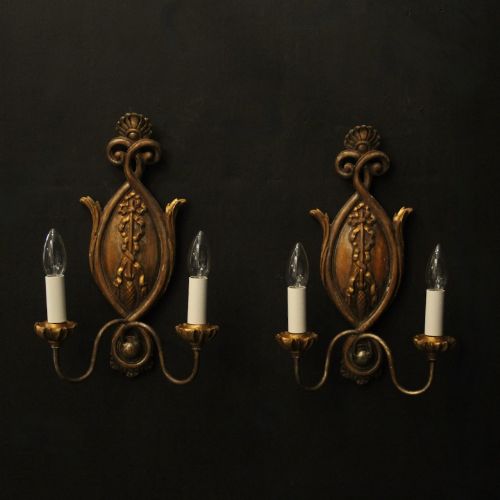
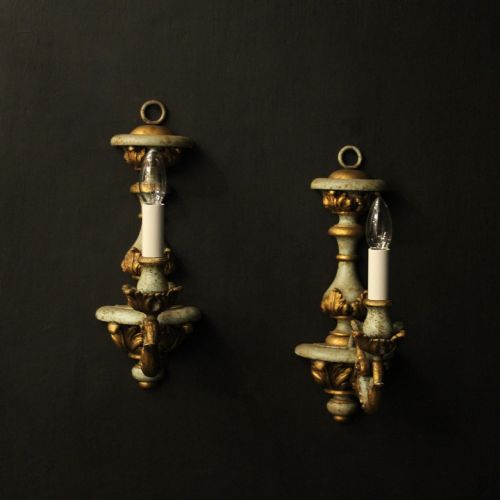
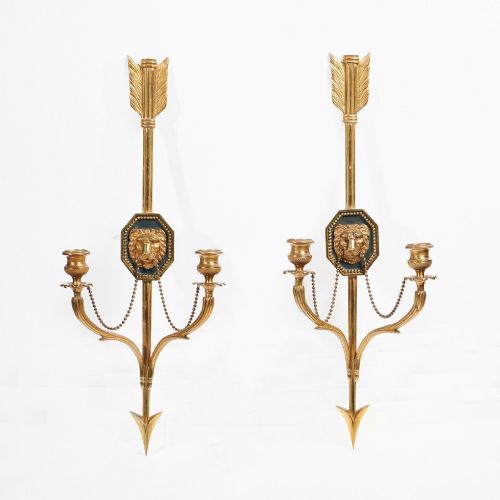
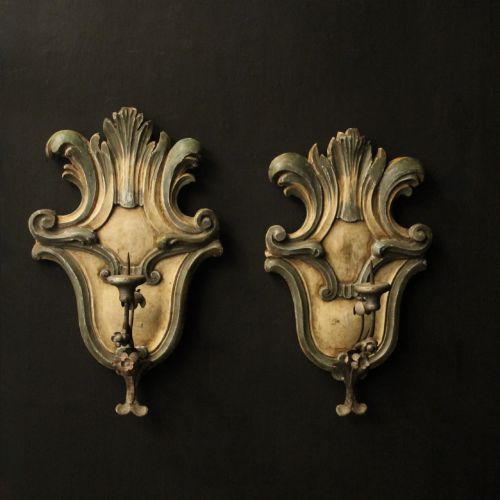
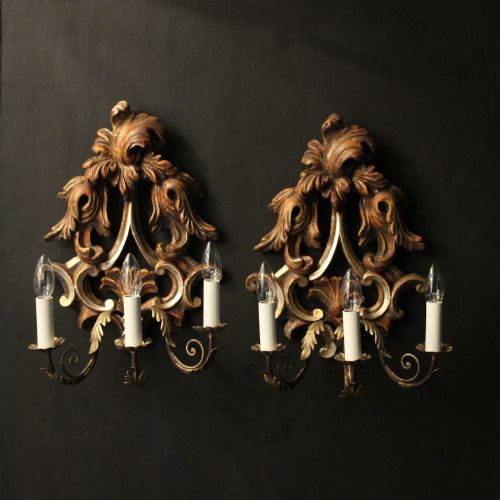
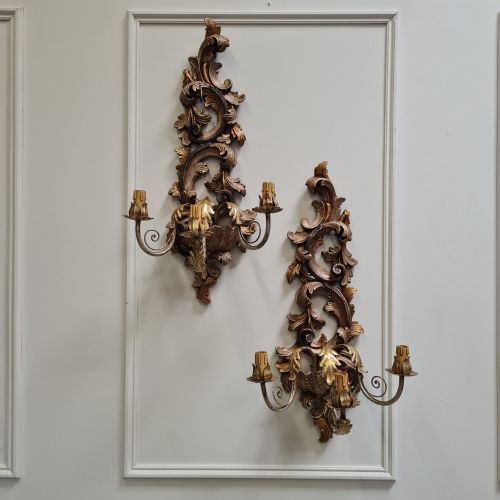
Vintage italian wall lights comprise wall sconces, girandoles, and appliques designed to mount directly onto domestic walls. The pieces on this page lean heavily toward Florentine and Rococo Revival styles from the 1920s and 1930s, alongside earlier nineteenth-century and seventeenth-century examples.
Buyers encounter twin arm, triple arm, and four arm variations alongside single arm lights and pricket candle sconces. Wooden forms dominate the selection, shaped into leaf motifs, cherubs, and gilt frames designed to hold multiple candles or electric conversions.
How they were made
Carved wood, gesso, and solid timber form the structural foundation of these Italian wall lights. Artisans applied layers of gold leaf, silver leaf, and polychrome paint over carved surfaces to achieve rich decorative finishes.
Ormolu, brass, metal, and toleware appear across specific French Empire and Grand Tour styles. Glass elements integrate into girandoles to reflect candle or lamp illumination.
The listings span periods from the 17th century through Victorian and 1930s production.
What varies in quality
The depth and intricacy of the hand-carved wood define the upper tier of these wall lights. Crisp detailing in leaf motifs, cherubs, and Rococo scrolls distinguishes superior craftsmanship from simpler production.
The application and preservation of gold leaf, silver leaf, and polychrome finishes dictate the visual impact of each piece. Intact gilding with subtle ageing holds greater fidelity to original seventeenth-century through 1930s aesthetics than heavy later repainting.
The Vintage Italian Wall Lights Glossary
- Girandole
- A branched wall light or sconce fitted with a mirror to reflect the light. These fixtures combine carved frames with reflective glass panels.
- Giltwood
- Wood that has been treated with a thin layer of gold leaf or gold paint. This technique provides a metallic sheen across Florentine frames and armatures.
- Gesso
- A plaster mix applied to wood surfaces as a base for gilding and painting. It allows carvers to crisp up fine decorative details before applying gold leaf.
- Toleware
- Painted or enamelled metalware used in domestic decorative objects. Pieces incorporate tin or iron elements alongside wooden components.
- Ormolu
- Gilded bronze or metal ornamentation applied to furniture and light fittings. It brings a bright metallic contrast to carved wooden sconces.
Vintage Italian Wall Lights: Frequently Asked Questions
How do I wire vintage italian wall lights?
Most of these fixtures originated for candles and require professional conversion for modern electrical wiring. Electricians typically run concealed cords through the back plates or arms to preserve the carved exterior.
Matching the appropriate bulb wattage helps protect delicate antique gilding and polychrome paint from excess heat over time.
What is the difference between a sconce and a girandole?
A sconce is a wall-mounted light fixture designed to hold candles or electric bulbs. A girandole specifically includes a mirror plate integrated into the back to multiply the illumination in a room.
Both forms appear frequently in Florentine and Baroque styles across the listed periods.
How do I clean gilded wood wall lights?
Dust these fixtures gently with a dry, soft brush or a clean microfiber cloth. Avoid all water, liquid cleaners, and abrasive materials that can strip away old gold leaf and gesso.
Keeping the lights away from direct moisture preserves the underlying timber and surface finishes.
How can I tell a Florentine style wall light apart?
Florentine wall lights typically feature ornate carved leaf motifs, scrolls, and heavy gilding rooted in Renaissance and Baroque traditions. Many examples from the 1920s and 1930s emulate these older regional aesthetics.
They often present multi-arm configurations designed to hold candles in grand drawing rooms or hallways.