



Gold Gilt Wall Clock
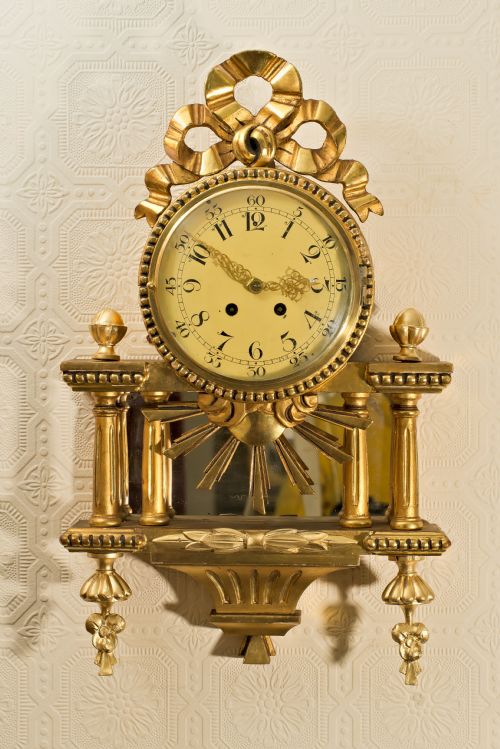
A gold gilt wall clock brings warmth and reflected light to a room, ranging from French Louis XVI style cartel models to star burst designs.
Gold Gilt Wall Clock
A gold gilt wall clock serves both a practical and decorative purpose in an interior, functioning as a focal point on a wall. When searching for a gold gilt wall clock, buyers encounter several distinct historical forms spanning from the eighteenth century into the twentieth century.
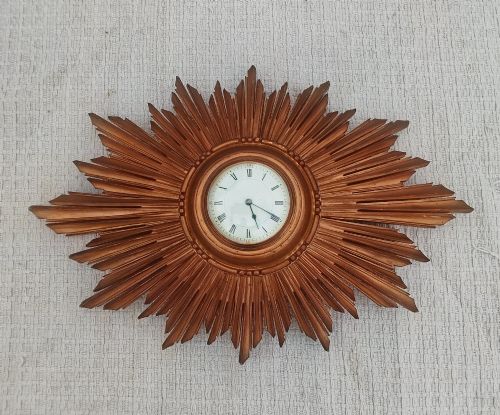
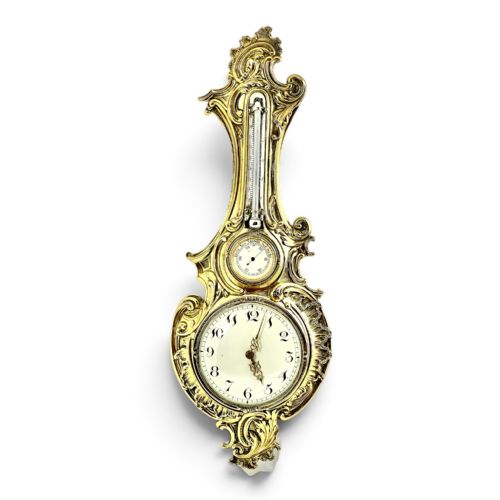
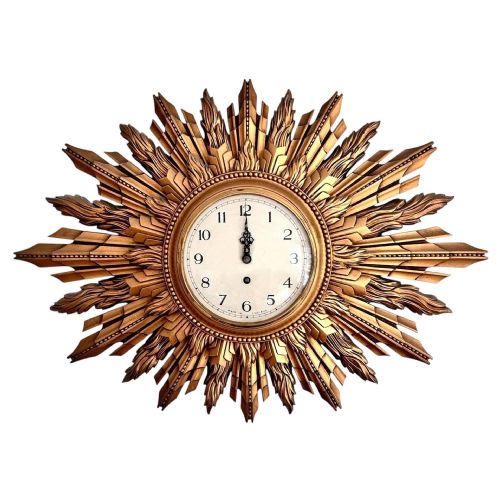
The selection on this page relies heavily on French cartel designs rendered in ormolu or gilt bronze, alongside English and Swedish examples. Pieces range from large nineteenth century interpretations of Louis XVI and Rococo styles to early twentieth century star burst and sunburst wall clocks in giltwood.
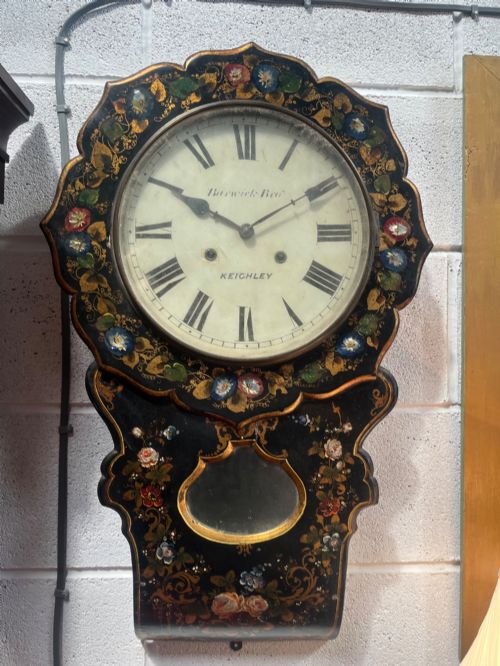
Makers and regional styles shape the offering, from London makers producing automaton picture clocks to Swedish pieces featuring eglomise glass. Buyers also find barometers and clock stations combining temperature measurement with timekeeping.
Materials and construction
Craftsmen utilised carved wood, gesso and gold leaf to create giltwood frames, often shaped into sunbursts or elaborate architectural cartel cases. Bronze and ormolu formed the basis for French Rococo and Louis XVI wall clocks, requiring precise casting and mercury gilding or electroplating.
Glass, enamel and ebonised wood appear frequently as supplementary materials, protecting delicate painted dials and adding contrast to the metallic lustre. Dial faces often feature enamel cartouches and fine metal hands, housed behind glass doors within the decorative wooden or bronze housings.
Some eighteenth-century clocks feature moving mechanical automatons that bring painted scenes to life while the hours tick away.
Evaluating the craftsmanship
Quality rests in the crispness of the carving on giltwood pieces and the depth of chase work on ormolu and bronze cartel clocks. Superior examples display refined proportions and meticulous finishing that retain their original luminosity over centuries.
The integrity of the gilding and the authenticity of the movement relative to the case distinguish exceptional pieces from standard productions. Maker attribution and signed dials further elevate the standing of a wall clock within this group.
WETTERSTRANDS·Smiths·Perivale of England·WILLIAM WEBSTER·Henri Dasson
The Gold Gilt Wall Clock Glossary
- Cartel clock
- A wall-mounted clock housed in an ornate frame made of gilt bronze, ormolu, or giltwood. These cases became popular in France during the eighteenth century and inspired later revival styles.
- Ormolu
- Finely ground high-carat gold applied to a bronze base using a mercury amalgam technique. This process creates a rich, durable golden surface seen on French decorative pieces.
- Eglomise
- A technique of cold painting and gilding on the reverse side of glass panels. It produces a mirror-like finish often incorporated into the doors of Swedish and continental clocks.
- Star burst
- A decorative wall clock design featuring radiating wooden or metal rays coated in gold leaf. This style gained popularity during the early twentieth century.
- Automaton
- A mechanical feature incorporated into a clock face or picture that moves as the mechanism operates. Eighteenth-century English examples demonstrate this intricate craftsmanship.
Gold Gilt Wall Clock: Frequently Asked Questions
What is a cartel wall clock?
A cartel clock is an ornamental wall clock designed to be hung directly on a wall rather than placed on a mantel or floor. They emerged in France and feature elaborate frames made from gilt bronze, ormolu, or carved wood.
These pieces often display symmetrical or asymmetrical Rococo and Neoclassical motifs, serving as prominent decorative elements in traditional interiors.
How do I date a giltwood sunburst clock?
Dating relies on examining the construction of the wooden rays, the type of gesso used beneath the gold leaf, and the mechanism style. Earlier nineteenth-century examples show hand-carved wooden construction with traditional bole and gold leaf application.
Twentieth-century variations, such as those from the Art Deco period or mid-century eras, often utilise lighter assembled frames, alternative metallic finishes, or electric and modern mechanical movements.
Where should I hang a heavy ormolu clock?
Heavy ormolu and gilt bronze cartel clocks require secure mounting directly into structural wall studs or masonry using appropriate fixings. The substantial weight of cast bronze cases demands professional installation to ensure stability.
Placement should avoid areas subject to extreme temperature fluctuations or direct moisture, which can affect the delicate gilding and internal gear trains.
What is eglomise glass?
Eglomise is a decorative technique where artists apply gold or silver leaf and paint to the reverse side of a glass panel. This method protects the delicate artwork behind the glass while producing a reflective, glossy surface.
Clock makers utilised this process on door panels and lower window sections of Swedish and continental wall clocks to add visual depth and contrast to the surrounding gilt frame.