
Gold Gilt Mantel Clock
A gold gilt mantel clock brings nineteenth-century drawing rooms alive with the steady tick of French brass and the gleam of ormolu.
Gold Gilt Mantel Clock
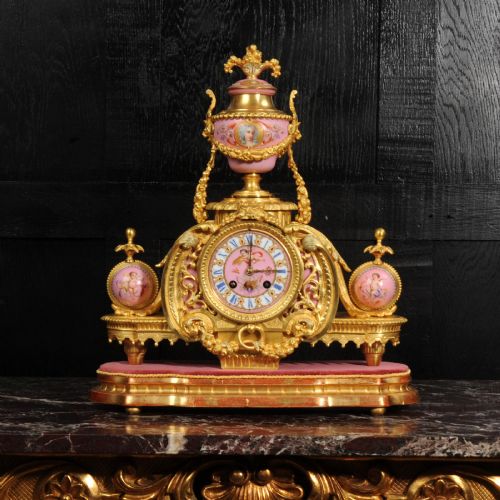
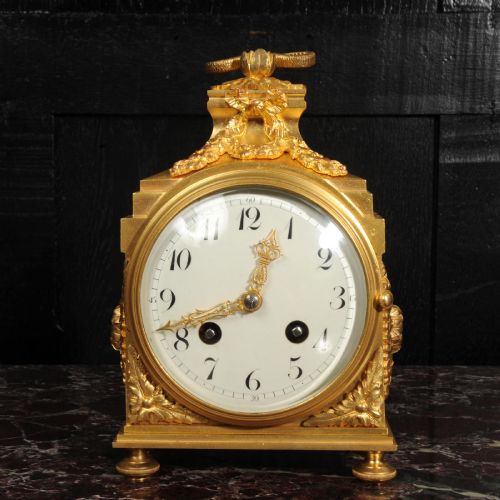
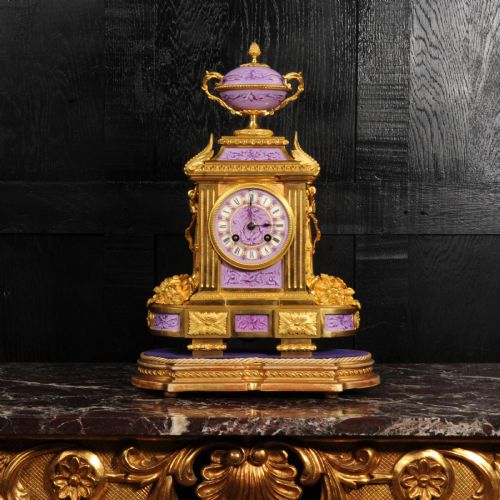
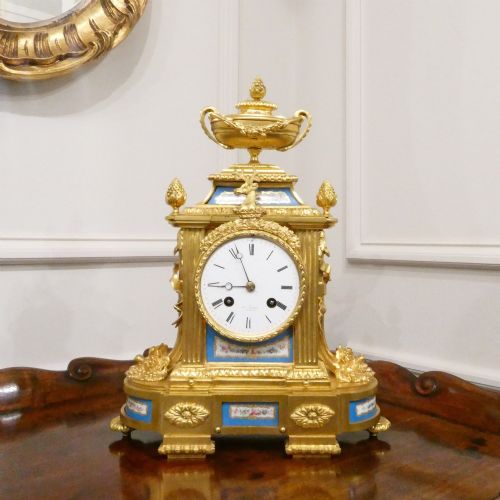
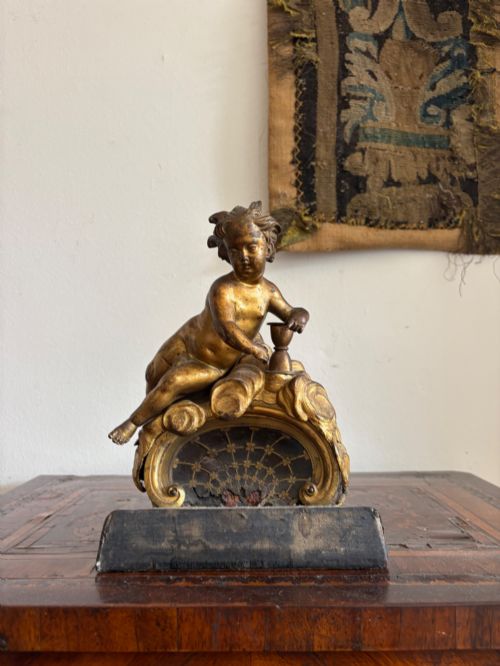
When you search for a gold gilt mantel clock, you encounter striking domestic timepieces spanning the nineteenth century, predominantly originating from French workshops and Parisian makers. These objects combine timekeeping with sculptural bronze, marble, and porcelain to anchor a room's decor.
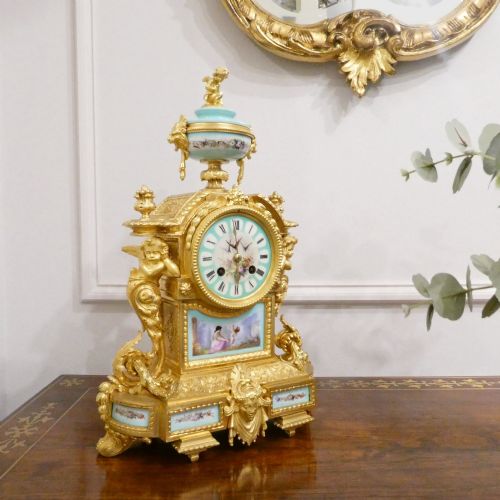
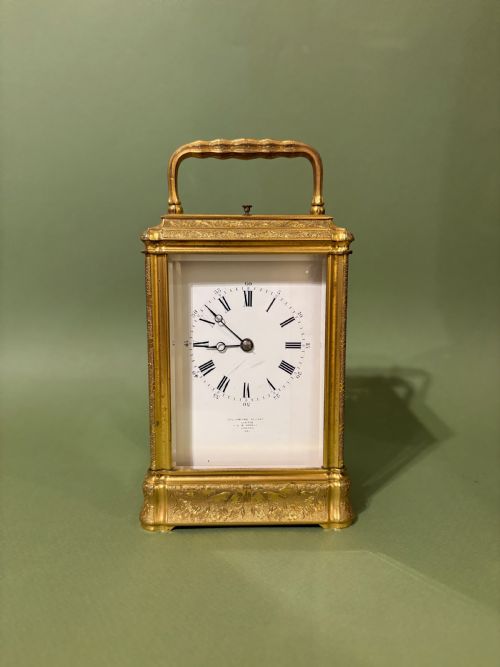
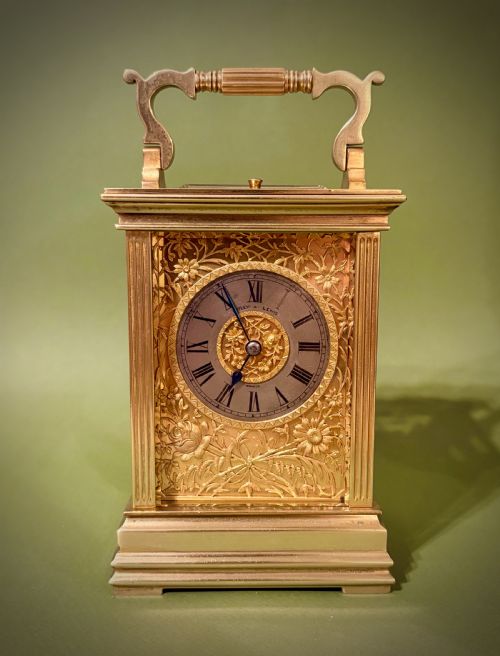
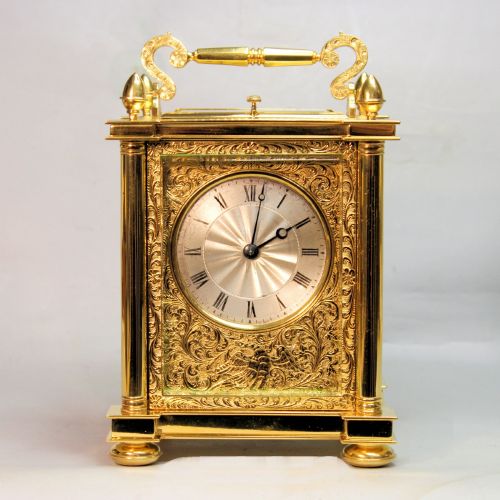
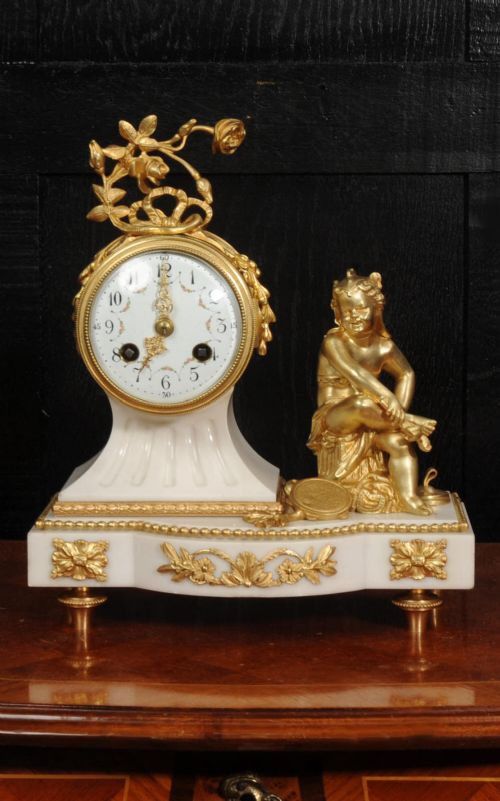
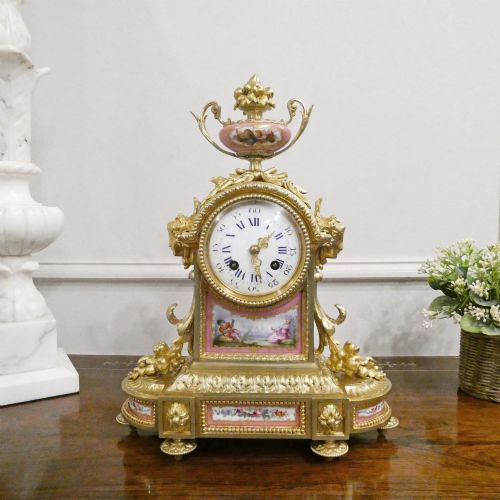
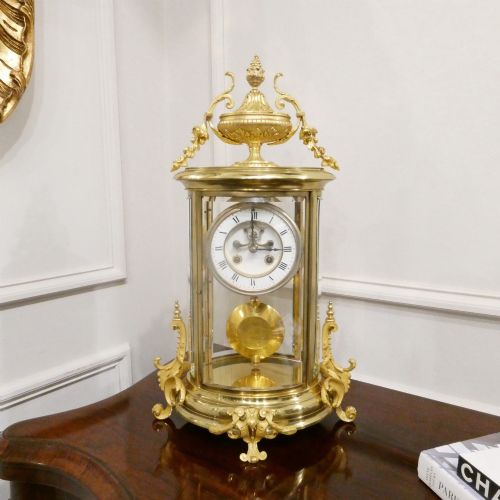
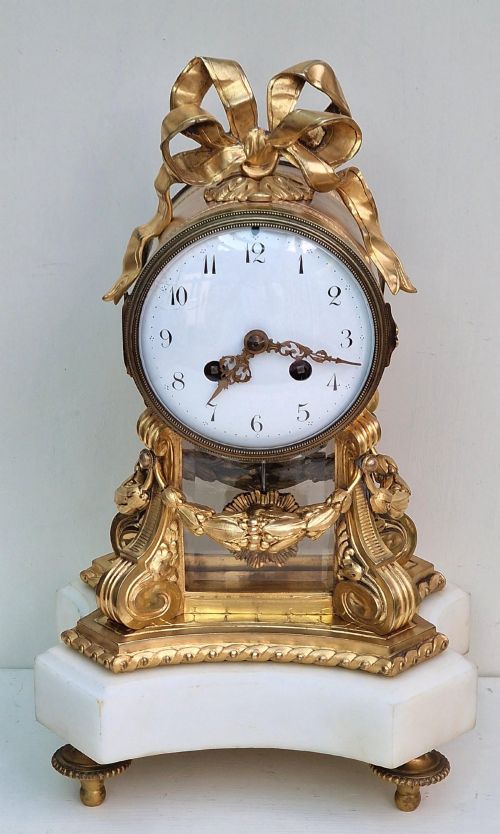
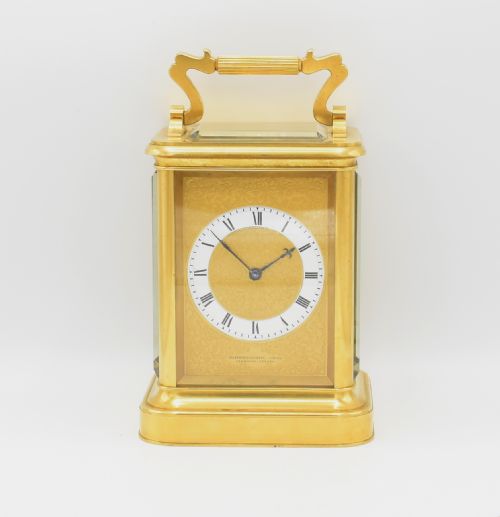
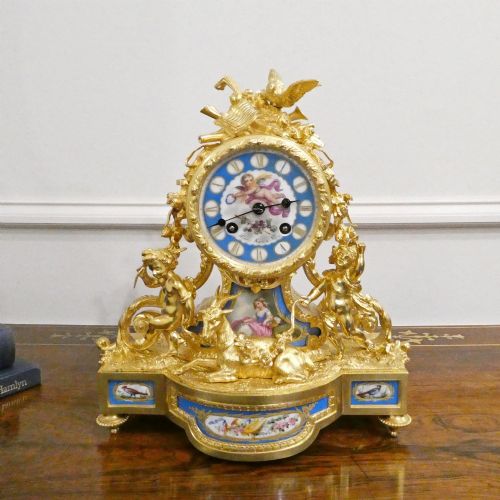
The prevalent forms on this page range from architectural Louis XVI style gilt bronze cases and figural Empire models to porcelain-mounted mantel clocks and brass carriage clocks. Many date from the Victorian era and reflect the ornate revival styles popular across Europe during that period.
How they were made
Maker's workshops cast bronze and brass into intricate frames, applying mercury gilding or modern electroplating to create the characteristic gold surface known as ormolu. Artisans then chased the metal by hand to sharpen foliage, figures, and architectural motifs.
Cases frequently incorporate polished white marble bases, bevelled glass panels, and hand-painted Sèvres porcelain plaques decorated with classical scenes or florals. Enamel dials carrying Roman or Arabic numerals sit protected behind curved bezels.
Materials across these listings include enamel, gilt bronze, glass, ormolu, brass, porcelain, gilt brass, and marble.
What varies in quality
Quality rests upon the crispness of the bronze chasing and the depth of the original fire-gilding, where inferior pieces show blunt casting and flat surfaces. Maker signatures stamped onto the movement backplate distinguish workshop standards.
The integration of materials dictates the standing of a piece, separating straightforward brass timepieces from elaborate creations featuring multi-part marble bases, figural mounts, and intact porcelain panels.
HENRI JACOT·COUSENS & WHITESIDE·Achille Brocot·Henry Marc·Japy Freres·Samuel Marti·Henry Dasson·Etienne Lenoir·Canaillor of Paris
The Gold Gilt Mantel Clock Glossary
- Ormolu
- Gilt bronze created by applying a mixture of gold and mercury to a bronze base before firing. This technique produces a durable, rich golden surface found on nineteenth-century French clocks.
- Carriage clock
- A portable spring-driven timepiece designed for travel, housed in a brass or gilt case with glass panels. They often feature repeating mechanisms to strike the hours on demand.
- Garniture
- A set consisting of a central clock flanked by matching decorative objects such as candelabra or urns. These sets were designed to sit symmetrically on a mantelpiece.
- Fusee
- A conical pulley used in clock movements to maintain even force on the gear train as the mainspring unwinds. This mechanical addition improves timekeeping accuracy.
- Chasing
- The artful finishing of cast metal using small punches and hammers to texture surfaces and sharpen details. Fine chasing separates master bronziers from routine foundry production.
Gold Gilt Mantel Clock: Frequently Asked Questions
How do I wind a mantel clock?
Use the correct winding key gently on the dial apertures, turning until you feel resistance without forcing the spring.
Most nineteenth-century movements run for eight days per wind and require a steady hand to avoid overwinding.
What is the difference between ormolu and brass?
Ormolu refers specifically to gilded bronze where gold is bonded to the metal base, while brass is an alloy of copper and zinc.
Ormolu displays a warmer, deeper golden hue and sharper cast detail than standard polished brass.
How do carriage clocks work?
These portable clocks rely on a mainspring and a balance wheel rather than a traditional pendulum, allowing them to keep time while moving.
Many incorporate striking trains that sound the hours and quarters automatically or on demand.
Why do porcelain plaques appear on these clocks?
Clockmakers collaborated with porcelain factories to incorporate hand-painted ceramic panels that matched the decorative tastes of the Victorian and Louis XVI periods.
These plaques typically feature pastoral scenes or floral motifs framed within the gilt bronze case.