



Gold Gilt Footstool
A gold gilt footstool brings warmth and opulent texture to a room, offering both practical comfort and decorative presence.
Gold Gilt Footstool
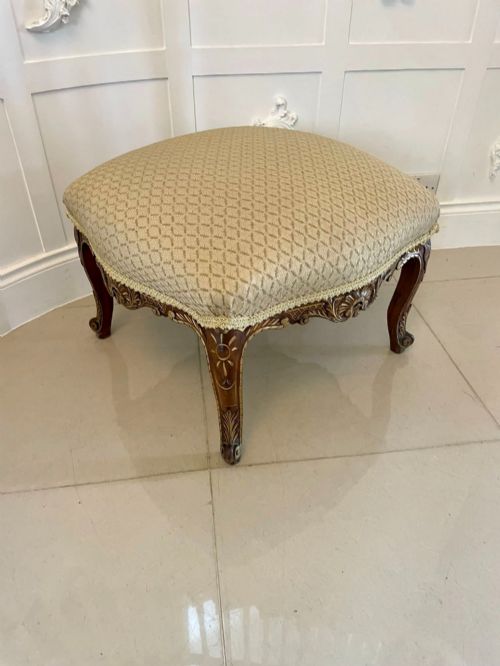
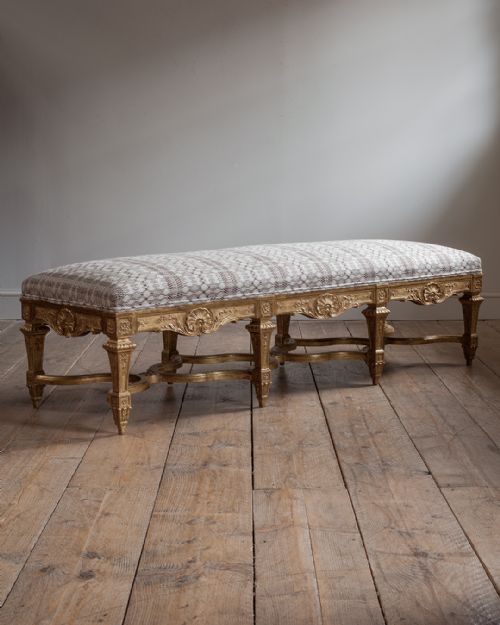
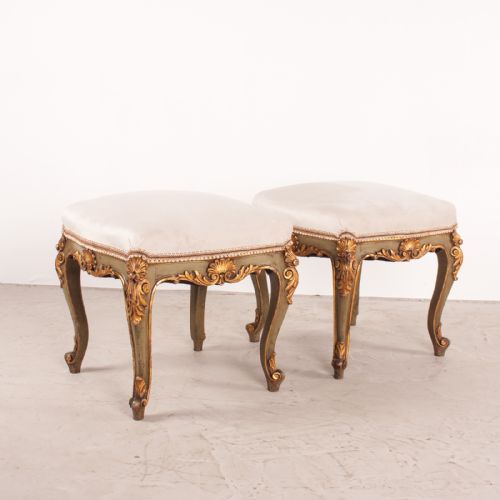
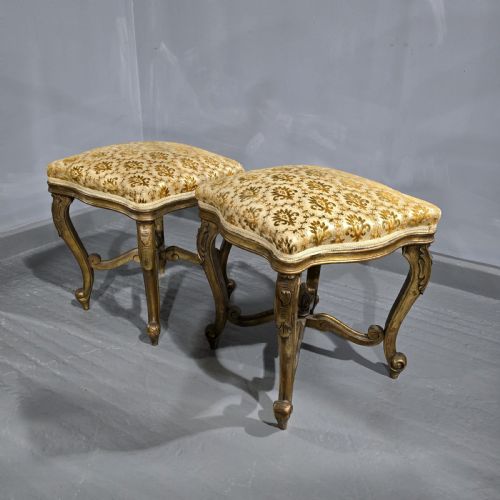
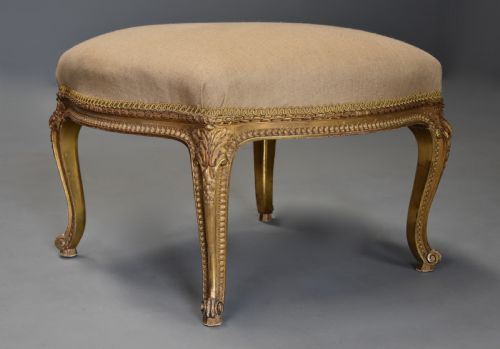
A gold gilt footstool typically presents as a compact seat designed to elevate feet or provide low occasional seating, frequently surfacing in Victorian and nineteenth-century forms. These pieces often draw upon Continental design vocabularies, including Louis XV and Louis XVI revivals, alongside William IV interpretations. Buyers encounter various configurations ranging from standard upholstered stools to curule designs and rocking gout stools.
The aesthetic vocabulary leans heavily on French styling, featuring carved timber frames enhanced with gilded surfaces and diverse textile coverings. Many examples reflect nineteenth-century craftsmanship, utilising rich wood foundations paired with elaborate decorative carving. They serve as versatile interior accents that complement both traditional and eclectic living spaces.
How they were made
Makers constructed these frames predominantly from timber such as walnut, applying carved detail before finishing the surfaces with giltwood or parcel gilt treatments. Artisans utilised traditional joinery methods to ensure stability in relatively small forms that endured daily use. Gilder's work involved applying thin gold leaf over prepared grounds to achieve the characteristic metallic sheen.
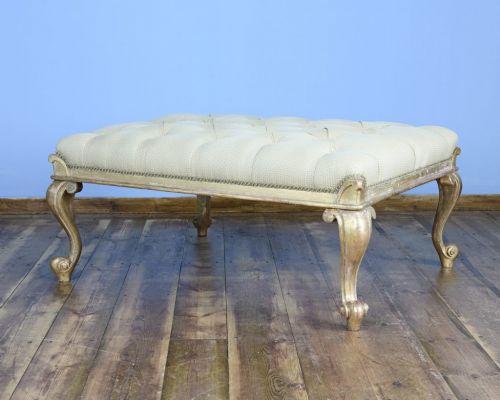
Upholstery completed the pieces, utilising textiles like silk, velvet, and general decorative fabrics secured to the wooden frames. Some examples incorporate deep buttoning techniques to enhance both comfort and visual texture. These varied coverings reflect the interior tastes of the periods in which they were produced.
The inventory includes French revival styles alongside English Georgian and William IV examples.
What varies in quality
The refinement of the carving dictates much of the visual merit, distinguishing fluid, hand-carved ornamentation from simpler or more mechanical execution. High-quality examples display crisp detailing in the giltwood work, where the application of gold leaf retains its depth and integrity across complex contours. The choice of underlying timber, such as walnut, and the structural robustness of the frame further separate standard production from superior pieces.
Upholstery choices and the preservation of original textile elements contribute significantly to an individual piece's character. Pieces retaining period silks or velvets, or those demonstrating meticulous traditional re-upholstery, hold greater visual harmony. Maker stamps or formal attributions introduce an additional layer of distinction to specific nineteenth-century examples.
LOIDRAULT FRERES PARIS·A.M.E. Fournier
The Gold Gilt Footstool Glossary
- Giltwood
- Wood that has been coated with gold leaf or powder. This finish provides a bright, reflective surface characteristic of formal antique seating.
- Parcel Gilt
- A decorative treatment where only specific portions of an object are gilded, leaving other areas like ebonised wood or natural timber exposed in contrast.
- Curule Stool
- An ancient form of seating featuring a cross-frame shape resembling an "X". This classical silhouette appears in nineteenth-century revival pieces.
- Gout Stool
- A specialised footstool designed with an adjustable or rocking mechanism to elevate the foot of someone suffering from joint discomfort. These items combine medical utility with decorative joinery.
- Ebonised
- Wood treated with a finish to make it resemble ebony. This dark ground frequently appears beneath parcel gilt highlights on Victorian examples.
Gold Gilt Footstool: Frequently Asked Questions
What periods do these footstools come from?
The available selection primarily spans the nineteenth century, encompassing Victorian productions and earlier Georgian influences. Makers during this era frequently drew inspiration from French court styles of Louis XIV, XV, and XVI.
These dates reflect a period of extensive revivalism in furniture design, where historical motifs were reinterpreted for contemporary nineteenth-century interiors.
How were these stools originally used?
They functioned primarily as comfortable footrests or low occasional seats in formal drawing rooms and parlours. Some specialised variants, such as rocking gout stools, provided specific physical support.
Their decorative gilt surfaces ensured they contributed to the overall opulent aesthetic of nineteenth-century reception spaces even when unoccupied.
What materials should I expect to find?
Frames are constructed from woods like walnut and general timber, which then receive a giltwood or parcel gilt finish. Upholstery materials include traditional silk, velvet, and various woven textiles.
Ebonised wood surfaces also appear, often paired with selective gilding to create strong visual contrasts on Victorian frames.
How do I care for giltwood furniture?
Giltwood requires gentle dusting with a soft, dry cloth to protect the delicate gold leaf surface from abrasion. Avoid placing these pieces in direct sunlight or near moisture sources to preserve the historic finish.
Maintaining stable environmental conditions helps prevent the underlying timber from shifting and protects the integrity of the antique gilding.