





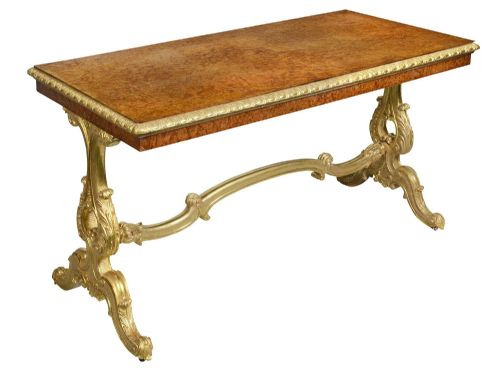


Gold Gilt Centre Table
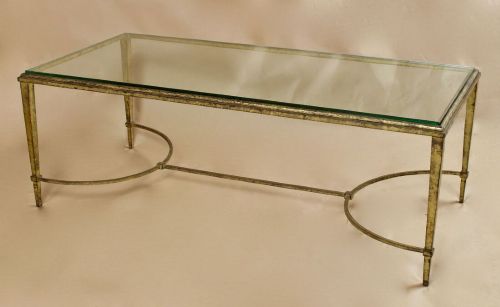
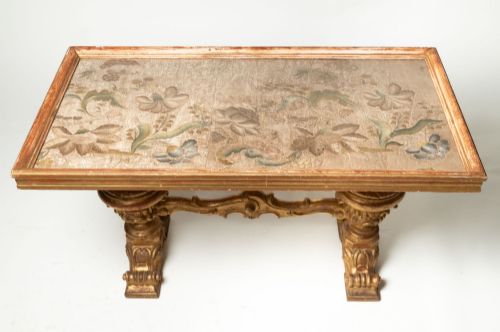
A gold gilt centre table commands attention in a room, offering a gilded surface for display and drawing the eye with carved or mounted details.
Gold Gilt Centre Table
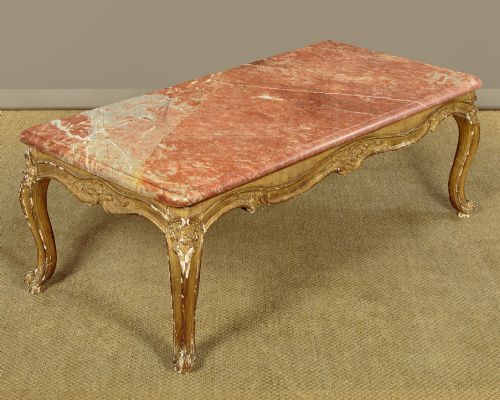
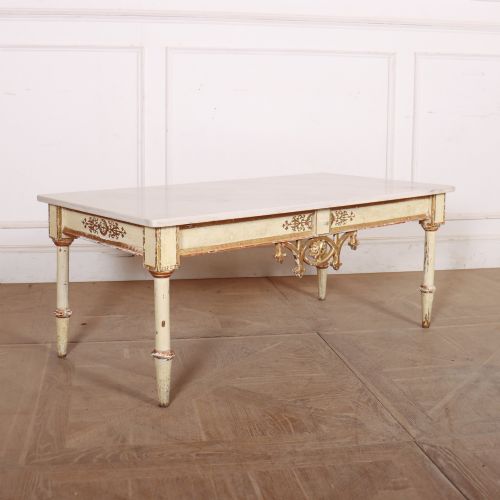
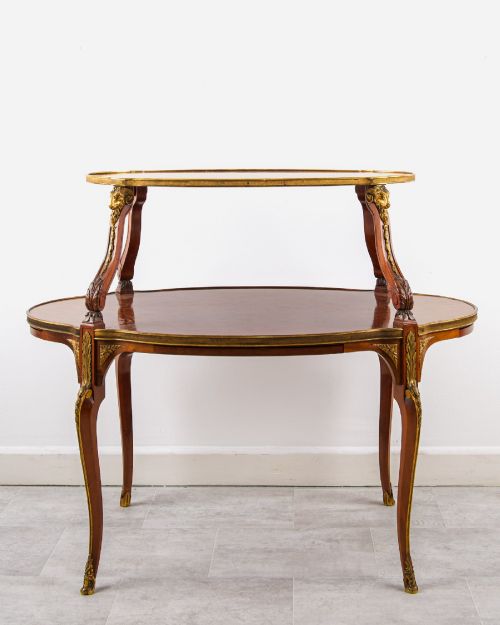
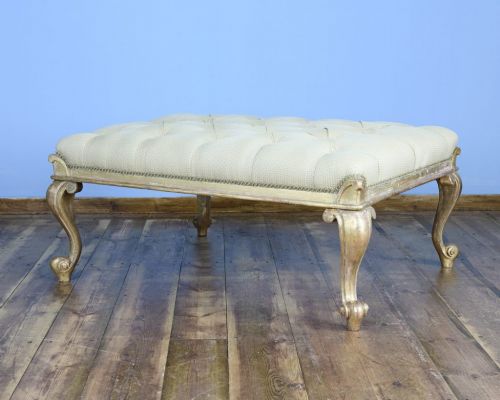
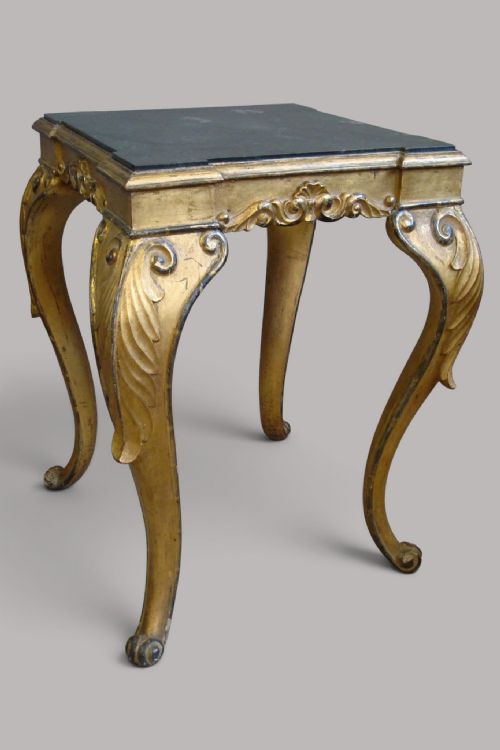
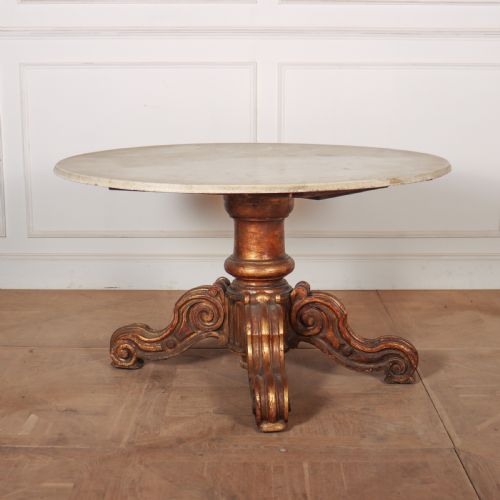
A gold gilt centre table stands as a decorative focal point, designed to sit centrally within a room rather than against a wall. The pieces found here encompass diverse forms, from grand 19th Century giltwood examples with marble tops to smaller occasional tables and coffee tables produced in later decades.
Originating across England, France, Italy, and Japan, these tables reflect varied craftsmanship from different European centres and periods. Buyers frequently encounter marble-topped and painted wood variants alongside classic gilded finishes.
Assessing quality and craftsmanship
Quality rests in the crispness of the wood carving and the depth of the gilding, where hand-applied gold leaf reveals finer definition than simpler painted finishes. The integration of mounts, whether cast ormolu or gilt bronze, distinguishes superior examples.
The choice of top material further separates pieces, with fitted marble slabs and intricate marquetry inlay representing higher levels of artisanal effort. Structural integrity in the joints and the original condition of the gilded surface remain central to the overall standard.
Gold Gilt Centre Table Retail Price Guide 2026
Typical asking prices for gold gilt centre table among the pieces listed under this phrase on Sellingantiques today, from the lower quarter to the upper quarter. They describe what is for sale here now, not the wider market.
Among the gilded surfaces and grand marble slabs, a cheeky cherub occasionally watches over the room from an ornate ormolu tazza.
Paul Sormani·Holland Son
The Gold Gilt Centre Table Glossary
- Giltwood
- Timber that has been coated with gold leaf or gesso and leaf. This surface treatment provides a bright, reflective finish typical of period frames and tables.
- Ormolu
- Gilt bronze ornamentation applied to furniture and decorative objects. This technique involves mercury gilding cast bronze to achieve a rich metallic lustre.
- Tazza
- A shallow bowl or ornament raised on a pillar and foot. These pieces often serve as table centerpieces.
- Marquetry
- Inlaid wood veneers forming decorative patterns or pictures. Craftsmen assemble different tinted woods to create surface designs on tables.
- Parcel Gilt
- A decorative treatment where only specific parts of an object are gilded. This highlights carved details against a contrasting wood or ebonised background.
Gold Gilt Centre Table: Frequently Asked Questions
Where should a centre table go?
A centre table stands freely in the middle of a room, allowing view from all sides. It functions as a focal point for displaying objects or serving refreshments.
Placement requires adequate clearance around the piece for movement. It suits large living spaces, entrance halls, or drawing rooms.
How do I clean a gilded table?
Dusting requires a very soft, dry brush or microfiber cloth. Avoid applying moisture or pressure to protect the delicate gold leaf.
Chemical cleaners will strip the gilding. Professional advice should be sought for any deeper conservation work.
Are marble tops original?
Many period tables feature heavy inset marble tops fitted during initial construction. Specimen marble and decorated stone are characteristic of 19th Century Italian and French pieces.
Inspection involves checking the fit within the wooden rebate. Replacement tops do occur in older furniture.
How do I identify Louis styles?
Louis XV style furniture displays asymmetrical curves, floral carving, and cabriole legs. It draws on Rococo influences popular in the 18th Century and revived later.
Louis XVI style shifts toward symmetry, straight tapered legs, and neoclassical motifs like fluting and urns. 19th Century revivals adopt these same vocabulary elements.