


Gold Gilded Pottery Bowl
These gold gilded pottery bowls bring rich colour and intricate metallic detail to a room, offering both decorative presence and historical depth.
Gold Gilded Pottery Bowl
A gold gilded pottery bowl combines ceramic bodies with applied metallic decoration, creating visually striking vessels that command attention on any surface. When exploring gold gilded pottery bowl examples, buyers encounter diverse forms ranging from large decorative bowls to intricate porcelain saucers and sugar bowls. The pieces span several distinct historical eras, including the Georgian period, the nineteenth century, and Edwardian productions.
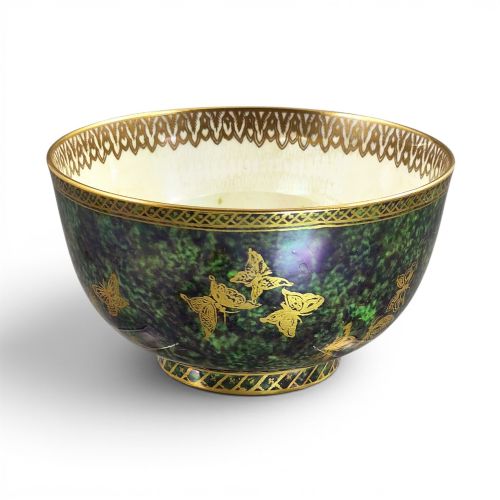
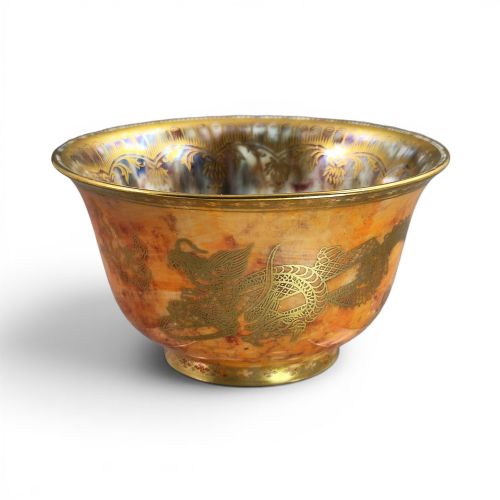
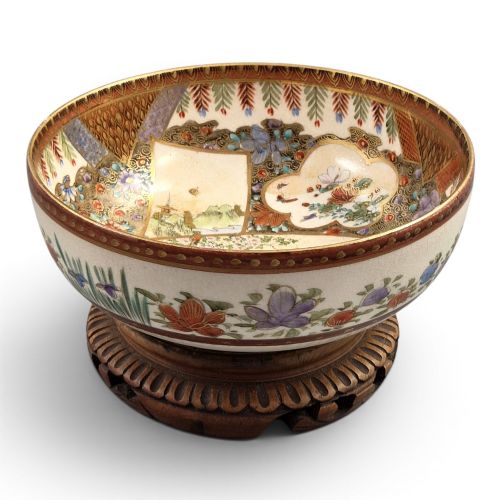
The selection on this page relies heavily on two major design traditions. English makers such as Wedgwood contribute elaborate lustre wares featuring dragons and fairy motifs, whilst Japanese Satsuma workshops provide finely painted earthenware adorned with samurai scenes and dense floral patterns. These diverse origins mean a buyer can choose between Western fantasy narratives and Eastern traditional iconography.
Most items on this page date from the late nineteenth century through to the Edwardian era and the nineteen-twenties. The forms include grand octagonal vessels and smaller cabinet pieces alike. Each bowl reflects the distinct aesthetic priorities of its period of manufacture, whether that involves the restrained elegance of earlier British ironstone or the maximalist gilding of Meiji period ceramics.
How they were made
Makers utilised various ceramic bodies including earthenware, porcelain, bone china, and ironstone as the structural foundation for these vessels. These materials were shaped either by hand or mould before undergoing initial firing to create a stable bisque form. Potters then applied glazes, including specialised lustre glazes that react during firing to produce iridescent optical effects.
Decoration relied upon careful hand painting with enamels followed by the application of gold leaf or gold gilt. Japanese Satsuma pieces utilised finely crackled cream-coloured earthenware surfaces as a canvas for dense polychrome enamels and raised gold work. Wedgwood pieces employed complex transfer printing combined with lustre glazes and meticulous hand-gilded highlights.
Object types span decorative bowls, porringers, sugar bowls, and bowls with saucers, decorated with lustre glazes, enamel, and gold leaf.
What varies in quality
The finesse of the hand painting and the density of the gilding largely determine the quality of an individual bowl. Superior examples exhibit precise brushwork in the enamel details and generous, unrubbed applications of gold leaf that retain their original brilliant lustre. Lesser pieces may display simpler transfer designs with minimal hand finishing or heavier wear to the metallic surfaces.
Signature marks and studio attributions heavily influence desirability and perceived standing. Bowls bearing the signatures of renowned Japanese masters or specific pattern numbers from established English potteries demonstrate a higher degree of workshop ambition. The complexity of the narrative scene, such as elaborate samurai battles or intricate fairy motifs, also elevates the artistic achievement of the piece.
Wedgwood·Kozan·Hododa Yokohama·Kinkozan Kyoto·Shozan Kyoto Studio
The Gold Gilded Pottery Bowl Glossary
- Satsuma ware
- Japanese pottery originating from Satsuma province, traditionally characterised by an ivory-coloured earthenware body with a fine crackle glaze. This ware is heavily decorated with polychrome enamels and intricate gold gilt.
- Lustre glaze
- A type of ceramic glaze containing metallic oxides that impart an iridescent, metallic sheen upon firing. This technique creates shimmering colour shifts across the surface of the bowl.
- Porringer
- A small bowl used historically for porridge, broth, or similar foods, often featuring handles or ears. In later periods, the term describes small decorative ceramic vessels of similar proportions.
- Shimazu mon
- The heraldic crest of the Shimazu clan, featuring a cross within a circle. This mon frequently appears on Satsuma ceramics produced in workshops associated with the domain.
- Millefleur
- A decorative pattern covering the entire surface with a dense multitude of small flowers. This French term translates to a thousand flowers and appears on various Japanese export wares.
Gold Gilded Pottery Bowl: Frequently Asked Questions
What are gold gilded pottery bowls?
These pieces are ceramic vessels finished with metallic gold leaf, gilt, or lustre, combining durable earthenware or porcelain bodies with opulent surface decoration.
They range from large Edwardian lustre display vessels to nineteenth-century Japanese Satsuma export ceramics decorated with detailed figurative and floral scenes.
How were Satsuma bowls made?
Potters shaped an earthenware body, applied a specialised crackle glaze, and fired the piece before adding intricate enamel paintings by hand.
Artists then highlighted the designs with heavy gold gilt, often incorporating family crests or complex narrative scenes requiring exceptional technical skill.
How do I style a gold gilded bowl?
These bowls serve well as standalone centrepieces on dining tables, sideboards, or open shelving where their metallic surfaces catch the light.
Because the gilding and enamels provide strong visual interest, they pair effectively with neutral backdrops that allow the intricate patterns to stand out.
How do I date an Edwardian bowl?
Dating relies on maker marks, recorded pattern numbers, and stylistic markers typical of the early twentieth century, such as specific fairy or dragon lustre motifs.
Consulting historical pottery catalogues and checking for registered design numbers helps narrow down the exact decade of manufacture.