


Gold Gilded China Cup
A gold gilded china cup brings tactile elegance to daily rituals, offering centuries of ceramic artistry in miniature form.
Gold Gilded China Cup
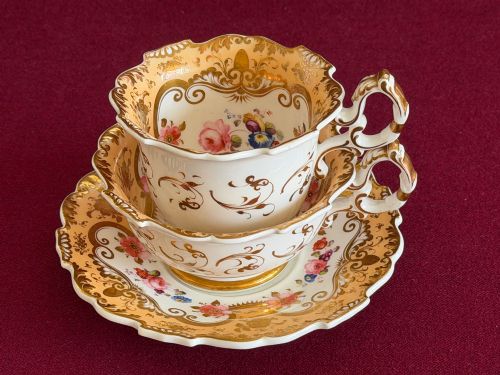
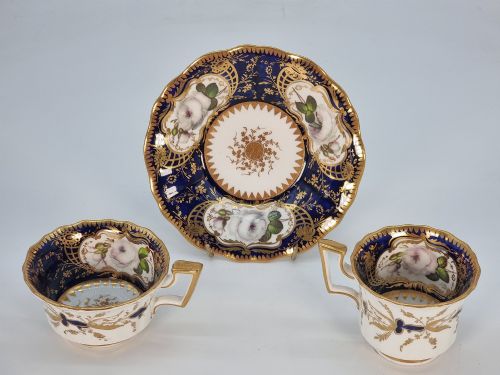
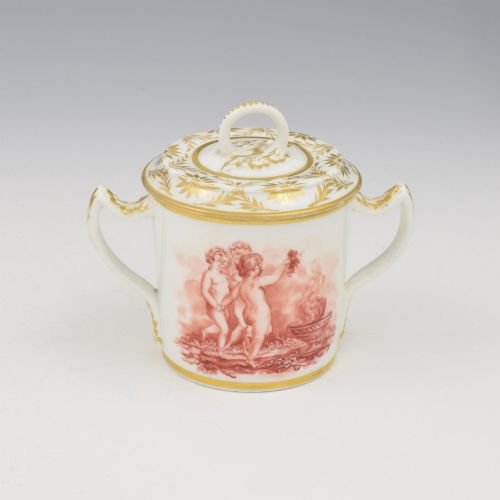
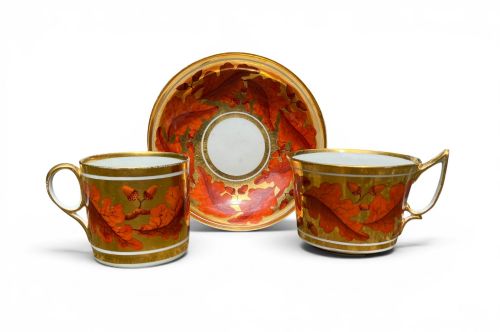
A gold gilded china cup represents the pinnacle of historical ceramic drinking vessels, encompassing teacups, coffee cans, cabinet cups, and chocolate vessels intended for display or refined service. When exploring a gold gilded china cup, one encounters forms ranging from Georgian tea bowls and Regency trios to Edwardian cabinet pieces and twentieth-century demitasse sets.
The selection centres heavily on early nineteenth-century English porcelain traditions, particularly works from Worcester, Coalport, Spode, and Derby, alongside continental pieces from Berlin. These items manifest in various formats, including single cabinet cups, matched trios with saucers and side plates, and comprehensive tea services.
The surviving examples bridge the gap between ornamental cabinet display and utilitarian pleasure. Buyers seek these items for their delicate proportions, historical associations, and the tangible quality of early ceramic manufacture.
How they were made
Potters utilised fine porcelain, bone china, hard-paste porcelain, and ironstone as the foundation for these vessels, shaping them by hand or on the wheel before high-temperature firing. The ceramic bodies received smooth glazes to prepare the surface for subsequent artistic intervention.
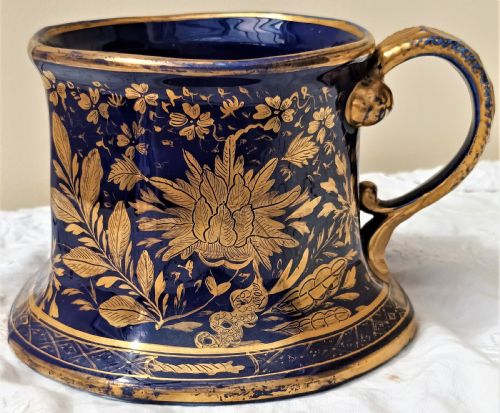
Artisans applied polychrome enamels and metallic embellishments by hand, fusing gold leaf and gilding to the porcelain through secondary kiln firings. This technique secured the precious metal against the ceramic glaze, resulting in durable metallic borders and painted motifs.
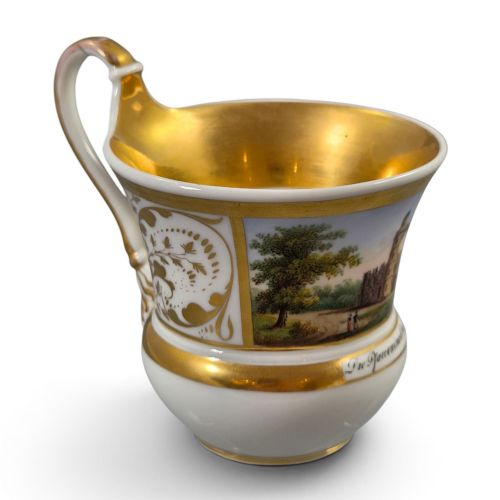
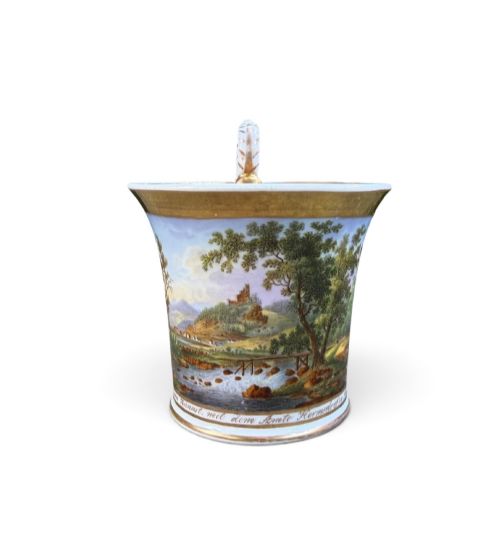
Object types include miniatures, chocolate cups with covers, demitasse sets, and complete tea services decorated with hand-painted fruit and topographical views.
What varies in quality
The standard of the painting dictates much of the distinction between ordinary and exceptional pieces, with delicate hand-painted topographical scenes, armorial bearings, and botanical studies representing superior craftsmanship. Mechanically applied transfers sit at the lower end of the decorative spectrum compared to meticulous brushwork by named decorators.
The weight, translucency, and purity of the porcelain body also signal quality, alongside the thickness and application of the gold leaf. Crisply moulded shapes, well-preserved gilding without excessive rubbing, and balanced handle forms separate cabinet-grade items from utilitarian kitchenware.
Royal Worcester·Spode·Derby Porcelain·Coalport·Minton·Davenport·KPM Berlin·Mason's Ironstone
The Gold Gilded China Cup Glossary
- Cabinet cup
- An ornamental cup intended primarily for display within a glass-fronted cabinet rather than everyday use. These pieces often feature elaborate topographical paintings or armorial designs.
- Trio
- A matched set consisting of a teacup, saucer, and matching side plate. This configuration became popular during the Georgian and Regency periods.
- Coffee can
- A straight-sided cylindrical cup designed specifically for drinking strong coffee. They frequently feature distinctive loop or ring handles.
- Hard-paste porcelain
- A true ceramic composition fired at very high temperatures, consisting of kaolin and petuntse. It creates a durable, vitreous body that resists scratching.
- Gilding
- The application of gold leaf or gold powder to the surface of ceramics. This adds reflective metallic highlights to rims, handles, and painted reserves.
Gold Gilded China Cup: Frequently Asked Questions
How were these cups used?
These vessels served high-status social rituals involving tea, chocolate, or coffee among the wealthy classes of the eighteenth and nineteenth centuries.
Many delicate cabinet cups remained on display in drawing rooms, while sturdier ironstone mugs and porcelain trios saw actual use during formal afternoon repasts.
Can I use my gold gilded china cup?
While structurally sound, antique porcelain requires careful handling and hand washing to protect fragile enamels and delicate gold gilding from abrasive detergents.
Modern dishwashers and microwaves will permanently damage the metallic surfaces and historical ceramic glazes of these fragile pieces.
How do I date a porcelain cup?
Dating relies on identifying factory backstamps, stylistic cues such as Regency neoclassical shapes, and the specific composition of the ceramic body.
Handwritten pattern numbers and specific painter marks also help narrow down the production era to particular decades like the Regency or Edwardian periods.
What is the difference between a tea bowl and a teacup?
Tea bowls lack handles entirely, reflecting the earlier Chinese custom of cradling the vessel directly in the hands to sip hot tea.
Teacups incorporate applied handles, a form that became standard in European manufacturing as breakfast and afternoon tea habits evolved.