
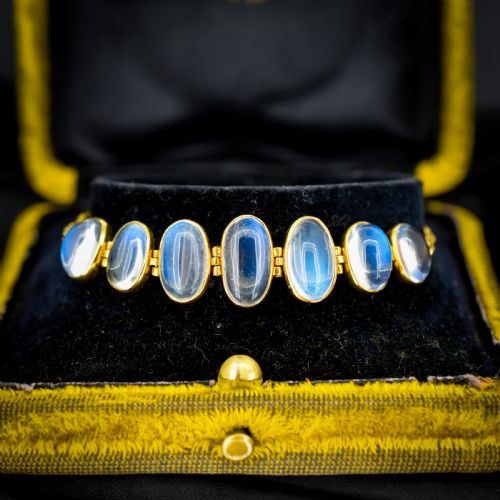


Gold Gemstone Bracelet
A gold gemstone bracelet brings together precious metals and colourful stones across periods from Victorian to Mid-Century.
Gold Gemstone Bracelet
A gold gemstone bracelet comprises precious metal settings housing stones such as sapphire, ruby, amethyst, garnet, and diamond. These pieces span periods including Victorian, Edwardian, Art Deco, and Mid-Century, taking the form of flexible link chains, gate links, or rigid bangles.
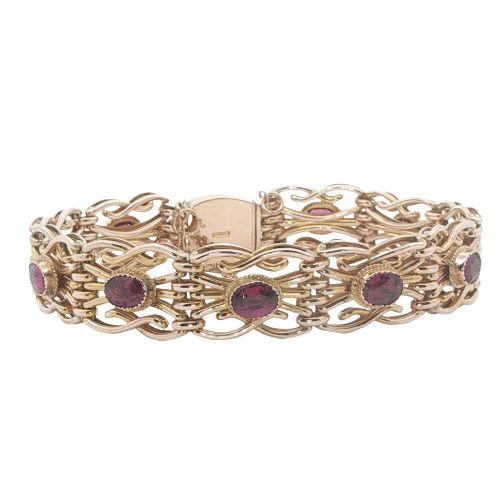
The version most commonly met on this page is the 9ct gold piece set with almandine garnet, amethyst, turquoise, or sapphire, often originating from the Edwardian or Victorian eras. Yellow gold and rose gold dominate these earlier designs, whilst white gold and platinum appear more frequently in later twentieth-century items.
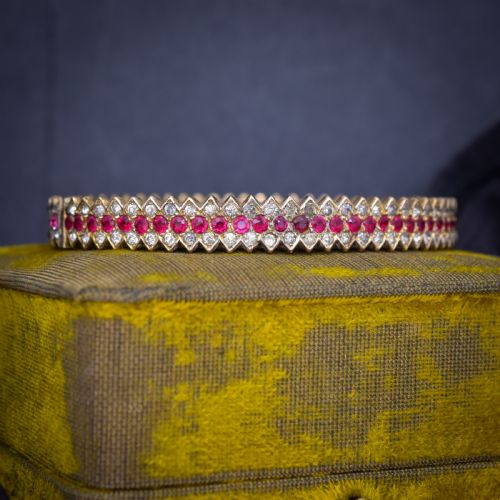
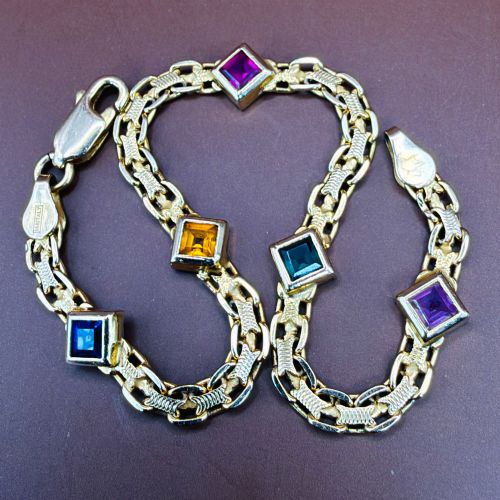
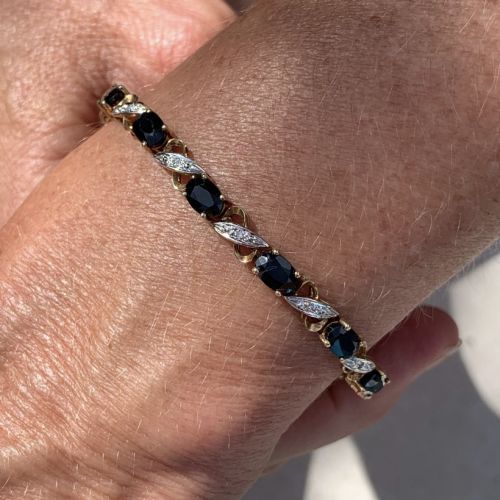
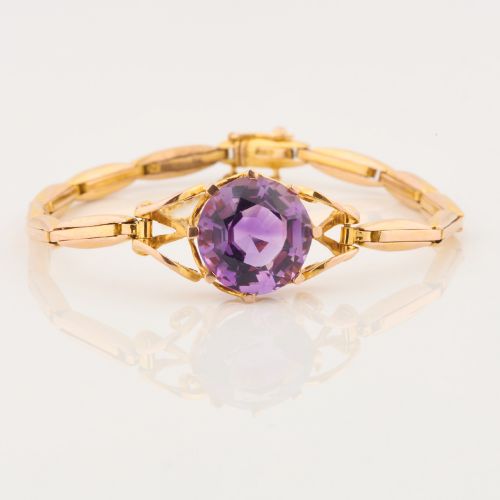
Buyers encounter diverse configurations, from multi-gemstone princess-cut lines to delicate heart padlock clasps and moonstone clusters. Each style reflects the prevailing aesthetic of its decade, whether the romantic motifs of the late nineteenth century or the geometric precision of the Art Deco period.
How they were made
Goldsmiths worked primarily in 9ct, 15ct, and 18ct gold, utilising both yellow and rose hues for Victorian and Edwardian items, alongside white gold for later twentieth-century jewellery. Metal was drawn into wire, cast into links, or beaten into solid bangle hoops to secure the stones.
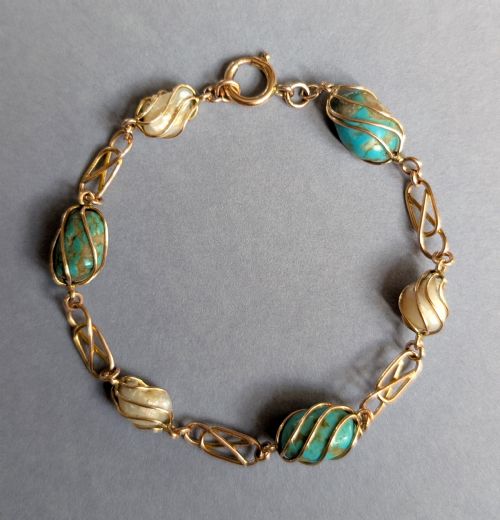
Gemstones were shaped using period-appropriate cuts, including cushion cuts, princess cuts, and rose cuts, then secured with claws, bezels, or flush settings. Seed pearls and turquoise beads were frequently threaded or pegged into place alongside larger faceted stones.
Materials recorded across the inventory include sapphires, rubies, amethysts, garnets, diamonds, pearls, and turquoise.
What varies in quality
Quality rests upon the saturation and clarity of the gemstones, from unheated Ceylon sapphires and Burmese rubies to deeply coloured almandine garnets and clear aquamarines. The weight and purity of the gold, whether 9ct, 15ct, or 18ct, likewise dictate the standing of the piece.
The integrity of the construction sets superior items apart, seen in the smoothness of articulated links, the security of box clasps or padlock fastenings, and the precision of the stone settings. Hand-finished details such as rope twist borders and engraved knot work indicate higher craftsmanship.
The Gold Gemstone Bracelet Glossary
- Bangle
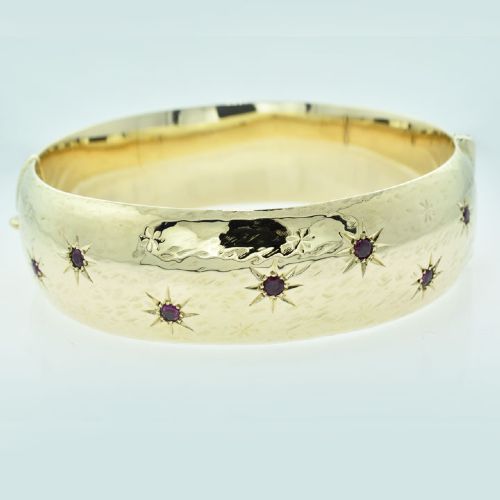
- A rigid bracelet that slips over the hand or opens with a hinged clasp. These items often feature chased decoration or flush-set gemstones.
- Padlock clasp
- A small padlock-shaped fastening commonly utilised on Victorian and Edwardian bracelets. This mechanism served both a functional and a decorative purpose.
- Gate link
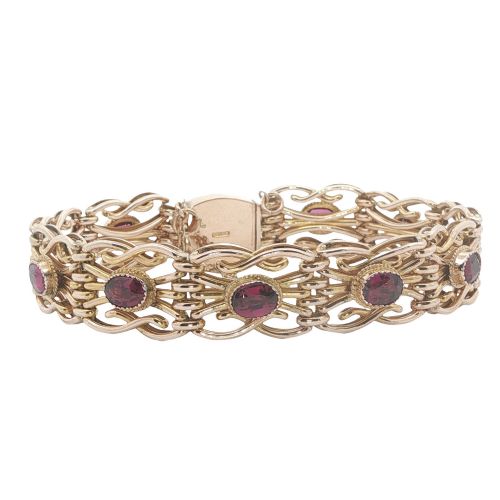
- A style of bracelet formed from interconnected parallel metal bars resembling a small gate. This construction creates a flexible and robust band.
- Almandine garnet
- A deep red variety of garnet frequently employed in Victorian and Edwardian jewellery. It provides a rich, dark hue when set in rose gold.
- Seed pearl
- A very small natural or cultured pearl used in clusters or borders. These delicate elements add soft lustre to nineteenth-century gemstone designs.
Gold Gemstone Bracelet: Frequently Asked Questions
How do I date a gold gemstone bracelet?
Dating relies upon hallmarks, metal purities, and stylistic clues. Victorian and Edwardian pieces often feature 9ct or 15ct gold alongside romantic motifs like hearts and lover knots.
Later items from the Art Deco or Mid-Century periods introduce white gold, platinum, and geometric gemstone arrangements. Consulting the specific hallmarks and stone cuts helps narrow the decade of manufacture.
Are these bracelets suitable for daily wear?
Daily wear is possible with sturdier link designs and harder gemstones like sapphire and diamond. Softer materials require greater care during everyday use.
Bangles and robust gate-link bracelets generally withstand regular rotation better than delicate antique seed pearl pieces. Checking the security of the clasp and settings ensures safe daily enjoyment.
What is a gate link bracelet?
A gate link bracelet consists of rows of parallel metal links joined together to form a flexible band. This style gained popularity during the Victorian era.
Many examples feature a padlock clasp and gemstone centrepieces, combining structural strength with decorative appeal.
How do I care for antique gemstone jewellery?
Antique jewellery requires gentle cleaning with a soft cloth and warm soapy water. Harsh chemical dips can damage softer stones like pearls, turquoise, and opals.
Storing pieces individually prevents scratching between different gemstones and metals. Regular checks by a jeweller keep stone settings secure.