


Gold Tennis Bracelet
A gold tennis bracelet is a continuous line of brilliant gems set in precious metal, offering wrist-wear of remarkable elegance and enduring versatility.
Gold Tennis Bracelet
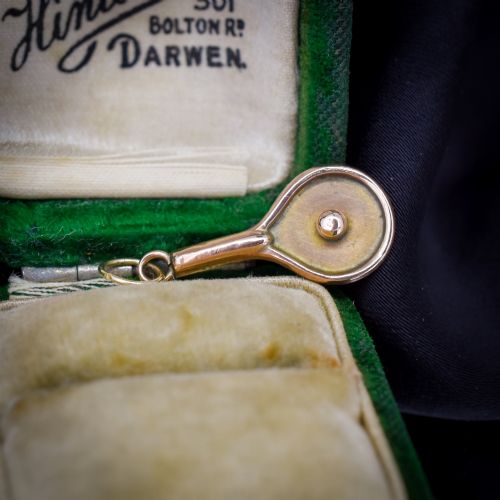
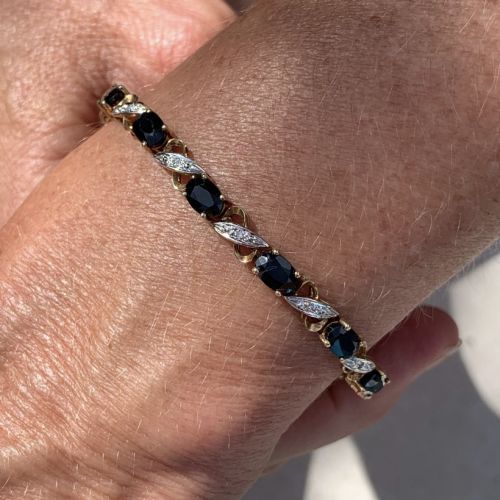
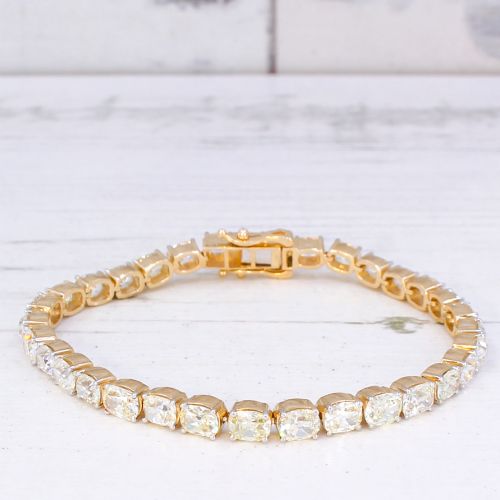
A gold tennis bracelet takes several forms across the periods represented in our selection, spanning Victorian, Edwardian, Art Deco, and mid-century examples. While the phrase often brings to mind modern uniform diamond lines, historical pieces range from antique charm pendants depicting tennis rackets in rose gold to gemstone-set line bracelets featuring sapphires, rubies, and green zircons.
The materials utilised include yellow, white, and rose gold in various purities such as 9ct, 15ct, and 18ct, alongside platinum-topped Victorian mountings. Gemstone configurations vary from old mine and brilliant cut diamonds to cushion-cut green zircons and rich blue sapphires, sometimes punctuated by turquoise.
Materials and Techniques
Construction relies on linking individual stone settings together flexibly so the band wraps smoothly around the wrist. Goldsmiths employed durable yellow, white, and rose gold alloys, often pairing lower and higher purities depending on the era of production.
Gemstones such as diamonds, sapphires, and rubies are secured in traditional settings including collet mounts and claw configurations designed to maximise light entry through old mine and brilliant cut facets.
What Varies in Quality
Quality depends upon the uniformity and match of the set gemstones, alongside the structural integrity of the articulated joints linking each segment. Fine examples demonstrate precise stone symmetry and secure, integrated clasp mechanisms that maintain the unbroken rhythm of the line.
The Gold Tennis Bracelet Glossary
- Tennis bracelet
- A flexible wrist ornament featuring a continuous symmetrical line of diamonds or gemstones. The name gained popular currency in the twentieth century.
- Old mine cut
- An early diamond facet arrangement characterised by a cushion shape, high crown, and small table. This cut is frequently encountered in Victorian and Edwardian pieces.
- Collet setting
- A metal collar or rim that surrounds the girdle of a gemstone to hold it securely in place. It offers a smooth, neat outline on antique jewellery.
- Art Deco
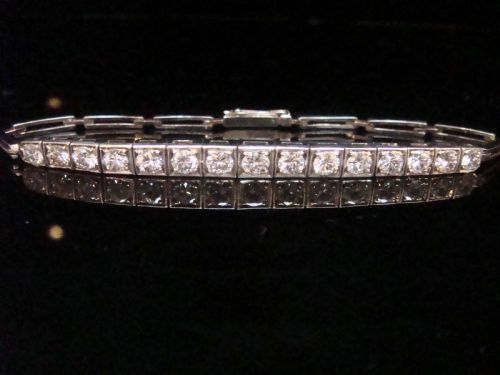
- A design style prominent in the 1920s and 1930s defined by geometric precision and linear elegance. Pieces from this period often use white gold alongside calibrated sapphires and diamonds.
Gold Tennis Bracelet: Frequently Asked Questions
How do I wear a gold tennis bracelet daily?
These flexible line bracelets sit closely against the wrist, making them suitable for everyday wear when paired with either casual attire or evening wear.
Ensure the clasp mechanism clicks securely into place before fastening any safety chains to prevent accidental loss during movement.
Are all tennis bracelets made of diamonds?
While diamond lines are common, many historical examples incorporate alternative gemstones such as blue sapphires, rubies, and green zircons.
Makers frequently alternated coloured stones with diamonds to create patterned line bracelets during the Edwardian and mid-century periods.
How can I tell an Edwardian piece from a Victorian one?
Victorian examples often utilise lower carat yellow or rose gold alongside silver-topped settings, whereas Edwardian pieces frequently feature white gold or platinum highlights.
Edwardian designs tend toward delicate openwork and intricate millegrain details, while Victorian work often showcases heavier collet or bezel settings.
What is a collet set diamond line?
A collet set line consists of individual stones enclosed in tailored metal rims linked together in a flexible chain. This technique protects the girdle of each diamond while creating a continuous border of precious metal.
It is a traditional method seen across various decades, providing a distinct profile compared to claw-set stones.