
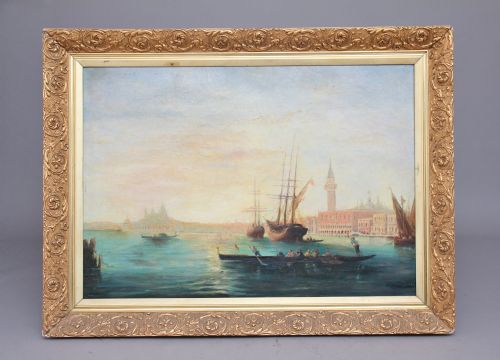

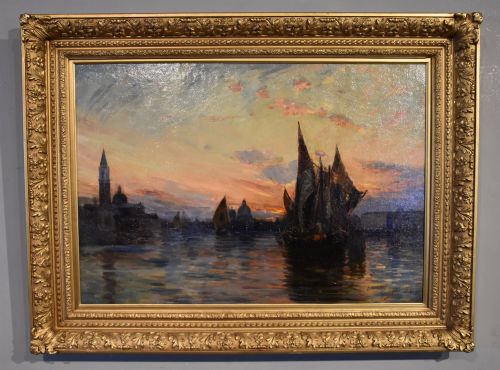


Gold Framed Venetian Landscape
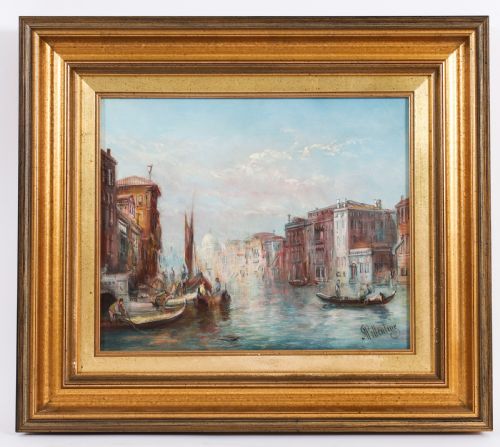
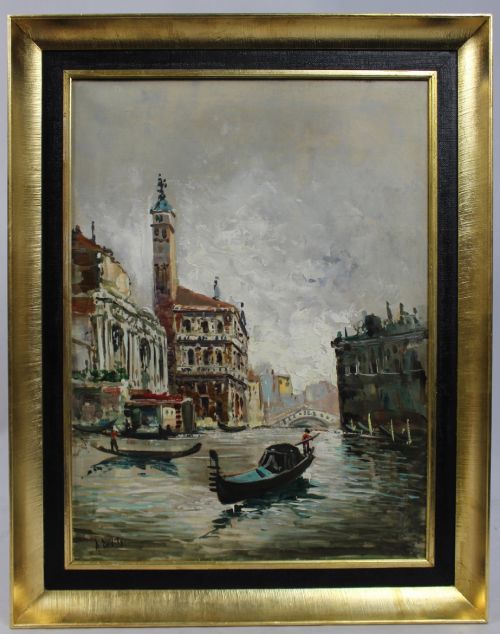
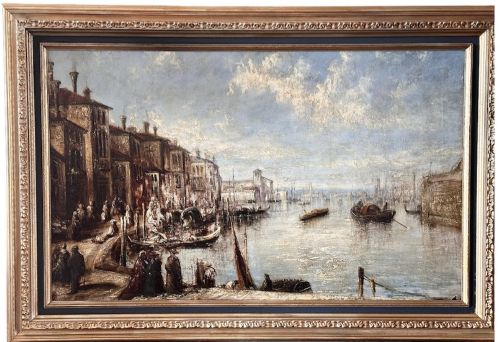
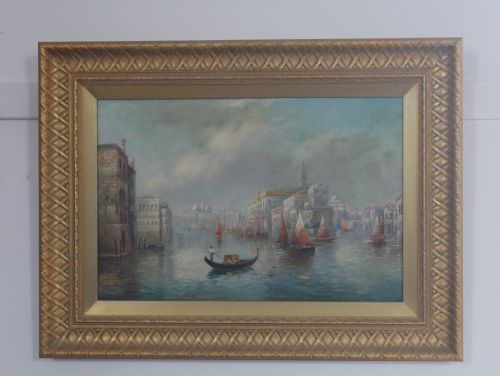
A gold framed venetian landscape captures the light and architecture of the lagoon through oil paint and watercolour.
Gold Framed Venetian Landscape
A gold framed venetian landscape depicts iconic water-level views of the Grand Canal, the Doge's Palace, and the lagoon. These works capture the changing light and architecture of Venice through the eyes of visiting and resident artists.
The version most commonly met on this page is the nineteenth-century oil painting on canvas, housed in a substantial wooden frame with gilding. These townscapes range from expansive panoramic vistas to intimate canal scenes.
The selection also includes watercolours and pastels spanning from the Victorian era through the mid-twentieth century. Each piece records the enduring artistic fascination with Italian topography.
How they were made
Artists applied oil paint or watercolour to canvas, wood, or board to build luminous depictions of water and stone. Canvases received layers of pigment to render the distinct reflections of the Venetian lagoon.
Frames utilise wood, gesso, and giltwood to create ornate borders that complement the painted scenes. The application of gold leaf or gilding provides a warm boundary that isolates the distant townscape from the room.
Listings feature works created across several eras, running from the nineteenth century into the mid-twentieth century.
What varies in quality
The strength of the composition and the handling of atmospheric light distinguish superior canvases from routine topographical records. Master painters achieve a convincing sense of depth across the water and articulate architectural detail with precision.
The preservation of the original canvas and the integrity of the gilded wooden frame contribute significantly to the standing of a piece. Original gilding shows authentic age without clumsy overpainting on the decorative mouldings.
Alfred Pollentine·Antonio DeVity·Francis Moltino·Thomas Hodgson Liddell·F J Aldridge·Antonietta Brandeis·Marc Aldine·E. Perez Senet·Jane Vivian·William Raymond Dommersen·William Knox·Helen Donald-Smith
The Gold Framed Venetian Landscape Glossary
- Giltwood
- Wood that has been coated with a thin layer of gold leaf or gold powder. This material forms the ornate frames typical of nineteenth-century townscapes.
- Gesso
- A plaster-like mixture applied to wood frames as a base for gilding. It allows craftsmen to carve intricate relief patterns before applying gold leaf.
- Townscape
- A painting or drawing depicting a built urban environment. In this context, it refers specifically to architectural views of Venetian palaces and canals.
- Lagoon
- The shallow body of water surrounding Venice. Artists frequently paint its specific atmospheric haze and water level light.
Gold Framed Venetian Landscape: Frequently Asked Questions
What periods do these paintings cover?
The selection spans from the nineteenth century through the mid-twentieth century, capturing shifting artistic movements from Victorian fine art to mid-century impressionism.
Most works date from the late Victorian period, reflecting a peak era of British and European travel to Italy.
Where were these views painted?
Subjects focus on identifiable Venetian landmarks including the Grand Canal, the Doge's Palace, and Santa Maria della Salute.
Artists set their easels along the waterfront or on boats to record accurate topographical details of the lagoon.
How should I hang a framed painting?
Select a wall with stable humidity away from direct sunlight to protect both the canvas and the delicate giltwood frame.
Ensure the hanging fixings match the weight of the solid wooden structure and the size of the canvas.
Are these works executed on canvas?
Many examples utilise oil paint on stretched canvas, while others employ oil on board or watercolour on paper.
Mediums vary by period and artist, with delicate pastels and gouache also appearing alongside traditional oils.