




Gold Framed Textile Art
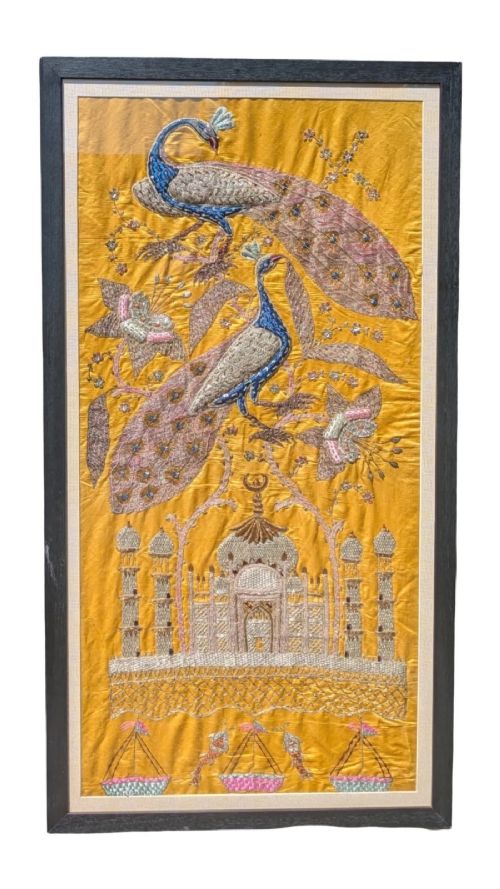
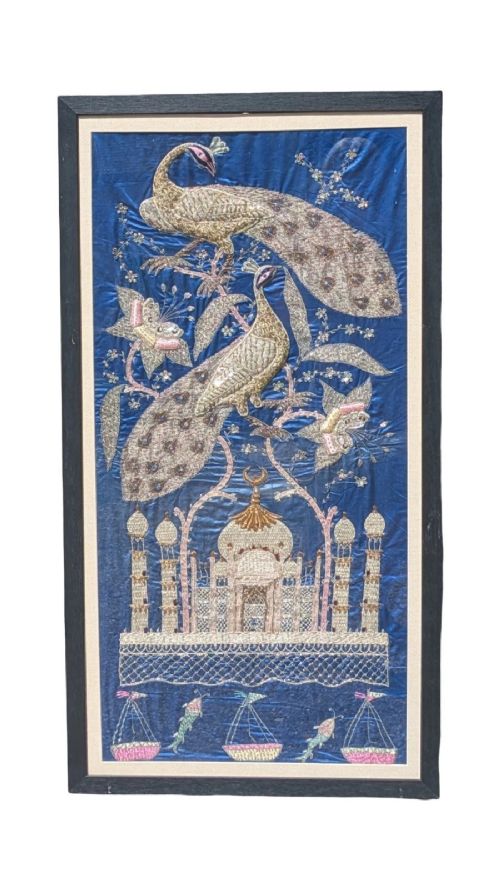
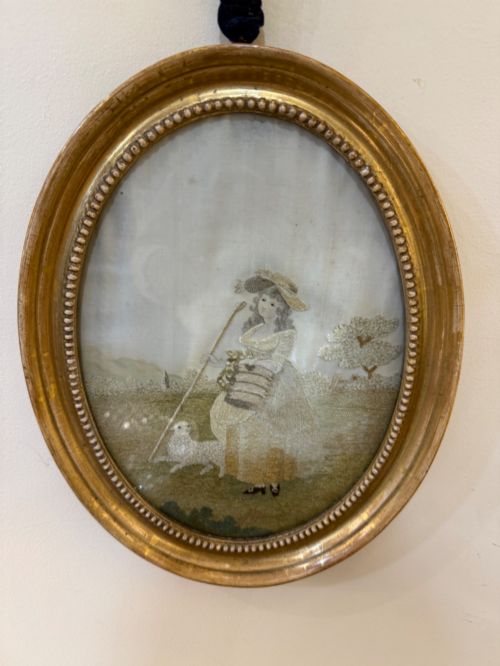
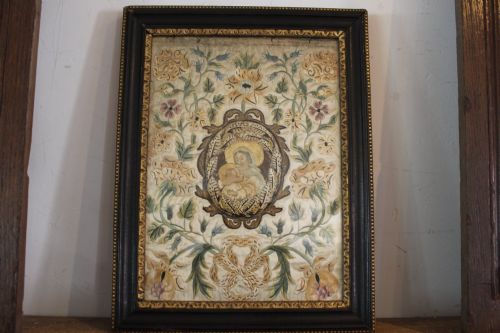
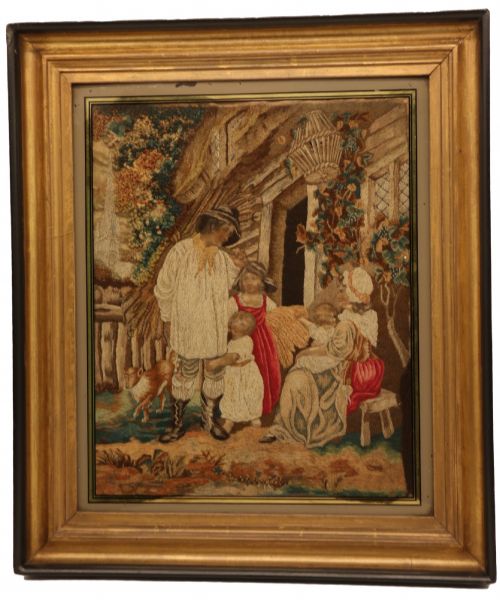
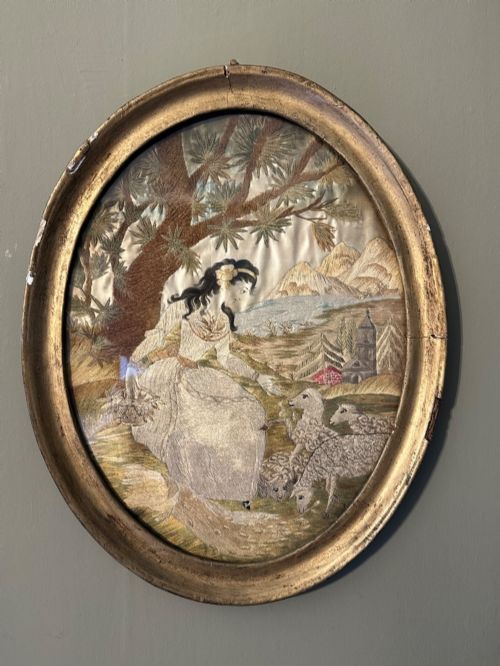
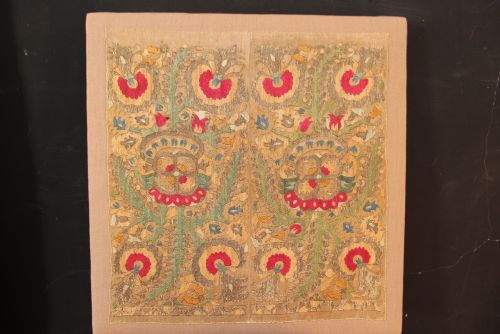
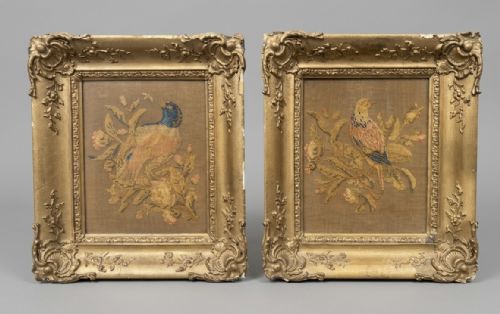
Gold framed textile art brings together historic needlework, silk embroidery, and tapestry housed in giltwood and gilded timber.
Gold Framed Textile Art
When you search for gold framed textile art, you encounter needlework pictures, silk embroideries, tapestry fragments, and crewel work secured behind glass within gilded wooden surrounds.
The selections span centuries, running from seventeenth-century stumpwork and Flemish panels to eighteenth-century English needleworks, Regency silk pieces, and nineteenth-century Indian and Ottoman stitchwork.
These works take the form of wall art, framed textiles, and mounted picture panels, often preserved in period gilt Mezzotint or water-gilded frames.
Materials and Techniques
The makers of these pieces utilised silk, wool, and metallic thread stitched onto fabric grounds, occasionally incorporating hand-painted elements and beadwork.
The structural housings rely on wood finished in giltwood, gilded wood, and gilt bronze or water-gilded surfaces to protect the fragile textiles within.
Listings feature periods spanning from the seventeenth century through to the 1930s, utilising silk, wool, and metallic thread.
Distinctions in Quality
Quality rests upon the fineness of the needlework and the complexity of the threadwork, separating simpler domestic panels from intricate silk embroideries.
The integrity of the mounting and the original pairing of the textile with its period gilt frame dictate the overall standard of the piece.
Bela Balogh
The Gold Framed Textile Art Glossary
- Stumpwork
- A raised embroidery style popular in the seventeenth century, utilising padded stitches to create three-dimensional figures.
- Giltwood
- Timber treated with gold leaf or gold paint, frequently used for decorative antique picture frames.
- Crewel work
- Embroidery executed in wool yarn, commonly seen on eighteenth-century and nineteenth-century textiles.
- Mezzotint frame
- A specific style of picture frame moulding often found housing Regency and Georgian needlework pictures.
- Tapestry fragment
- A surviving section of a larger woven wall hanging, preserved and mounted behind glass.
Gold Framed Textile Art: Frequently Asked Questions
What is gold framed textile art?
These pieces consist of historic textiles, including silk embroideries, tapestries, and needlework pictures, housed inside gilded wooden frames.
They represent centuries of needlecraft traditions originating from England, Europe, India, and the Ottoman Empire.
How were these framed textiles used?
Historic needleworks and tapestries served primarily as decorative wall art within domestic interiors, displaying status, skill, or artistic taste.
Commemorative pieces also marked specific military events, royal associations, or personal milestones.
How do I live with antique textiles?
Protect framed silk and wool pieces from direct sunlight to prevent the fading of natural dyes and metallic threads.
Keep them in rooms with stable humidity levels to preserve both the fragile fabric grounds and the wooden gilt frames.
How do I date an embroidered panel?
Dating relies on stylistic clues within the stitching, such as seventeenth-century stumpwork motifs or Regency aesthetic conventions.
The construction and finish of the surrounding gilt frame often provide parallel chronological evidence.