




Large Landscape Tapestry
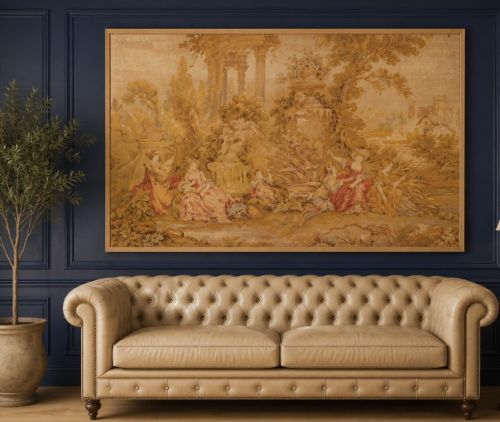
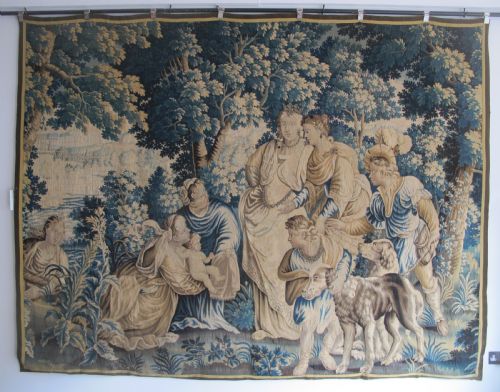
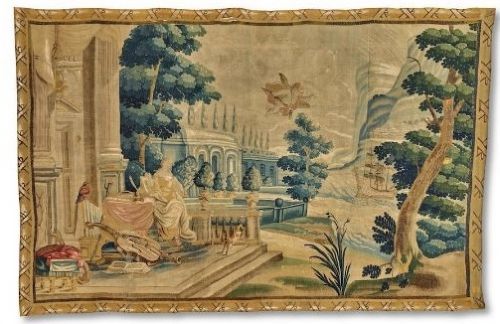
A large landscape tapestry fills a room with woven foliage, architectural ruins and mythological scenes from the seventeenth to the nineteenth centuries.
Large Landscape Tapestry
A large landscape tapestry brings grand pastoral views, verdure foliage and mythological scenes directly onto interior walls across domestic spaces. These wall hangings span seventeenth century Flemish origins through to nineteenth century French and Aubusson productions.
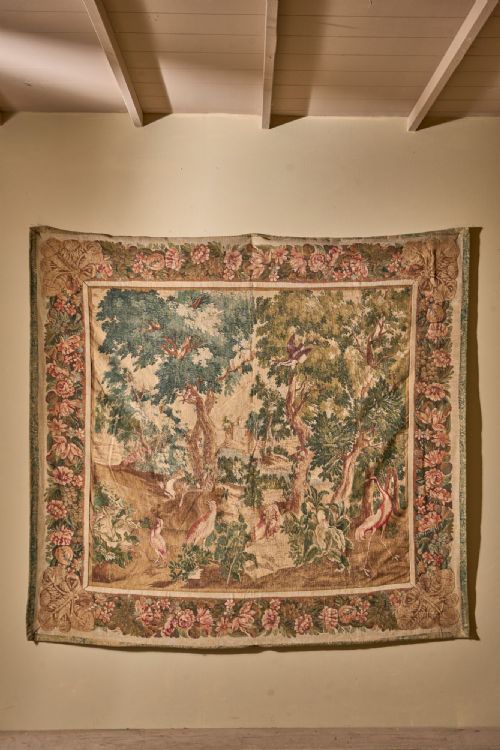
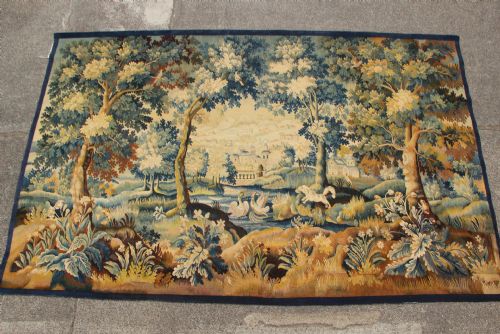
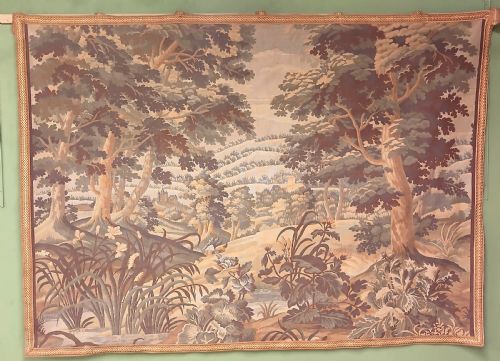
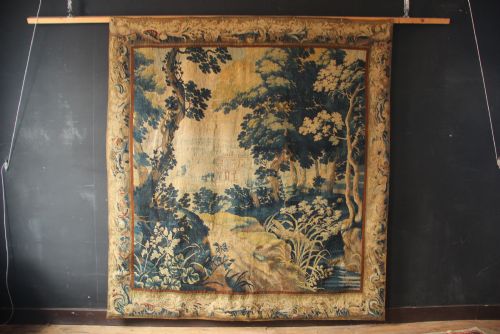
The version most commonly encountered on this page is the seventeenth century Flemish verdure piece, often depicting dense woodland, trees and distant rivers. Buyers also find eighteenth century panels from Audenarde alongside later French chateau hangings and wool work pictures.
Scale remains a defining characteristic, with dimensions stretching across several metres to cover entire walls in sitting rooms or halls. Many arrive mounted within timber frames or prepared simply as wall hangings ready for suspension.
What varies in quality
The density of the weave and the complexity of the botanical detail separate standard examples from superior works. Finer pieces employ intricate silk highlights alongside wool to catch the light within foliage and water.
Clarity of perspective and the survival of naturalistic colour gradients dictate the artistic merit of each panel. Weavings originating from established centres like Aubusson or Flemish workshops typically display greater compositional depth than regional copies.
Listed items span from the seventeenth century through to nineteenth century French and Aubusson productions.
The Large Landscape Tapestry Glossary
- Verdure
- A tapestry style dominated by lush foliage, trees, plants and landscape views rather than human figures. These compositions often feature birds hiding amongst dense leaves and distant chateaux.
- Aubusson
- A town in France renowned for its tapestry production since the seventeenth century. Pieces from this origin often feature pastoral scenes and floral borders.
- Audenaarde
- A Flemish centre of tapestry weaving historically famous for verdure panels. Workshops here produced heavy wool hangings depicting wooded river valleys.
- Wall hanging
- A textile designed to be suspended vertically from a batten or hook rather than laid upon a floor. These items insulate rooms and decorate large expanses of masonry.
- Flemish Baroque
- A flamboyant artistic style originating in Flanders during the seventeenth century. Tapestries from this movement emphasise dramatic movement, heavy foliage and rich theatricality.
Large Landscape Tapestry: Frequently Asked Questions
How do I hang a large tapestry?
Heavy wall hangings require a sturdy wooden batten or a concealed metal rod fixed securely to structural wall studs. Sew a heavy-duty fabric sleeve along the top reverse edge to distribute the weight evenly across the support.
Ensure the textile hangs straight without stretching individual threads from mounting points. Keep the lower edge slightly clear of radiators and direct heat sources to protect the fibres.
What is a verdure tapestry?
A verdure tapestry depicts a dense landscape of trees, foliage, plants and sometimes animals or distant architecture. These woodland scenes served as decorative woodland windows within grand seventeenth and eighteenth century interiors.
Human figures remain entirely absent or play a very minor role compared to the dominant plant life. The colour palette traditionally relies on deep greens, blues and browns that have aged gracefully over centuries.
How do I tell Flemish from French tapestries?
Flemish pieces from the seventeenth century often feature darker, more saturated woodland palettes with robust verdure borders. They tend to emphasise heavy leaf canopy and mythological or pastoral depth.
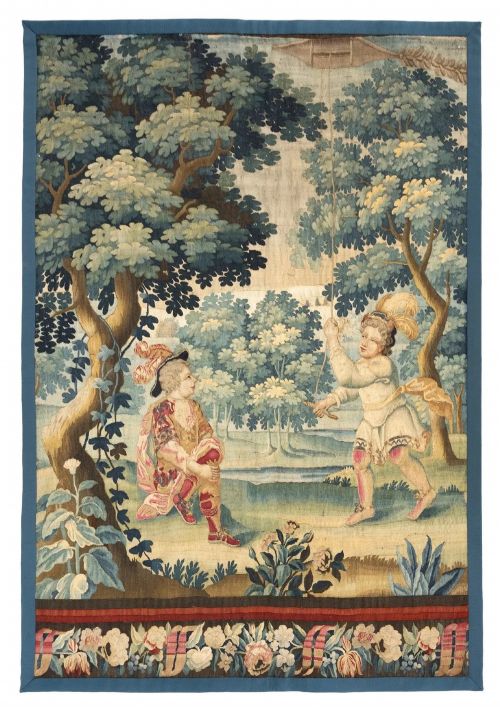
Later French and Aubusson productions frequently incorporate lighter pastel tones, refined architectural ruins and more delicate floral swags. Examining the weave density and stylistic motifs helps clarify the regional origin of the workshop.
Were these tapestries meant for insulation?
Historic stone and brick walls allowed immense drafts into domestic and public rooms during winter months. Large woven textiles provided a practical barrier that trapped warmth and reduced ambient chill.
Over time, the functional requirement evolved into a clear display of wealth, taste and status. Wealthy owners commissioned massive landscape scenes to transform austere stone chambers into verdant, wooded retreats.