


Gold Framed Mountain Art
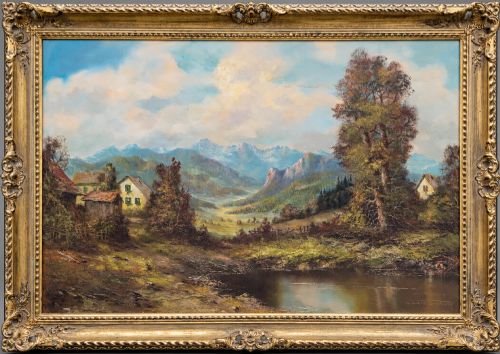
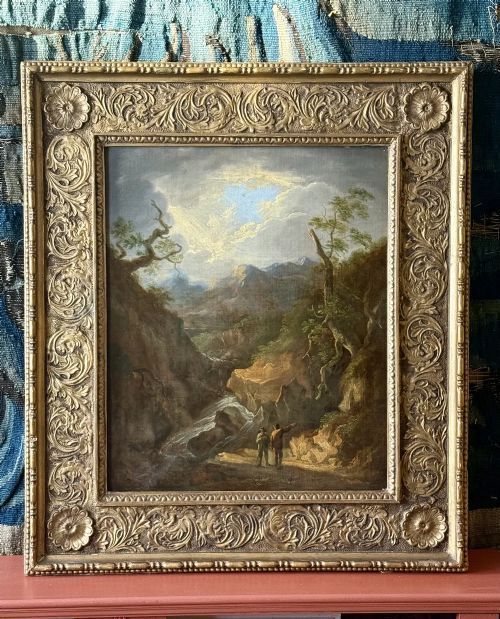
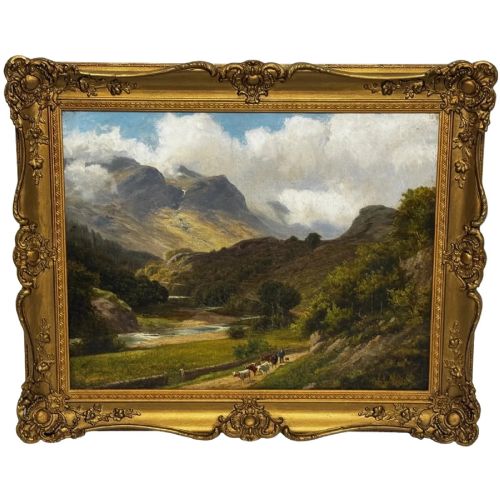
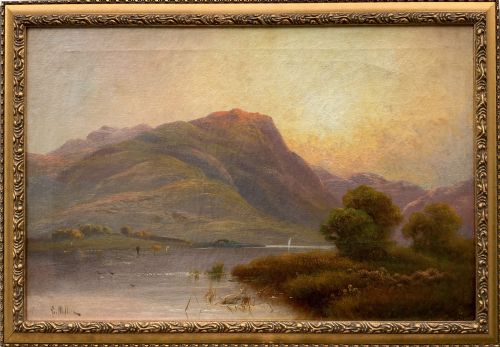
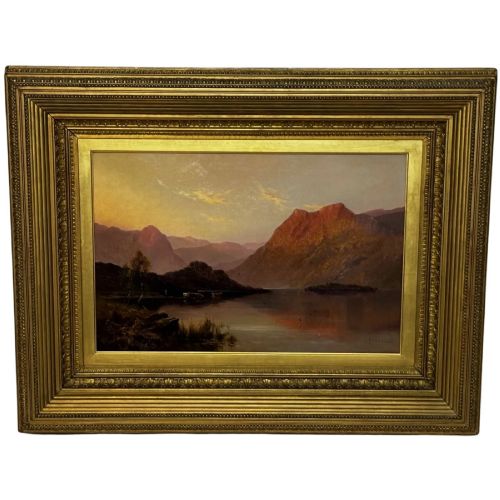
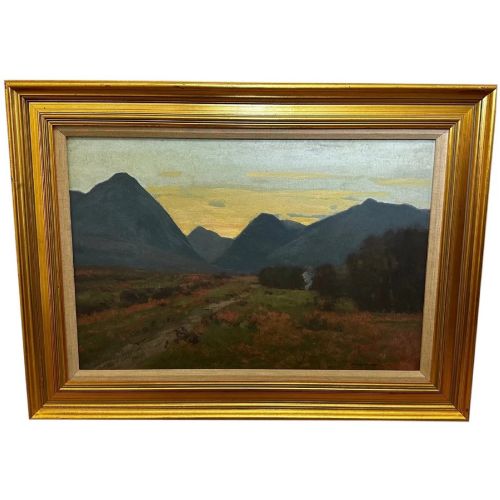
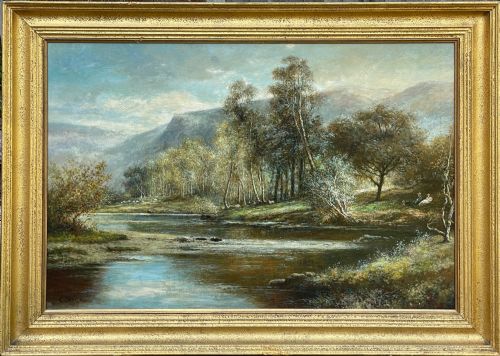
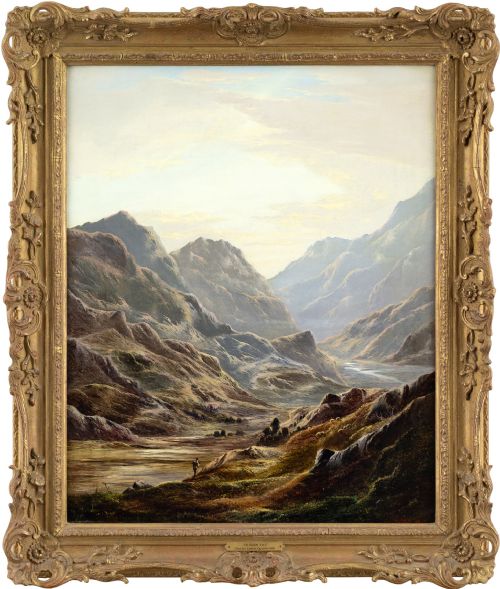
Gold framed mountain art captures rugged peaks and serene lochs held within ornate gilt surrounds, offering a direct window into nineteenth-century landscape painting.
Gold Framed Mountain Art
When searching for gold framed mountain art, collectors encounter nineteenth-century paintings dominated by Victorian landscape traditions and Scottish Impressionism. These works capture dramatic topography, from Welsh ranges to Alpine summits, executed primarily by British and continental painters during the 1850s to the 1920s.
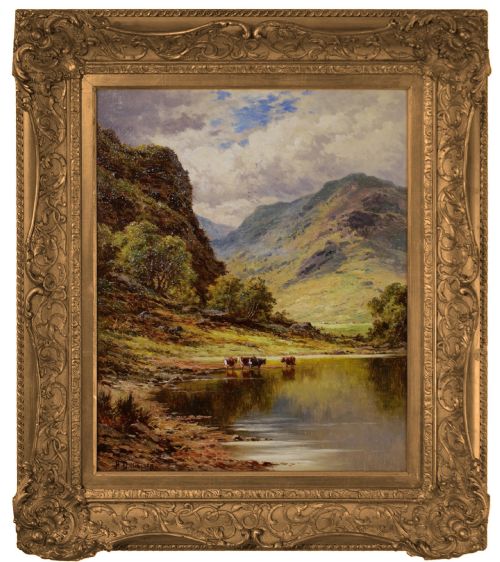
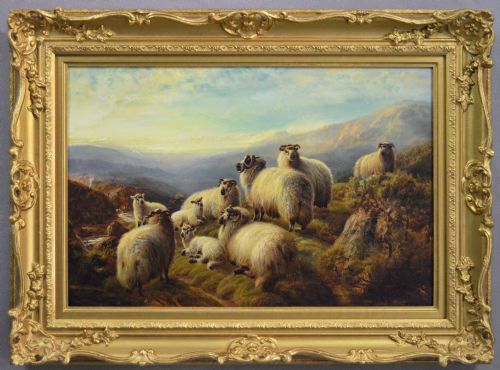
The prevalent forms on this page consist of oil on canvas alongside occasional watercolours, housed in their original surrounds. Painters of this era focused on naturalistic depictions of valleys, lakes, and cattle against towering backdrops, reflecting a deep Victorian fascination with wild scenery.
Materials and Construction
Artists relied upon oil paints applied to woven canvas surfaces to achieve rich tonal depth and atmospheric light effects. These canvases were mounted into wooden frames built up with gesso layers, which were subsequently gilded to produce the characteristic metallic finish.
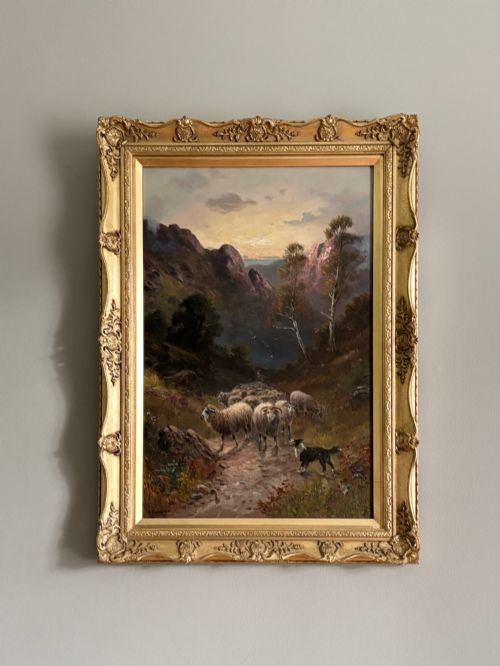
The frames utilised traditional moulding techniques, often heavily ornamented with decorative corner elements and leaf patterns. This combination of oil pigments and giltwood surrounds provided a robust and opulent presentation designed to complement domestic interiors of the period.
Listings feature oil on canvas and watercolours framed in giltwood and gesso from the Victorian era up to 1920.
Assessing the Pieces
The strength of a composition rests on the artist's handling of light, shadow, and atmospheric perspective across the mountain ranges. Works by documented Victorian and Scottish painters demonstrate superior draftsmanship in rendering geological formations and water reflections compared to anonymous school pieces.
Originality of the surround contributes significantly to the integrity of the piece. Surviving period gilt wood and gesso frames that retain their original burnished surfaces maintain the historical context established by the artist.
William Beattie-Brown·Alfred Fontville de Breanski·George Houston·Benjamin Barker of Bath·Henry H. Parker·Douglas Cameron·Charles Leslie·Robert Watson·William George Tennick·William Henry Mander·Sidney Richard Percy·Thomas Spinks·Frank Hider·Giulio Cecchini·Walter J Watson·J Barclay·John Douglas Perrett·Edward Horace Thompson·Karl Herrle·Stephen Enoch Hogley·James H Hulse·George Melvin Rennie·George Turner·Alfred de Breanski Snr·Frederick Richard Lee
The Gold Framed Mountain Art Glossary
- Giltwood
- Wood carved and coated with gold leaf or a gold-coloured metallic finish. This material formed the primary structural base for the ornate surrounds typical of the period.
- Gesso
- A plaster-like mixture applied to wooden frames to create a smooth surface for gilding. It allowed artisans to mould intricate decorative details before applying gold leaf.
- Oil on Canvas
- Pigments bound in a drying oil applied to a stretched fabric support. This medium allowed artists to build rich textures and blend colours across large landscape scenes.
- Watercolour Painting
- Pigments suspended in a water-based solution applied to paper. These works required protective glazing and framing to prevent moisture damage over time.
Gold Framed Mountain Art: Frequently Asked Questions
What periods do these paintings date from?
The listings consist largely of nineteenth-century and early twentieth-century works spanning from the 1850s through the 1920s. Victorian realism and Scottish landscape traditions dominate this era.
Artists during this timeframe frequently travelled to Wales, Scotland, and the Alps to record dramatic topography directly onto canvas.
How should I care for an oil painting?
Oil paintings on canvas require stable indoor humidity and protection from direct sunlight to prevent cracking. Dusting the gilt frame gently with a dry cloth preserves the gold leaf.
Avoiding harsh cleaning agents ensures the original gesso and gilt surfaces remain intact over decades.
What subjects appear most frequently?
Mountainous landscapes, Highland cattle, lakes, and rivers form the core subjects across these historic works. Painters focused heavily on natural vistas found in Snowdonia, the Lake District, and the Scottish Highlands.
Figures and sheep often scale the foreground to emphasise the vast scale of the surrounding peaks.