
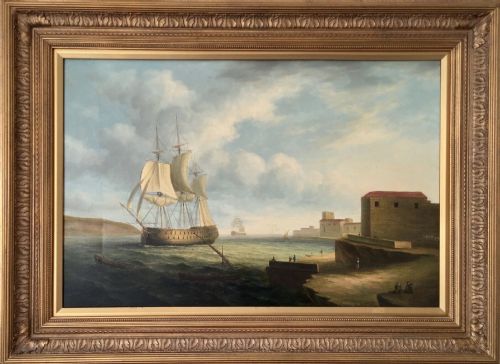

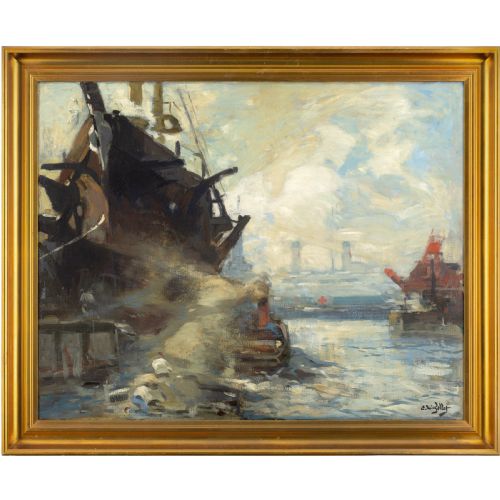
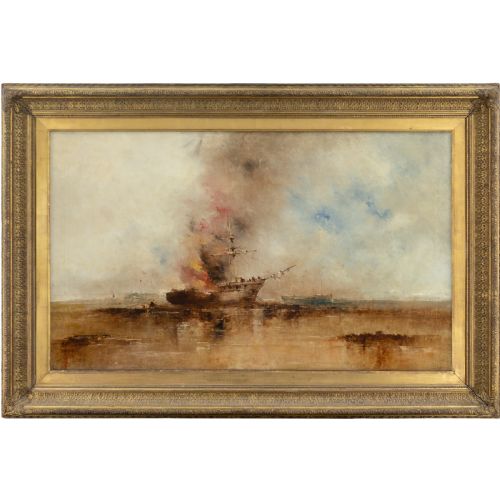
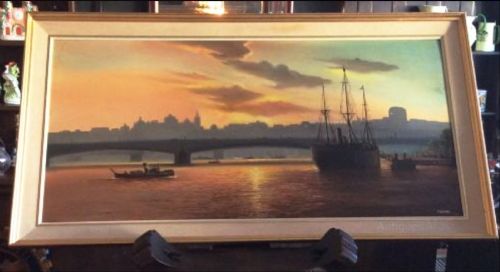


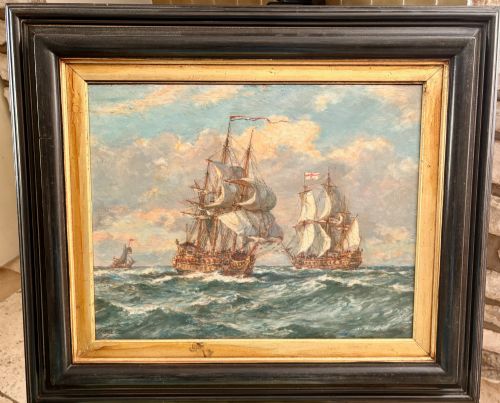
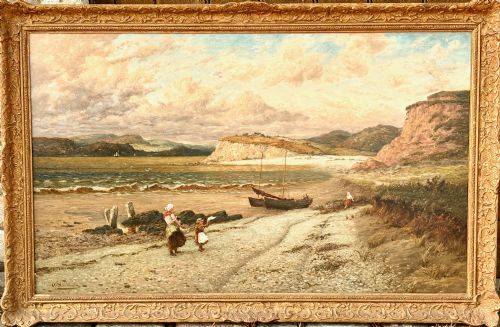
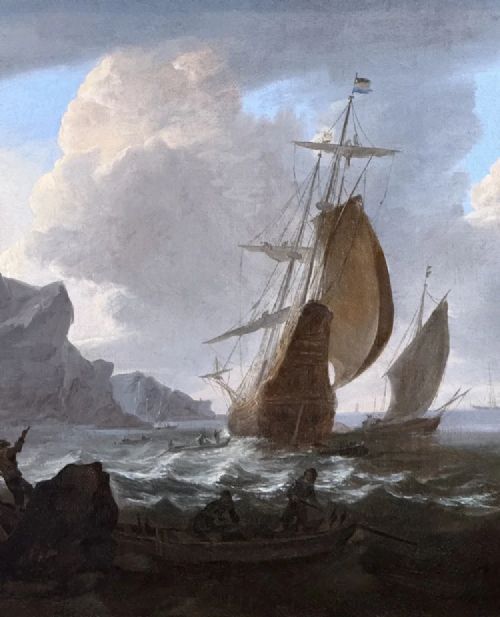
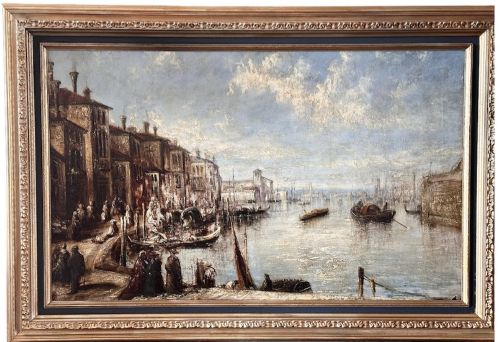

Gold Frame Seascape Artwork
These gold frame seascape artwork pieces capture open water, harbours and coastal weather through centuries of painting tradition.
Gold Frame Seascape Artwork
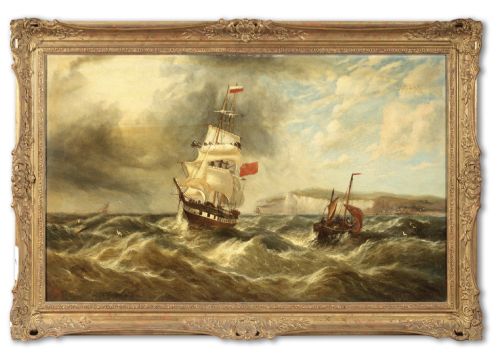
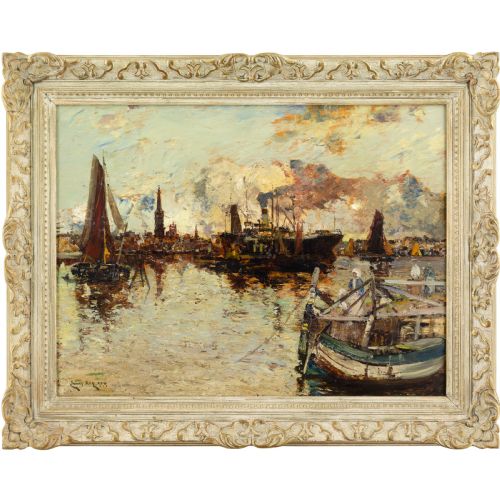
When searching for gold frame seascape artwork, a buyer encounters oil paintings and watercolours depicting ships, coastal towns, and open water housed in gilded timber surrounds. These works range from seventeenth-century Dutch panels to nineteenth-century British views of harbours and merchant vessels.
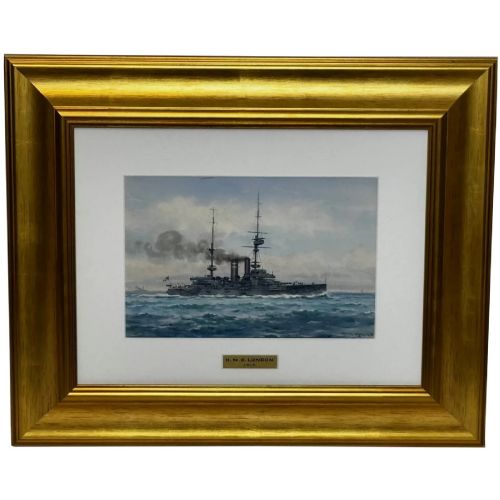
The most common pieces met on this page date from the nineteenth and early twentieth centuries, spanning Victorian maritime canvases and Edwardian watercolours. Subjects frequently show specific locations such as Venice, St Ives, and various river ports under varying weather conditions.
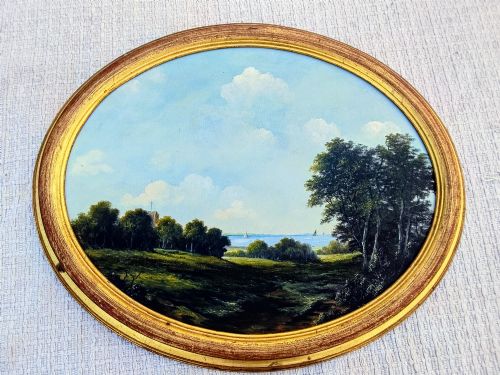
Forms vary from compact framed watercolours on paper to large-scale Victorian oil paintings on canvas and panel. Many retain their original or period-matching giltwood frames which complement the maritime subject matter.
Canvas, panel and gilt timber
Painters used oil paint on canvas or wooden panel, and watercolour on paper, to capture the shifting light of sea and sky. Pigments were applied to build up textured waves, sails, and atmospheric clouds.
Frames were constructed from wood and finished with layers of gesso and gilding to create the characteristic gold surround. Mouldings often featured decorative details suited to the period of the artwork.
Listings feature works created using oil on canvas, oil on panel, and watercolour on paper, housed within giltwood frames.
Brushwork and framing
Quality rests in the handling of light, water and atmospheric perspective by the artist, distinguishing skilled observation from mechanical reproduction. Strong composition and confident brushstrokes elevate a maritime painting above standard topographical records.
The relationship between the painting and its gilt frame contributes to overall merit. Original period frames that retain their original gilding and proportion enhance the integrity of the piece compared to later replacements.
Eugène-Louis Gillot·William McAlpine·James Kay RSW·Frank Watson Wood·Bernard Gribble·Bonaventura Peeters·Francis Moltino·Bernard Benedict Hemy·Willem Bos·Charles Euphraisie Kuasseg·John Wilson Carmichael·Erich Mercker·Nicholas Condy·Thomas Hodgson Liddell·William Henry Williamson·John Holland·George Stanfield Walters·Abraham Hulk I
The Gold Frame Seascape Artwork Glossary
- Giltwood
- Wood carved and coated with gold leaf or gold paint. This material forms the traditional bright border surrounding historical paintings.
- Seascape
- A work of art depicting the sea, coastlines, ships, or marine views. These compositions focus on water and weather.
- Gesso
- A paint mixture consisting of a binder mixed with chalk, gypsum, or pigment. It provides a smooth surface for gilding on wooden frames.
- Panel
- A flat piece of wood used as a support for painting before canvas became dominant. Wooden panels often survive from earlier centuries.
- Provenance
- The documented history of ownership of an artwork. Clear provenance helps verify the origin and authenticity of a painting.
Gold Frame Seascape Artwork: Frequently Asked Questions
What periods do these seascapes cover?
The listings span from the seventeenth century through the Victorian and Edwardian eras up to mid-twentieth-century works. Nineteenth-century pieces form a large portion of the available selection.
Earlier Dutch works sit alongside later British and European coastal scenes, showing changing artistic approaches to maritime subjects.
Are the frames original to the paintings?
Many pieces retain period gilt frames that match the age of the artwork, though framing can sometimes date from a later restoration. Giltwood and wood frames were designed to complement the tones within the paint.
Checking the construction of the frame helps determine whether it has been paired with the canvas at a later date.
How should I care for an oil painting?
Keep oil paintings away from direct sunlight and sudden changes in temperature or humidity to protect both the canvas and the wooden stretcher. Gentle dusting with a soft, dry brush is sufficient for routine maintenance.
Avoid using water or cleaning solutions on the painted surface or the gilt frame.
How do I identify a watercolour from an oil painting?
Watercolours are painted on paper and typically sit beneath protective glass within the frame. Oil paintings use textured paint applied to canvas or wood panel and are generally displayed without glass.
Examining the surface texture under a light reveals the distinct finish of pigment bound in oil versus transparent washes on paper.