





Brown Toned Maritime Painting
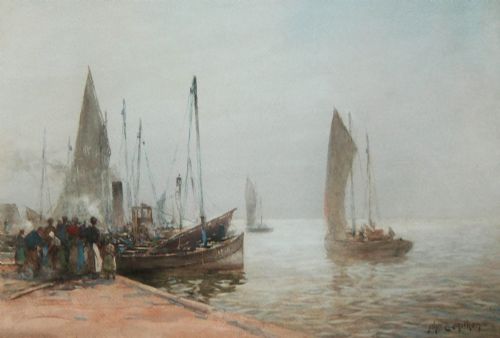
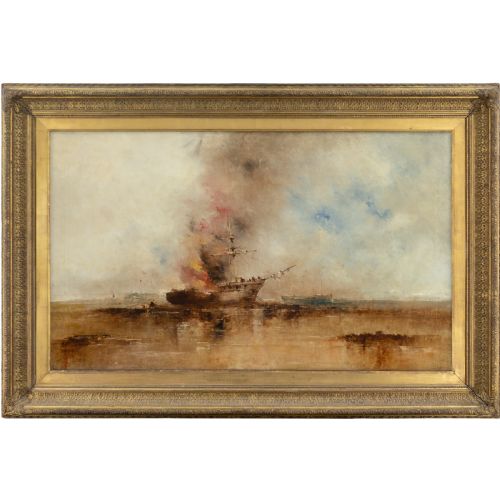
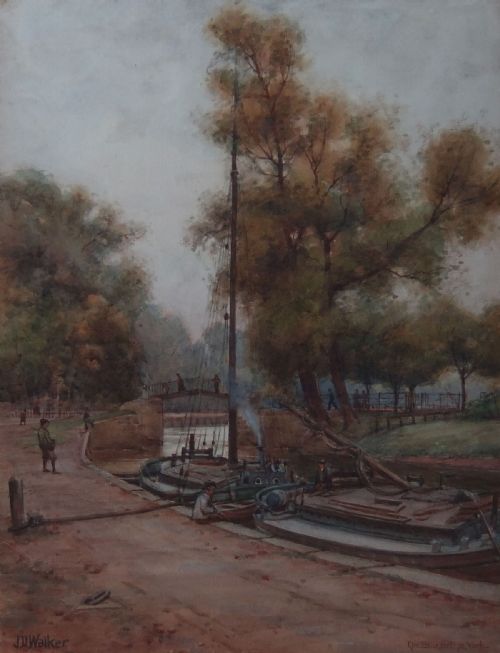
These brown toned maritime painting examples capture coastal scenes and harbours using muted palettes that emphasise atmosphere over bright colour.
Brown Toned Maritime Painting
A brown toned maritime painting focuses on marine subjects rendered in sombre or earthy hues, ranging from bustling harbour views to quiet coastal landscapes. These works often depict coastal architecture, fishing vessels, and ships at sea under muted skies.
The selections available here span from the nineteenth century through to the mid-twentieth century, capturing periods such as the Edwardian era and the Victorian age. The forms take shape primarily as oil paintings on canvas and watercolours on paper housed within frames.
Buyers encountering this phrase will find British schools well represented alongside continental and Canadian works depicting specific locations like Whitby, Polperro, and the Thames. Each piece documents maritime activity through a restrained tonal scheme.
Materials and technique
Artists create these works using oil paint on canvas or watercolour pigment and paint on paper, employing brushes to build up maritime scenes. The application of pigment relies on the interaction between fluid watercolours and absorbent paper or rich oil paints built across woven canvas textures.
Framing forms an integral part of the physical object, with giltwood frames frequently enclosing the painted surface to complement the composition. The physical support materials dictate the preservation requirements and the visual weight of each finished artwork.
Brown Toned Maritime Painting Retail Price Guide 2026
Typical asking prices for brown toned maritime painting among the pieces listed under this phrase on Sellingantiques today, from the lower quarter to the upper quarter. They describe what is for sale here now, not the wider market.
Listings feature works created between the nineteenth century and the nineteen-fifties, utilising oil paint, watercolour, paper, canvas, and wood.
Quality and execution
The distinction between works rests upon the artist's handling of light, atmospheric depth, and the convincing depiction of maritime architecture and vessel rigging. Stronger examples demonstrate confident brushwork that defines water movement and structural forms without relying on excess detail.
Condition of the paper or canvas surface, along with the preservation of the original pigments, dictates the integrity of the piece. The quality of the surrounding frame and the clarity of the artist signature or attribution further distinguish individual works.
William McAlpine·James E. Aitken·Alfred George Morgan·Gyrth Russell·Percy Brooke·Edward M. Elliott·Lieutenant Harold E Frecker·Hendrik Yan Wolter·Owen Bowen·Frank Wasley·John D. Walker
The Brown Toned Maritime Painting Glossary
- Watercolour
- A painting method where water-soluble pigments are suspended in a water-based solution and applied to paper. This medium allows for transparent washes that capture light and atmospheric effects.
- Oil on Canvas
- A technique utilising pigments bound in a drying oil applied across a stretched fabric surface. This combination permits rich colour blending and textured application.
- Giltwood Frame
- A wooden border coated with gold leaf or metallic paint, designed to enclose and protect a painting. These frames provide a decorative finish that enhances the visual presentation of the artwork.
- Estuary Seascape
- A pictorial representation focusing on the tidal mouth of a large river where it meets the sea. These scenes typically incorporate shipping vessels, mudflats, and coastal structures.
- Post-Impressionism
- An art movement extending beyond impressionism that prioritises expressive form and personal interpretation over naturalistic representation. Works in this style utilise distinct brushstrokes and tonal focus.
Brown Toned Maritime Painting: Frequently Asked Questions
What periods do these paintings cover?
The works span from the nineteenth century through to the mid-twentieth century, encompassing Victorian, Edwardian, and later periods.
This timeline reflects changing approaches to marine art across several decades of British and European painting.
Which materials are used most often?
Paintings utilise oil on canvas or watercolour pigment on paper as the primary mediums for depicting coastal scenes.
Wood and giltwood feature extensively in the frames that house these works.
Where do these coastal scenes typically take place?
Depicted locations include specific harbours, rivers, and coastal towns such as Whitby, Polperro, and the Thames in London.
Several works record scenes from foreign ports and international waters.
How should these framed works be displayed?
Pieces require placement away from direct sunlight to protect pigments on paper and canvas from fading over time.
Stable indoor humidity levels help preserve both the wooden frames and the underlying painting supports.