





Gold Frame Glass Print
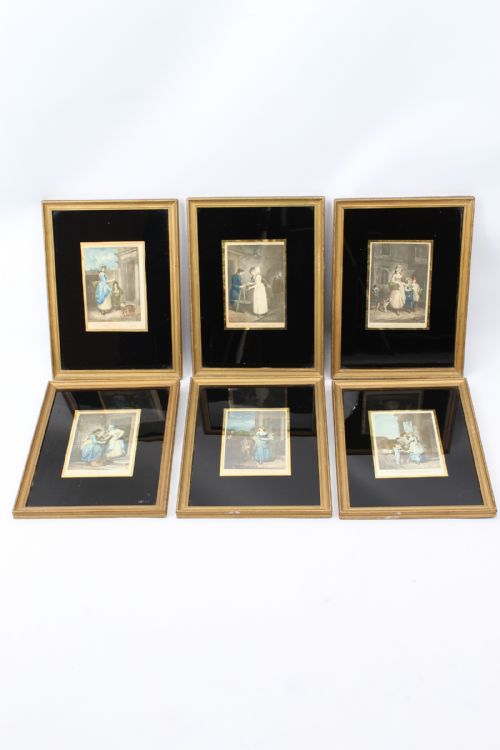
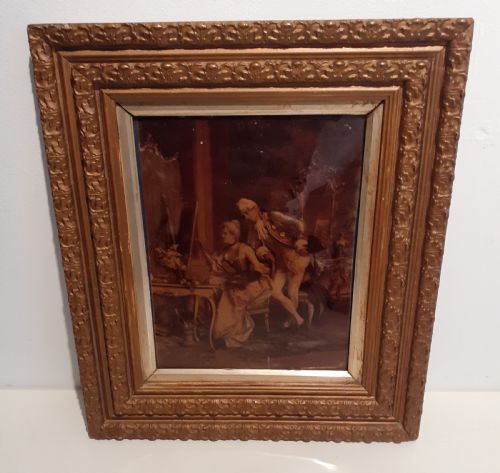
These gold frame glass print pieces combine period imagery with protective glazing and gilded surrounds, offering collectors a striking wall display.
Gold Frame Glass Print
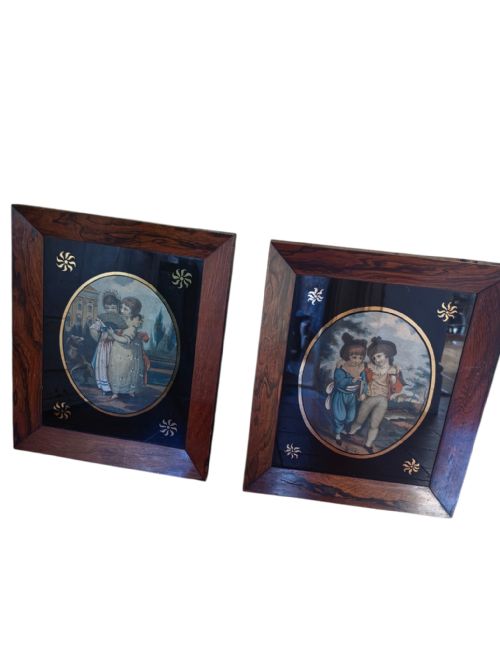
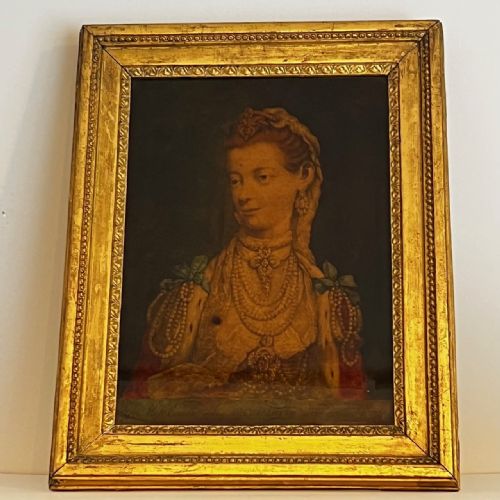
When you search for a gold frame glass print, you encounter a variety of antique wall art and decorative items that integrate historical paper prints, reverse glass paintings, and chrystoleums. These pieces span periods from the Georgian and Regency eras through the Victorian age and into the Art Deco years, showcasing diverse subjects from royal portraits to allegorical scenes.
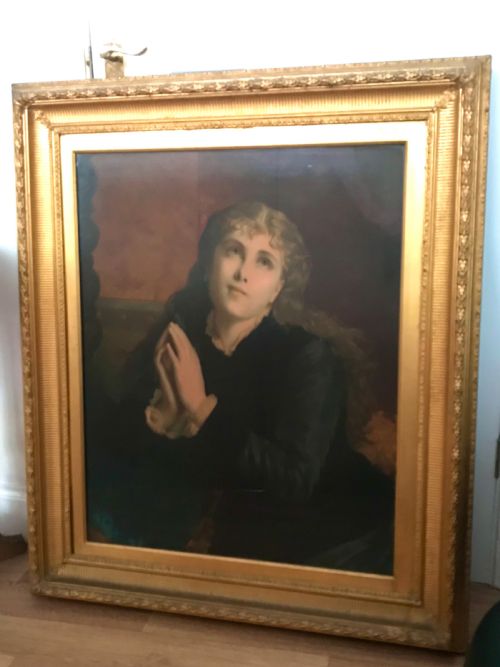
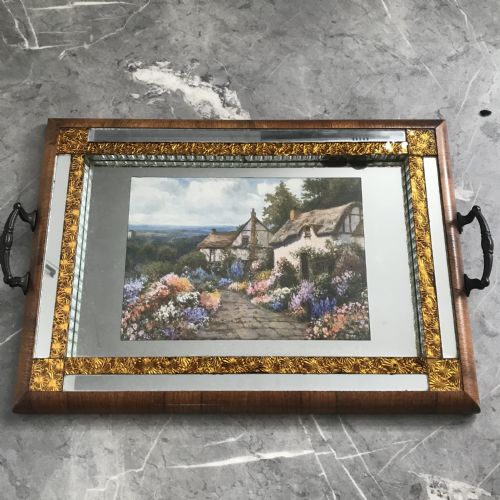
The most common examples on this page are nineteenth century chrystoleums and reverse glass prints housed in ornate giltwood, gesso, or gold leaf frames. You also find specialised forms such as convex glass pieces, optical illusion lithographs, and mirrored trays utilising walnut veneer.
Makers and publishers span traditional printsellers and artists, with specific works attributed to figures like Robert Sayer and Schweninger. The framing often employs traditional gilding techniques upon wood, matching the aesthetic ambitions of each distinct historical period.
Materials and technique
The construction relies on glass placed directly over paper prints, mezzotints, or hand-painted surfaces to protect the delicate media beneath. Chrystoleums involve mounting a paper print to glass, rubbing away the paper backing, and meticulously hand-colouring the remaining transparent image from behind with oil paints.
Frames are constructed from wood, gesso, and giltwood, applying layers of gold leaf or gilt finish to achieve a brilliant metallic sheen. Convex and dome-fronted glasses are utilised to create depth and project the imagery outward from the wall.
Object forms span wall art, reverse glass prints, chrystoleums, mezzotints, and decorative trays with walnut veneer.
Distinctions in quality
Quality reveals itself in the intricacy of the hand-painting beneath the glass and the crispness of the underlying mezzotint or engraving. Finer chrystoleums exhibit subtle, layered oil colouring that enhances the realism of the subject without obscuring the printed lines.
The framing demonstrates craftsmanship through the depth of the gesso mouldings, the integrity of the original gilt leaf, and the weight of the timber. Period frames that remain entirely original to their prints command greater regard than later replacements.
Robert Sayer·Schweninger·Henry Corbould·Kauffman·Frye
The Gold Frame Glass Print Glossary
- Chrystoleum
- A specialised Victorian method of applying a paper print to glass, thinning the paper, and hand-colouring the reverse with oils. This technique produces a luminous, enamel-like appearance that mimics an oil painting.
- Reverse glass print
- An image painted or transferred directly onto the rear surface of a pane of glass so that the final composition is viewed through the transparent material. This method protects the pigments from dust and atmospheric degradation.
- Giltwood
- Timber carved and coated with gold leaf, metal powder, or gold paint to simulate solid gold. It forms the primary decorative surround for many Georgian and Victorian works.
- Gesso
- A plaster-like mixture applied to wood frames and carved or moulded into intricate decorative patterns before gilding. It provides the raised relief details seen on ornate period frames.
- Mezzotint
- A printmaking process of the intaglio family where the copper plate is roughened to produce rich dark tones and subtle gradations of light. It was frequently employed for portraits and reproductions of fine art.
Gold Frame Glass Print: Frequently Asked Questions
What is a chrystoleum?
A chrystoleum is an antique picture created by placing a paper print face down on glass, removing the paper support, and hand-painting the back with oil colours.
This intricate process gives the flat print a rich, three-dimensional depth that resembles a miniature oil painting.
How do I date a framed glass print?
Dating relies on examining the frame style, glass characteristics, and the printing technique used for the underlying image. Georgian and Regency pieces often feature simpler mouldings, while Victorian examples lean toward heavier gesso or convex glass.
Checking the paper substrate and backing materials also helps assign the piece to a specific nineteenth or early twentieth century period.
Are reverse glass prints delicate?
The painted or printed layer sits protected behind the glass pane, which shields the delicate media from surface dirt and direct handling.
However, the glass itself and the surrounding gilt frame require careful handling to prevent chipping or cracking during transport and hanging.
How should I hang these framed pieces?
These works require secure wall fixings suited to the weight of solid wood and gesso frames. It is best to avoid hanging them in areas of direct, strong sunlight to protect the pigments and paper from fading over time.