




Gold Foliage Chandelier
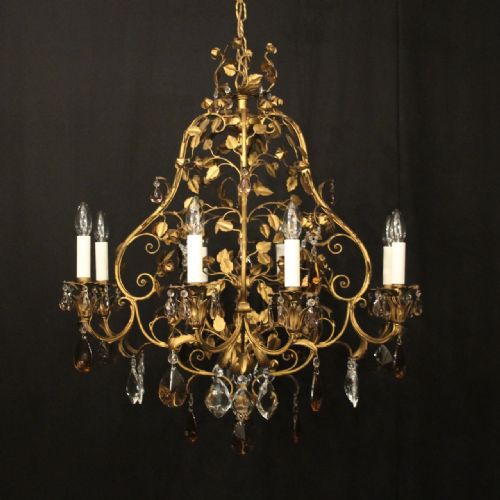
A gold foliage chandelier brings warmth and botanical charm to a room through gilded metal leaves and floral motifs.
Gold Foliage Chandelier
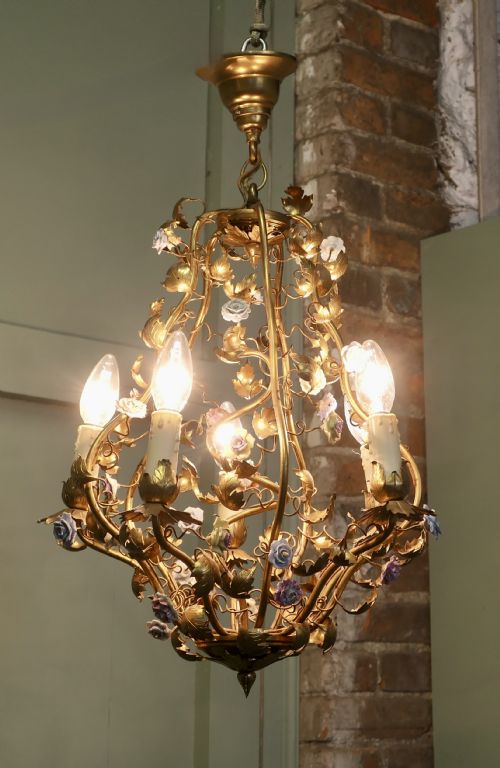
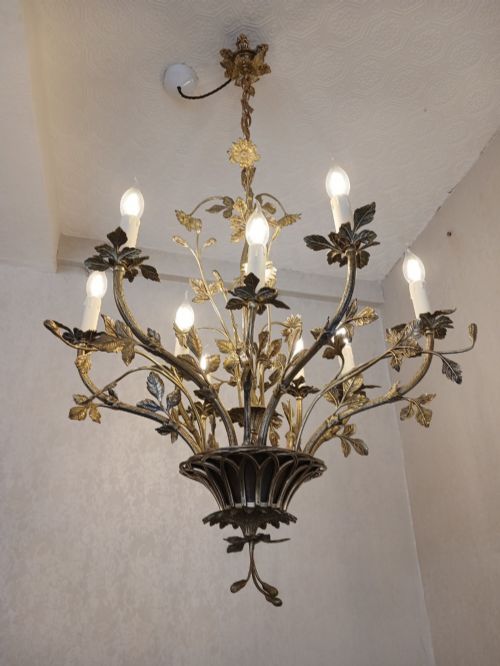
A gold foliage chandelier combines botanical forms with illumination, taking the shape of branching metal leaves, ceramic flowers, and cascading crystals. These light fittings emerge from early twentieth-century French and Italian workshops, reflecting regional decorative traditions from Florentine to Hollywood Regency styles.
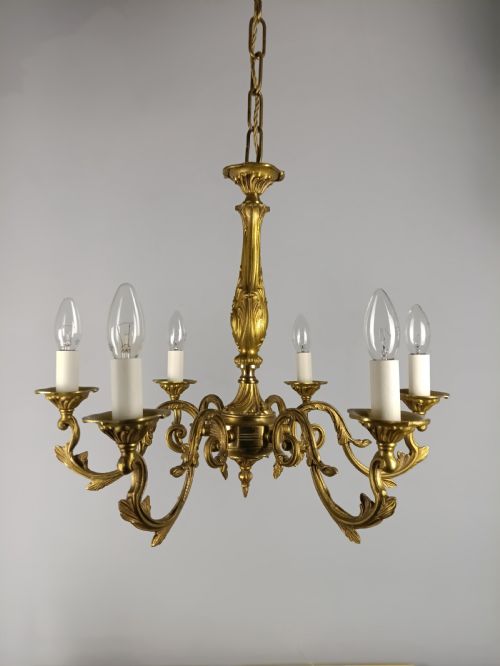
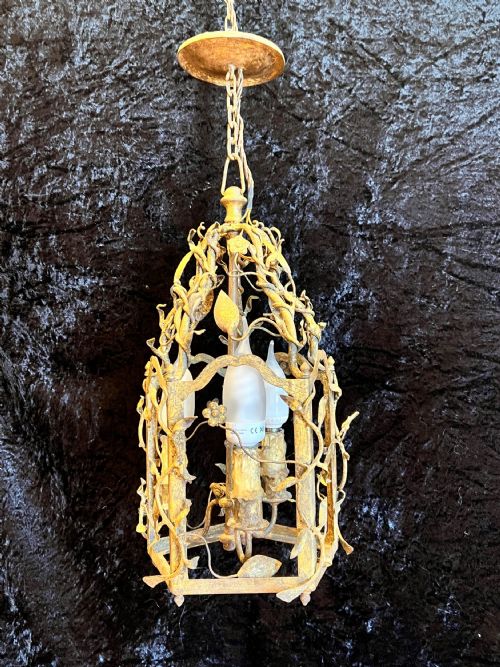
The most common examples on this page are French and Italian fixtures dating between nineteen hundred and nineteen thirty. You will find multi-bulb cage chandeliers, rustic lanterns, and branch designs finished in gilt metal, brass, and toleware.
How they were made
Maker workshops built these chandeliers using forged metals, shaped brass, and painted toleware to construct intricate floral frames and branches. Artisans applied gilt leaf or metallic paint over wrought iron, bronze, and brass to achieve a rich golden surface.
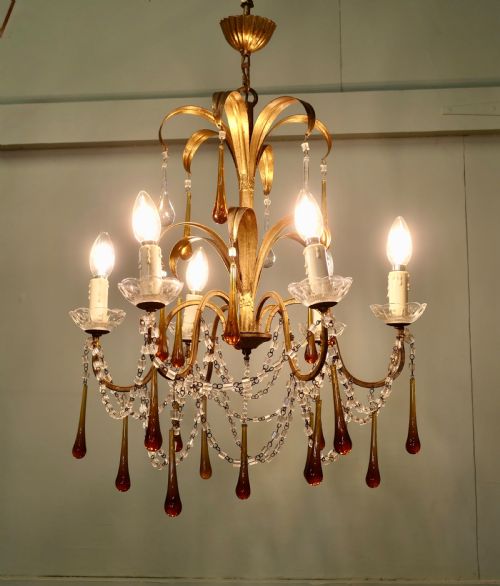
Many examples incorporate delicate elements such as ceramic flowers and amber crystal teardrops suspended from wire frames. Electric wiring was later added or adapted to house multiple bulbs within these ornate botanical structures.
Materials recorded across the inventory include gilt metal, wrought iron, brass, glass, toleware, ceramic, and gilded bronze.
What varies in quality
Quality rests upon the delicacy of the metalwork and the depth of the gilding applied to the leaves and branches. Finer examples feature hand-shaped foliage and integrated ceramic blooms that demonstrate careful sculptural detail rather than mass production.
The presence of original crystal drops and the complexity of multi-light configurations distinguish superior pieces. Structural integrity in the central cage and branches determines how gracefully the fixture hangs and distributes light.
The Gold Foliage Chandelier Glossary
- Toleware
- Painted or lacquered sheet metal often shaped into floral and leaf motifs on vintage lighting. This material provides vibrant colour and durable structure for decorative chandeliers.
- Gilt
- A thin layer of gold leaf or gold paint applied to metal, wood, or plaster surfaces. It creates the characteristic metallic sheen seen across these antique light fittings.
- Cage chandelier
- A style of light fixture where the frame resembles an open metal cage decorated with crystals and drops. This design directs light outward through an arrangement of bulbs.
- Florentine
- A decorative style originating in Florence, Italy, known for ornate carved wood, gilded finishes, and botanical motifs. Pieces from this tradition often feature prominent leaf and flower carvings.
Gold Foliage Chandelier: Frequently Asked Questions
How do I clean a gilt foliage chandelier?
Dust the metal leaves and crystals gently with a soft dry brush or microfibre cloth to protect the delicate gilt surface. Avoid harsh chemical cleaners that can strip away the gold finish or damage the painted toleware.
For deeper cleaning, dampen a cloth slightly with water and mild soap, working carefully around ceramic flowers and crystal drops. Ensure the power is switched off before undertaking any maintenance.
Are these chandeliers compatible with modern wiring?
Many vintage chandeliers have been rewired for contemporary electrical standards while retaining their original sockets and brass components. You should consult a qualified electrician to check the internal wiring and ensure secure ceiling installation.
Using low-heat LED bulbs helps protect fragile materials like painted toleware and vintage crystal from excessive heat exposure. Proper installation also ensures the heavy brass and bronze frames are safely supported.
What rooms suit a branch or flower chandelier?
The botanical design of a foliage chandelier makes it well suited to dining rooms, hallways, and drawing rooms where decorative lighting serves as a focal point. Smaller three-light lanterns work effectively in compact spaces or entryways.
Larger twelve-light Florentine and cage chandeliers require higher ceilings and ample clearance to display their full scale. The warm metallic finish complements traditional interiors and eclectic spaces alike.
How do I identify French and Italian pieces?
French chandeliers from this era often feature toleware foliage, gilded bronze, and cascading amber crystals in rococo or Hollywood Regency styles. Italian Florentine pieces tend to emphasise carved giltwood and elaborate floral arrangements.
Examining the construction methods, metal patination, and specific floral motifs helps distinguish between regional workshops. The choice of materials, such as wrought iron versus gilt brass, points directly to the origin.