

Gold Crystal Lighting
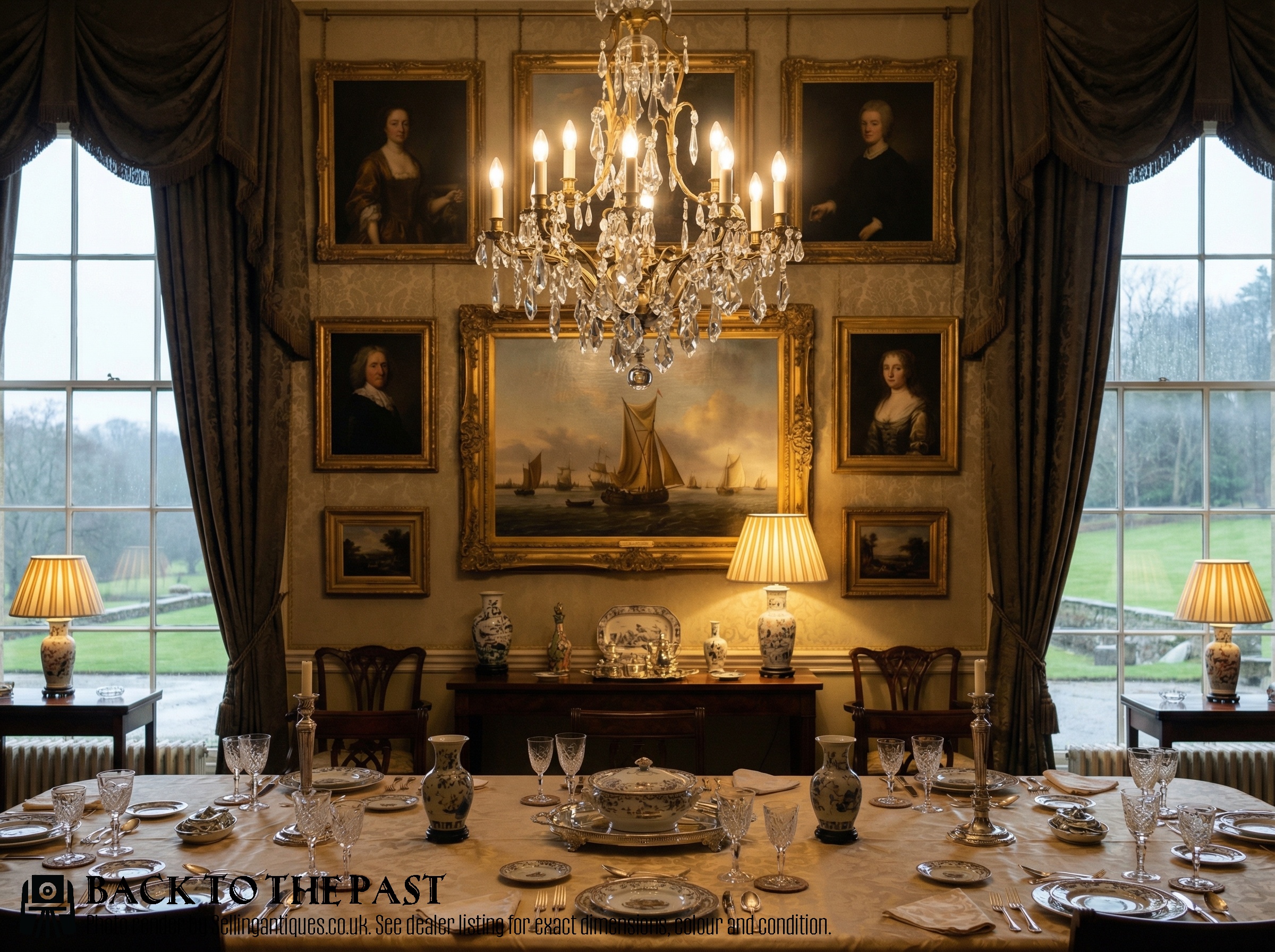
Gold crystal lighting brings together polished metal and refractive glass to catch every beam in a room.
Gold Crystal Lighting
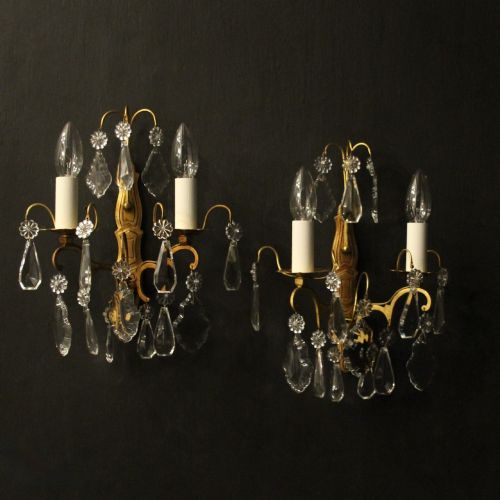
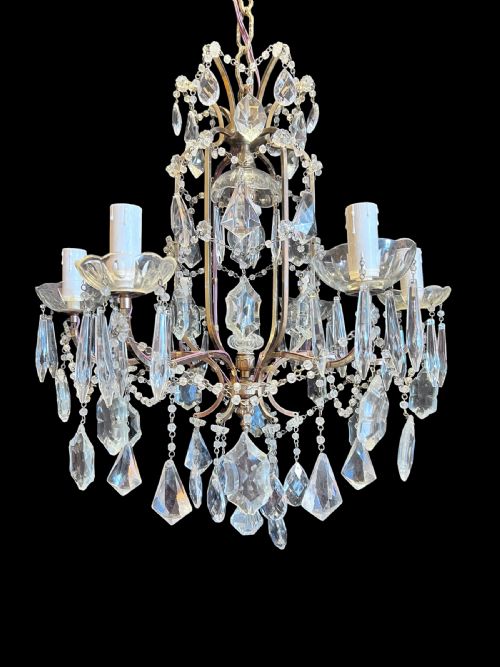
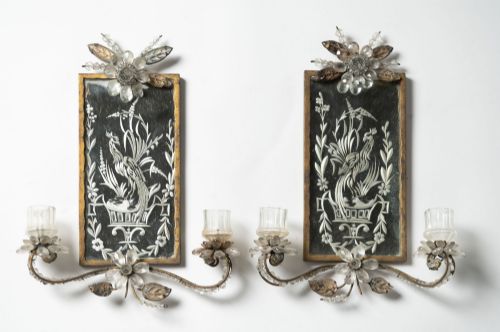
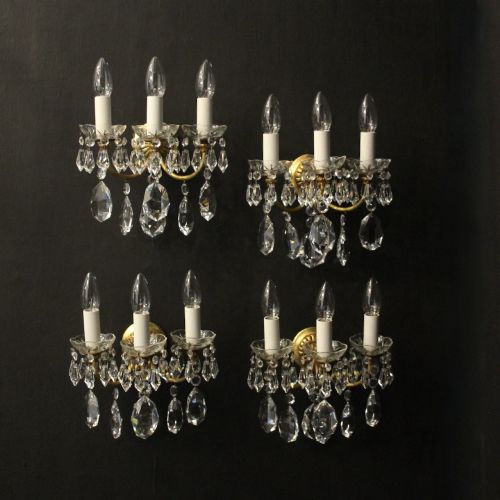
Gold crystal lighting encompasses chandeliers, wall sconces, ceiling lights, pendants, and table lamps originating from the nineteenth and early twentieth centuries. These pieces combine metallic frames with glass and crystal elements designed to illuminate and decorate interior spaces.
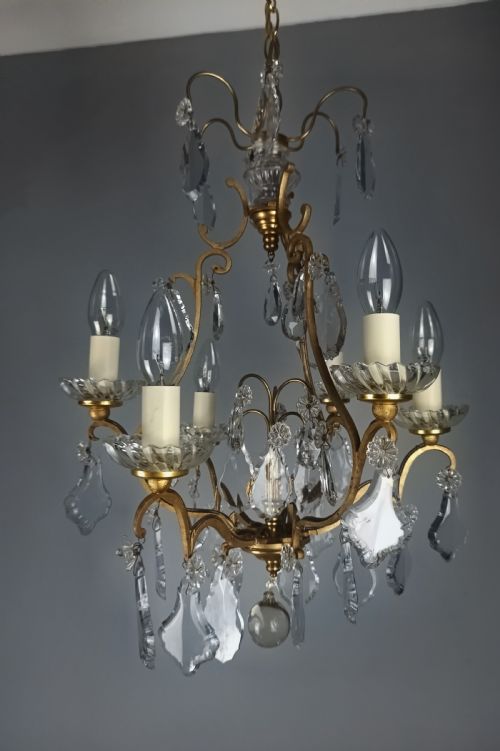
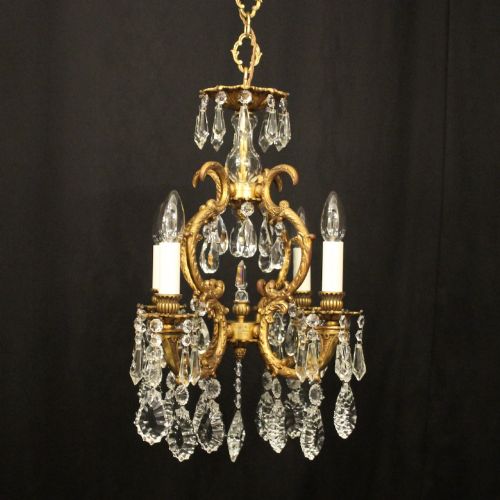
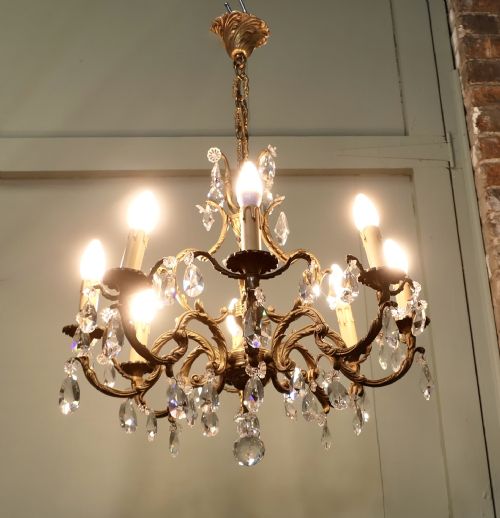
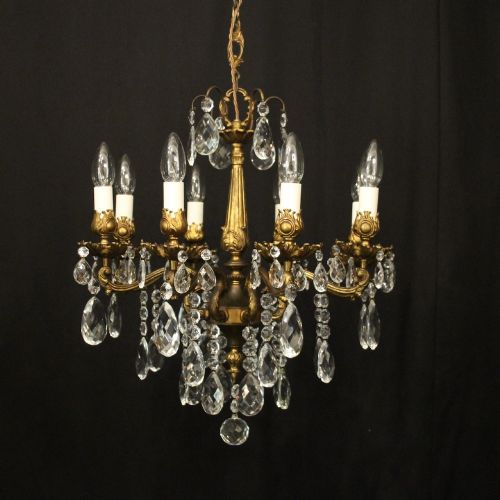
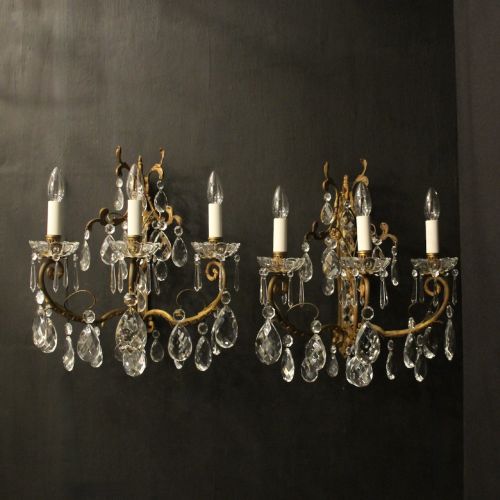
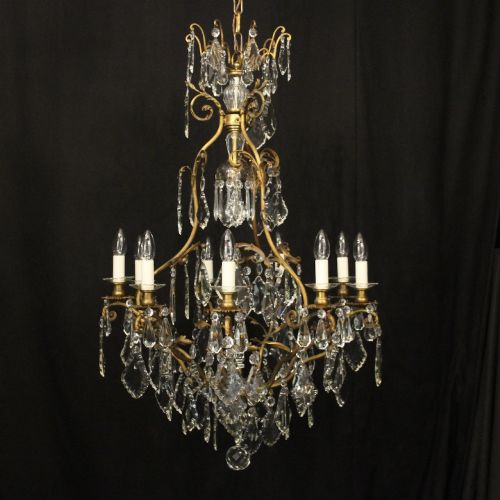
The selection on this page is dominated by French and Italian designs, spanning periods from Victorian and Edwardian to the 1920s and 1930s. Buyers frequently encounter multi-arm chandeliers and matched pairs of wall lights finished in gilt bronze, brass, or gilded metal.
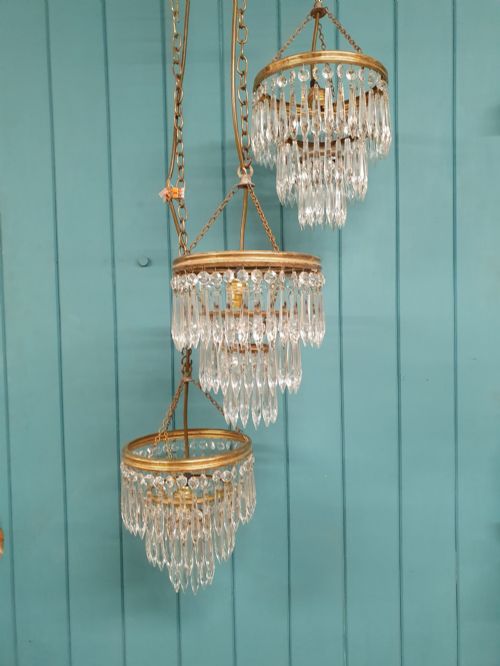
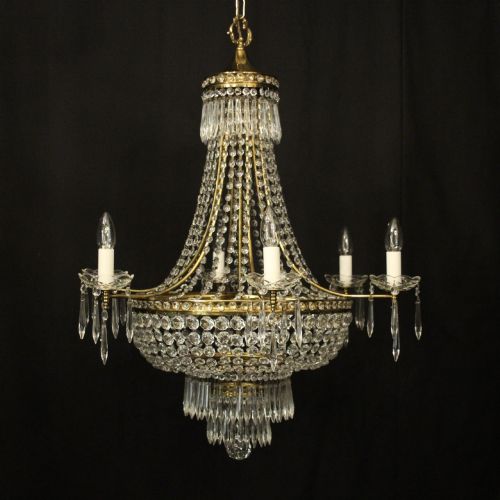
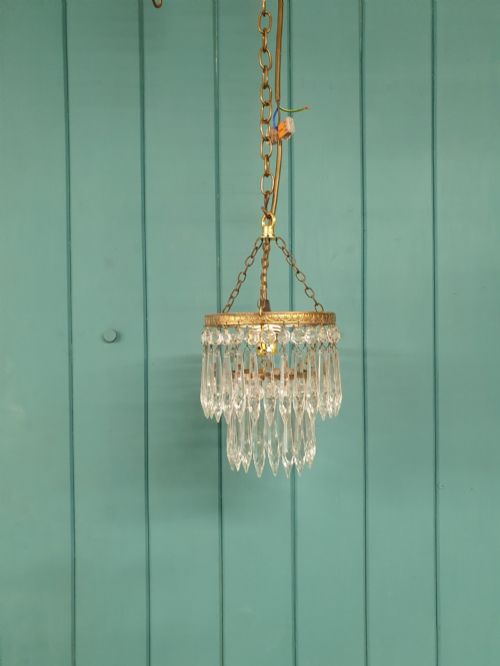
Forms range from small single-light fixtures to large multi-tier tent and waterfall chandeliers hung with lustres and teardrops. Alongside ceiling fixtures, the inventory includes candelabras, candlesticks, and table lamps incorporating cut glass and rock crystal.
How gold crystal lighting was made
Frames rely on cast and worked metals such as bronze, brass, spelter, and ormolu, often treated with a gilt finish to achieve a warm metallic appearance. These structural elements provide the rigid support necessary to hold multiple candle arms and heavy glass components.
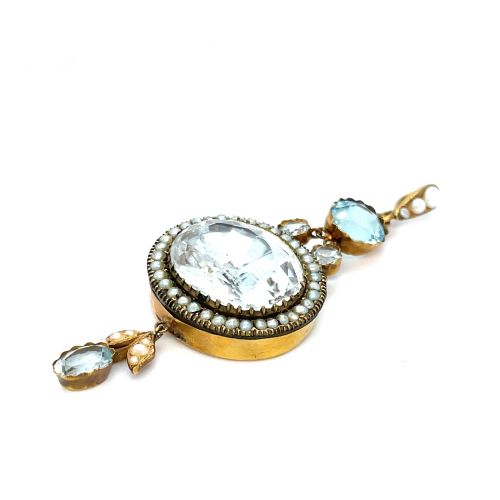
Crystals and glass drops are hand-cut or moulded into shapes including spikes, teardrops, and lustres, then wired or pinned to the metal framework. In some instances, specialised components such as foil-backed aquamarine or turquoise crystals introduce distinct colour variations to the assembly.
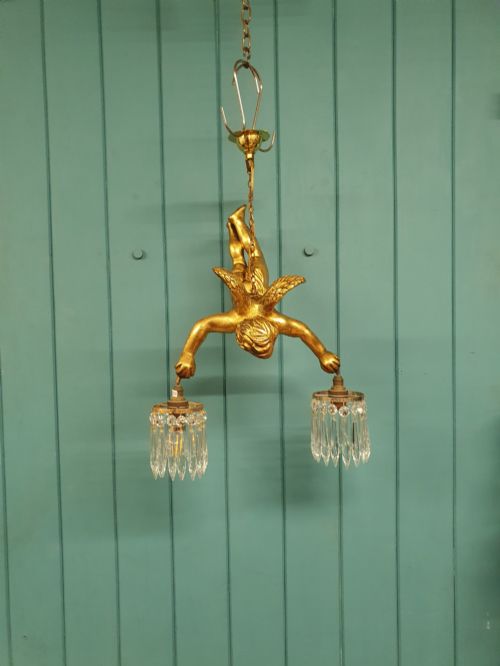
Some chandeliers come guarded by gilded winged cherubs and flying cupids holding the crystal spikes aloft.
What varies in quality in gold crystal lighting
The refinement of the metalwork separates standard items from superior examples, visible in the depth of chasing on bronze frames and the crispness of cast details like cherubs and lion masks. Heavier bronze and ormolu structures offer greater durability and visual weight compared to lighter stamped brass or painted toleware.
The clarity and cutting of the crystal components also determine the calibre of a piece, with sharp, hand-cut facets producing superior light refraction. Complete arrangements of matching drops and lustres sustain the visual integrity of a fixture.
Maison Baguès
The Gold Crystal Lighting Glossary
- Lustre
- A cut glass or crystal pendant hung from a chandelier or candlestick to reflect light. These drops dangle from pins and sway slightly with air currents.
- Tent and waterfall
- A chandelier configuration where strings of crystals form a conical upper tent above a cascading lower tier of drops. This style maximises the density of glass elements.
- Ormolu
- Finely ground high-carat gold mercury-gilded onto a bronze object. The technique creates a durable, warm metallic lustre found on nineteenth-century French fixtures.
- Spike chandelier
- A vertical lighting form characterised by an elongated central column surrounded by outward-projecting arms. These fixtures suit rooms with restricted ceiling heights.
Gold Crystal Lighting: Frequently Asked Questions
How do I choose the right size chandelier?
Consider the floor area and ceiling height of the room where the fixture will hang. Multi-arm configurations with numerous lights suit larger spaces, while compact single or triple-arm options fit smaller areas.
Verify the drop length to ensure adequate clearance beneath the lowest crystal pendant.
Can these antique lights use modern electricity?
Most of these fixtures are adapted for contemporary wiring while retaining their original frames and crystal components. Professional installation ensures that internal components meet current electrical standards.
Low-wattage bulbs help replicate the soft, warm illumination intended for period lighting.
How do I clean crystal lustres safely?
Remove dust regularly using a soft feather duster or microfiber cloth to maintain the refractive quality of the glass. For a deeper clean, remove the individual drops and wash them in lukewarm water with a mild detergent.
Dry each crystal thoroughly with a lint-free cloth before rehanging it on the metal frame.
How do I distinguish French and Italian styles?
French pieces often follow Empire, Rococo, or Chateau traditions, utilising gilt bronze, elaborate casting, and structured tent designs. Italian Florentine examples frequently incorporate leafy, organic motifs and painted or gilded wood elements.
Examining the metal casting and the cut of the crystal usually reveals the regional workshop origin.