
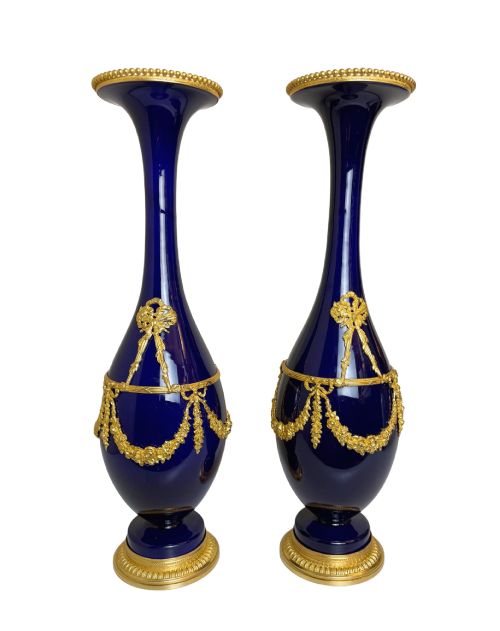
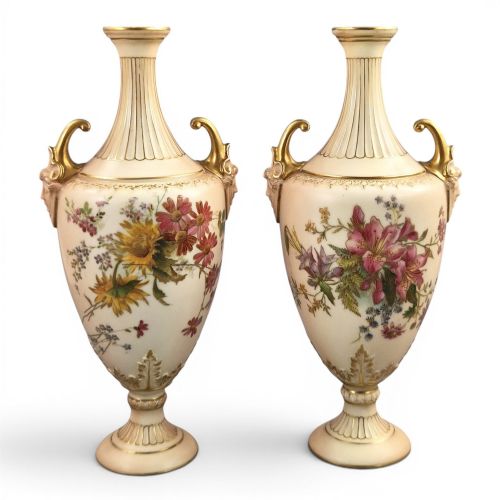
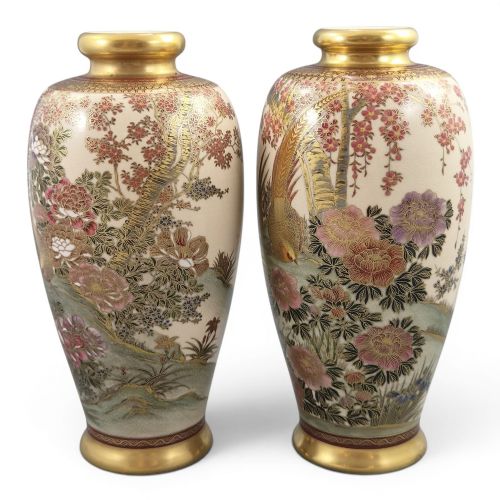


Gold Floral Vase Pair
These gold floral vase pair selections bring together 19th Century and Edwardian pieces finished in porcelain, earthenware, and gilt.
Gold Floral Vase Pair
A gold floral vase pair brings together matching decorative vessels created across the nineteenth and early twentieth centuries, spanning the Victorian and Edwardian eras.
The selections on this page feature porcelain, earthenware, and stoneware forms, alongside unexpected works such as oil paintings and lacquer panels.
Makers from European potteries and Japanese workshops dominate the offerings, displaying floral motifs executed in enamel, gilding, and gold leaf.
Materials and methods
Potters shaped these vessels from porcelain, earthenware, and stoneware, applying glazes and foundational bodies before ornamentation.
Decoration relied heavily on enamel paints, gilt bronze mounts, and hand-applied gold leaf or gilding to highlight floral patterns.
Some pairs hide tiny painted wisteria gardens and inquisitive dolphins where you least expect them.
Assessing quality in a pair
Quality rests upon the precision of the hand-painted floral details and the crispness of the gilt work across both pieces in the pairing.
The sophistication of the ceramic body, whether delicate porcelain or robust stoneware, defines the upper tiers of the selection.
Royal Worcester·Manpei·Hakusan·Hododa·Doulton Burslem·Ernst Wahliss·Royal Doulton Lambeth·Henry Schouten·Royal Crown Derby
The Gold Floral Vase Pair Glossary
- Gilt
- A thin layer of gold applied to the surface of porcelain, metal, or wood. This finish catches the light and emphasises decorative motifs.
- Earthenware
- Porous pottery fired at lower temperatures, often finished with an opaque glaze. It forms the body for many decorated antique vessels.
- Satsuma
- Japanese pottery featuring a crackled cream-coloured earthenware glaze decorated with enamels and gilding. These works frequently depict elaborate garden scenes.
- Stoneware
- A dense, hard ceramic fired at high temperatures until vitrified. It provides a durable ground for enamel and slip decoration.
Gold Floral Vase Pair: Frequently Asked Questions
How are antique pairs matched?
Makers produced these vessels together in matching moulds or pairs, ensuring uniform height, shape, and decorative programmes from the outset.
Over time, matching pairs survived intact by remaining displayed together in domestic interiors and collections.
Where were these ceramic pieces made?
The pieces originate from major European ceramic centres in England and Austria, alongside traditional Japanese kilns.
Each region employed distinct regional clays, glazes, and artistic traditions in the creation of their floral wares.
How should I clean my vases?
Dust the surfaces gently with a soft, dry cloth to protect delicate enamel work and fragile gilding from abrasion.
Avoid using water, chemical cleaners, or immersion, as these can lift fragile gold leaf and historical pigments.
What is Satsuma ware?
Satsuma refers to Japanese earthenware characterised by a fine crackle glaze decorated with polychrome enamels and raised gold.
These pieces were produced for both domestic use and export during the late nineteenth and early twentieth centuries.