
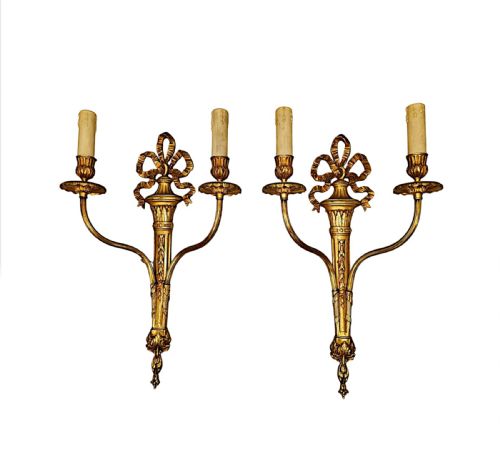
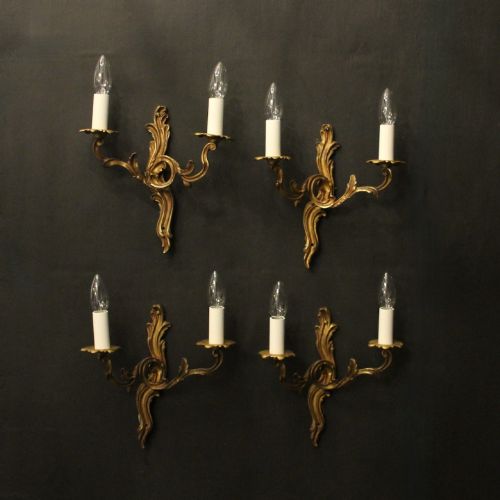

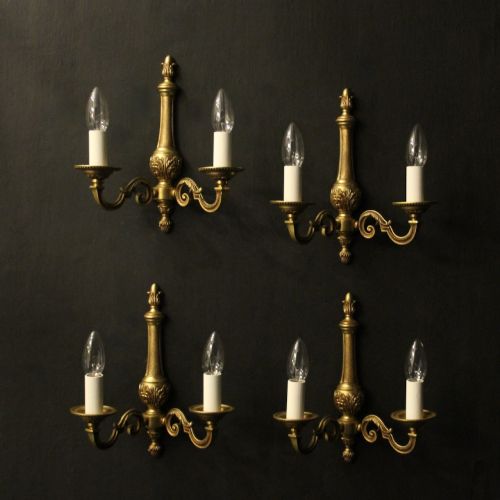
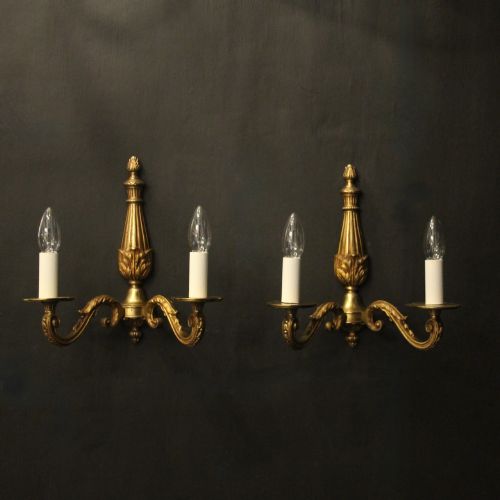
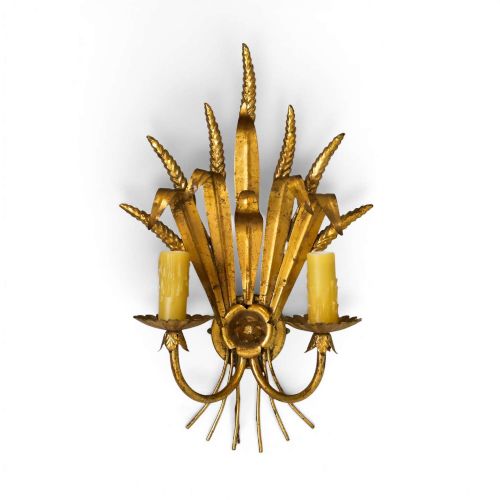
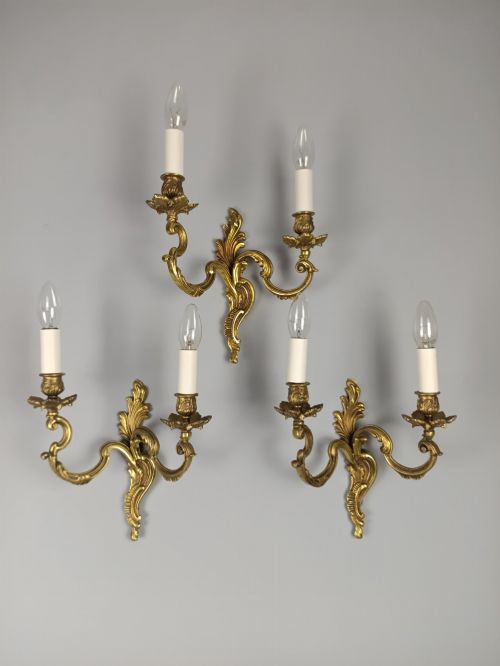
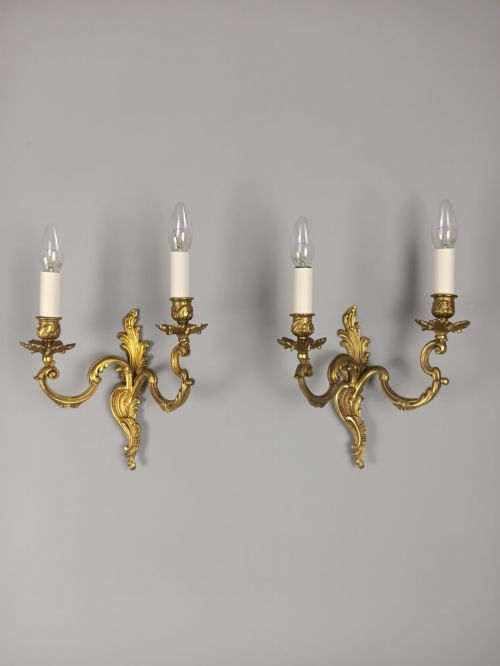
Gold Double Wall Light
A gold double wall light brings warmth and polished reflection to a room, cast in bronze, brass, or gilded metal.
Gold Double Wall Light
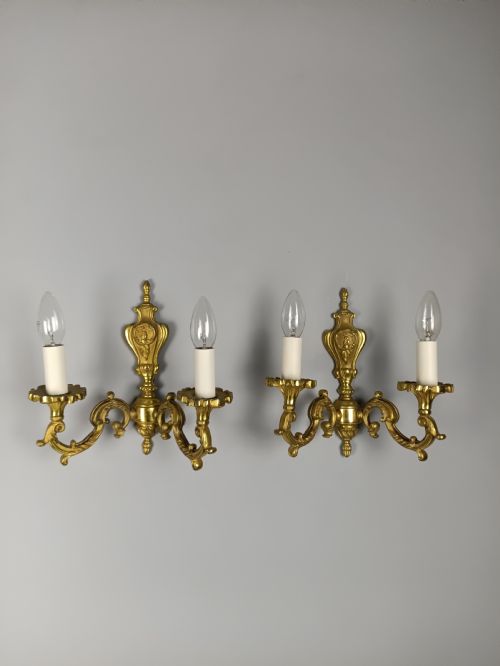
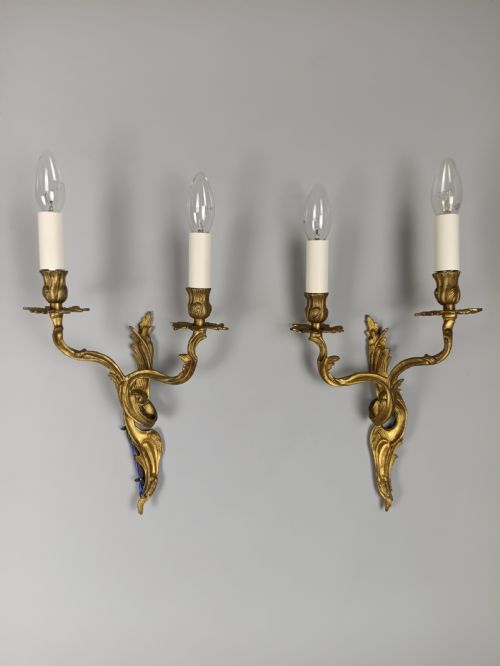
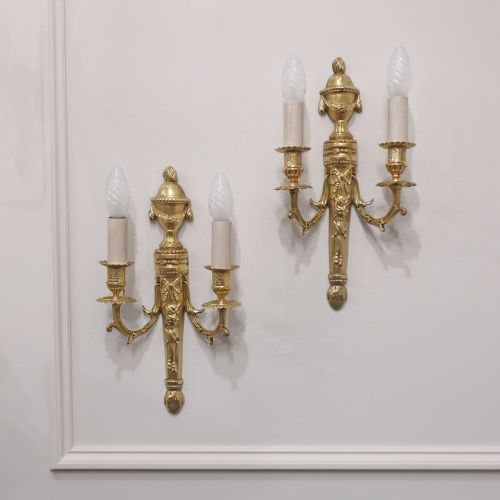
A gold double wall light takes many forms across the nineteenth and twentieth centuries, originating predominantly from French workshops styled in the Rococo, Empire, and Neoclassical traditions. These pieces mount directly to a wall, supporting twin candle-arms or bulb holders designed to project ambient illumination across a space.
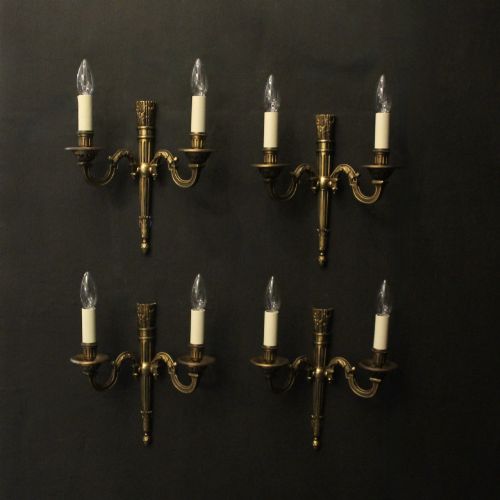
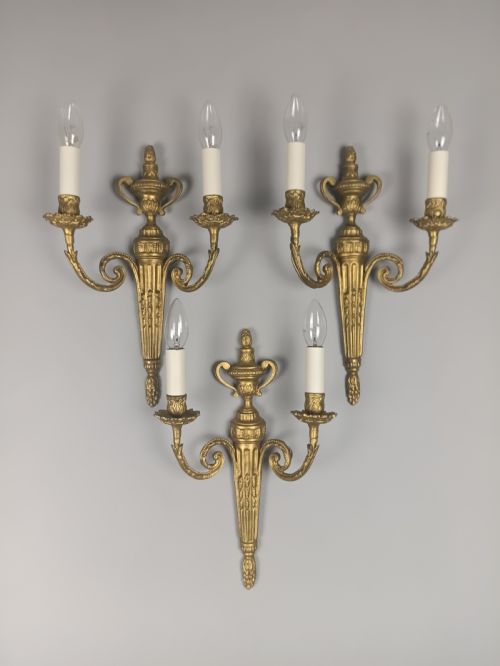
The most common examples on this page are twin arm wall lights and sconces dating from the nineteen-twenties and nineteen-thirties, often found in matched pairs or larger sets. French production dominates the selection, though English and Florentine variants also appear alongside Victorian and mid-century interpretations.
Makers such as Casier contribute to the nineteenth-century baseline, while Liberty and Adam style pieces broaden the stylistic range into wooden giltwood and refined neoclassical geometry. Buyers encounter everything from small ribbon motifs to substantial four-branch setups.
Materials and construction methods
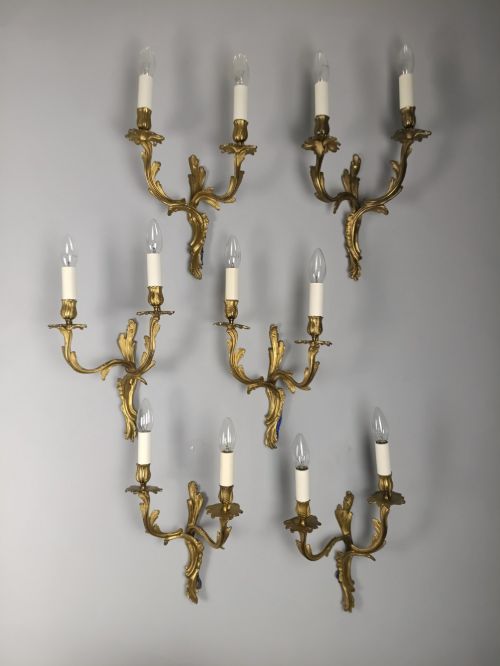
Brass, bronze, and gilt metal serve as the primary structural foundations for these items, shaped through casting and then finished with surface gilding or ormolu. Metalworkers utilised traditional foundry techniques to achieve intricate scrollwork and floral relief before applying gold finishes.
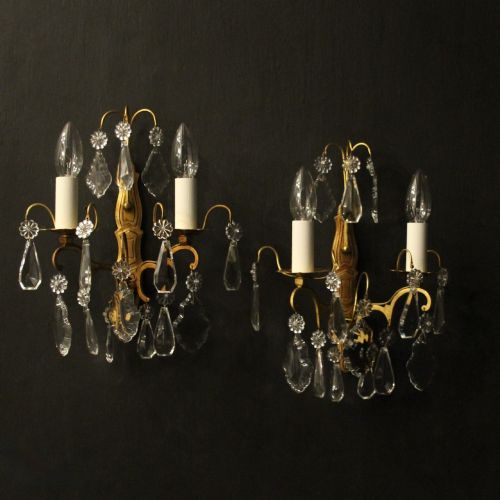
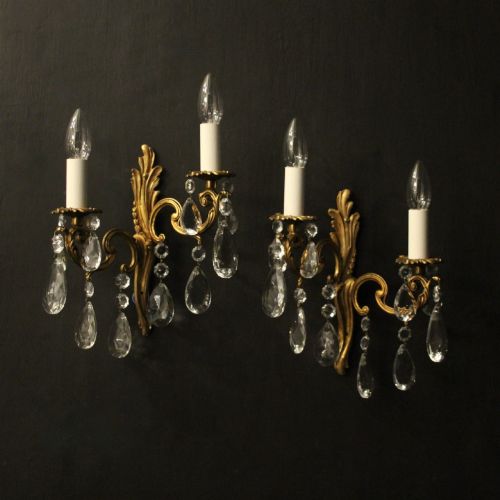
Gilded brass and gilded bronze dominate the material record, paired occasionally with crystal drops or carved giltwood in Florentine and Victorian iterations. The application of gold leaf or mercury gilt gives these pieces their luminous surface character.
A few lucky pieces even come tied with gilded metal ribbons, proving that nineteenth-century metalworkers knew how to put a bow on it.
Judging quality and craftsmanship
The precision of the metal casting dictates the distinction between standard production and superior craftsmanship, visible in the crispness of acanthus leaves, ribbons, and rococo scrolls. Heavier bronze and ormolu pieces hold sharper detail than lighter pressed brass alternatives.
Surface preservation separates well-kept examples from those that have lost their lustre, with original gilding retaining a softer glow than later paint touch-ups. The integration of structural arms and backplates reveals the maker's original structural intent.
Casier·Liberty
The Gold Double Wall Light Glossary
- Ormolu
- Gilded bronze, produced by applying a finely ground high-carat gold-mercury amalgam to a bronze object and heating it until the mercury vaporised. This technique was widely employed in French furniture mounts and lighting from the eighteenth century onward.
- Giltwood
- Timber, typically carved gesso-coated softwood, covered with thin gold leaf or metal leaf. It appears frequently in Florentine and Victorian wall lights.
- Empire style
- The nineteenth-century neoclassical design movement inspired by the archaeological finds of ancient Greece and Rome, characterised by military motifs, laurel wreaths, and classical symmetry.
- Sconce
- A wall-mounted lighting fixture designed to hold candles or electric lamps, projecting illumination outward from vertical surfaces. Sconces have decorated domestic interiors for centuries.
Gold Double Wall Light: Frequently Asked Questions
How do I install a vintage gold double wall light?
Most antique wall lights require professional hardwiring into existing wall circuits by a qualified electrician, ensuring proper mounting brackets support the weight of the metal.
Older fixtures may need modern internal rewiring to meet current safety standards while preserving the exterior historic components.
Where should I place a wall sconce?
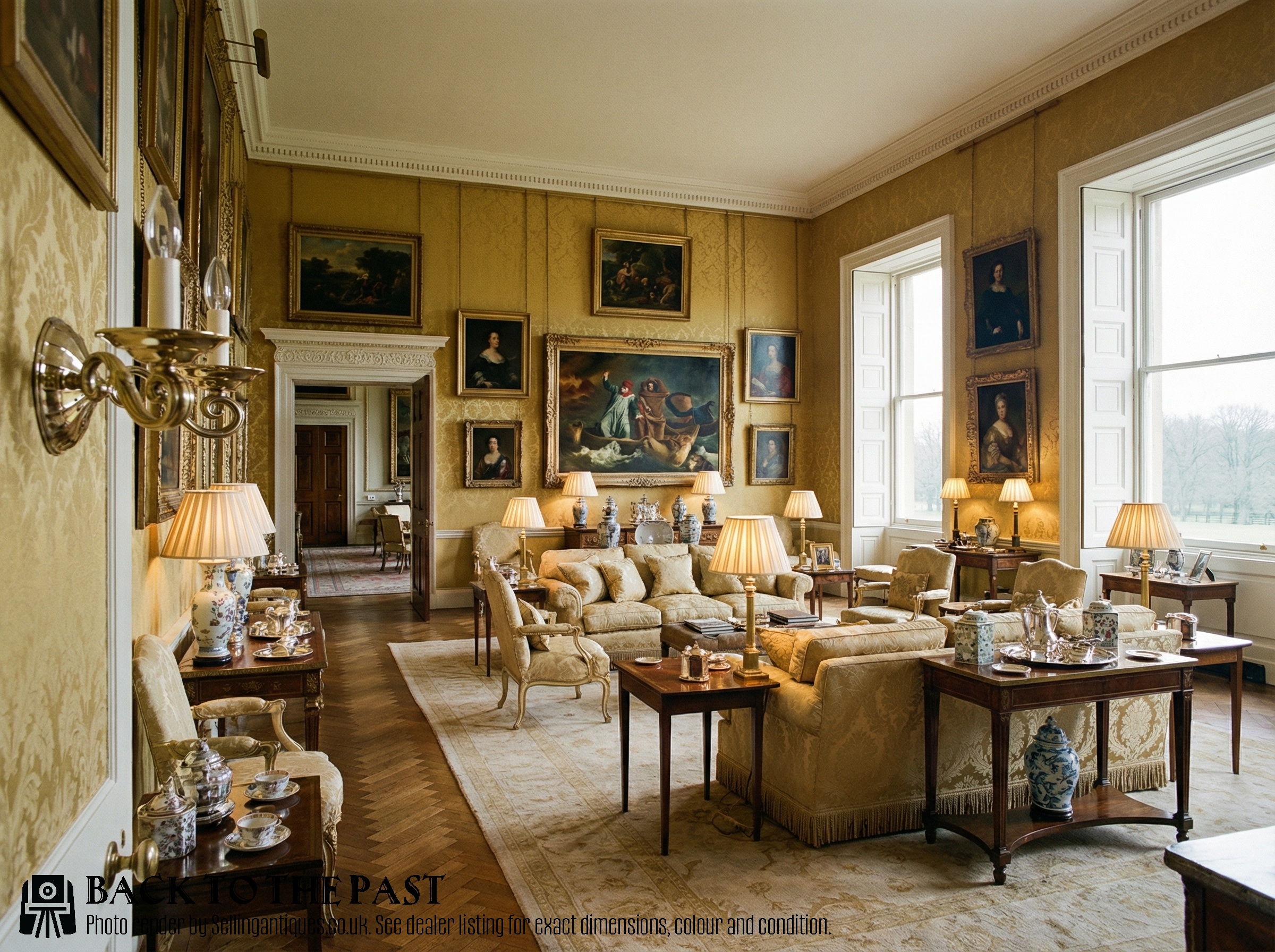
Wall sconces work effectively when mounted at eye level on either side of a fireplace, mirror, or doorway to create balanced secondary illumination.
In dining rooms or hallways, placing them at consistent heights ensures even light distribution across the wall surfaces.
How do I clean gilded bronze safely?
Dusting gently with a soft dry brush prevents the accumulation of particulate matter without abrading the delicate gold surface layer.
Moisture and chemical polishes should be avoided entirely, as they strip away historical gilding and ormolu finishes.
How can I tell the period of a wall light?
Stylistic cues such as Rococo asymmetry, Empire laurel wreaths, or mid-century geometric simplicity align fixtures with specific nineteenth and twentieth-century design movements.
Examining the backplate construction, screw types, and casting marks offers further clues regarding the manufacturing date.