
Gold Diamond Necklace
A gold diamond necklace brings together precious metals and brilliant stones in designs spanning the Victorian, Edwardian, Art Deco and later twentieth-century periods.
Gold Diamond Necklace
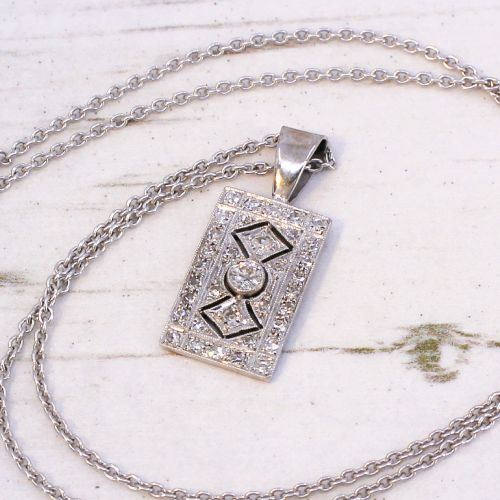
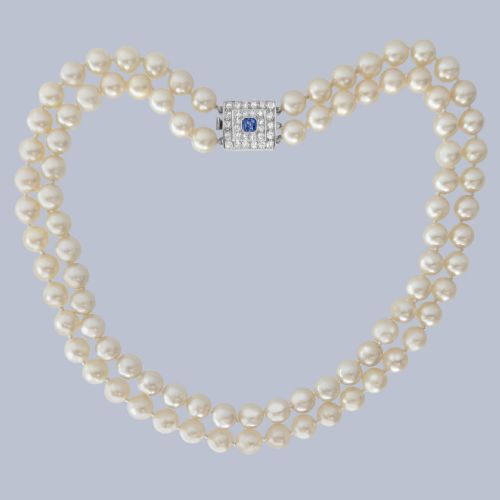
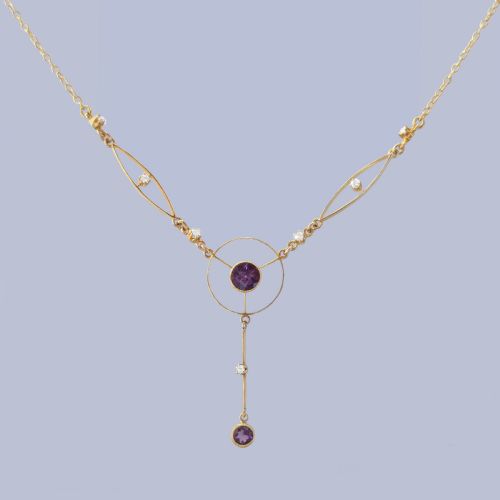
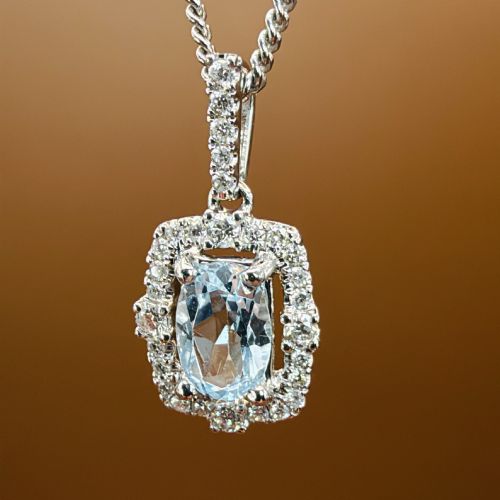
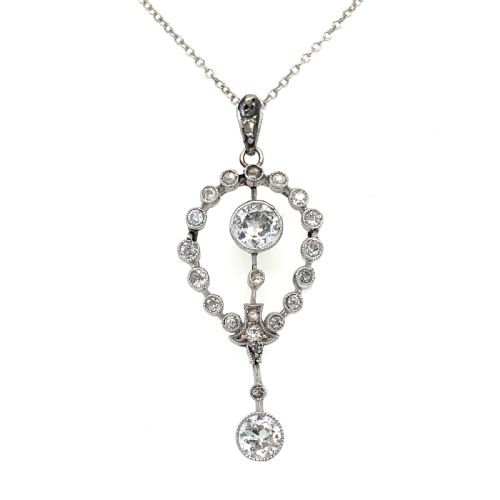
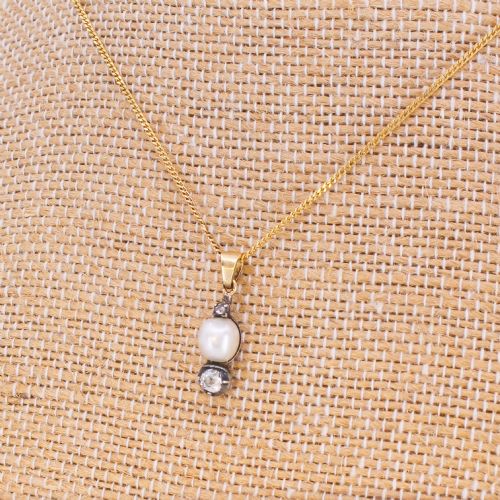
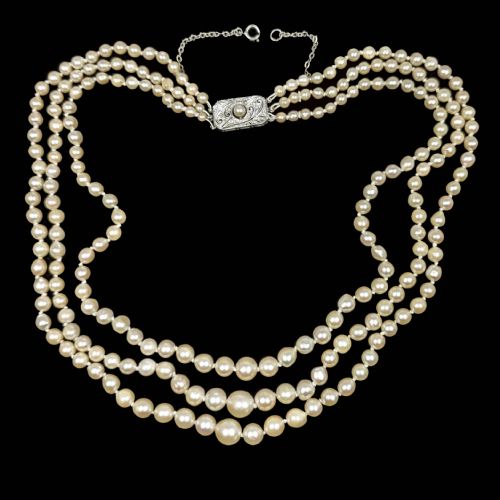
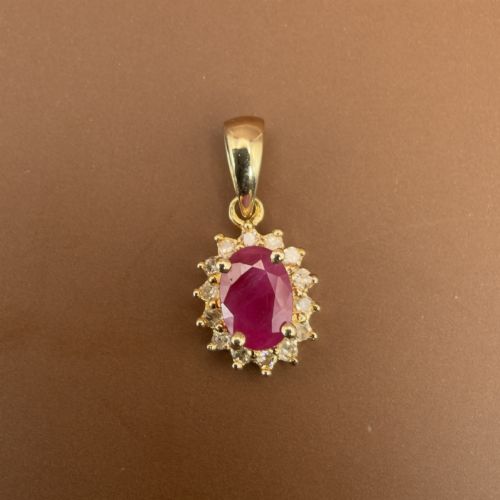
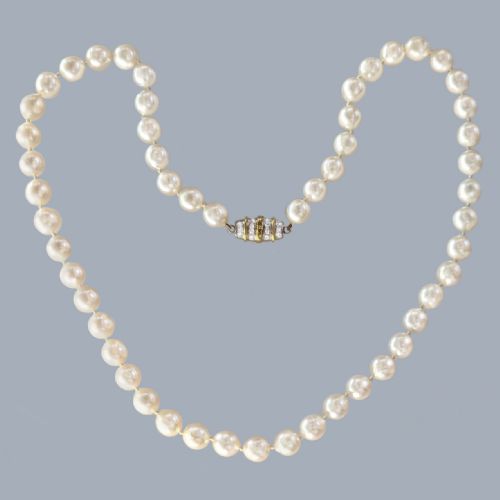
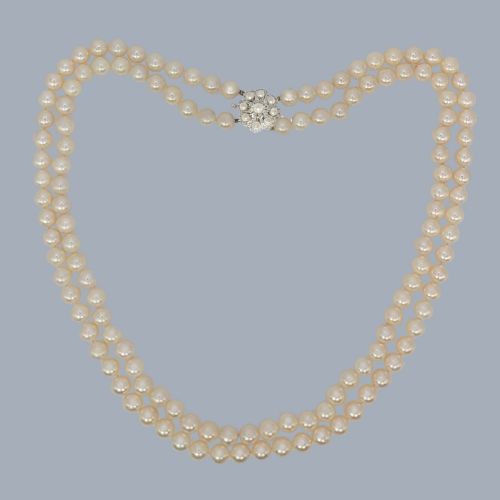
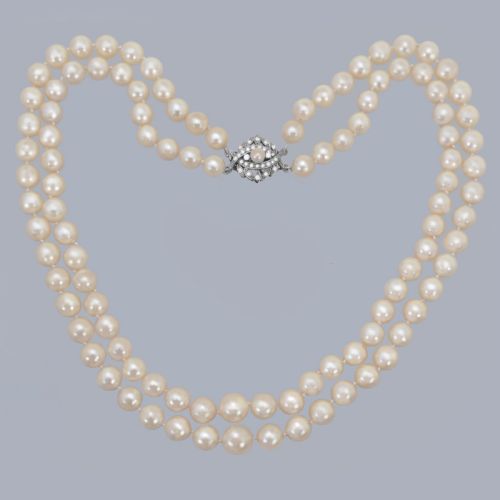
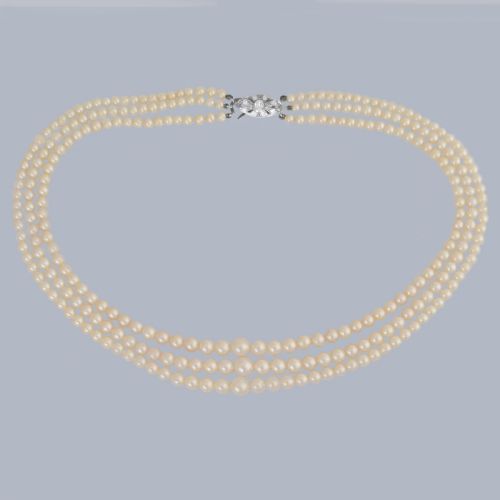
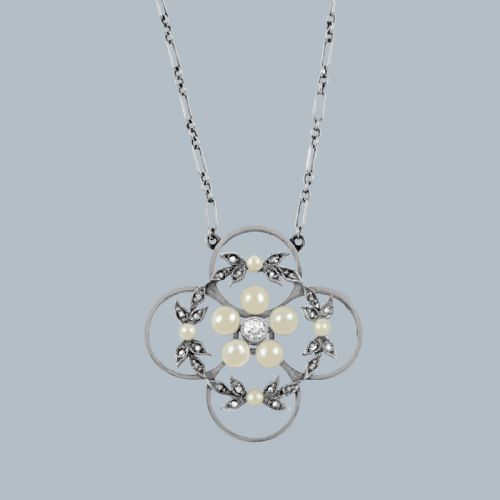
A gold diamond necklace takes many structural forms, appearing primarily as pendant necklaces, multi-stone clusters, and pearl strands secured with diamond-set gold clasps. Buyers seeking a gold diamond necklace encounter pieces ranging from nineteenth-century silver-topped gold work to mid-century creations.
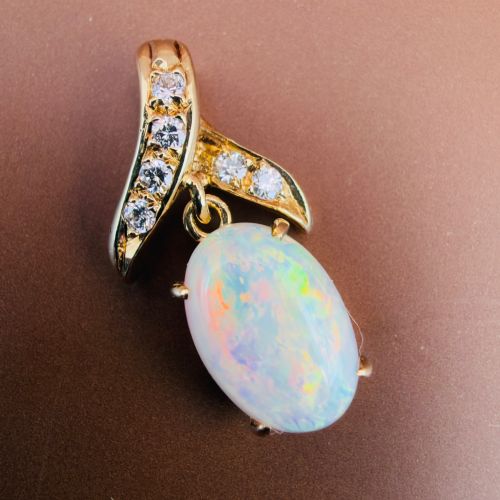
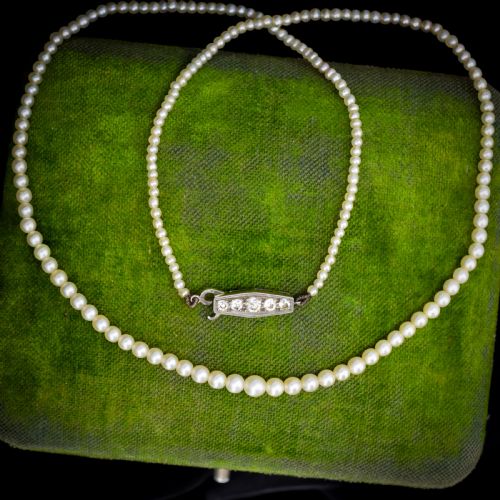
The pieces encompass distinct stylistic movements, notably the ornate motifs of the Victorian and Edwardian eras, the geometric lines of the Art Deco period, and later twentieth-century designs. Gemstone accents frequently accompany the diamonds, including aquamarines, sapphires, rubies, opals, and natural pearls.
Examples on this page draw from French origins, Italian makers, and British workshops, demonstrating a wide geographical reach across European jewellery traditions. Each piece balances the warmth of gold with the crisp sparkle of diamonds, whether set as a central pendant or structured in a multi-strand arrangement.
Materials and construction
Craftsmen utilised various purities of gold, including 9ct, 10ct, 14ct, 15ct, 18ct, and 21ct yellow and white gold, alongside platinum and silver. Silver frequently topped gold settings in nineteenth-century pieces to enhance the whiteness of the metal surrounding old-cut diamonds.
Techniques evolved from hand-cut rose and old-cut diamonds in antique pieces to precise princess and round-cut stones in later items. Gemstones such as black opals, conch pearls, and blue zircons were secured alongside diamonds using claw settings, cluster arrangements, and integrated clasps.
Gold Diamond Necklace Retail Price Guide 2026
Typical asking prices for gold diamond necklace among the pieces listed under this phrase on Sellingantiques today, from the lower quarter to the upper quarter. They describe what is for sale here now, not the wider market.
Some antique necklaces cleverly hide their fastening behind a diamond-set cluster clasp, letting the pearls steal the show until you turn around.
Assessing quality
Quality rests upon the selection and matching of the stones, where uniform diamond clarity, colour, and well-proportioned carat weight elevate a piece above standard examples. The integration of secondary gemstones, such as large aquamarines, natural rubies, or high-lustre pearls, dictates the significance of the necklace.
Execution of metalwork distinguishes superior pieces, visible in the fineness of the gold or platinum settings, the structural integrity of hinged connections, and the precision of the diamond claw work. Signed items or those with distinct regional provenance carry the evidence of superior workshop standards.
Roberto Coin
The Gold Diamond Necklace Glossary
- Old-cut diamond
- A hand-faceted diamond shape typical of the Victorian and Edwardian eras, featuring a smaller table and higher crown designed to catch candlelight.
- Rose-cut diamond
- A stone style featuring a flat base and a dome composed of triangular facets, common in antique French pieces.
- Cluster pendant
- A central arrangement of gemstones where a larger focal stone or motif is surrounded by smaller diamonds.
- Silver-topped gold
- A historical technique where silver was applied to the front of a gold mount to provide a bright white background for diamonds without tarnishing.
- Carat
- The unit of weight used for measuring diamonds and other precious gemstones found in these necklaces.
Gold Diamond Necklace: Frequently Asked Questions
How do I care for my gold diamond necklace?
Gold and diamonds tolerate gentle cleaning with warm water, mild soap, and a soft brush to remove everyday oils. Store the necklace separately in a lined box to prevent the diamonds from scratching softer accompanying stones like pearls or opals.
Inspect the settings periodically to ensure the claws holding the diamonds and gemstones remain secure. Professional cleaning by a jeweller helps maintain the brilliance of both the metal and the stones.
How can I tell a Victorian necklace from a later piece?
Victorian necklaces often feature old-cut or rose-cut diamonds set in silver-topped gold or higher purity yellow gold. Designs frequently incorporate natural pearls, turquoise, or coloured glass and rock crystal cabochons.
Later twentieth-century pieces, particularly from the Art Deco period or the 1960s, tend to utilise white gold or platinum with uniform round and princess-cut diamonds. Hallmark stamps and the overall structural geometry also offer clear indicators of the manufacturing era.
What styles of gold diamond necklaces are available?
The selection includes delicate pendant necklaces, multi-stone cluster drops, and pearl strands fastened with diamond-set gold clasps. Gemstone combinations vary widely, featuring sapphires, rubies, aquamarines, and opals alongside the diamonds.
Styles range from the intricate floral motifs of the Edwardian period to the clean lines of Art Deco design. Each format highlights different combinations of precious metals and coloured stones.
Are these necklaces suitable for everyday wear?
Gold and diamonds are durable materials suited for regular wear, provided the piece is handled with reasonable care. Sturdier chain mountings and secure settings allow for daily enjoyment of the jewellery.
Necklaces featuring softer organic gems like pearls or high-carat gold elements benefit from slightly more mindful wear to prevent surface abrasion. Removing the necklace during physical activities preserves the integrity of the clasps and settings.