




Gold Damask Armchair
A gold damask armchair brings warmth and texture to a room, offering grand historic seating wrapped in rich patterned silk.
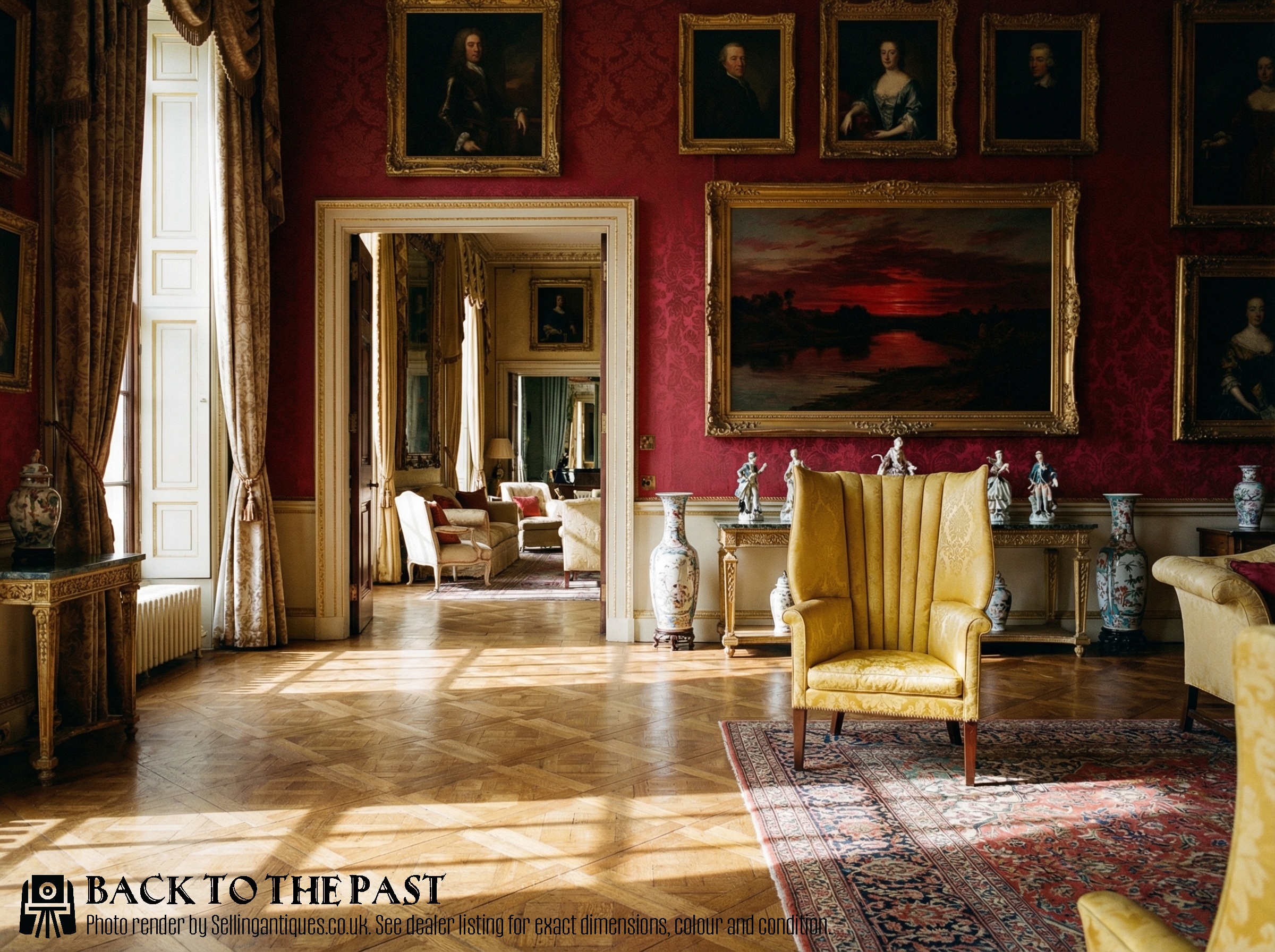
Gold Damask Armchair
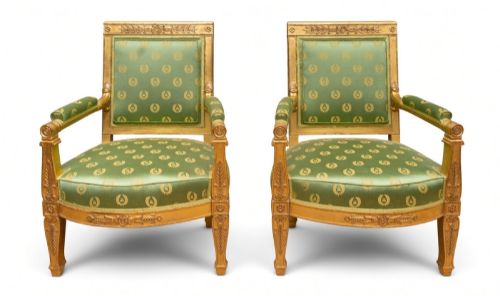
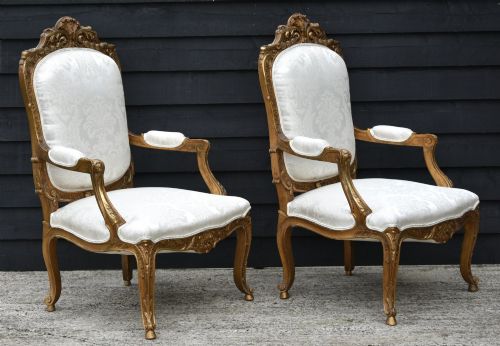
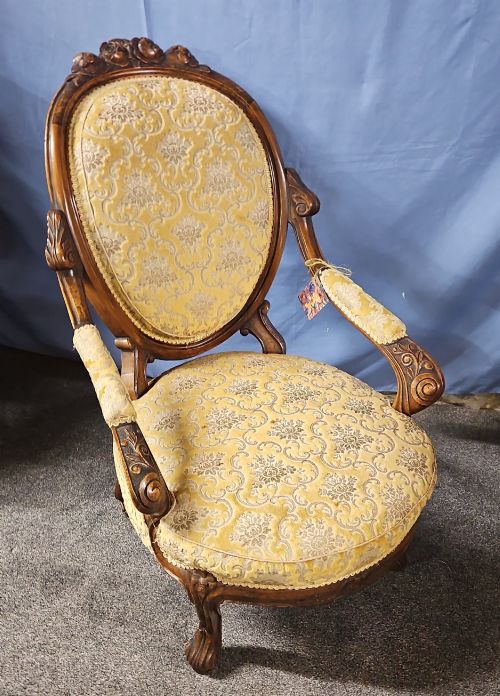
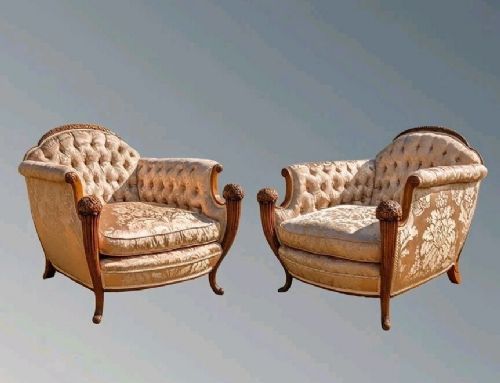
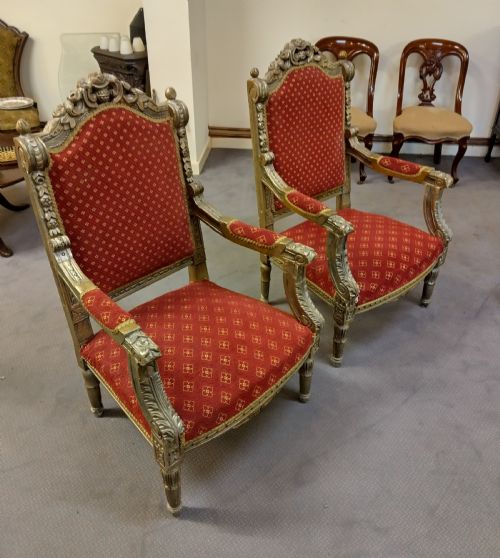
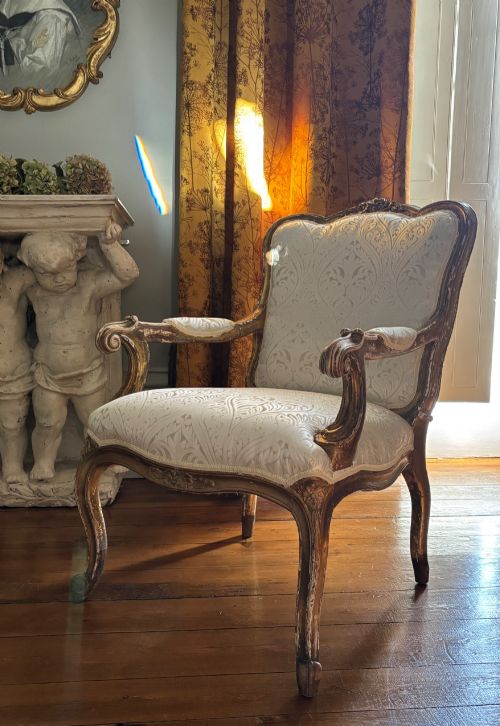
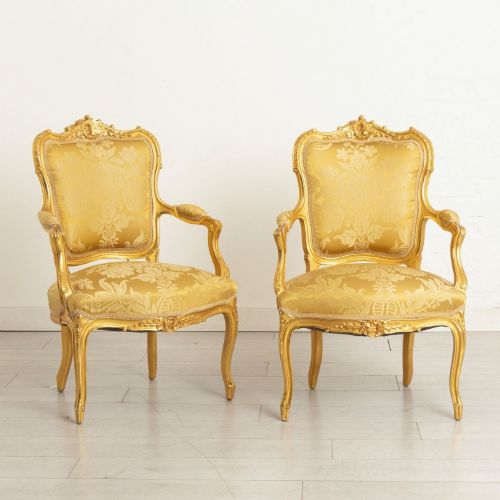
A gold damask armchair is a statement seating piece upholstered in heavy patterned fabric and framed in carved wood. When searching for a gold damask armchair, buyers encounter pieces ranging from eighteenth-century Georgian mahogany frames to nineteenth-century French giltwood creations.
The selections available here lean heavily toward continental revival styles, particularly Louis XVI and French Rococo designs. These chairs often appear in pairs or larger salon suites alongside matching sofas.
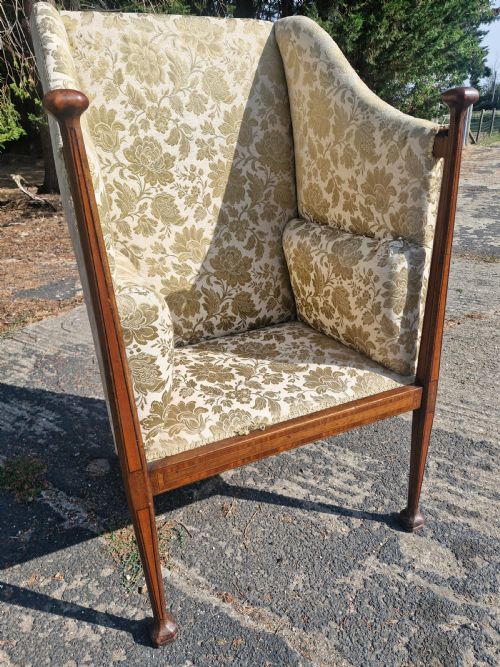
Beyond grand French seating, the inventory includes sturdy English wingbacks and Victorian library chairs dressed in shimmering metallic textiles. Each form combines functional comfort with distinct period craftsmanship.
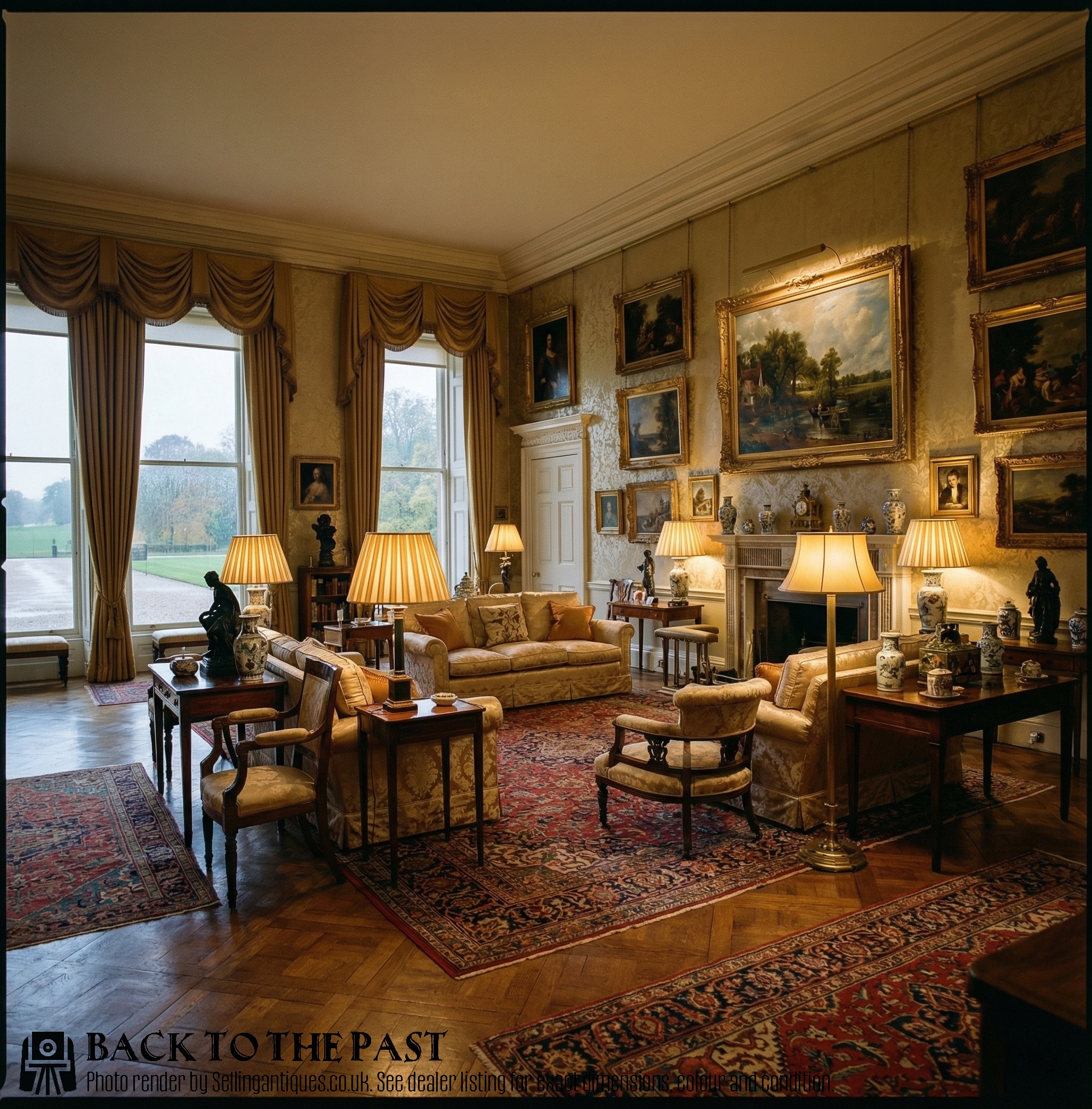
Assessing quality and execution
Quality rests primarily in the crispness of the hand-carved ornamentation upon the wooden frame. Superior pieces display deep, undercut relief work rather than shallow, mechanical moulding.
The integrity and weight of the textile contribute significantly to the overall standard of the chair. Authentic period silk damasks exhibit complex woven patterns that catch the light differently than modern synthetic blends.
Gold Damask Armchair Retail Price Guide 2026
Typical asking prices for gold damask armchair among the pieces listed under this phrase on Sellingantiques today, from the lower quarter to the upper quarter. They describe what is for sale here now, not the wider market.
The listings span from the eighteenth century through the 1930s, showcasing walnut, mahogany, and giltwood frames.
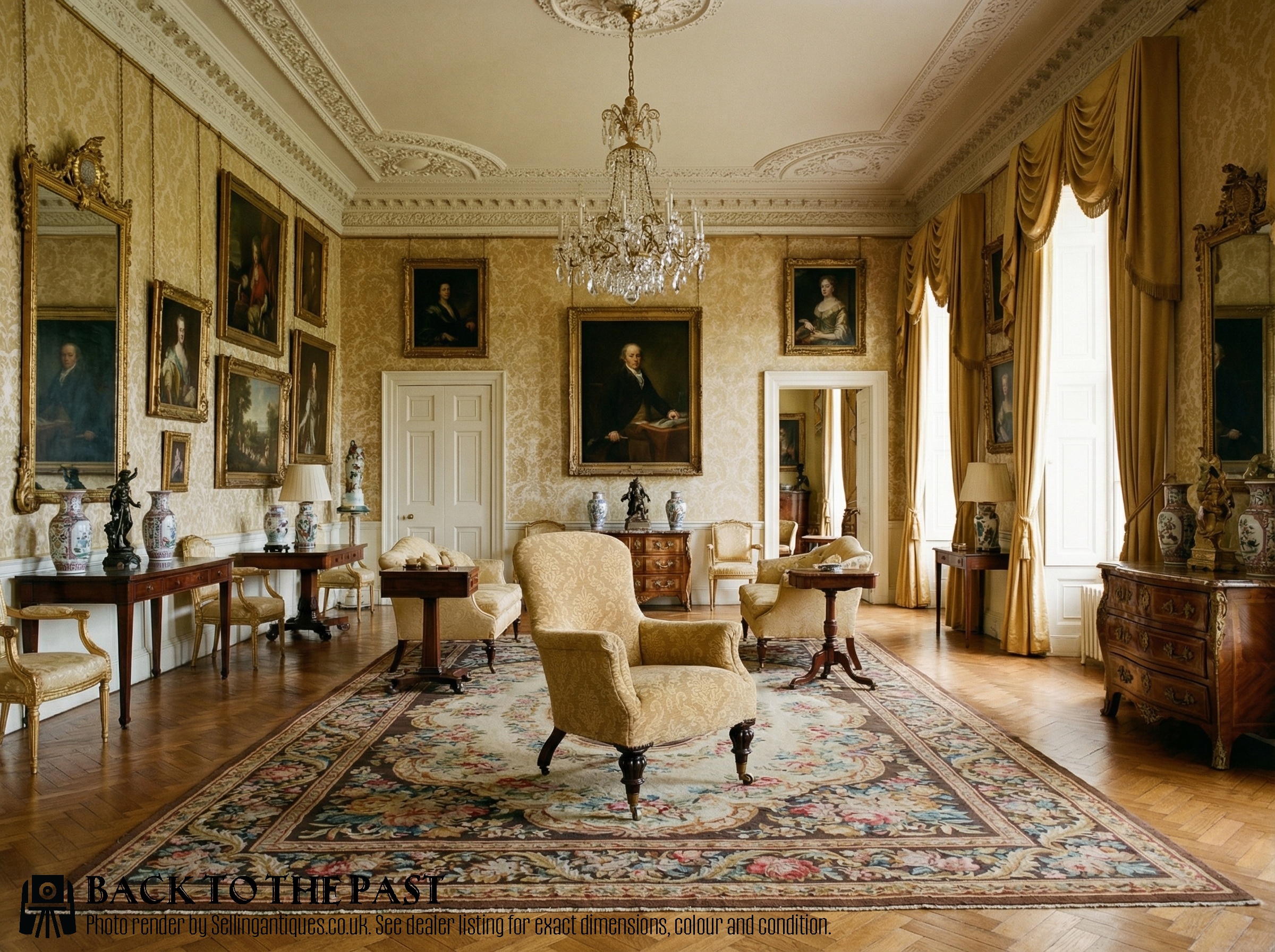
Jacob Desmalter·Blaise Maucuy·Howard and Sons
The Gold Damask Armchair Glossary
- Damask
- A reversible figured fabric of silk, wool, or linen with patterns formed by contrasting warp and weft threads. It provides the characteristic sheen seen on formal period upholstery.
- Giltwood
- Timber treated with gold leaf or powder applied over a prepared base layer. This finish adds brilliant reflective quality to decorative furniture frames.
- Fauteuil
- An open-arm armchair with wooden armrests, originating in France during the seventeenth century. The design exposes carved wooden arms while padding the back and seat.
- Wingback
- An armchair with side panels or wings attached to the back frame. This traditional form originally protected sitters from drafts in large rooms.
Gold Damask Armchair: Frequently Asked Questions
How do I clean gold damask fabric?
Silk damask requires professional dry cleaning or careful surface dusting with a soft brush. Moisture can damage delicate metallic threads and underlying natural stuffings.
Preventative measures like avoiding direct sunlight will protect the golden hue from fading over time.
Are these chairs comfortable for daily use?
Period armchairs were built for formal entertaining rather than slouching, though deep-seated Victorian library chairs offer substantial padding. Many pieces retain supportive springs or traditional webbing systems.
Placing an occasional cushion on the seat can improve ergonomics for modern lounging.
How do I distinguish Louis XVI style from Rococo?
Louis XVI pieces feature straight tapered legs, geometric symmetry, and neoclassical motifs like fluting and ribbons. Rococo designs embrace asymmetrical curves, C-scrolls, and flowing floral carvings.
Examining the foot and leg geometry provides the quickest method for identifying the correct stylistic period.
Can I mix these chairs with modern interiors?
Historic seating adds focal points and textural contrast when placed against minimalist modern backdrops. The gleaming gilt frames and patterned textiles bridge traditional and contemporary aesthetics.
Allowing sufficient space around each chair lets the intricate woodcarving stand out properly.