
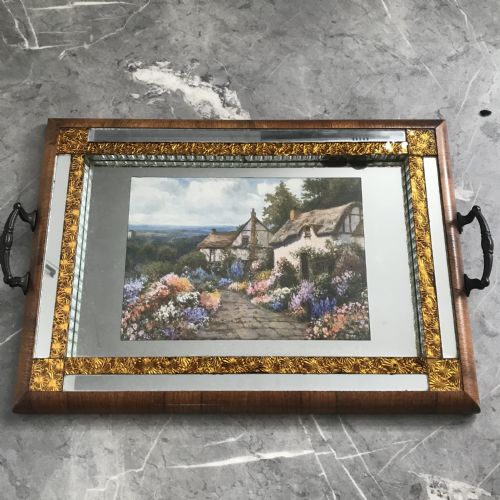


Gold Cocktail Table
A gold cocktail table brings surface sheen and decorative form into a room, spanning periods from the nineteenth century through the art deco era.
Gold Cocktail Table
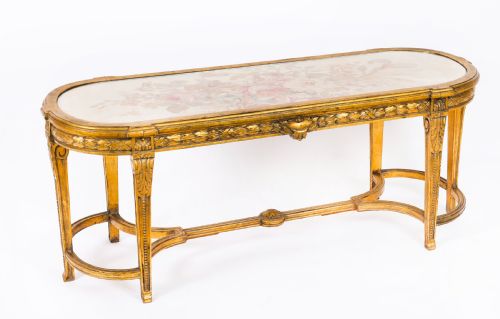
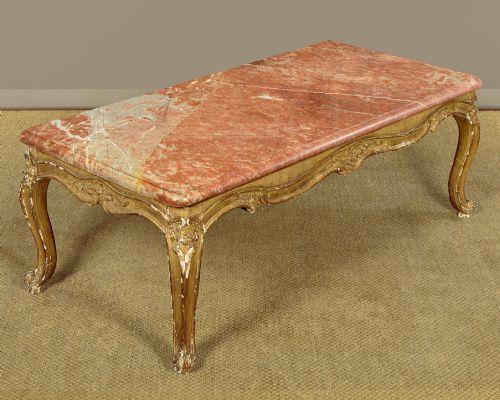
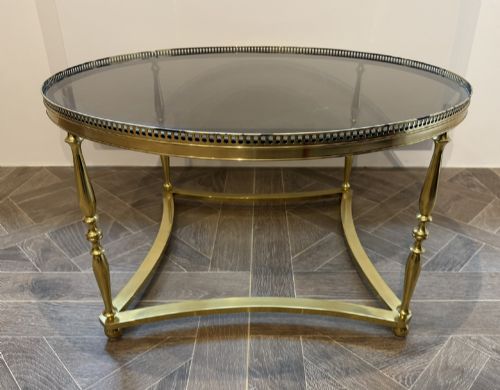
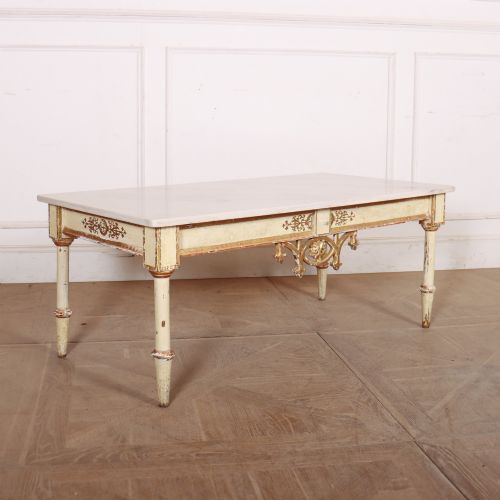
A gold cocktail table encompasses low coffee tables and tray tables finished in gilt, giltwood, brass, or painted wood. These pieces frequently feature marble tops or mirrored glass surfaces set within ornate frames.
The versions most commonly met on this page date from the early twentieth century, reflecting French neoclassical, Louis XVI revival, and Italian neoclassical styles. Chinoiserie examples from the Edwardian period and the nineteenth century also appear.
Makers and artisans utilised traditional forms such as low coffee tables and decorative trays adapted into table formats. Buyers will find variations ranging from Parisian brass designs to Venetian style tables.
Materials and construction
Makers constructed these tables using solid wood frames, carved giltwood, and cast brass, often applying gold leaf or paint finishes to achieve the characteristic metallic surface. Tops were predominantly inset with white or figured marble, polished glass, or mirrored panels.
Lacquer work appears on Chinoiserie examples, combining painted wooden surfaces with Asian-inspired motifs. Walnut veneer and traditional joinery support the structural integrity of the tray tables and coffee tables from the nineteenth and early twentieth centuries.
Assessing quality and craftsmanship
Quality rests in the crispness of the giltwood carving and the weight of the brass framework. Finer examples display meticulous hand-finishing on the gilded surfaces and precise joinery where the frame meets the top.
The choice of inset material significantly dictates the tier of the piece, with heavy polished marble slabs and bevelled mirrored glass representing superior execution compared to simpler painted wood panels.
The Gold Cocktail Table Glossary
- Giltwood
- Wood that has been coated with gold leaf or gold dust. This finish provides a luminous and durable decorative surface characteristic of neoclassical revival furniture.
- Chinoiserie
- European interpretations of Chinese and East Asian artistic traditions, popular in furniture decoration. Lacquer work and intricate painted scenes typify this style on tables and trays.
- French Neoclassical
- A style drawing inspiration from classical antiquity, marked by balanced proportions and architectural motifs. Tables from this tradition often incorporate brass detailing and marble tops.
- Tray table
- A piece of furniture comprising a removable or fixed tray mounted on a supportive folding or static base. These versatile forms were utilised for serving drinks or displaying decorative objects.
Gold Cocktail Table: Frequently Asked Questions
What periods do these tables come from?
The pieces span from the late nineteenth century through the 1930s, encompassing Edwardian, art deco, and revival periods.
Most examples date specifically to the early twentieth century, reflecting enduring neoclassical tastes across European workshops.
How were gold cocktail tables used?
These tables served primarily in drawing rooms and reception spaces for holding drinks, smoking accessories, or decorative items.
Tray tables offered portable utility, allowing servants to transport items before resting the tray securely onto a dedicated stand.
How do I style a marble topped table?
A marble topped table works well as a central low table in a living room, providing a cool and durable surface.
Pair it with soft textiles and upholstered seating to balance the hard reflectivity of the stone and metal frame.
How do I distinguish French revival styles?
Louis XVI revival pieces typically display straight, fluted legs and rectilinear frames finished in giltwood or painted wood.
In contrast, earlier rococo revival iterations favour asymmetrical curves, elaborate scrolling, and exuberant floral carvings.