




Round Brass Centre Table
A round brass centre table brings bold metalwork and rich timber into a room, anchoring the space with functional proportion and period character.
Round Brass Centre Table
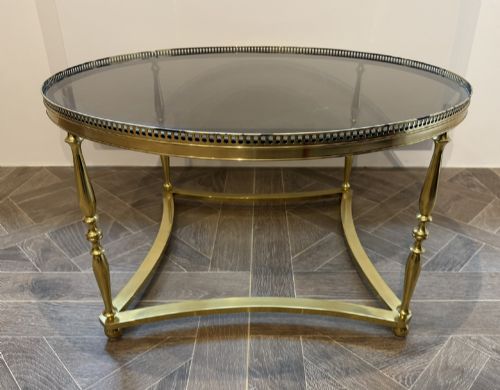
A round brass centre table combines a circular top with brass mounts, inlay, or framing, creating a striking focal point for a room. These freestanding pieces sit independently of walls, designed to be viewed from all sides in the middle of a space.
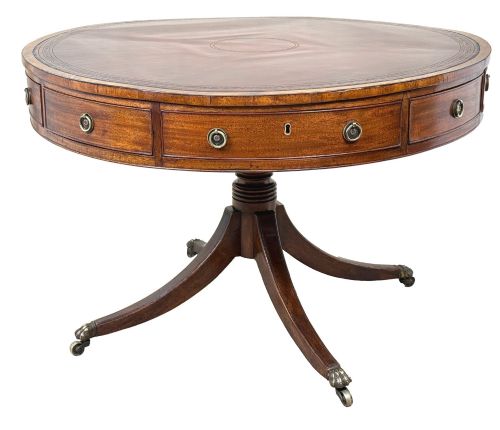
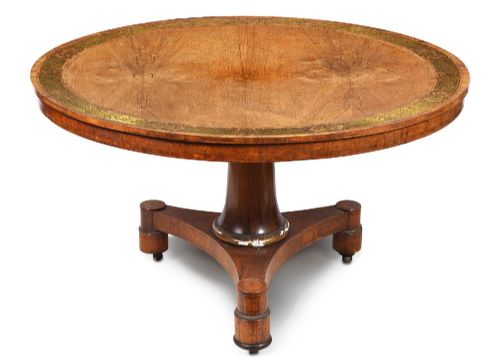
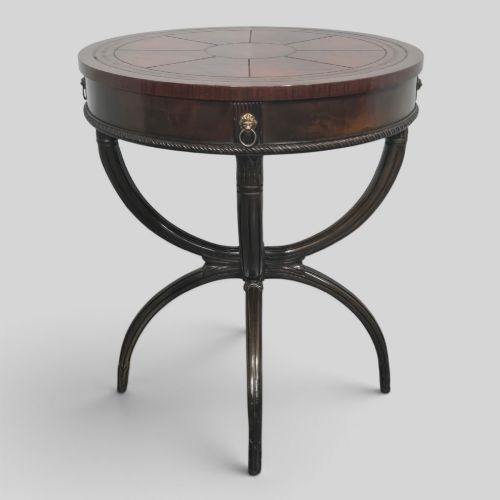
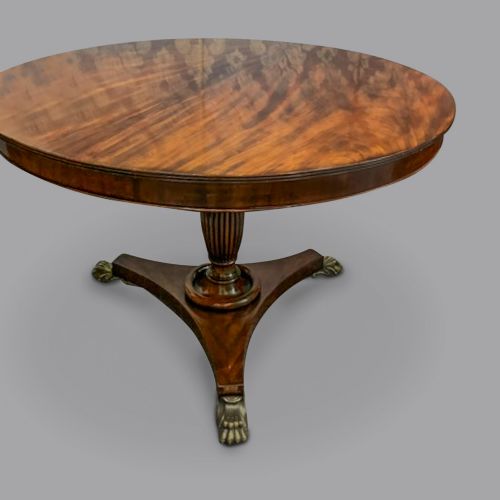
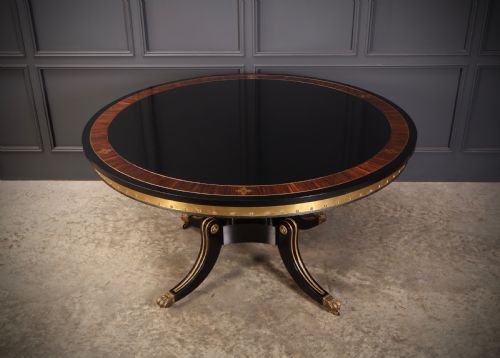
The selections span distinct periods, drawing heavily on Regency and Georgian proportions alongside Edwardian interpretations and later revivals. Buyers encounter robust mahogany and rosewood timber bases contrasted against gleaming brass elements, often taking the form of drum tables or tilt-top breakfast tables.
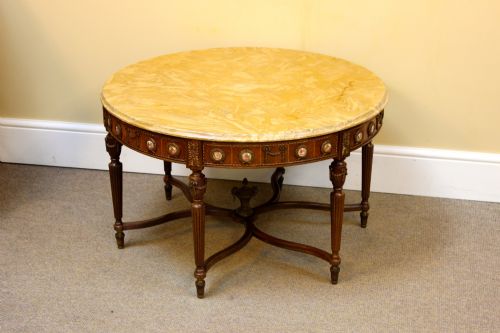
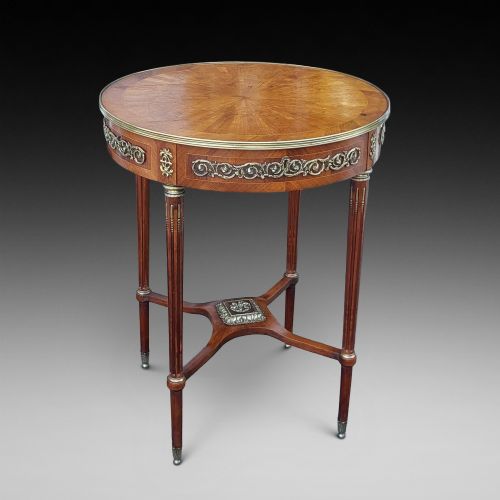
Many examples incorporate elaborate surface treatments, from specimen wood inlays to marble tops and gilt bronze mounts. The scale ranges from compact coffee tables to substantial dining and breakfast tables meant for central placement.
What dictates the quality of a piece
The grade of timber and the precision of the brass inlay determine the initial visual impact of the piece. Crispness in the cast metal mounts and the seamless integration of brass stringing into dark woods separate standard joinery from superior workshop output.
Proportion and structural integrity define the higher tiers, particularly in tilt-top mechanisms and drum table configurations. Pieces demonstrating careful selection of figured veneer and well-balanced pedestals command greater attention.
Listings span the eighteenth, nineteenth, and early twentieth centuries, featuring mahogany, rosewood, marble, and brass.
François Linke·Holland and Son·William Trotter of Edinburgh
The Round Brass Centre Table Glossary
- Drum table
- A circular library or centre table with a deep frieze containing drawers, resembling the shape of a drum. They often feature leather-inset tops and stand on a central pillar with branching legs.
- Tilt-top
- A tabletop hinged to the pillar so it can tilt vertically when not in use, allowing the table to be stored against a wall. This mechanism requires precise engineering to ensure stability when lowered.
- Crossbanding
- A strip of veneer applied to the border of a tabletop with the grain running perpendicular to the main surface. This technique frames the primary wood and adds visual depth.
- Ormolu
- Gilt bronze ornamentation applied to furniture, cast and chased to achieve sharp detail before receiving a gold finish. It serves as a prominent decorative accent on neoclassical and empire pieces.
Round Brass Centre Table: Frequently Asked Questions
Where should a round brass centre table go?
These tables work best positioned in the middle of a room where their circular form and detailed brasswork can be appreciated from every angle. They function effectively as grand reception pieces, library tables, or occasional surfaces.
Because they stand independently without relying on wall support, ensure there is adequate clearance around the perimeter for movement and seating.
How do I care for brass inlay on wood?
Maintain the timber surfaces using appropriate natural waxes while keeping abrasive polishes away from the delicate brass elements. Gentle dusting prevents grime from accumulating in the recessed channels around the metal.
Avoid placing these tables in direct sunlight or near heat sources to prevent the wood from shrinking and loosening the brass inlay.
What is the difference between a breakfast table and a coffee table?
Breakfast tables from the Regency and Georgian periods stand at standard dining height and frequently feature tilt-top mechanisms for versatile use. Coffee tables sit much lower to the ground and are built primarily for living room seating areas.
Both formats utilise circular tops and brass detailing, but their intended domestic functions dictate their overall height and proportions.
How do I identify a Regency period table?
Regency pieces often display classical architectural influences, featuring rosewood or mahogany veneers accented with precise brass inlay and bold central pedestals. Look for sabre legs, brass paw feet, and clean geometric lines inspired by ancient Roman and Greek design.
Later pieces from the twentieth century often adopt these exact Regency revival characteristics, making timber patination and construction methods key to dating.