





Gold Cherub Candelabra
Gold cherub candelabra bring figurative bronze figures and ornate candle branches together in decorative lighting from the eighteenth and nineteenth centuries.
Gold Cherub Candelabra
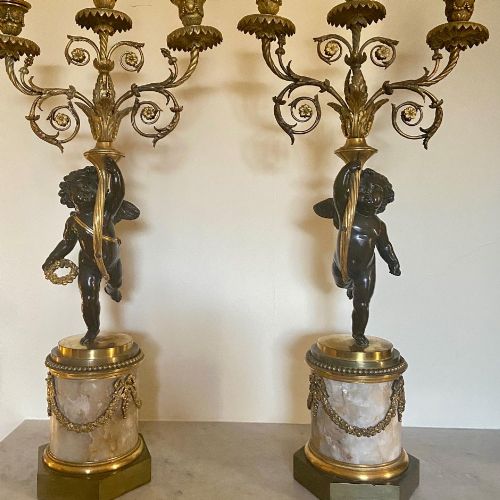
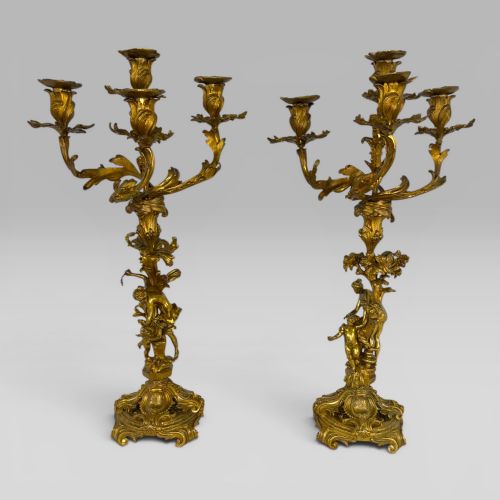
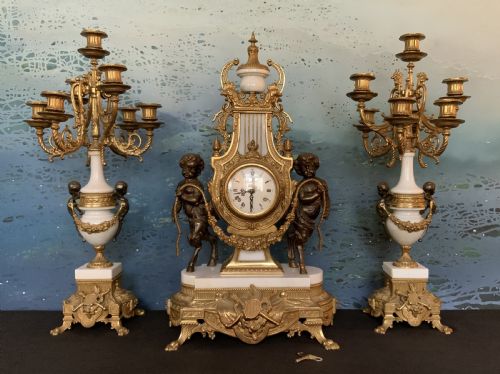
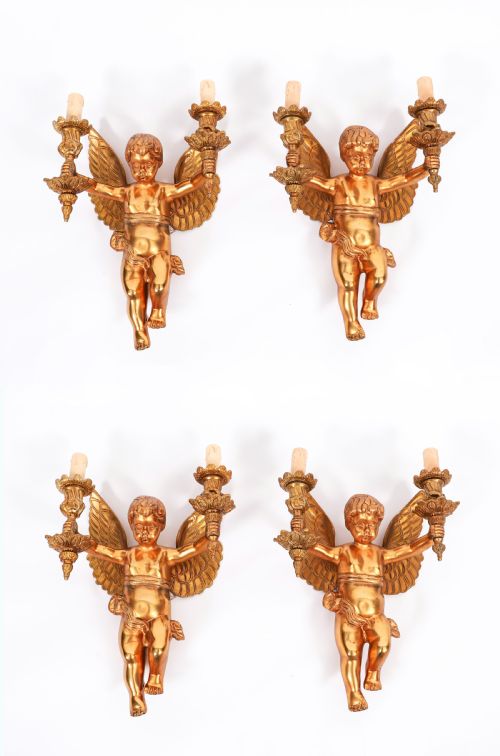
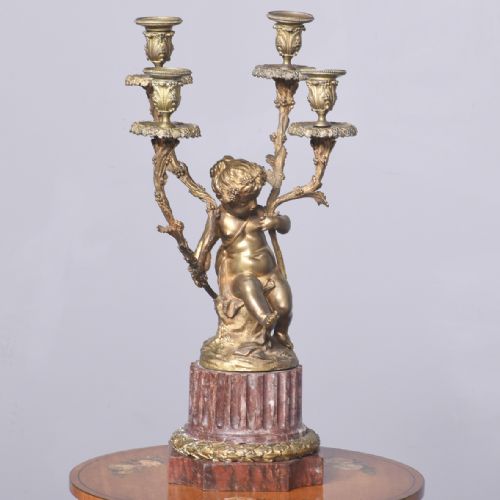
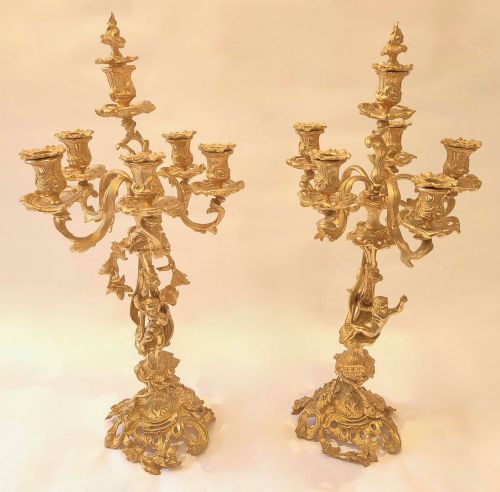
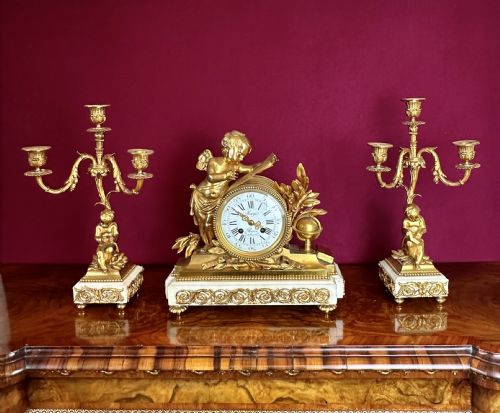
Gold cherub candelabra appear primarily as matched pairs designed for mantelpieces and side tables during the nineteenth century. These pieces integrate winged putti or cherubic figures supporting multi-branch candle holders, often forming part of larger garniture clock sets.
The dominant aesthetic draws upon French Rococo Revival and Louis XVI styles. Makers combined classical proportions with playful or theatrical figural motifs that reflect continental interior decoration traditions.
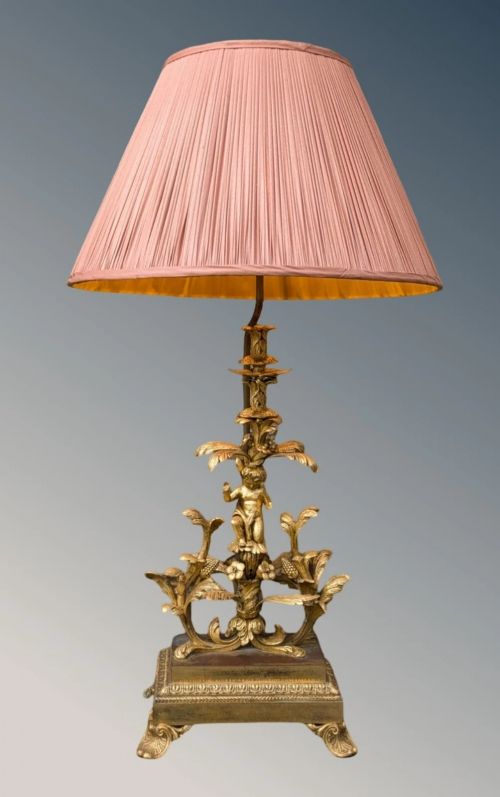
Beyond candelabra proper, related lighting forms include wall sconces, chandeliers, and table lamps sharing the same bronze and gilt vocabulary.
Materials and construction
Foundries utilised cast bronze, patinated bronze, and ormolu to render both the muscular forms of the cherubs and the scrolling architecture of the arms. Ormolu application involved mercury gilding to impart a durable golden lustre onto the bronze substrate.
Many examples incorporate contrasting natural materials such as white marble, porphyry, and fluorspar for the plinths and bases. These stone elements provide structural stability and visual weight beneath the metal figures.
Winged putti manage to look simultaneously angelic and deeply mischievous while balancing heavy brass candle branches on stone pedestals.
Assessing craftsmanship
The integration of the various components dictates overall harmony. Superior pairs demonstrate secure mechanical joints between the bronze figures, the marble bases, and the candle branches without visible gaps or misalignment.
Francois Redmond·Claude Clodion
The Gold Cherub Candelabra Glossary
- Ormolu
- Gilt bronze produced by applying a mixture of gold and mercury to a bronze base and heating it until the mercury vaporised. This historic technique created a rich, matte golden surface.
- Garniture
- A set of matching decorative objects, typically comprising a clock flanked by candelabra or vases, designed to sit together on a mantelpiece.
- Putti
- Depictions of chubby, winged male infants used as decorative motifs in art and sculpture, frequently appearing as cherubs in nineteenth-century metalwork.
- Patinated bronze
- Bronze treated with chemical solutions to produce a darkened, weathered surface colour that contrasts with gilded elements.
- Fluorspar
- A colourful halide mineral sometimes utilised for decorative bases or decorative inserts within nineteenth-century ornamental metalwork.
Gold Cherub Candelabra: Frequently Asked Questions
How do I clean gilt bronze candelabra?
Dust the metal gently with a soft, dry brush to prevent the accumulation of dirt within the intricate crevices of the cherub figures. Avoid abrasive cloths, modern chemical polishes, and water, as these can strip or damage the historic gilt surface.
For the marble or stone bases, use a slightly damp cloth followed immediately by a dry one. Ensure no moisture seeps into any joints between the stone and the bronze components.
Were these candelabra electrified later?
Many nineteenth-century candelabra and wall lights underwent conversion to electricity during the twentieth century to suit modern domestic lighting needs. Some examples retain their original configuration for wax candles.
Buyers should examine the wiring path and inspect whether the conversion was reversible without altering the structural integrity of the bronze arms.
What is a clock garniture set?
A clock garniture is a matched suite of decorative mantel ornaments consisting of a central clock accompanied by two matching side pieces, such as candelabra or urns. They were designed to create a balanced focal point on a fireplace mantel.
The materials and decorative motifs, including the gilt cherubs and marble plinths, match identically across all components of the set.
How can I tell the period of a candelabrum?
Dating relies on stylistic clues, casting techniques, and material combinations seen across the nineteenth century, including Louis XVI Revival and Rococo styles. Earlier eighteenth-century precursors display different casting methods and proportions compared to Victorian reproductions.
The presence of specific stone types like porphyry or fluorspar alongside patinated and gilded bronze often points toward particular decades within the 1800s.