
Gold Ceramic Vase
A gold ceramic vase brings metallic lustre and painted detail together in earthenware, porcelain, and stoneware vessels from various periods.
Gold Ceramic Vase
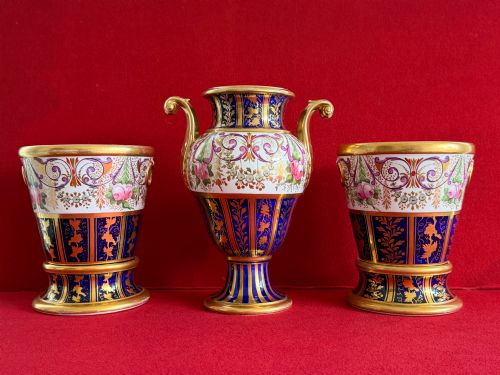
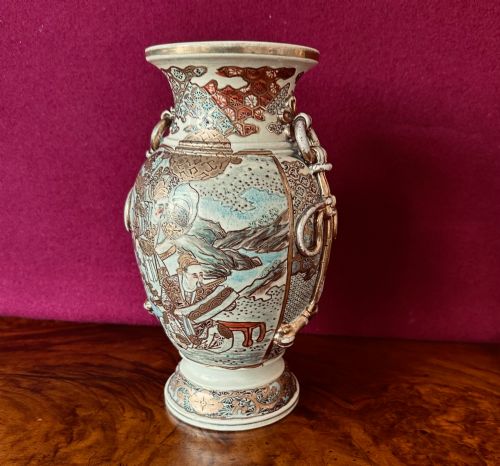
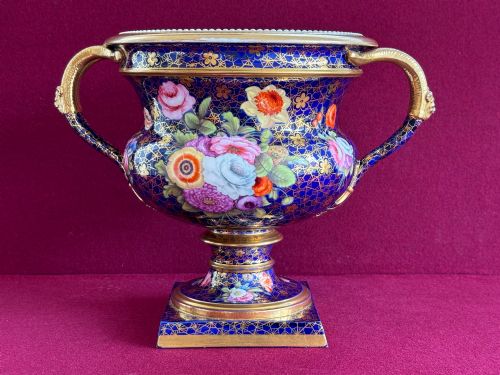
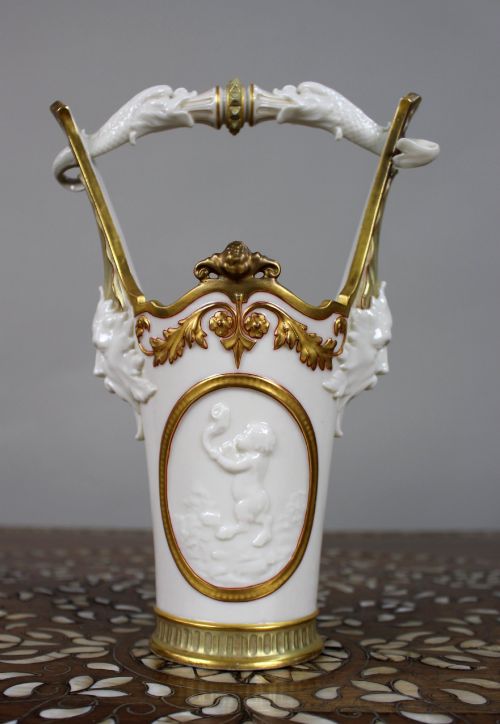
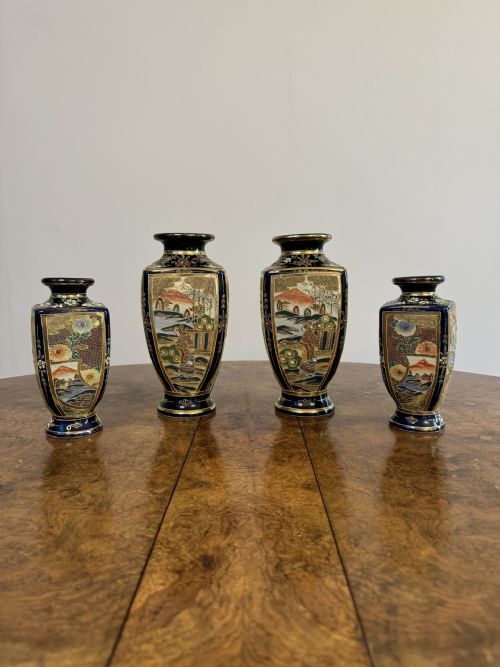
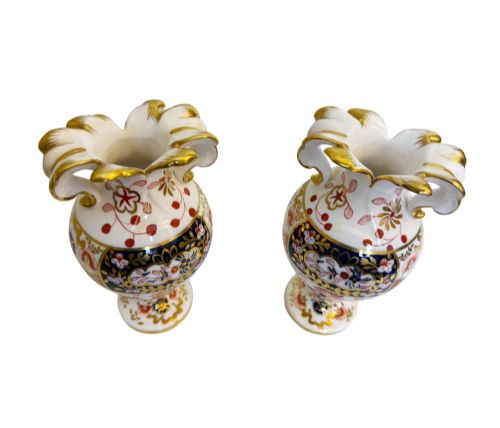
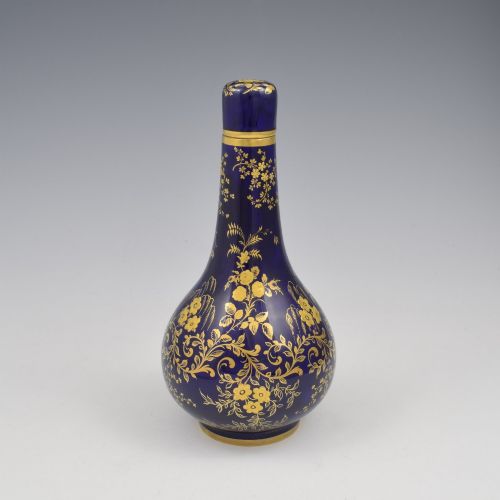
A gold ceramic vase combines ceramic bodies with applied metal leaf, gilding, or enamel work. The selection spans English porcelain factories and Japanese Satsuma workshops.
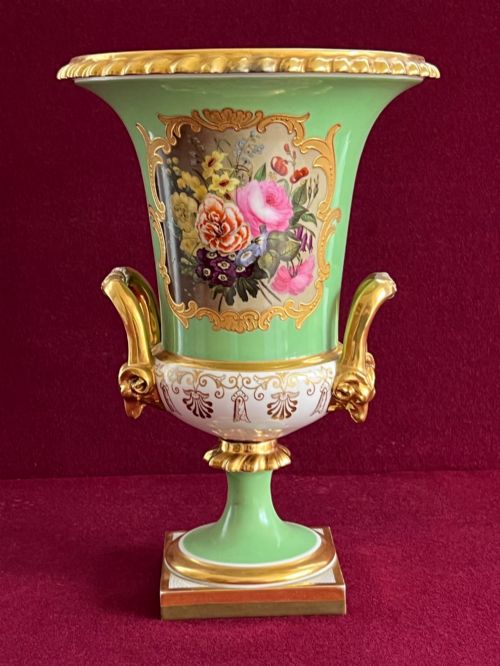
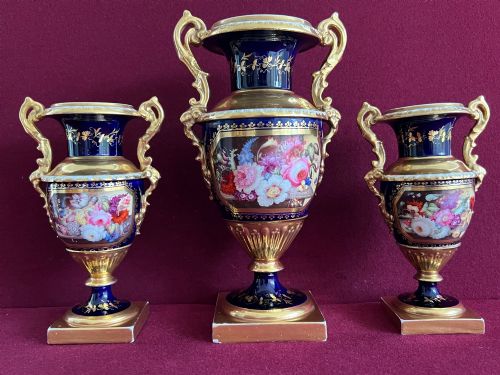
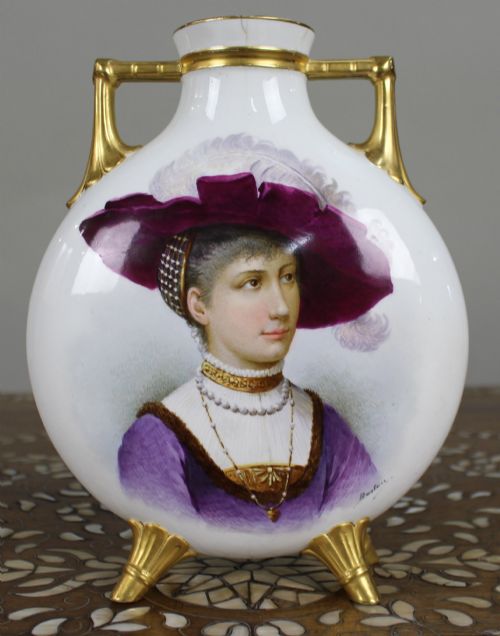
Buyers will find 19th-century English urns, Edwardian blush ivory pieces, and Japanese Meiji period earthenware vessels. Forms range from campagna urns and moon flasks to decorative jardinieres and garnitures.
The category encompasses items intended for display, floral arrangement, or conversion into table lamps. Each piece relies on ceramic foundations enriched with gold highlights.
How they were made
Makers utilised porcelain and earthenware bodies, throwing or moulding them into shapes before firing. Artisans applied cobalt blue grounds, blush ivory glazes, or white slips as a base for subsequent decoration.
Gilding and gold leaf were hand-painted or burnished onto the ceramic surface, often combined with enamel colours. Workshops used gold gilt and ormolu mounts to accent handles, rims, and figural scenes.
Materials in the listings include porcelain, earthenware, gold leaf, and enamel across various 19th-century and 20th-century styles.
What varies in quality
Quality depends on the precision of the hand-painting and the integrity of the gilding. Skilled execution shows in detailed figural work, crisp transfer or hand-brushing, and well-preserved gold leaf without excessive rubbing.
Factory attribution and named artists elevate certain pieces above standard decorative wares. Early English porcelain bodies and signed Japanese Satsuma workshops demonstrate superior material refinement.
Flight Barr And Barr·Royal Worcester·Coalport·Shozan
The Gold Ceramic Vase Glossary
- Satsuma
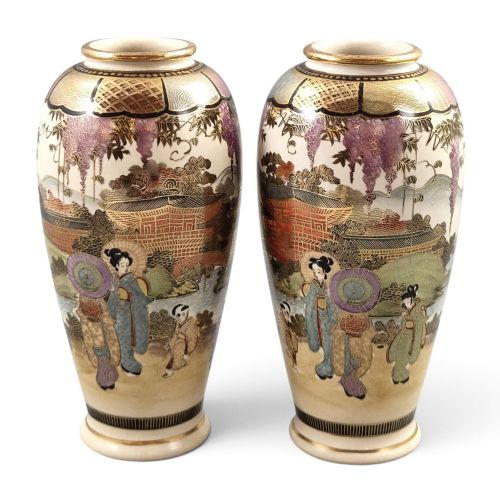
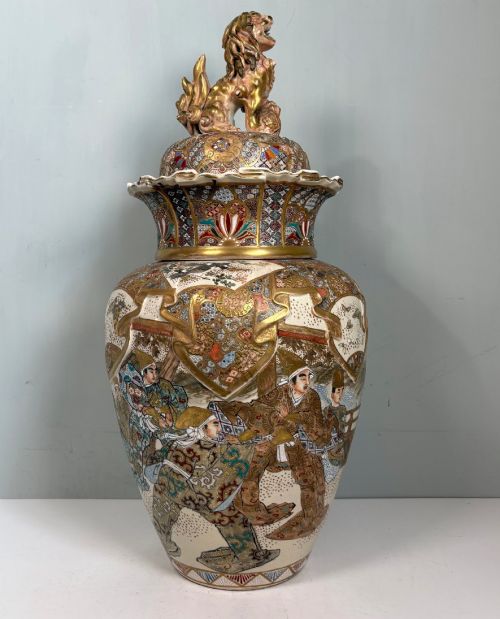
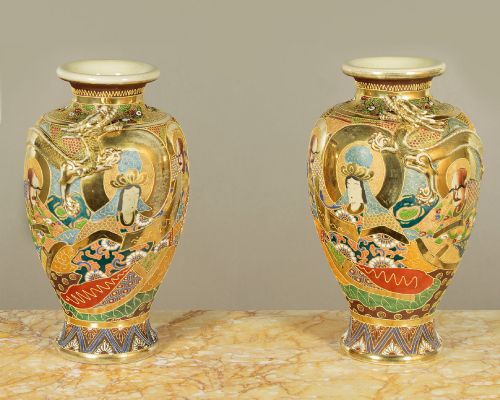
- Japanese earthenware pottery featuring a crackle-glaze finish and detailed polychrome enamel and gilt decoration. These pieces were widely produced during the Meiji period for export.
- Gilding
- The application of gold leaf or gold powder to a ceramic surface. This technique creates metallic highlights on handles, rims, and painted panels.
- Blush ivory
- A porcelain body finish developed by Royal Worcester in the late 19th century. It mimics the creamy tone of ivory and accepts floral painting and gold tinting.
- Campagna urn
- A classical bell-shaped vessel with a wide mouth and footed base. English factories produced these decorative urns in porcelain throughout the 19th century.
- Reticulated
- Pierced or openwork ceramic decoration created by cutting patterns into the clay before firing. Potteries such as Grainger Worcester utilised this technique for ewers and vases.
Gold Ceramic Vase: Frequently Asked Questions
How do I care for gilded ceramics?
Gilded ceramics require gentle handling to protect fragile gold leaf and enamel decoration from abrasion. Dust them softly with a dry cloth.
Avoid immersing antique gilded pieces in water or using harsh cleaning agents, as moisture can damage the historic glaze and metallic surfaces.
How do I identify Satsuma ware?
Satsuma pieces feature a characteristic cream-coloured earthenware body with a fine, crackled glaze. They are typically decorated with dense enamel patterns and heavy gold gilding.
Many of these vessels bear artist signatures or workshop marks from the Meiji period on the base.
What periods do these vases come from?
The available selection includes pieces from the 18th, 19th, and early 20th centuries. Victorian and Edwardian English factories are well represented alongside Meiji period Japanese works.
Earlier examples often originate from Regency and Georgian porcelain houses, while later items include early Showa period pieces.