

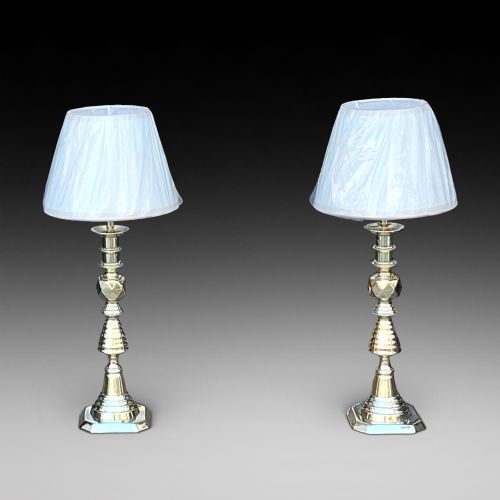
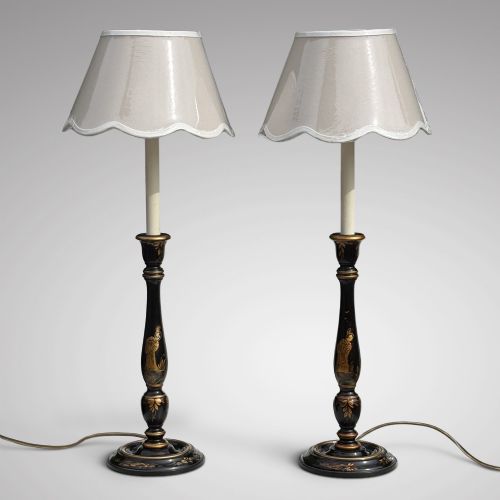
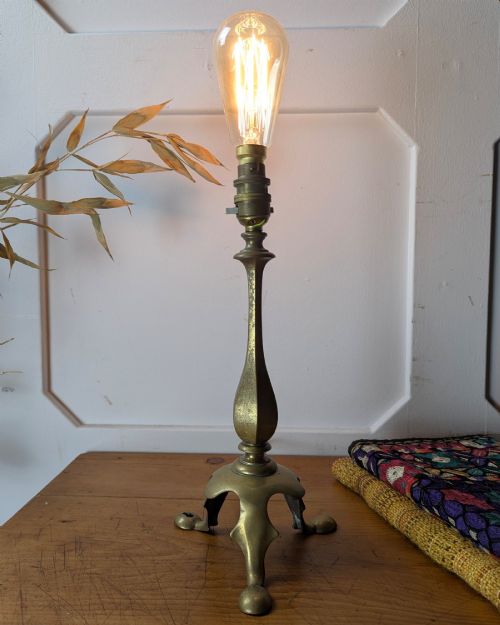
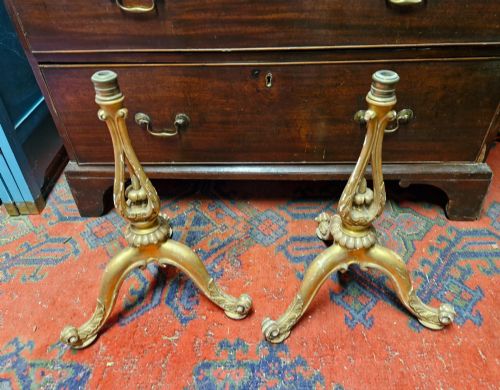

Gold Candlestick Table Lamps
Gold candlestick table lamps bring warmth and architectural height to a room, combining period lighting conversion with gleaming gilded metalwork.
Gold Candlestick Table Lamps
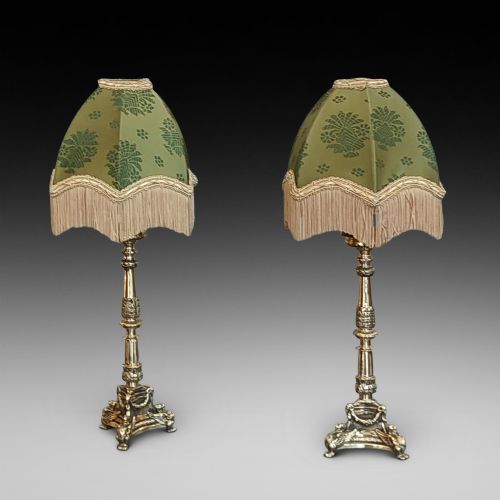
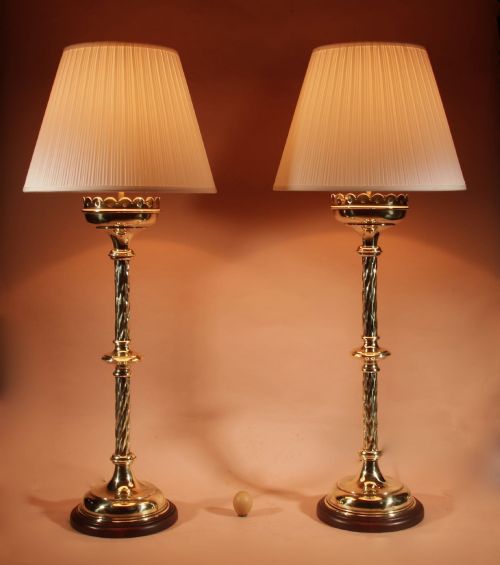
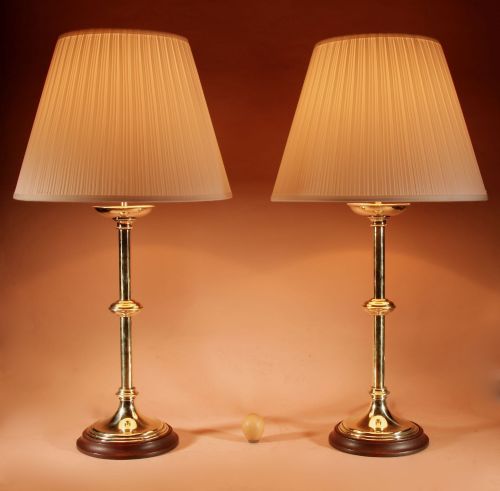
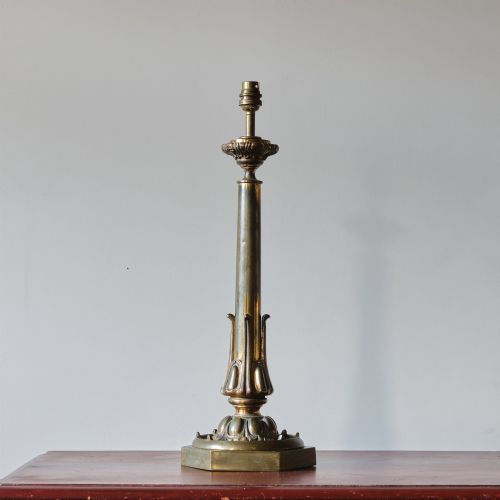
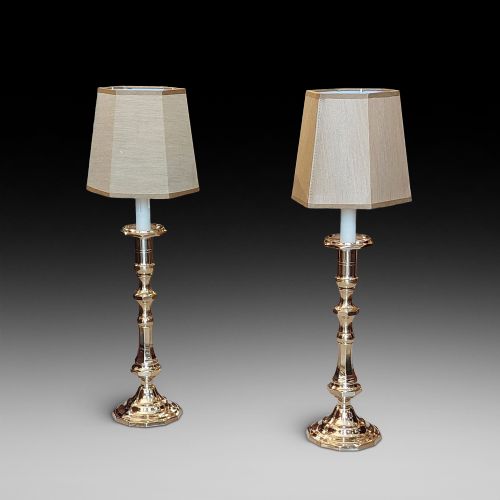
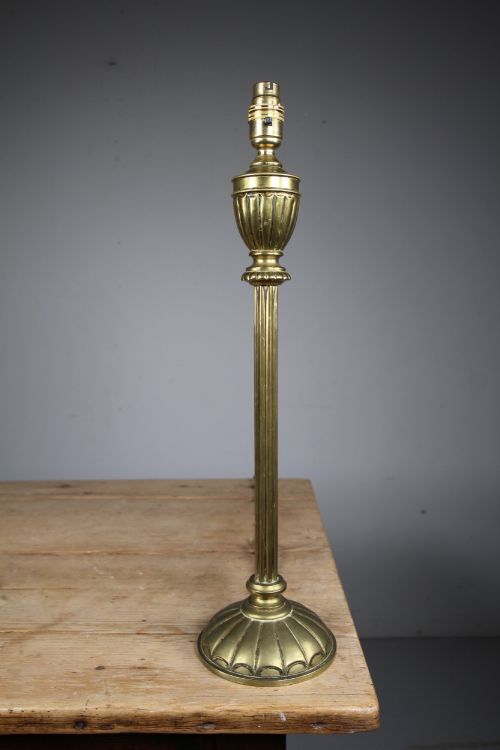
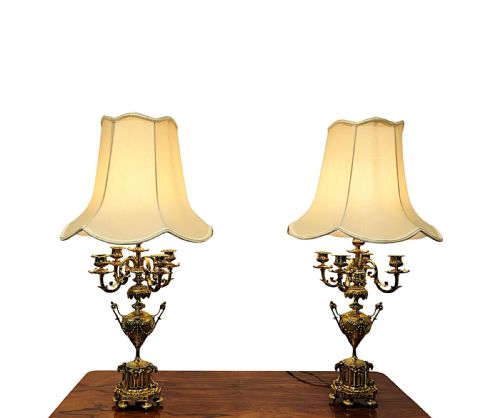
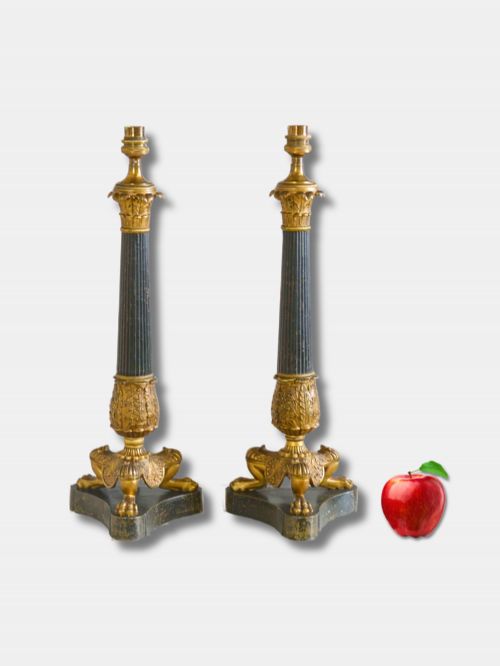
These pieces are primarily functional light fittings adapted from older candle holders or manufactured in decorative metal and giltwood during the nineteenth and early twentieth centuries. Buyers seeking gold candlestick table lamps encounter items ranging from simple Victorian turned brass columns to elaborate French ormolu designs with classical motifs.
Candlestick lamps and converted candelabra dominate the offerings, often appearing as matched pairs alongside occasional single monumental pieces. The forms span hexagonal balusters, Corinthian orders, and tripod bases originating from English, French, and continental workshops.
Materials and construction methods
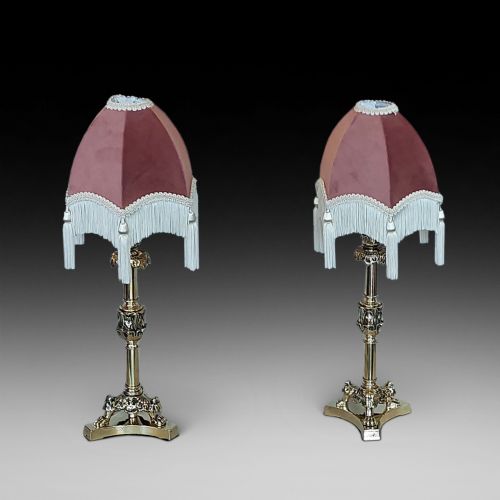
Metal fabrication relies heavily on cast brass, ormolu, and gilt bronze, utilising detailed moulding and chasing to achieve crisp architectural ornamentation like rams' heads and lions' paw feet. Foundries shaped these metals into complex columns, multi-branch candelabra, and hexagonal baluster profiles.
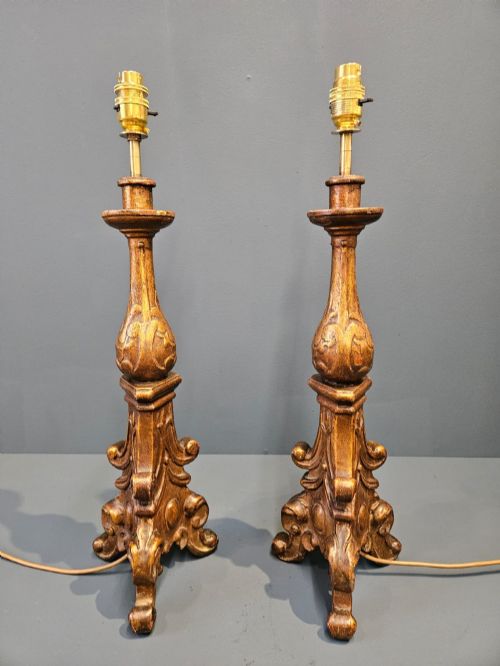
Wooden alternatives employ carved giltwood and timber with applied gold leaf or lacquered finishes, frequently seen in Spanish altar pieces and French chateau candlesticks. Fabric elements such as silk shades and toleware components complement the metallic bodies, completing the conversion into functional lighting.
Gold Candlestick Table Lamps Retail Price Guide 2026
Typical asking prices for gold candlestick table lamps among the pieces listed under this phrase on Sellingantiques today, from the lower quarter to the upper quarter. They describe what is for sale here now, not the wider market.
Listings span the eighteenth, nineteenth, and early twentieth centuries, incorporating Victorian, Edwardian, and Neoclassical styles.
Assessing quality in period lighting
Quality rests in the crispness of the metal casting and the depth of the original gilding or ormolu work rather than mere surface shine. Finer examples display hand-chiseled details on acanthus leaves, crisp fluting on columns, and substantial weight in the brass or bronze body.
The integrity of the conversion matters significantly, distinguishing professional adaptations that preserve the original candlestick structure from heavy-handed alterations. Superior pieces maintain balanced proportions between the antique base and the electrical fittings, demonstrating careful craftsmanship during adaptation.
The Gold Candlestick Table Lamps Glossary
- Ormolu
- Finely ground high-carat gold applied to a bronze base using a mercury amalgamation process common in 18th and 19th-century French manufacturing. This technique produces a rich, durable golden matte finish.
- Giltwood
- Timber carved and coated with a thin layer of gold leaf or gilt composition. It frequently appears on continental altar sticks and decorative chateau table lamps.
- Baluster
- An architectural column or pillar with a swelling lower portion, often utilised in the turned brass stems of Victorian and Edwardian table lamps.
- Candelabra
- A branched candlestick holding multiple lights. Many period examples are converted to electric table lamps by running wiring through the central stem.
Gold Candlestick Table Lamps: Frequently Asked Questions
How do I date an antique brass lamp?
Dating relies on examining manufacturing techniques, such as sand-casting marks, joinery methods, and the style of the turned or chased ornamentation. Victorian and Edwardian pieces often exhibit standardised threading and distinct patination compared to earlier Georgian examples.
Electrical components usually indicate later rewiring, so the focus remains strictly on the metal body, base weight, and stylistic vocabulary characteristic of specific nineteenth-century periods.
Can I use modern lampshades on these bases?
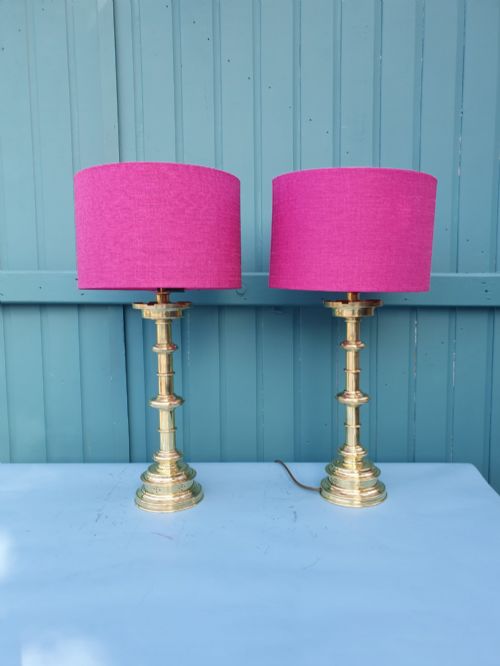
Most antique lamps accept standard modern shade fitters provided the harp or shade carrier matches the diameter of the bulb holder. Shade selection depends on balancing the height and visual weight of the gilded metal base.
Silk or fabric shades in neutral or complementary tones maintain the historic character without overwhelming the intricate casting and gilding of the candlestick.
Were these lamps originally electric?
Electricity was not used for domestic lighting during the eighteenth and nineteenth centuries, meaning these items started as candle holders or oil lamps. Candlesticks and candelabra were subsequently adapted for electrical wiring during the twentieth century.
Conversions often occurred decades after manufacture, turning altar sticks, column lamps, and decorative candlesticks into practical table lighting while retaining their original aesthetic appeal.
What is the difference between ormolu and brass?
Ormolu consists of a bronze or brass substrate treated with a gold amalgam layer to impart a rich, warm golden surface finish associated with high-end French decorative arts. Standard brass is an alloy of copper and zinc displaying its own metallic yellow tone without the applied gold layer.
While solid brass can be polished to a bright shine, ormolu retains a softer, more uniform golden lustre that resists tarnishing due to the precious metal content.