


Gold Candle Holders
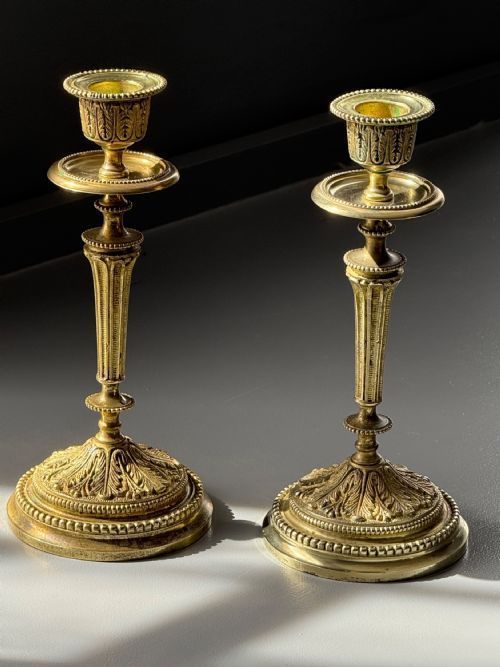
Gold candle holders bring warmth and historical weight to a room, ranging from simple Georgian brass to elaborate French gilt bronze.
Gold Candle Holders
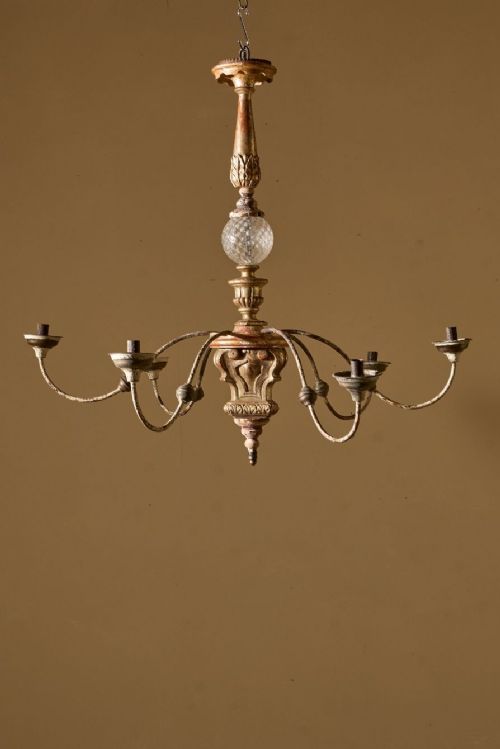
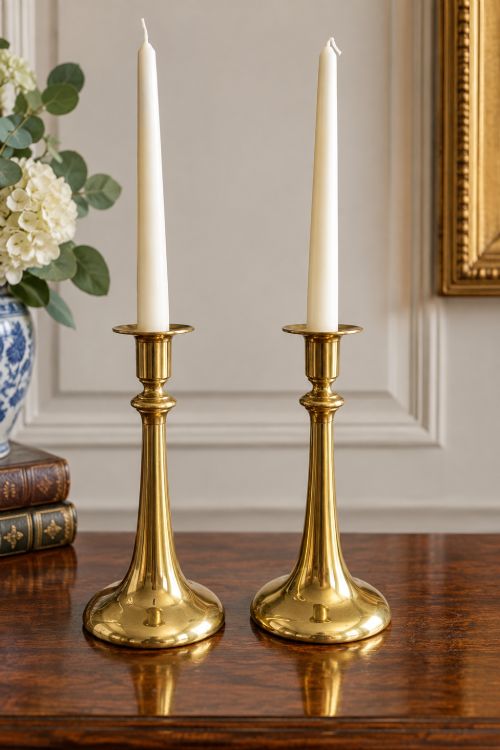
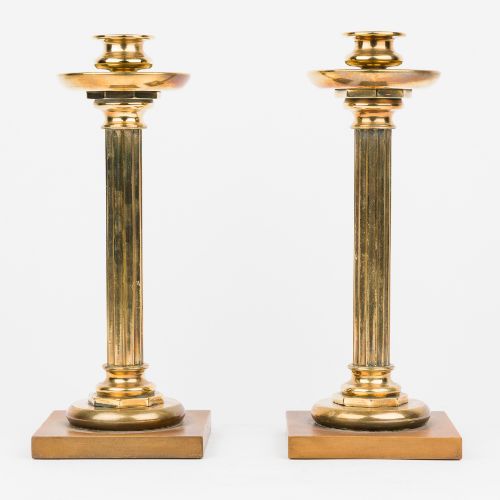
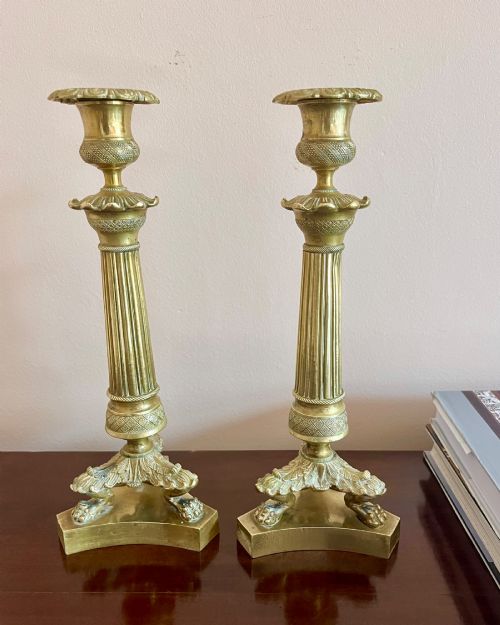
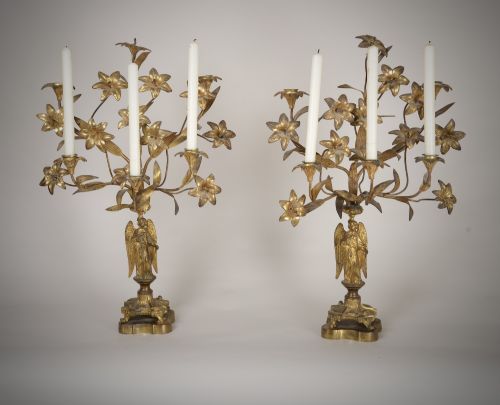
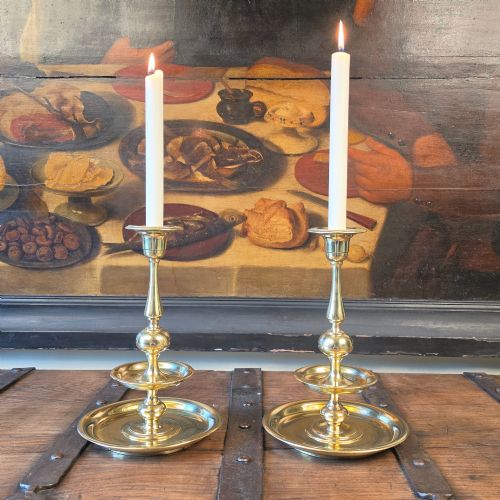
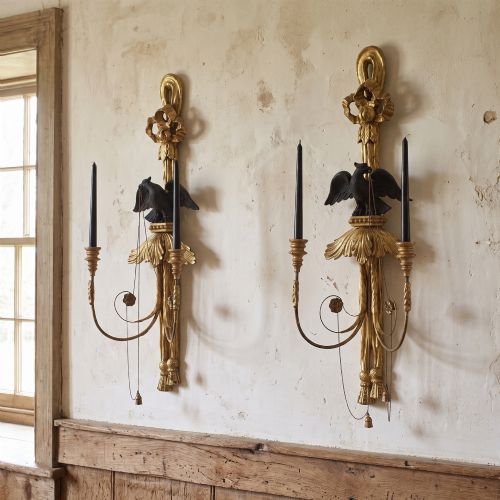
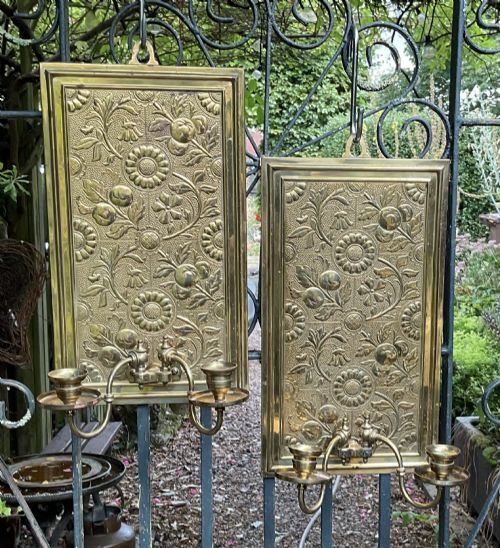
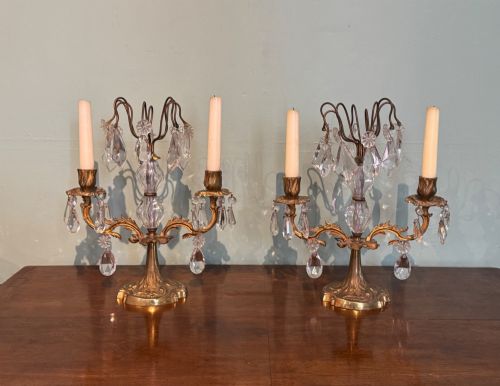
When searching for gold candle holders, buyers encounter a diverse selection of lighting fixtures spanning multiple centuries and stylistic revivals. The most common forms on this page include pairs of candlesticks, multi-arm candelabra, and wall sconces.
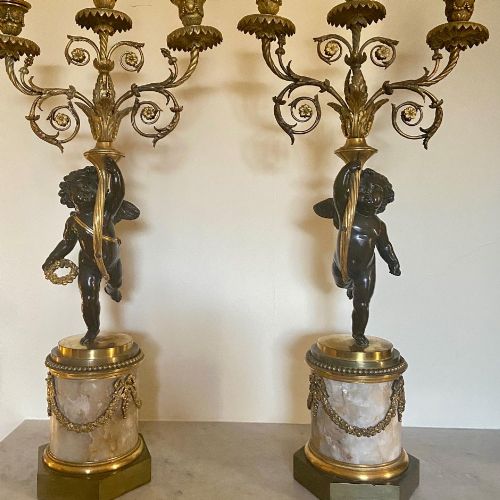
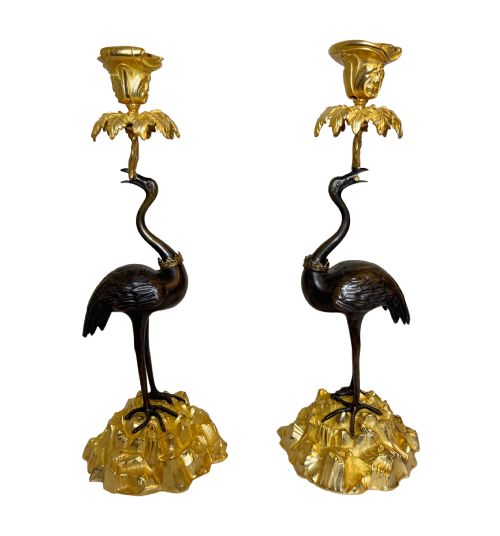
Materials range from polished and cast brass to patinated and gilt bronze, often styled after Georgian, Regency, Louis XVI, and Victorian periods. Pieces frequently feature figural elements, architectural motifs, or sculptural details like trees and animals.
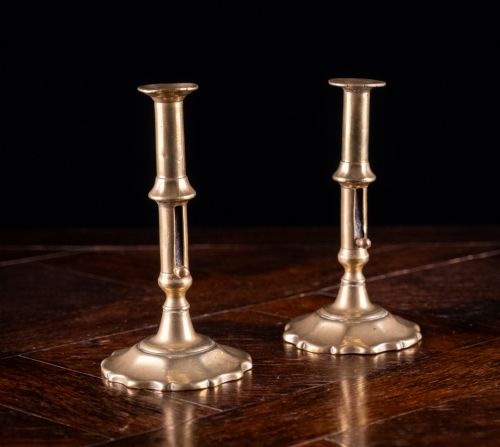
The assortment includes domestic table lighting alongside larger ecclesiastical and altar pieces. English brass and French gilt bronze dominate the selection, showing both utilitarian designs with side ejectors and highly ornate decorative schemes.
Materials and Construction
The manufacturing techniques rely heavily on metal casting, utilising brass, bronze, and ormolu to achieve durable and intricate forms. Ormolu and gilt bronze applications involve the precise deposition of gold onto a bronze or brass base, creating a lasting luminous finish.
Wood is also employed in specific items, seen in carved and gilded wall sconces and altar sticks finished with gesso. Additional materials like porcelain, cut glass, marble, and fluorspar appear in combination with metal mounts, reflecting the decorative priorities of their respective periods.
Materials documented across the current inventory include cast brass, gilt bronze, ormolu, porcelain, marble, and carved giltwood.
Evaluating Quality
Quality in these items is determined by the crispness of the casting and the depth of the gilding. Superior examples display sharply defined ornamentation, careful hand-chiselling after casting, and harmonious proportions across pairs.
The distinction between standard domestic brassware and high-end gilt bronze lies in the finesse of the sculptural details and the integration of subsidiary materials like marble or porcelain. Well-preserved fire-gilt surfaces maintain a rich, matte lustre that lesser chemical finishes fail to replicate over time.
Bruce Talbert·Pierre Philippe Thomire·Barr, Flight and Barr·Ridgway
The Gold Candle Holders Glossary
- Ormolu
- Gilded bronze, where finely ground gold is amalgamated with mercury and applied to a bronze base before heating. This traditional French fire-gilding technique produces a deep, durable metallic lustre.
- Candelabra
- A branched candlestick holding multiple candles on separate arms. These large lighting fixtures often form decorative centrepieces on tables or sideboards.
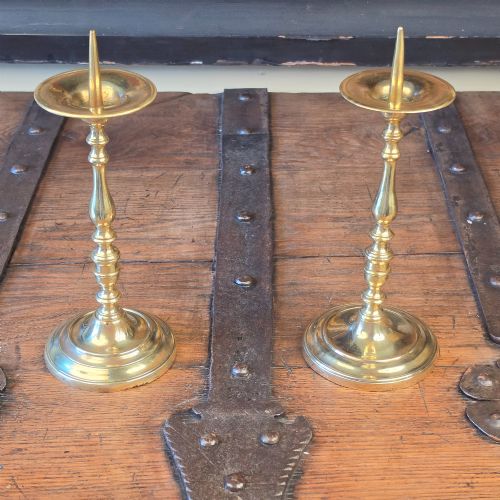
- Pricket candlestick
- A candle holder featuring a sharp metal spike at the top to secure the base of the candle rather than a socket. They frequently appear in ecclesiastical contexts.
- Wall sconce
- A lighting fixture fixed to a wall, designed to project light outwards using candles mounted on brackets or arms. They often incorporate reflective backplates or mirrors.
- Side ejector
- A small mechanical lever fitted to the side of a brass candlestick column to push up and remove the remaining candle stump. This practical addition is characteristic of certain Georgian designs.
Gold Candle Holders: Frequently Asked Questions
How do I clean antique brass and gilt items?
Dust gently with a soft, dry cloth to preserve the surface patina. Avoid abrasive polishes, particularly on gilded or ormolu surfaces, which can strip the thin gold layer.
Harsh chemical cleaners permanently damage historical finishes. Professional conservation advice is recommended for pieces showing significant tarnish or structural wear.
What is the difference between brass and ormolu?
Brass is a solid alloy of copper and zinc, commonly used for durable domestic candlesticks throughout the Georgian and Victorian eras. It can be polished to a bright golden sheen.
Ormolu involves a layer of gold applied to a bronze substrate. This technique produces a softer, richer golden tone associated with high-status French decorative arts.
How were multi-arm candelabra used historically?
Candelabra provided primary illumination in grand dining rooms and salons before the advent of electricity. Their multiple arms allowed them to cast substantial light across formal spaces.
They often stood on mantelpieces or pier tables, sometimes paired with matching wall sconces to create a cohesive lighting scheme throughout a reception room.
Can I use standard modern candles in antique holders?
Many antique candle sockets vary slightly from modern standard diameters due to historical manufacturing methods. Forcing an ill-fitting candle into a antique socket risks cracking fragile brass or porcelain.
Using beeswax tapers shaved down at the base ensures a secure fit without putting undue pressure on the antique material.